
Best Practices for Operating a Dumper Safely on Site
What separates a routine dumper run from a preventable incident? Often, it comes down to checking the machine, assessing the route and considering the tipping area before moving off. The best practices for operating a dumper start with that repeatable preparation. It helps you respond to changing site conditions and reduce the risk of overturns, collisions and unstable loads.
Uneven ground, nearby pedestrians and poor load placement can all make dumper work hazardous. The challenge is turning that awareness into a clear routine. This guide explains how to prepare yourself and the work area, carry out pre-use checks, travel and handle materials safely, and park the dumper securely. It also explains when to stop and reassess the task. With 35 years of experience in the plant and tool hire industry, Rocket Rentals Ltd understands the value of inspection and equipment suited to the work. These practical steps can help you plan dumper use carefully from the start of the shift to the end.
Table of Contents
Why safe dumper operation starts with understanding site risks
A dumper is designed to move and tip materials on site. The risks depend not only on the machine, but also on its route, its load and how the work area is organised. A route that is clear at the start of a shift can change when deliveries arrive, ground conditions deteriorate or other activities move into the area.
The Health and Safety Executive (HSE) identifies overturning and dumpers striking pedestrians among the main causes of fatal injuries involving these vehicles. Both hazards can develop quickly if the dumper is used on unsuitable ground, visibility is restricted, or people and vehicles share space without clear controls. Assess these risks before work begins, not only once the dumper is moving.
Assess the task, machine and route together before moving materials.
Which dumper hazards should operators recognise first?
An overturn can become more likely if a dumper travels over uneven or unstable ground, uses a slope beyond its safe working conditions, or carries a poorly balanced load. Watch for soft edges, ruts, loose material and ground that may not support the machine. Restricted visibility is another warning. If you can’t see the route clearly, pedestrians or obstacles may be difficult to spot in time.
Collision risk rises where pedestrians and moving dumpers cross paths, particularly near entrances, loading areas and blind corners. The HSE’s guidance highlights overturns and pedestrian strikes as serious hazards. A general overview of dump-truck types and protective features, including ROPS (roll-over protective structures that help protect the operator if a machine overturns) and FOPS (falling-object protective structures that help protect the operator from falling objects), is available in Dump truck safety features.
How does a site plan reduce dumper risk?
A site plan helps everyone understand where vehicles should travel, where pedestrians can walk and which areas are restricted. Separate pedestrian and vehicle routes where practicable. Choose a dumper route with clear sightlines and enough room to manoeuvre. Avoid unnecessary obstacles, tight turns and movements that bring vehicles into conflict.
Mark or communicate vehicle routes, pedestrian walkways and crossing points.
Identify loading and tipping areas, blind spots and places where access is restricted.
Make sure drivers and workers know how route changes will be communicated during the shift.
Site conditions and work activities can change. A delivery might block a route, excavation work could alter access, or poor weather might affect the ground. Supervisors should tell affected workers about changes and restricted areas before dumper movements continue. If you encounter an unexpected obstruction, people in the route or ground that appears unsafe, stop and follow the site’s arrangements for resolving the issue.
This is the practical foundation of the best practices for operating a dumper: spot changing hazards early and adapt the task instead of relying on yesterday’s route or conditions. A clear plan gives operators and nearby workers a shared understanding of where the dumper will travel and where extra care is needed.
Prepare the operator and dumper before the first movement
A safe start involves more than turning the key. Before moving off, make sure the operator is ready, the dumper is suitable for the task and the route is understood. HSE guidance says operators should be trained, competent and authorised to use the specific dumper. Training or experience with a different machine doesn’t automatically mean someone is ready to operate this one.
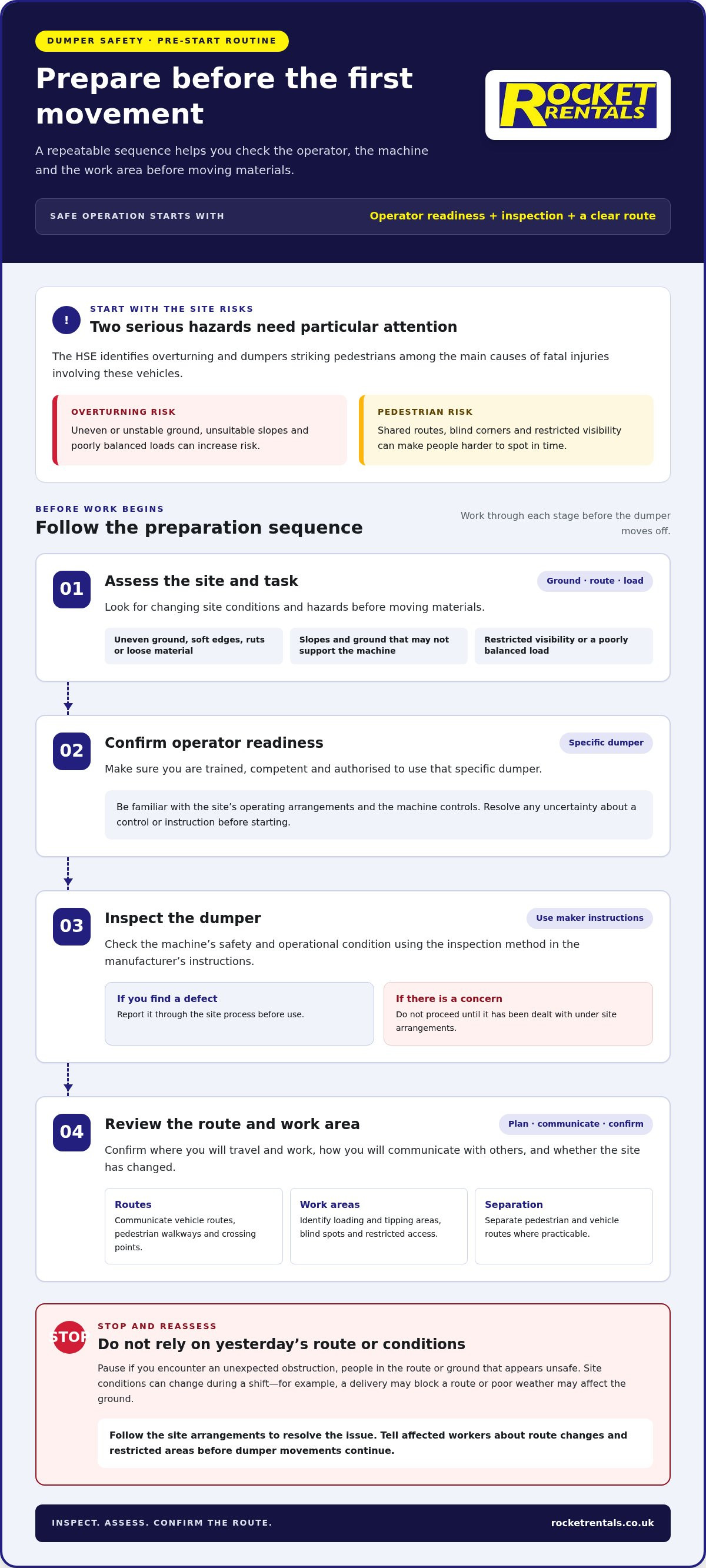
Use this sequence before work begins:
Confirm operator readiness. Make sure you’re authorised for the specific dumper and familiar with the site’s operating arrangements. If you’re unsure about a control or instruction, resolve that before starting.
Inspect the dumper. Check its safety and operational condition using the inspection method in the manufacturer’s instructions. Report defects or concerns through the site process before use.
Review the task and route. Confirm where you’ll travel and work, how you’ll communicate with others, and whether conditions or site activities have changed.
Inspection before work begins helps identify concerns while there’s still time to address them safely.
What should an operator consider before using a dumper?
Start with your competence and authorisation for that particular dumper. Then consider the job as a whole: the materials to be moved, the intended route, the work area and how you’ll communicate with colleagues. A route or work area can change between shifts, so don’t rely on assumptions. Check the dumper’s controls and operating limits in the manufacturer’s instructions instead of applying guidance from another machine.
The HSE sets out expectations for operator competence, inspection and safe use in its HSE guidance on dumper safety. Follow the relevant site arrangements as well as the machine instructions. If you’re unclear about how the task should be carried out, pause and raise the question through the site’s usual process before using the dumper.
What belongs in a pre-use inspection?
An inspection is a detailed examination of equipment to verify its safety and operational condition. Use the manufacturer’s instructions for the correct method and scope. Don’t substitute an informal glance or an assumed checklist. If you find damage, a fault or anything that causes concern, report it through the site process and don’t proceed until the concern has been dealt with under those arrangements.
For hired equipment, inspection and clear operating information are part of responsible planning, alongside choosing a dumper suited to the task. If you’re preparing a requirement, Rocket Rentals dumper hire can help you plan the equipment around your site work.
Manage gradients, loads and tipping areas before moving materials
A dumper route can look straightforward on a site plan but behave differently under the machine. Ground may be wet, soft or loose, and a gradient that appears manageable may not suit the dumper, its load or the surface conditions. Assess the whole movement, from loading point to tipping area, before setting off. If the task or ground changes, pause and reassess rather than continuing with the original plan.
The best practices for operating a dumper include treating gradient, load and tipping position as connected decisions. A stable route is not enough if the load blocks your view or the tipping point is close to an excavation edge.
How should operators assess gradients and ground conditions?
Check the manufacturer’s information for the dumper’s safe working capacity on gradients, and keep the route within those limits. Consider the surface too: wet, muddy or loose ground can affect traction and stability. Look for changes in level, soft patches and areas where the surface may give way. If the route or gradient appears unsuitable for the task, stop and agree a safer approach before proceeding.
How can loading and tipping remain controlled?
Keep the load evenly distributed and below the top edge of the skip. Material heaped above the edge can shift or fall, while an uneven load may affect stability. Don’t travel with a load that obscures your view. Where possible, avoid driving onto loose, uncompacted piles of material. Choose a firm, suitable tipping area and keep clear of unprotected excavation edges.
Before each movement, think through the sequence rather than treating loading and tipping as separate actions:
Check the route: confirm that the gradient and surface remain suitable for the dumper and its load.
Load evenly: keep material below the skip edge and maintain a clear view ahead.
Choose a stable tipping point: use the planned area, away from unprotected edges and unstable ground.
Control the approach: follow the site arrangements and avoid sudden changes in direction or speed.
Near an excavation, wheel stops can help prevent the dumper from moving too close to the edge during tipping. They are a planned control, not a reason to approach an edge without assessing the ground and work area. The site team should decide where the tipping point is safe and put suitable controls in place before dumper movements begin.
Keep reassessing as conditions change. For example, a surface that was firm earlier may become muddy after rain or repeated vehicle movements. If you’re unsure whether the dumper, load or route remains within safe working conditions, stop and follow the site process to review the task before continuing.
Follow a safe routine while travelling, tipping and parking
A consistent routine helps you manage each dumper movement as work on site changes around you. Follow the agreed traffic plan, stay alert to people and other activity, and don’t continue if the route or visibility becomes unsafe. The best practices for operating a dumper apply throughout the task, from setting off to leaving the machine parked and secure.
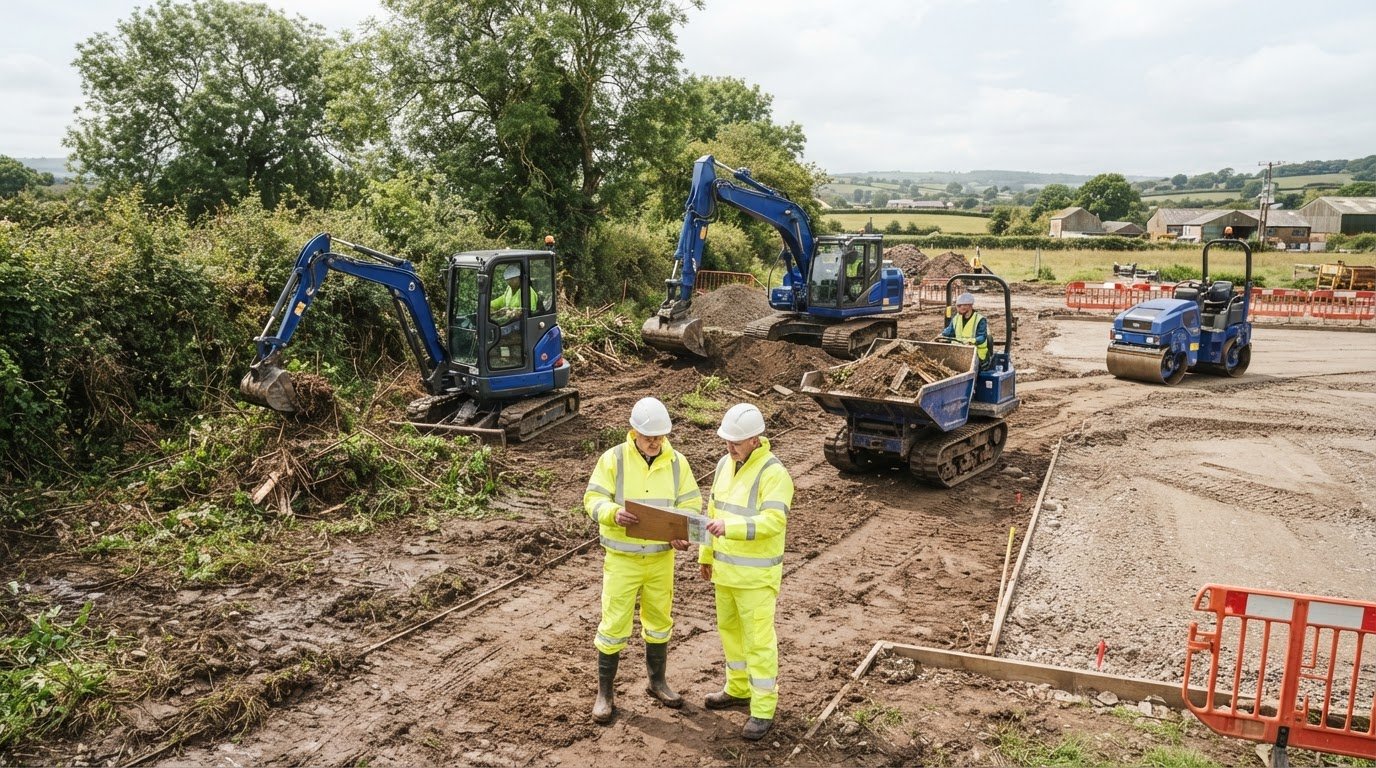
Maintain clear visibility and separation from pedestrians throughout every dumper movement.
Use this sequence for each material-handling task:
Confirm the route. Check that it remains clear and follows the site traffic plan. Look for changes such as new obstructions, vehicles or people entering the work area.
Move under control. Stay alert to pedestrians, obstacles and changing conditions. Keep the load positioned so it doesn’t block your view, and follow the manufacturer’s instructions for operating the dumper.
Tip in the planned area. Approach only when the tipping area and surrounding conditions are suitable, and follow the site’s arrangements for the task.
Park and secure the machine. Use the agreed parking area and follow the manufacturer’s instructions and site procedure before leaving the dumper.
What should operators do while moving a dumper?
Keep to the agreed route and watch for people, vehicles and obstacles, including at crossings and where sightlines are limited. Changes in site activity can affect a route that was previously clear, so remain alert rather than relying only on the original plan. If visibility is inadequate or the route becomes unsafe, stop the task in line with site procedures and seek direction before continuing.
Don’t try to compensate for poor visibility by carrying on slowly or changing the route without agreement. The site traffic plan provides a shared arrangement for vehicle movements and pedestrian access. Follow it, and use the site’s communication process if conditions require a pause or a route change.
How should operators finish a dumper task?
Before tipping, check that you’re at the planned area and that people and other activity won’t interfere with the operation. If conditions have changed, pause and follow the site process to reassess. Once the task is complete, park and secure the dumper as directed by the manufacturer and site procedure. Don’t rely on a familiar routine if the machine’s instructions specify a different method.
Report any damage, fault or change in the dumper’s condition through the site reporting process, even if it appeared during the final movement. Clear reporting helps the responsible site team decide what action is needed before the machine is used again. A safe finish is part of the working routine, not an afterthought.
Planning dumper hire for a site task? Arrange dumper hire with Rocket Rentals Ltd as part of your equipment planning.
Plan dumper hire around safe, reliable site operation
Safe dumper hire starts with a clear picture of the work. Before arranging equipment, define what materials need moving, where they’ll be loaded and tipped, and the route between those points. Include site conditions in your planning, since gradients, ground surface, pedestrian routes and access restrictions can all affect whether a dumper is suitable for the task.
Preparing this information helps you match the equipment to the work and its safe operating conditions, rather than focusing on the material-handling task alone. Consider:
The material: what you’ll move and where loading and tipping will take place.
The route: its surface, gradients, turning areas and any points where people and vehicles may cross.
The work area: the available space, tipping location and any restricted or changing areas.
The operating conditions: whether the planned movement fits the dumper’s safe working limits, as set out in the manufacturer’s information.
Share a practical description of the job, including any known changes to the route or work area. This gives the hire conversation a useful focus and connects the equipment choice to the site task. It also supports the wider best practices for operating a dumper: plan the machine, load and route as part of one operation.
What information helps match a dumper to the job?
Describe the material-handling task and the conditions the dumper will encounter. For example, explain whether the route includes gradients, soft or uneven ground, pedestrian routes or a tipping point near an excavation. These details help define the equipment requirement around both the work and its safe operating conditions. Avoid relying on a general description such as “moving materials across site” if there are specific access or tipping considerations.
The dumper must suit the job, route and planned working conditions. Use the manufacturer’s information for machine-specific limits, and make sure the site plan accounts for how people and other vehicles will move around the work area. Don’t assume a dumper suitable for one task will automatically suit another with different ground, gradients or access.
How does Rocket Rentals Ltd support dumper hire planning?
Rocket Rentals Ltd provides self-drive Dumper Hire for professional projects. The company places emphasis on inspection, a relevant consideration when planning reliable equipment for site work. Clear information about your task and site conditions helps keep the hire requirement focused on the work you need to carry out.
If you’re preparing a dumper hire requirement, discuss your dumper hire needs with Rocket Rentals Ltd.
Make your next dumper task safer from the outset
Make dumper planning part of the job setup, not something left until the machine is ready to move. Before the next task, agree who is operating, how the work area will be managed and what should happen if conditions change. A brief discussion with the team can help keep the plan clear as site activity shifts.
The best practices for operating a dumper are most useful when they shape decisions before, during and after each movement. Keep the manufacturer’s instructions and site procedures in view, and make stopping to reassess an accepted part of the routine whenever the task no longer feels safe.
If a dumper is part of your upcoming project, take the next step with a clear brief about the work and site conditions. Discuss dumper hire for your project with Rocket Rentals Ltd and plan your equipment requirement with confidence.
Frequently Asked Questions
Is it safe to operate a dumper on a slope?
It can be safe only if the dumper’s manufacturer guidance permits the gradient and the ground and load are suitable. Don’t assume a slope is acceptable because another machine has travelled over it. A change in surface or a loaded return journey may alter the conditions. If you can’t establish that the planned movement is within the machine’s safe working limits, don’t proceed until the task has been reviewed.
How often should a dumper be inspected?
Follow the inspection frequency and method set out in the manufacturer’s instructions and the site’s arrangements. There isn’t one interval that applies to every dumper and working situation. An inspection before use can help identify an issue before the machine enters the work area, while site procedures may require further checks or checks after a change in condition. Record and report findings through the relevant site process.
Can a dumper be used if the load blocks the operator’s view?
No. Don’t move the dumper if the load prevents you from seeing the route clearly. Ask for the load to be adjusted or the task to be changed so you can maintain a clear view while travelling. Take particular care before moving near a crossing, doorway or busy work area, where someone may enter your path. Don’t rely on another person’s directions as a substitute for following the site’s safe system of work.
What should you do if a dumper develops a fault during work?
Stop using the dumper and follow the site process for reporting the fault. If it’s safe to do so, leave the machine in a suitable position and secure it in line with the manufacturer’s instructions. Tell the responsible person what happened and describe any warning signs or change in performance. Don’t restart or continue using it until the fault has been assessed and the site’s process allows the task to resume.
What should operators do if pedestrians enter the dumper route?
Stop the dumper safely and give the pedestrian space to leave the vehicle route. Don’t try to pass them or assume they’ve seen you. Follow the site’s communication arrangements if the route remains obstructed, and wait until the way is clear before moving again. If pedestrians keep entering the route, notify the site supervisor so access arrangements can be reviewed before further dumper movements take place.
Can a dumper be used on a wet or muddy surface?
Not automatically. Wet or muddy ground can affect traction and stability, so assess the surface and planned movement before using the dumper. A route that was suitable when dry may become slippery or soft after rain or repeated traffic. If the machine may slide, sink or lose stable footing, stop and have the task reviewed. Use the manufacturer’s guidance and site procedures to decide whether conditions are suitable for continued work.
Comments