
Plan Project Equipment Needs by Estimating Task Time
What if a task that needs 16 hours of work takes five working days to finish? That can happen when the person assigned to it has other priorities. To plan equipment needs for a project, estimate the working time each task requires, then account for when the work can actually happen.
It’s easy to focus on the equipment list and overlook task timing. Booking equipment too early, too late or for longer than needed can disrupt the work programme. A useful plan links every item to a defined task, its duration and when it is needed on site.
This guide explains how to define project scope and deliverables, estimate task durations and schedule equipment around dependencies. You’ll also learn how to adapt the schedule when requirements or timings change, keeping equipment planning aligned with the work as it progresses.
Table of Contents
Defining project scope and deliverables
Define the work, its deliverables and dependencies before assigning equipment or dates. In the UK, DSEAR addresses workplace risks from hazardous substances, according to the Health and Safety Executive.
Breaking work into project tasks
Breaking work into tasks means dividing the agreed scope into activities with clear outputs. This shows where equipment is needed and how one activity affects the next. A work breakdown structure can map tasks to deliverables, such as preparing ground before excavation. Estimate the effort for each task separately from its calendar duration. For example, 16 hours of work may span five working days when someone can only devote part of each day to it.
Setting aims and client requirements
Project aims describe the result the work should achieve; client requirements define what that result must include. Record the required outcomes, assumptions and constraints in the project management plan. Then prioritise requirements so the team can make clear decisions when time or resources compete. For example, a groundworks brief might specify a prepared area as the deliverable, with access and sequencing requirements shaping the work. These details define scope and guide scheduling.
Defining the equipment schedule
An equipment schedule records what equipment is needed, where it will be used and when each task needs it. Link each item to a task and its dependencies, rather than listing machinery without context. This makes the sequence of activities visible and helps prevent clashes between work stages. Include relevant specifications and quantities so the planned equipment suits the task and site conditions.
Setting measurable quality expectations
Quality expectations describe how the completed work will be assessed. Make each expectation specific and measurable, such as defining the required finish or confirming that a completed area meets the agreed dimensions. Connect acceptance criteria to the client’s requirements, available resources and project constraints. Clear criteria help the team know when a task is complete and whether it has achieved the expected result.
What Is an Equipment Schedule?
An equipment schedule links machinery to project tasks, dates and locations. In construction or manufacturing, it helps teams coordinate equipment use with milestones and the wider project lifecycle.
Scheduling equipment around project work
Scheduling equipment means aligning each item’s use with task dates, milestones and dependencies. If site preparation must finish before installation, schedule the installation equipment for the later activity. This sequence helps avoid trade conflicts and downtime. A Gantt chart can show when each equipment type is assigned, making overlaps and gaps easier to spot as the project develops.
Recording equipment schedule information
For each item, record its related task, quantity, location and required dates, alongside relevant specifications. These might include load capacity, power requirements, dimensions or clearance needs. Add an equipment ID or tag if items need tracking. Clear entries help teams match equipment to site conditions, allocate people with the right skills and spot clashes before they affect a milestone.
For availability and delivery planning, record the supplier’s stated lead time and expected delivery date, then compare them with the task start date. Track changes to delivery commitments and past delivery performance in the project record to assess reliability. This keeps scheduling decisions based on current information, rather than an outdated dashboard entry.
A shared spreadsheet or project software can show scheduled use, delivery status and location. Update it as equipment moves through the project, from planned arrival to final use. For example, a dashboard can flag when two teams need the same item at once or when a task depends on equipment that has not arrived.
Record practical arrangements alongside dates: where equipment will be stored, how it will reach the work area and when routine maintenance is due. Note who coordinates each arrangement and when equipment leaves the site. Planning these details helps teams manage handovers and keep equipment movements aligned with the work programme.
Adapting the plan as project needs change
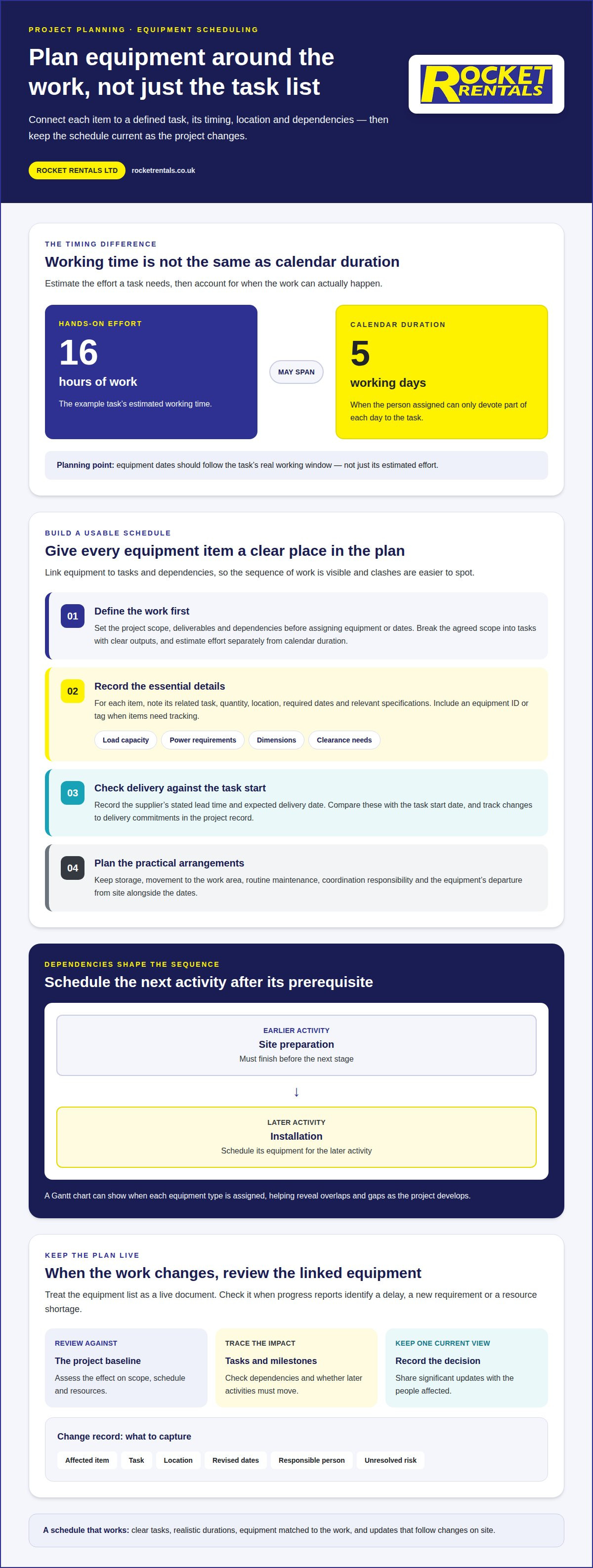
An equipment plan should change when project scope, task sequence or site conditions change. Treat the tools and equipment list as a live document, not a record completed only during planning. For example, if ground preparation takes longer, move the linked equipment dates and review which later activities depend on it.
Assess each proposed change against the project baseline for scope, schedule and resources. Identify the affected tasks, milestones and equipment bookings, then record the decision and its reason. If a delivery moves, establish whether installation or another dependent activity must also move. This lets stakeholders understand the likely effect on the programme before operations are disrupted.
Keep change documentation alongside the equipment schedule. Record the affected item, task, location, revised dates, responsible person and any unresolved risk. For example, if a work area becomes unavailable, note where equipment will be used instead and whether this changes access or sequencing. Clear records give the team one current view and prevent conflicting versions.
Review the schedule whenever progress reports identify a delay, new requirement or resource shortage. Compare actual task progress with expected dates, then revise equipment timing and duration as needed. Check dependencies too: a postponed excavation task may shift the dates for follow-on work. This helps identify changes that could affect the critical path.
Share significant updates with the people whose work or decisions are affected. A revised delivery date may matter to the site team, while a scope change may need the client stakeholder’s agreement. Set a regular review point in project meetings and update the equipment list after each agreed change. This keeps planning connected to the work as it develops.
Create and update the tools and equipment list throughout the project. Project plans should be maintained continuously, not treated as a one-time planning exercise.
How do you create an equipment schedule and timeline for a project?
Start with the project task sequence, then connect each equipment requirement to the activity that needs it. This makes the schedule a practical planning tool, rather than a separate list that can fall out of step with site work.
Build an equipment register with one entry for each item or equipment type. For every entry, record:
The task or activity it supports, and the quantity required.
The date needed, expected delivery date and any delivery lead time.
Its location, relevant specifications and the person responsible.
Any training requirement and the expected period of use.
These fields connect equipment decisions to the project timeline. For example, equipment needed for site preparation must arrive before that activity starts, not simply before the project’s final milestone.
Plot tasks and equipment use on a Gantt chart, a timeline showing activities and their dates. Show dependencies, such as site preparation before installation, and mark key milestones. This makes overlaps visible. If two activities require the same equipment at once, the schedule exposes the conflict before it affects delivery.
Use the schedule to identify shortages early. Compare each planned date with delivery lead times and the dates of dependent tasks. Prioritise equipment needed for critical-path activities, because delays there can affect the project’s minimum duration. A project schedule also helps explain why each equipment resource is required.
Keep the timeline current as dates or requirements change. If delivery shifts, update the relevant task, dependent activities and milestone dates together. A shared spreadsheet or scheduling tool can make changes visible to the team, while a named owner helps keep each equipment entry up to date.
For planned equipment needs, discuss equipment for your project with a hire team once your schedule identifies the items and dates required.
Rocket Rentals Ltd
Rocket Rentals Ltd is a nationwide, family-run business that can match your site work with suitable plant hire. Mini Digger Hire and Excavator hire provide machinery for construction work, while Roller Hire supports ground preparation. Welfare Unit Hire can meet site welfare needs. Plant hire is available on a weekly basis.
Share your tasks, expected hire period and site requirements to discuss suitable equipment. Ask Rocket Rentals Ltd about an inspection before work begins, and contact the company to discuss your project schedule and hire arrangements.
Put your project plan into action
A useful equipment plan gives the project a clear starting point, but its value depends on how well it supports decisions on site. Knowing how to plan equipment needs for a project means treating the schedule as part of the working programme, not an isolated document.
As work gets under way, use the agreed plan to keep decisions consistent across the team. Assigning clear ownership for schedule updates helps everyone identify the current arrangements and prevents outdated information from guiding the next task.
With a practical plan in place, you can approach the work with greater clarity. Keep the schedule useful, current and connected to the project’s changing priorities.
Frequently Asked Questions
What steps are involved in planning equipment needs for a project?
Start by collecting the site brief, access details and known constraints, then identify what information is still needed before making equipment decisions. Assign someone to resolve each gap, such as confirming storage space or delivery access. Keep decisions and approvals in one project record. This gives the team a clear reference when requirements are reviewed or responsibilities change.
How do you estimate the type and quantity of equipment a project requires?
Match equipment capability to the material, working conditions and required output. Check practical limits such as site access, ground conditions, working space, and the equipment’s reach or capacity. Then consider whether attachments or different equipment types are needed for the planned work. These checks help avoid choosing machinery that cannot operate effectively in the conditions it will face.
How can you keep equipment records useful during a project?
Keep a record of each item’s condition, inspection findings, faults and any action taken. Note who reported an issue and whether it affects the next planned use. For example, a fault recorded after one shift should be visible before another team relies on that equipment. Clear, current records support handovers and help the project team make informed decisions about equipment readiness.
How should equipment uncertainty be handled in project planning?
Identify uncertainties that could change equipment requirements, such as difficult ground conditions or restricted site access. For each, record its possible effect and a practical response, such as changing the work sequence or allowing time to reassess the equipment choice. Review these assumptions as new site information becomes available. This keeps contingency planning tied to real project risks rather than guesswork.
What UK health and safety rules apply to project equipment?
DSEAR addresses workplace risks from hazardous substances.
How should equipment needs be included in project planning?
Include equipment needs alongside staff effort, licences, travel and facilities. Allow for contingencies, using historical data from similar projects to help plan what may be needed.
Comments