
Bulk Excavation Guide: Choosing the Right Plant
Choosing the biggest machine on site isn’t always the quickest way to keep bulk excavation moving. The right combination depends on what needs digging, where the excavated material will go and what the ground needs before the next stage begins. This bulk excavation equipment guide explains how to match plant to each task, so you can plan the sequence rather than select machines in isolation.
It can be difficult to judge whether you need an excavator, mini digger, dumper, roller or attachment, especially when access and working space are limited. A mismatch can interrupt the flow between excavation, material movement and ground preparation. This guide explains the main role of each machine and how to plan a practical combination around your project stages.
It also covers what to prepare for self-drive plant hire, from site access and timing to the work sequence. Rocket Rentals provides self-drive plant hire for professional projects, with inspection as a practical part of preparing equipment for work. Use these points to plan with confidence and match the machines to the job ahead.
Table of Contents
What bulk excavation involves and why the work sequence matters
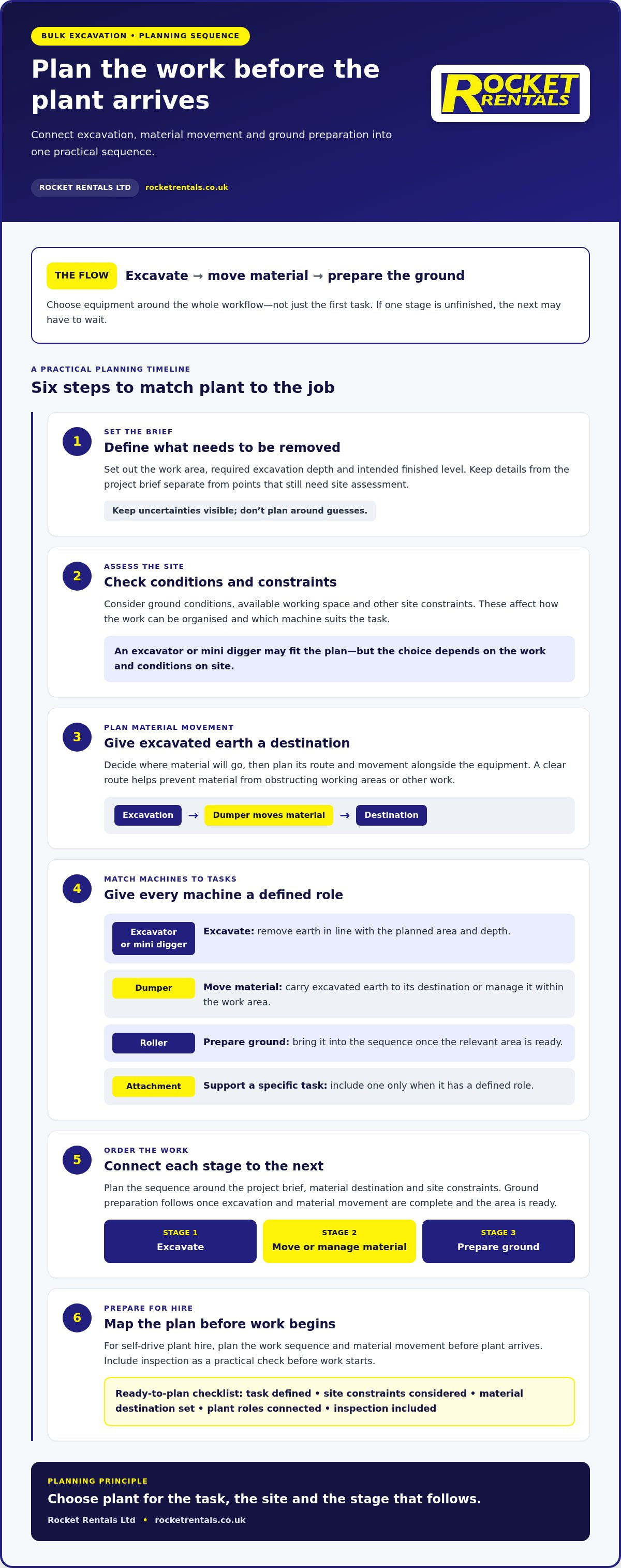
Bulk excavation is the planned removal and movement of earth across a project area to prepare the site for the work that follows. Unlike a single isolated dig, it involves coordinating excavation, moving or placing material, and any required ground preparation as connected stages.
Build the equipment plan around that sequence. A machine selected for digging needs to suit the work area and ground conditions, and the material it removes needs a clear destination. If the next stage is not ready, spoil can obstruct working space and interrupt the job. Planning the stages together helps you identify what needs to happen, and in what order, before plant arrives.
Which project requirements shape bulk excavation planning?
Start with the intended work area, required excavation depth and destination for the material. Then consider ground conditions and site constraints, as these affect how the work can be organised. An excavator or mini digger may form part of the plan, but the right choice depends on the task and site, not on a general assumption about what a machine can do. For background on machine types, see this overview of types of excavators.
Separate details established in the project brief from points that still need site assessment. The excavation area and intended finished level, for example, may already be defined, while the nature of the ground may need closer assessment before you settle the work plan. Keep uncertainties visible rather than building the equipment plan around guesses.
How does the work sequence affect equipment choice?
Set out the main stages in order: excavate the material, move it to its destination, then prepare the ground for the next part of the project. The equipment roles need to connect. Excavation creates material that must be moved or managed, and ground preparation follows once the relevant area is clear and ready.
If one stage falls behind, the next may have to wait. Material movement becomes harder when routes or working areas are blocked, and ground preparation cannot proceed smoothly if excavation is unfinished. Choose equipment to support the whole workflow, not just the first task. The order may change with the project brief, material destination and site constraints, so map those factors before settling on a combination.
Use this bulk excavation equipment guide as a planning framework: define what must be removed, establish where it will go, and match plant roles to the stages that follow. A clear sequence gives you a practical basis for comparing equipment options.
Bulk excavation equipment: match each machine to its job
Give each machine a defined role in the project plan. Excavators and mini diggers handle excavation, dumpers support material movement, and rollers are used for ground preparation. Excavator attachments can support particular tasks, depending on the work planned. Thinking in these connected roles helps you avoid choosing plant as a list of separate machines without a clear purpose.
Equipment guides may cover a wide range of heavy equipment used in construction, including machines for tasks beyond bulk earthworks. For your plan, focus on what the site needs at each stage and distinguish general industry examples from Rocket Rentals’ relevant hire categories: excavators, mini diggers, dumpers, rollers and excavator attachments.
What role does an excavator play in bulk earthworks?
An excavator removes earth in line with the planned area and depth. Whether an excavator or mini digger is the better fit depends on the work and conditions on site. Consider the space available, the areas to be excavated and how digging connects to the next stage. Don’t assume a machine is suitable based on its category alone. Plan around the task.
A mini digger is one excavation option, not an automatic solution to every restricted-space challenge. Let your project brief and site assessment guide the choice. If you’re comparing this category for a project, the mini excavator hire guide can help you consider its role alongside the other plant involved.
How do dumpers, rollers and attachments fit the plan?
Once earth is excavated, it needs to be moved to its destination or managed within the work area. A dumper supports that movement, connecting the excavation task with the material’s next location. Plan the route and destination alongside the equipment so that material movement doesn’t obstruct other work.
A roller belongs at the ground-preparation stage, once the relevant area is ready. Its role is distinct from digging or carrying spoil. Timing matters: bringing ground-preparation plant into the sequence before excavation and material movement are complete can complicate the workflow.
Attachments are task-specific additions to an excavator. Their purpose is to support the planned work, so include one only when it has a defined role. Don’t assume a single attachment will suit every excavation job.
In this bulk excavation equipment guide, the key is to match each category to a stage: excavate, move material, then prepare the ground. Rocket Rentals offers self-drive plant hire across these equipment categories, helping you plan plant around the work instead of selecting machines without a clear role.
How to compare equipment options for your bulk excavation project
Compare plant against the work it needs to do, not just its name or general category. One machine won’t necessarily cover every stage: excavation, moving material and preparing the ground are different tasks. Equipment suitability depends on the task and site conditions. Use the table to identify the roles your project may need, then consider how each fits the site.
Which site constraints should guide the comparison?
Start with the available working space, access routes and area where the work will take place. Then consider ground conditions, the required excavation and the intended destination for the material. These factors help you decide which equipment roles make sense without relying on assumed machine dimensions or ground limits.
Separate confirmed details from points that still need site assessment. You may know the planned work area and where material should go, while ground conditions still need assessment. Keeping that distinction clear helps prevent assumptions from becoming fixed parts of the hire plan.
When should you plan more than one equipment role?
If your project includes excavation, material movement and ground preparation, consider how each task will be handled and how the stages connect. An excavator or mini digger may handle digging, a dumper may support material movement, and a roller may be relevant for later ground preparation. Not every project needs all these roles. The scope and site conditions determine the plan.
Use this comparison as a working tool within your bulk excavation equipment guide. Note each task, where it sits in the sequence and which constraints affect it. This gives you a clearer basis for planning plant around the job, rather than expecting one machine category to cover every stage.
Plan the bulk excavation sequence before equipment arrives
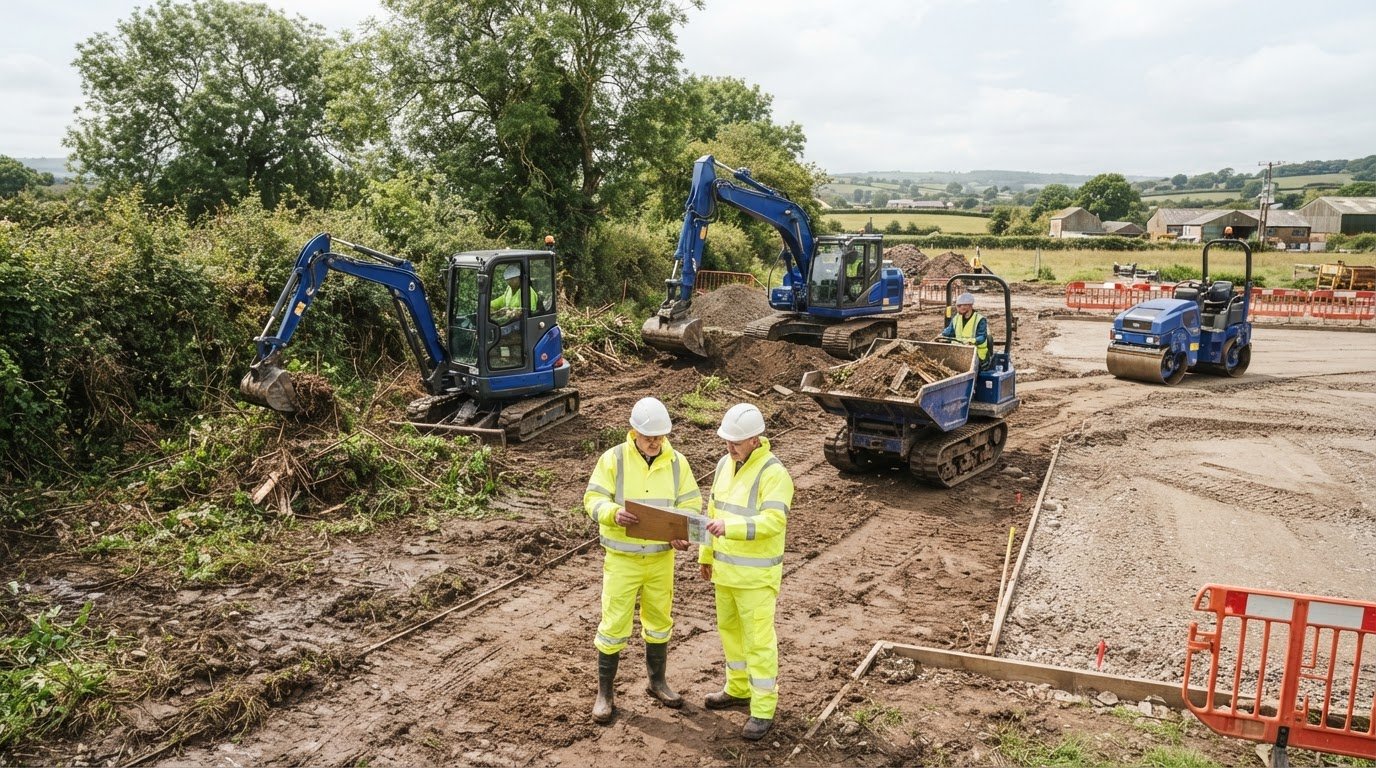
A clear sequence helps you coordinate plant with the work instead of reorganising the site around equipment after it arrives. Before arranging self-drive hire, list the tasks, identify where excavated material will go, assign a role to each machine and plan the handover. This gives everyone a shared view of the job and helps identify practical issues, such as access routes crossing active work areas.
Define the tasks, map material movement, plan machine roles and prepare for handover before work begins. Use that order as a starting point, adjusting it to your project brief and site conditions.
Define the tasks. Set out the areas to be excavated and what needs to happen in each one.
Map material movement. Identify where excavated material is intended to go and how it will move from the work area.
Plan machine roles. Match plant to excavation, material movement and any ground-preparation work in the sequence.
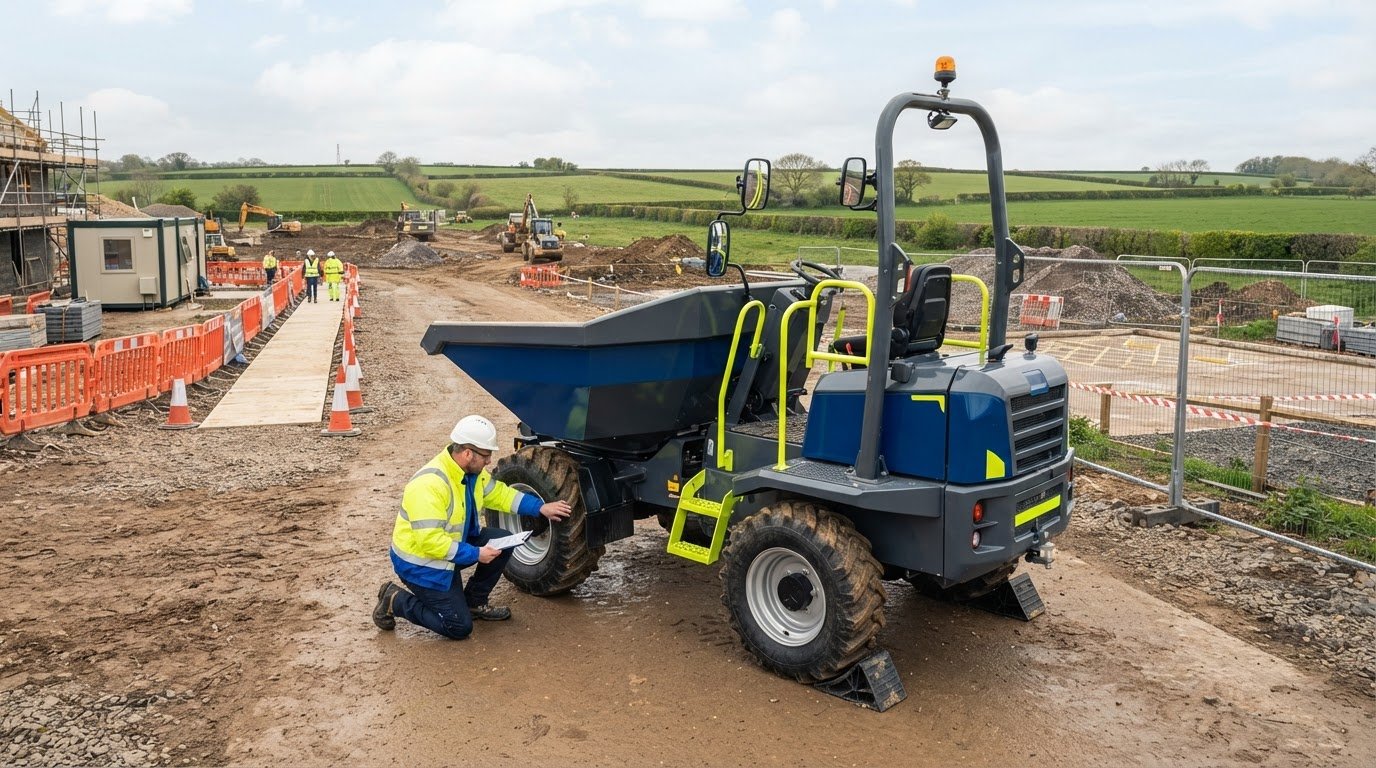
Prepare for handover. Allow time to understand the equipment’s condition through inspection before work starts.
Keep the plan practical. Mark the working areas and routes, and consider whether a route or access point could become obstructed as work progresses. The order of tasks may also depend on which areas must be clear before the next stage can begin.
How can you coordinate excavation and material movement?
Link the planned excavation area to the destination for the spoil. Consider the dumper role alongside the excavator or mini digger, so material has a planned route rather than accumulating where it could interfere with other work. Check how the route fits around site access and active work areas. The plan should reflect the project, not assume fixed cycle times, output levels or machine quantities.
What should you prepare for equipment inspection and handover?
Make inspection part of the handover before work starts. An inspection is a detailed examination of equipment to verify safety and operational condition. Take time to understand the condition of the plant you’ll be using and how it fits the planned task. For related planning, Rocket Rentals’ excavator hire guide can help you consider the excavator’s place in the overall sequence.
Clear communication at handover supports an orderly start. The person receiving the equipment should understand its intended role and where it is planned to work. Don’t wait until equipment arrives to decide the sequence: access, routes and task order are easier to coordinate beforehand.
Rocket Rentals provides self-drive plant hire for professional projects, with hire terms that are extremely flexible, removing time constraints, and discounts the more days you hire for. If your sequence is taking shape, plan your self-drive plant hire around the tasks and machine roles your project requires.
Arrange self-drive plant hire around your project plan
A useful hire discussion starts with the job, not an assumed machine specification. Set out what needs excavating, where the material will go, which areas need ground preparation and how the tasks fit together. Then consider site access, working space and the order in which each area will be available. This helps shape a self-drive plant plan around your project’s requirements.
Use this preparation list to organise the information you’ll need:
Tasks: describe the work each machine needs to support.
Sequence: note what happens first and which stages depend on earlier work being complete.
Material movement: identify the intended destination and the route from the excavation area.
Site constraints: describe access, working areas and any known ground conditions that affect the plan.
With those points set out, you can explain equipment roles clearly and reduce the risk of arranging plant that doesn’t fit the work sequence.
What should you have ready when arranging plant hire?
Prepare a concise project brief covering the tasks, sequence and site constraints. Include where excavation is planned and how material will be moved, as these details connect the digging task with the next stage. Rocket Rentals provides self-drive plant hire for professional projects, with excavators, mini diggers, dumpers, rollers and excavator attachments among its relevant hire categories. Choose equipment according to your job requirements, not an assumed specification.
Include handover in your plan. Rocket Rentals highlights inspection as a practical consideration when equipment is prepared for work. Allow time to understand the equipment’s condition before starting, and make sure its planned role is clear to the people organising the site sequence.
How can flexible hire terms support project planning?
Project stages don’t always fit a rigid timetable. Rocket Rentals’ hire terms are extremely flexible, removing time constraints, and the business offers discounts the more days you hire for. This flexibility can help you arrange self-drive plant hire around the planned duration of the work, rather than treating each task as separate from the wider project schedule.
Rocket Rentals brings 35 years of experience to plant hire, alongside a focus on inspection and reliable equipment. Use this bulk excavation equipment guide to explain your requirements and connect the right equipment categories to each stage, from excavation to material movement and ground preparation.
Ready to discuss your project sequence and equipment requirements? Discuss your self-drive plant hire needs with Rocket Rentals through the company website.
Take your excavation plan to the next step
Before arranging plant, turn your project notes into a clear brief: what the work needs to achieve, how the site will be used and which details still need resolving. This gives you a practical starting point for discussing equipment requirements and keeps decisions tied to the job rather than assumptions. A well-prepared brief can also make it easier to plan around changes as the work progresses.
Use this bulk excavation equipment guide to review your sequence and identify gaps in the plan. Consider what information will help you explain the site layout, access and timing, so your self-drive hire discussion can focus on the requirements that matter to your project.
When you’re ready to move from planning to the next step, discuss your bulk excavation equipment requirements with Rocket Rentals. A clear conversation about the work ahead can help you approach your project with confidence.
Frequently Asked Questions
What equipment is used for bulk excavation?
Bulk excavation may involve excavators or mini diggers for digging, dumpers for moving material and rollers for ground preparation. Excavator attachments can support task-specific work. You won’t necessarily need every category on every project. For example, if your project doesn’t include a separate ground-preparation stage, a roller may not form part of the equipment plan. Choose plant according to the tasks in your project brief.
How do I choose equipment for a bulk excavation project?
Choose equipment by matching the work to the site, rather than starting with a preferred machine. In this bulk excavation equipment guide, the practical starting point is to note the areas to be excavated, access routes, ground conditions and where material will go. A site plan marked with these details can help you identify constraints and explain your requirements clearly when arranging self-drive plant hire.
Can one excavator handle every stage of bulk earthworks?
No single excavator should be assumed to cover every project stage. Its role is excavation, while moving material and preparing the ground are separate tasks. Your plan may involve other equipment categories if those stages are part of the brief. An excavator can dig an area, for example, but the plan still needs to account for where the spoil goes and how the site will be prepared afterwards.
What role does a dumper play in bulk excavation?
A dumper supports the movement of excavated material between the work area and its intended destination. Before planning this role, identify the route and consider whether it passes through areas where other work is taking place. A route that crosses an area scheduled for later preparation may affect the order of tasks. The dumper’s role is to fit the material movement plan, not replace the excavation machine.
When are rollers used during excavation work?
Rollers are used for ground preparation when that stage is part of the project plan. They are generally considered after excavation in the relevant area is complete and any required material movement there has been addressed. The exact timing depends on the work brief and site conditions. If different parts of the site are at different stages, plan where roller work can proceed without interfering with unfinished excavation or movement routes.
What should I consider before arranging self-drive plant hire?
Prepare a clear description of the tasks, their order and the site conditions that may affect access or working space. Include where excavated material is going and which areas need preparation, so the equipment plan reflects the whole job. Rocket Rentals Ltd provides self-drive plant hire for professional projects. Arranging self-drive hire and proving operator competence are separate matters, so plan both as part of your preparations.
How does equipment inspection fit into hire planning?
Inspection gives you an opportunity to understand the equipment’s condition before work begins. Include it in your handover planning, rather than treating it as an afterthought once the site sequence is under way. Make sure the plant’s intended task is clear to the people coordinating the work. If anything about the equipment’s condition is unclear during handover, resolve that before putting it into the planned work sequence.

Comments