
Buying vs Renting Construction Equipment: The Site Manager’s Guide
Updated: Sep 27
Owning a fleet is often viewed as a sign of success, but for many site managers, it actually represents a significant drain on liquid capital and operational focus. The debate of buying vs renting construction equipment often comes down to more than just the initial invoice. You likely feel the pressure of managing high upfront costs while trying to avoid unexpected downtime caused by machine failure. It's a difficult balance to maintain, especially when you also have to coordinate complex routine maintenance schedules and transport logistics between sites.
As a family-run business, we understand that you need reliability to keep your project on track. This guide helps you discover the financial and operational factors that determine whether purchasing or plant hire is the right choice for your next project. We will provide a clear framework for calculating ROI and explain how to access the latest machinery without capital risk. You'll see how professional inspection and detailed service records can reduce your maintenance burden and ensure every machine is job-ready from the moment it arrives.
Table of Contents
Buying vs Renting Construction Equipment: The Financial Landscape
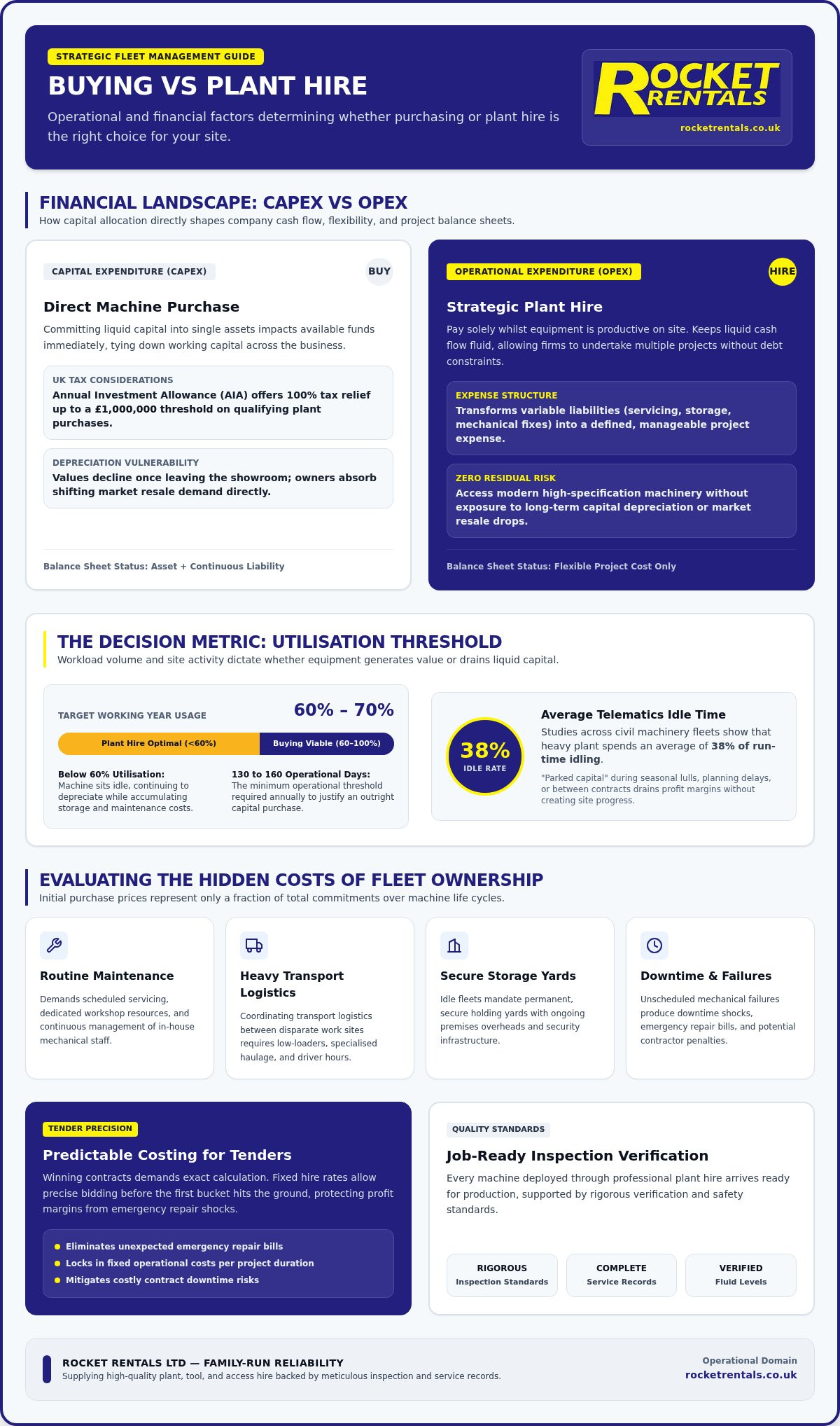
Deciding between buying vs renting construction equipment is a fundamental financial choice that shapes your project's bottom line. When you purchase a machine, you're committing to Capital Expenditure (CapEx). This ties up significant funds in a single asset. Whilst UK tax rules like Full Expensing offer capital allowances for new purchases, the immediate impact on your bank balance is heavy. In contrast, plant hire is an Operational Expenditure (OpEx). It allows you to pay for the machinery only whilst it's productive on your site. For growing firms, this distinction is vital. It keeps your cash flow fluid, allowing you to take on multiple projects without being restricted by the debt of a large fleet.
Plant hire is the strategic rental of heavy machinery to avoid ownership burdens. While an owned machine is technically an asset on your balance sheet, it's also a constant liability. You must account for storage, insurance, and the ongoing cost of routine maintenance. By choosing to rent, you transform these unpredictable variables into a single, manageable expense. This shift from an asset-heavy model to an expense-based model provides the flexibility needed to scale your operations up or down as demand changes.
The Burden of Capital Depreciation
Machinery begins to lose its market value the moment it leaves the showroom. This capital depreciation is a silent cost that many site managers overlook until they attempt to sell the equipment. Resale values fluctuate based on market demand and the specific condition of the machine. If you own a fleet, you're vulnerable to these shifts. With plant hire, you avoid this risk entirely. You always have access to modern, high-specification equipment without worrying about the eventual drop in its resale price. As a family-run business, we take pride in maintaining a fleet that meets rigorous inspection standards; this ensures you get the performance of a new machine without the depreciation headache.
Predictable Costing for Tenders
Winning a contract requires precision. When you're preparing a tender, having fixed hire rates allows for much more accurate bidding. You know exactly what the equipment will cost for the duration of the project before the first bucket hits the ground. If you own your machinery, a single mechanical failure can lead to expensive emergency repairs and significant downtime. These financial shocks can quickly erode your profit margins. By using our self-drive hire services, you eliminate the threat of unexpected repair bills. You receive equipment with full service records and checked fluid levels. This gives you the confidence that your project costs will remain exactly as planned.
When Buying Construction Machinery Makes Sense
While the flexibility of plant hire suits many projects, ownership remains a viable strategy for specific operational models. The decision often rests on a single metric: the utilisation threshold. For larger corporations with a consistent pipeline of work, purchasing equipment makes sense when a machine is expected to be active on site for at least 60% to 70% of the working year. This equates to roughly 130 to 160 operational days. If your workload demands a specific excavator or telehandler on every single project, the long-term tax advantages can be persuasive. Under current UK rules, the Annual Investment Allowance (AIA) provides 100% tax relief on qualifying plant purchases up to a £1,000,000 threshold, which can significantly offset the initial capital outlay.
Ownership also provides the benefit of 24/7 availability for specialised, bespoke machinery. If your work involves highly niche industrial tasks that require unique modifications, finding suitable equipment in a standard rental fleet is difficult. In these rare cases, having the machine permanently in your yard ensures it is ready the moment a project begins. However, for most standard groundwork or access requirements, the choice between buying vs renting construction equipment usually leans towards the latter to avoid the administrative and mechanical burdens of a self-owned fleet.
The High-Utilisation Argument
A machine only generates value when the engine is running and the work is progressing. The primary risk of ownership is "parked capital". This occurs when a machine sits idle in your yard during seasonal lulls, planning delays, or between contracts. Even when not in use, an owned machine continues to depreciate. Telematics studies across civil machinery fleets show that heavy plant spends an average of 38% of its run-time idling. When you factor in the cost of storage, insurance, and the necessity of keeping up with routine maintenance, a machine that falls below the 60% utilisation mark quickly becomes a financial drain rather than an asset.
Customisation and Branding
Some firms choose to buy machinery to maintain brand consistency across high-profile sites. Owning your fleet allows you to paint equipment in company colours and apply permanent livery. This can serve as a mobile billboard for your business. Beyond aesthetics, ownership allows for permanent modifications, such as specific hydraulic setups or safety systems tailored to a unique site environment. While these benefits are clear for specialist contractors, most site managers find that a "core and flex" model is more efficient. You can maintain a small core of owned assets while using self-drive plant hire to handle variable project demands without the long-term commitment of a purchase.
Eliminating Routine Maintenance and Downtime
Mechanical failure is one of the most common causes of project delays. If an owned excavator breaks down, the responsibility for the repair sits squarely with you. You must source parts and coordinate the labour. With professional plant hire, the responsibility for upkeep is entirely removed from your plate. We handle all routine maintenance, ensuring that fluid levels are checked and filter replacements are carried out before the machine reaches you.
Our modern fleet features the latest technology, which is often more reliable than older, owned machinery. When you choose excavator hire South West, you're getting equipment that is ready to work. If a technical issue does arise, a hire partner can often swap the machine quickly. This flexibility prevents the costly downtime that occurs when a project stalls due to a single failed component. You aren't stuck with a broken asset; you're supported by a fleet that moves with your needs.
Safety, Compliance, and Inspection
Health and safety compliance is a major administrative burden for site managers. Every piece of machinery must meet strict standards, including LOLER and PUWER regulations. When you own your fleet, keeping these certifications up to date is your job. Hire simplifies this process significantly. Every piece of hire equipment must have verifiable service records that you can present during a site audit.
We take safety seriously. Every machine undergoes a rigorous inspection before it leaves our yard. This examination verifies the operational condition and safety features of the unit. It provides you with the peace of mind that the equipment is compliant and safe for your operators to use. This level of professional oversight is difficult to replicate with an in-house fleet unless you have significant resources dedicated to compliance. By partnering with a family-run specialist, you ensure that your site meets all safety requirements without the extra paperwork.
Hidden Costs: Transport, Storage, and Technology
Owning a fleet introduces logistical challenges that extend far beyond the initial purchase. When you weigh up the choice of buying vs renting construction equipment, you must consider how a 20-tonne excavator or a large telehandler will move between project locations. Moving heavy plant requires specialised low-loader transport and qualified drivers. These logistics lead to significant administrative work and added fees for every site transition. Similarly, owning a welfare unit sounds straightforward until you consider the requirement for regular waste disposal and water replenishment. Hiring a welfare unit removes this burden, as the hire partner manages the servicing schedule on your behalf and ensures the unit meets current site compliance regulations.
The Logistics of Transport and Storage
Storage is an often overlooked factor in the ownership model. When machinery isn't active, it needs a secure, high-specification depot to protect it from theft and weather damage. These facilities come with high insurance premiums and security costs. By choosing plant hire, you effectively outsource these storage risks. Hiring locally to your project also reduces your carbon footprint and eliminates long-distance transport fees. It ensures that the equipment is only on your books whilst it is actually working. Our family-run business handles the delivery and collection, so you don't have to worry about the complexities of moving heavy machinery through busy urban centres.
Avoiding Technological Obsolescence
Technology in the construction industry moves at a rapid pace. A machine purchased today may be surpassed by newer models within just a few years. Modern plant hire fleets frequently update their machinery to include the latest fuel-efficient engines and advanced safety features. For example, a five-year-old digger you own will likely lack the engine efficiency of a new hire unit meeting the latest Stage V emissions standards. This makes your owned fleet less competitive on sites with strict environmental requirements.
You can also access specialised equipment only when the specific phase of your project requires it. If you need a scissor lift for a short-term task, access hire provides the exact reach you need without the long-term commitment of a purchase. This prevents you from being stuck with obsolete technology that is less productive and more expensive to run. You always have the right tool for the job, backed by a team that understands the latest industry standards.
If you want to avoid these logistical hurdles and access the latest machinery, you can view our range of self-drive plant hire today to see how we can support your next project.
Making the Decision: A Strategic Framework
Choosing the right path requires a balanced look at your current project pipeline and long-term business goals. The debate over buying vs renting construction equipment isn't solved with a one-size-fits-all answer. Instead, it demands a methodical evaluation of your operational capacity. By following a structured framework, you can move away from guesswork and make a decision based on clear financial and logistical data. This ensures your capital is working as hard as your machinery on site.
The 5-Step Decision Checklist
Before committing to a purchase or signing a hire agreement, work through these five steps to determine the most efficient route for your site:
Step 1: Forecast utilisation for the next 12 months. Review your upcoming contracts. If a machine will spend more than 30% of its time idle in your yard, plant hire is almost always the more cost-effective choice.
Step 2: Assess internal maintenance capacity. Do you have a dedicated mechanical team and a workshop capable of handling filter replacements and emergency repairs? If not, fleet owners must rely on external support—such as heavy equipment repair specialists like Ms. Hydraulics LLC—otherwise the maintenance burden of ownership will likely lead to project delays.
Step 3: Evaluate storage and transport logistics. Consider where the machine will be kept between jobs. Factor in the cost of low-loader transport and the security risks associated with storing high-value plant.
Step 4: Consider site-specific needs. Every project has unique requirements. Assess whether you need specialised attachments or welfare units that may not be necessary for your next contract.
Step 5: Compare the total cost. Look at the total cost of ownership, including insurance, depreciation, and routine maintenance, against a fixed weekly hire quote.
Why Partner with Rocket Rentals Ltd?
We believe that a hire partner should be a dependable extension of your own team. As an independent, family-run business, we understand the daily pressures site managers face. We prioritise reliability and safety, ensuring that every machine in our fleet meets the highest standards. Our rigorous inspection process means your equipment arrives on site in optimal condition, backed by detailed service records and checked fluid levels.
Our fleet is designed to support professional contractors across various project phases. Whether you require a self-drive telehandler for material handling, a dumper for muck-away, or mini excavator hire for precise groundwork, we provide the modern machinery you need. You get the benefit of the latest technology without the capital risk or the long-term storage headache. Choosing between buying vs renting construction equipment is a strategic decision. If you're unsure about your fleet requirements, contact our expert team today. We're here to provide practical advice and help you choose the right equipment for a successful, efficient project.
Optimising Your Fleet Strategy for Success
The choice between buying vs renting construction equipment often determines the long-term financial health of your business. By shifting from a capital-heavy ownership model to a flexible hire strategy, you protect your cash flow and remove the logistical burdens of transport and storage. You also guarantee that your team always works with modern, reliable machinery that meets current safety standards. This approach allows you to scale your fleet according to the specific needs of each project phase without the risk of parked capital.
As an independent, family-run specialist, we're committed to providing more than just machinery. Our extensive range of modern self-drive plant undergoes a rigorous pre-hire inspection to ensure maximum uptime on your site. We provide the peace of mind that comes from verifiable service records and a fleet maintained to professional standards. If you want to reduce your capital risk and improve site efficiency, contact Rocket Rentals Ltd today to discuss your next project and get a reliable plant hire quote. We look forward to supporting your operational success with dependable equipment and expert advice.
Frequently Asked Questions
Is it cheaper to rent or buy construction equipment for a long-term project?
Renting is often more cost-effective if the machine's utilisation falls below the 60% to 70% threshold, even on long-term projects. Ownership requires a massive capital outlay and carries the risk of depreciation and storage costs during project lulls. When you weigh up buying vs renting construction equipment, you must consider the total lifecycle cost. Rental provides fixed weekly costs that make project budgeting predictable and protect your business against market fluctuations.
What are the main benefits of plant hire for small construction firms?
Small firms benefit from plant hire by preserving cash flow and avoiding the high entry costs of fleet ownership. It allows smaller contractors to take on larger projects by accessing modern telehandlers or excavators without debt. You also eliminate the need for a central depot or specialised transport vehicles. This flexibility means you only pay for machinery whilst it is productive, reducing the overheads that often burden growing construction businesses.
Does the hire company handle routine maintenance and fluid levels?
Yes, the hire company takes full responsibility for routine maintenance and ensuring fluid levels are correct before delivery. We perform all necessary filter replacements and mechanical checks to ensure the machine is job-ready. This removes the need for you to employ an in-house mechanical team. You can focus on the project whilst we ensure the equipment remains in peak operational condition throughout the duration of your hire agreement.
What happens if a hired excavator suffers downtime on site?
If a hired machine suffers downtime due to a mechanical fault, the hire company typically provides a rapid repair or a replacement unit. This is a major advantage over ownership, where a breakdown could stall your project for weeks whilst you source parts. Because we maintain a modern fleet, mechanical issues are rare. If one does occur, our family-run team works quickly to ensure your site remains productive and on schedule.
Can I hire specialised attachments for a rented digger?
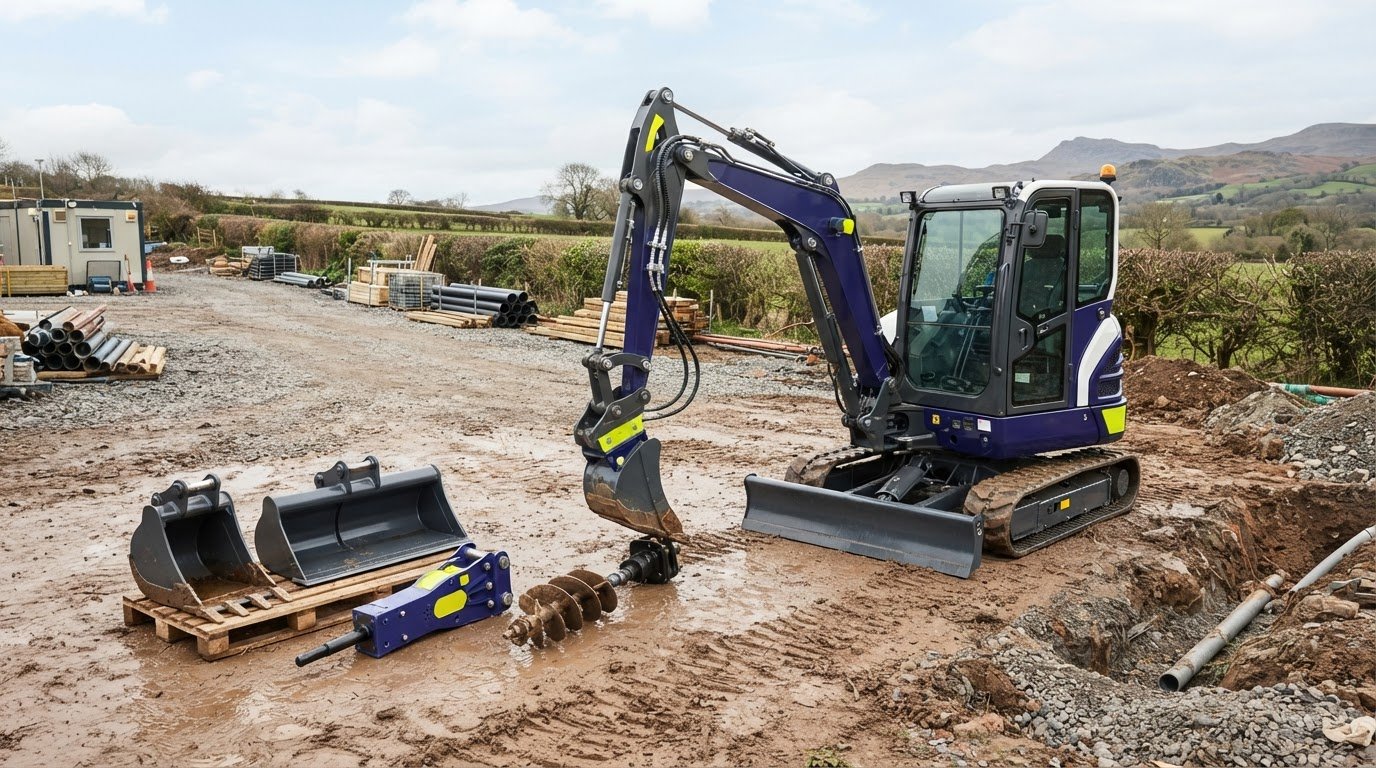
You can certainly hire a wide variety of excavator attachments to suit specific tasks on your site. This allows you to transform a standard machine into a specialised tool for demolition, trenching, or landscaping. Accessing these attachments through plant hire is more efficient than purchasing them, especially for niche tasks. It ensures you have the exact tool required for the job without the long-term cost of storing specialised components that are only used occasionally.
Are service records provided with every plant hire agreement?
Verifiable service records are provided with every piece of equipment to ensure full compliance with site safety regulations. These documents prove that the machine has undergone regular servicing and meets all legal requirements, such as LOLER or PUWER standards. Having these records ready for inspection is vital for site managers during safety audits. It provides an essential paper trail that confirms the machinery is safe, well-maintained, and suitable for professional use.
Do I need my own insurance when opting for self-drive plant hire?
Yes, you generally need to provide your own hired-in plant insurance when opting for self-drive plant hire. This protects you against theft or damage whilst the machinery is under your control on site. It's a standard requirement across the industry for professional contractors. You should always check that your policy covers the specific value of the equipment, whether you are hiring a mini digger or a large telehandler, to ensure full protection.
Why is a professional inspection important before equipment arrives on site?
A professional inspection is critical because it verifies that the machinery is safe and fully operational before it reaches your site. We check everything from safety beacons to hydraulic hoses to prevent machine failure. This process ensures the equipment arrives ready to work, reducing the risk of immediate downtime. It also confirms that the machine meets all health and safety standards, which is a key responsibility for every site manager.
Comments