
Building Site Welfare Facilities Checklist: Stay Compliant
Updated: Sep 27
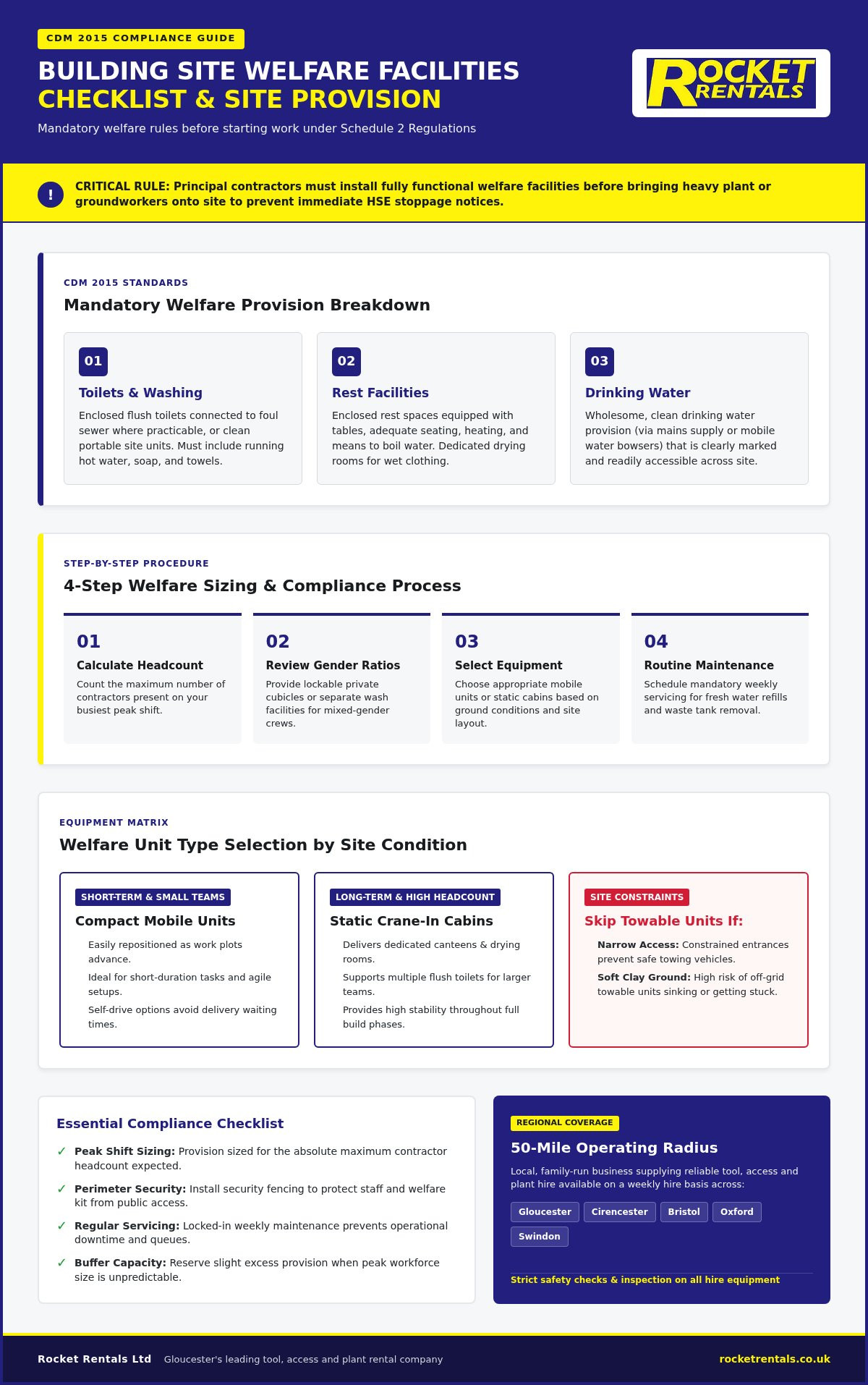
A building site welfare facilities checklist starts under Schedule 2 of the Construction (Design and Management) Regulations 2015: principal contractors must provide suitable welfare facilities before any site work begins. You need enclosed flushed toilets (connected to a foul sewer where reasonably practicable) and suitable washing facilities (sanitation provision) sized to your workforce so work can start without an HSE stoppage.
Key Takeaways: To comply with CDM 2015 regulations, you must provide toilets, washing facilities, drinking water, rest areas, and changing rooms before any site work begins.
Provision must accommodate the maximum number of contractors present on your busiest shift.
Skip towable units if your site has narrow access or soft clay ground conditions.
Hire mobile units for short-term flexibility or static crane-in cabins for long-term project stability.
Schedule weekly servicing for all units to manage fresh water refills and waste removal.
Table of contents
Building Site Welfare Facilities Checklist: Size the Kit to Your Headcount
Your workforce size sets the equipment configuration you actually need on the ground. Miss the mix and you lose hours to queues, complaints or an inspector’s notice; get it right and the rest of the programme can run.
Typical situations and a concrete pick from the same ruleset:
Short tasks with a small team: choose compact, mobile welfare units you can reposition as the plot changes.
Larger workforce projects: plan dedicated canteens, drying rooms and multiple flush toilets so breaks and hygiene keep pace with headcount.
Shifting phase demands: select self-drive units so you control moves without waiting on a separate delivery slot.
According to the Construction Regulations 2015, you must provide adequate toilets and welfare units, clean drinking water (water bowsers), and suitable washing facilities. Matching those items to headcount prevents operational downtime and keeps your team safe. Ready-to-use hire units bring that provision onto site quickly so you meet the duty from the first day of works.
As a local, family-run business based in Gloucester, Rocket Rentals Ltd supplies reliable equipment for weekly hire to sites across Gloucester, Cirencester, Bristol, Oxford and Swindon. Call the hire desk when you want the layout reserved against your start date.
Tip: Always install fully functional welfare facilities before bringing heavy plant or groundworkers onto the site to avoid immediate HSE stopping notices.
What Welfare Facilities Are Required on a Construction Site?
Legal workplace compliance requires you to supply toilets and welfare units, washing facilities, rest areas, changing rooms, and clean drinking water (water bowser).
Under the Construction Regulations 2015, adequate site welfare is a strict duty. Where a sewer connection is not reasonably practicable, portable welfare units cover the gap; where it is practicable, flushed toilets connected to drainage are the expected standard. According to Wikipedia's construction site safety overview (2025), proper sanitation and safe rest zones significantly reduce workforce injuries and illness. Without those basics, productivity drops and absence rises, so treat welfare as part of the critical path rather than an afterthought. You must also maintain proper site perimeter controls using secure Security fencing to protect staff and equipment from public access.
Keeping these amenities operational throughout your build relies on proper routine maintenance. As a local family‑run business, Rocket Rentals Ltd supplies trusted equipment for sites across Gloucester and the surrounding areas. A direct call to the hire desk is usually enough to lock in a swift setup. To organise reliable plant hire and site equipment for your project, contact the team with your headcount and start date.
How Many Toilets Do You Need per Worker on Site?
You must supply enough toilets and welfare units for the maximum number of people on a standard shift, with privacy handled properly when crews are mixed-gender. Undersizing shows up fast as queues, blocked work fronts and hygiene complaints.
Mixed-gender crews need separate washing facilities or lockable private cubicles with dedicated soap and paper dispensers. That detail is easy to miss when you only count total heads.
Calculating your exact provision takes four simple steps:
Calculate site headcount: Count the maximum number of contractors present on your busiest shift.
Review gender ratios: Check if you need separate cubicles to satisfy privacy rules.
Select your equipment: Rent reliable units through Rocket Rentals Ltd to maintain high health standards.
Schedule routine maintenance: Arrange weekly servicing to manage fresh water refills and waste removal.
Order a little spare capacity when your peak shift is hard to predict: the hire cost is usually lower than the delay from a non-compliant or overloaded block. Clean equipment is delivered across Gloucester, Cirencester, Bristol, Oxford and Swindon by the family-run team, and consistent safety checks on each unit make a clear difference once the site is live.
One hire path shows how service quality supports the plan. A customer needed kit on a tight booking window, the desk handled the query through to delivery without friction, and the job started on time. Among Rocket Rentals Ltd's Google reviews, cidermonstered (5★) wrote:
"I recently hired a petrol aerator and the experience from my initial query, booking and delivery was superb. Cameron is a great ambassador for the company and delivered excellent customer service, thank you"
Friendly, professional handling of the booking is what gets the welfare units you specified onto the plot without delay.
Regional Hire Rates Cut Mobile Unit Costs on Local Jobs
Hiring temporary site amenities costs significantly less than purchasing permanent units outright, which matters when the programme only needs welfare for a defined phase.
Selecting mobile towable units gives you a fast route to British regulatory compliance on short projects. Static containers suit long-term construction projects better, where crane-in cabins and fixed services pay back over many months. Regional transport distance changes the outlay: delivery fees rise when your plot sits far from the depot, so a Gloucester-based supplier trims transit cost on jobs in Cirencester, Bristol, Oxford and Swindon.
You tow mobile units straight to the plot and cut separate setup fees when access allows. Hiring self-drive equipment on flexible terms keeps capital free compared with buying lockable shelters that depreciate between jobs.
A portable site toilet pairs with fresh drinking water and safe washing facilities in one planned package. Ask for a personalised quote when you want exact weekly rates against your dates. Weekly hire options help you hold the budget line while teams stay safe; routine maintenance and inspection protocols (fluid levels and filter checks before dispatch) keep downtime low once the units are on site. Speak to Rocket Rentals Ltd when you are ready to firm up the welfare layout.
When Off-Grid Towable Welfare Units Fail Your Site Layout
Towable portable site toilets (welfare units) fail when tight access or poor ground conditions stop towing vehicles from positioning them safely. If your gate, turning head or formation already looks tight on the drawing, read this before you book a drawbar unit.
Mobile cabs set up quickly, yet long tow-bars need a wide turning circle that often blocks narrow access routes. Heavy road chassis can sink into soft clay unless you add trackway mats, which adds cost and time you may not have. On firm, open ground a Towable unit is efficient; on a cramped, muddy footprint it becomes hard to place and harder to service.
If you face tight spatial limits, static site setups fit the layout better. Non-towable cabins can take crane-arm delivery over boundary walls, which saves plot space and removes tow-hitch obstructions from plant routes. Every hire includes a thorough inspection so equipment arrives ready to use. As a family-run business based in Gloucester, Rocket Rentals Ltd delivers the units to your location and can add a dedicated drinking water supply with full washing facilities so the package stays compliant. Contact the team to organise delivery against your access constraints.
Details and enquiries: Rocket Rentals Ltd.
Frequently asked questions
What welfare facilities are required on a construction site?
You must provide a portable site toilet where a sewer connection is not reasonably practicable, clean washing facilities, a supply of fresh drinking water, rest areas and changing facilities. Keeping those spaces in working order limits downtime and meets health and safety duties for the people on your plot.
How should toilets be arranged and maintained?
Toilets must remain easily accessible to all staff, ventilated and stocked with soap, hand drying supplies and toilet paper. Service them at regular intervals so hygiene holds, odours stay down and worker health is protected for the full programme.
What are the requirements for washing facilities?
Washing facilities need clean running water, soap and suitable drying options, placed close to the toilets and rest areas. Steady upkeep of those points keeps the working environment healthy and compliant from start on site through to handover.
What drinking water provisions are required?
You need readily available drinking water that is clearly marked and protected from harmful site contaminants. Provide clean cups or jet fountains so contractors can stay hydrated through the shift without leaving the plot. In broader commercial and industrial facilities, organisations often build on basic hydration provision by partnering with dedicated breakroom services like Vending SoCal to provide convenient refreshments for their teams.
How many toilets do you need per worker?
Size toilet numbers to the maximum shift headcount, privacy needs for mixed crews, and the cleaning schedule you can sustain. Plan access routes and spare capacity early so facilities do not become the reason a task pauses mid-morning.
Stay Compliant by Closing the Welfare Gaps Before Work Starts
Closing CDM welfare gaps before tools hit the ground protects your workforce and avoids regulatory delays. If you require professional guidance managing statutory workplace obligations, discover AFN Industrial Services Ltd to assist with your site's ongoing health, safety, and environmental compliance. Work through a complete building site welfare facilities checklist against real headcount, gender mix and access, then keep each portable site toilet, drinking water supply and washing facility on a simple daily check so nothing drifts out of use mid-phase.
The family-run Rocket Rentals Ltd team gives practical kit advice for jobs around Gloucester and nearby towns, and regular inspection of hired units helps you dodge costly downtime. Request a quote with your peak shift size and start date when you want the welfare package scoped.
Comments