
Daily excavator safety checks before work starts
A walkaround alone isn’t enough to confirm an excavator is safe to use. Daily excavator safety checks should combine a visual inspection before work with functional checks after starting the machine. Record the findings and take unsafe equipment out of service. Inspect visible damage, tracks, hydraulic hoses and the quick hitch, then confirm the controls and safety features work as expected.
A consistent pre-start routine helps you spot defects before they interrupt work or put people at risk. It also gives operators a clear process to follow at the start of each shift. This guide explains what to inspect, how to record and report defects, and when to tag out and immobilise an excavator until it is repaired. It also covers checks to make after starting the machine and how to prepare the working area before digging.
Table of Contents
Exterior walkaround and visible damage
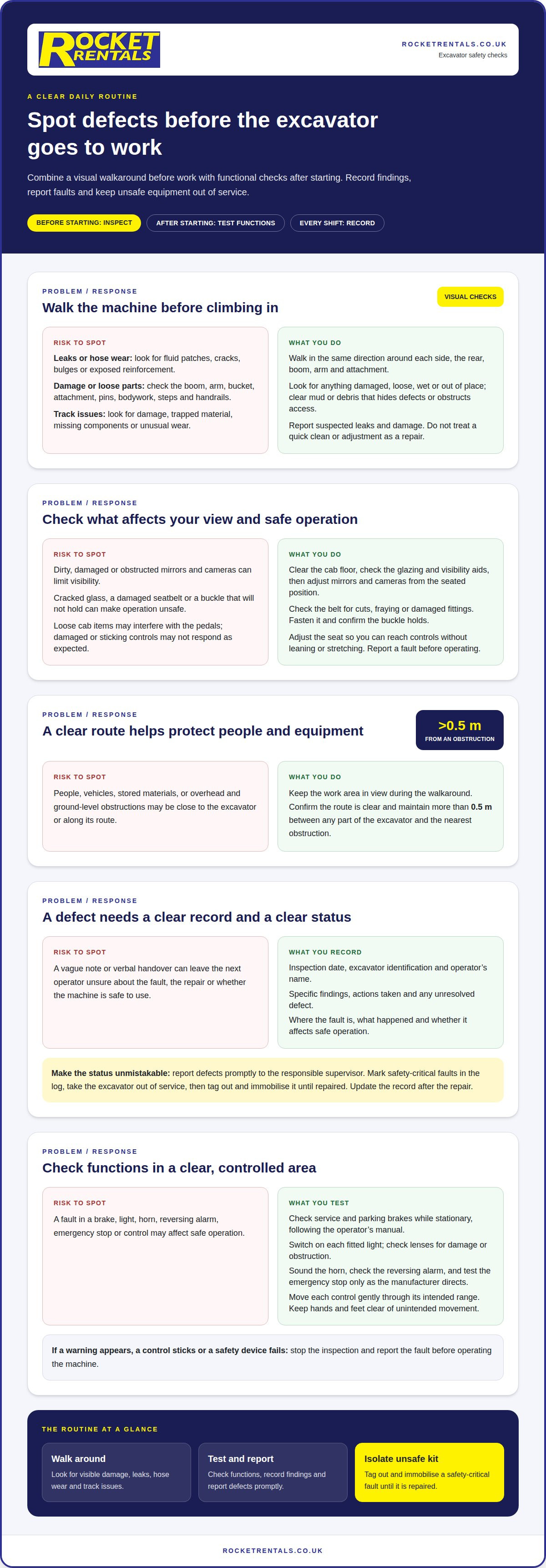
Begin daily excavator safety checks before climbing into the cab. Walk around the parked machine in a consistent direction, checking each side, the rear, boom, arm and attachment. From ground level, look for anything damaged, loose, wet or out of place. Following the same route makes it easier to notice changes since the previous shift.
Inspect the hydraulic hoses along the boom and arm for leaks, cracks, bulges or exposed reinforcement. A ruptured hose can cause loss of control and put nearby workers at risk.
Look beneath the excavator for fresh fluid patches, then trace visible leaks towards their source. Report a suspected hydraulic leak before operating the machine.
Check the boom, arm, bucket and attachment for visible cracks, distortion, loose pins or damage. These parts transfer force during digging, so report defects rather than continuing with a damaged component.
Look over the bodywork, access steps and handrails for damage or loose fittings. Clear away mud or debris that could hide a defect or obstruct safe access.
Check the tracks and undercarriage for visible damage, trapped material or missing components. Note unusual wear or anything that could affect the machine’s stability on the ground.
Inspect mirrors and cameras for dirt, damage or obstruction, and check that visibility aids are secure. UK excavators should have adequate aids to help drivers see areas where people may be at risk.
Walk around the machine with the work area in view as well. Identify nearby people, vehicles, stored materials and overhead or ground-level obstructions before moving the excavator. On UK sites, maintain more than 0.5 m between any part of the excavator and the nearest obstruction. Confirm the route is clear before starting work.
If you find a worn hydraulic hose, report it for immediate replacement rather than waiting for it to fail. Record visible damage through the site’s defect-reporting process. A quick clean or adjustment is not a repair. Any defect that could affect safe operation must be dealt with before the excavator returns to work.
Inspection logs, defect reporting and isolating unsafe machines
For UK 360 excavators, pre-shift checks are described as satisfying PUWER and LOLER requirements. HSE says checks before use can include functional testing of mobile machinery brakes and lights.
Record every inspection in a daily log, whether on paper or using digital health and safety software from Be-Safe Technologies Ltd. Include the inspection date, excavator identification, operator’s name, findings and actions taken. A clear entry helps the next operator understand the machine’s condition and whether any defect is still unresolved.
Make each entry specific. Instead of writing “hydraulics checked”, name the affected component and describe what you observed, such as a leaking hose or damaged fitting. Record defects even if they do not immediately stop the machine, so they can be assessed and followed up.
Report defects or problems promptly through the site’s reporting process, and tell the responsible supervisor before work begins.
Describe where the fault is, what happened and whether it affects safe operation.
Mark safety-critical defects clearly in the log and take the excavator out of service.
Tag out and immobilise an unsafe machine until it has been repaired.
How should you report and manage defects found during a daily excavator inspection? Record the fault in the daily log and report it promptly. If it is safety-critical, remove the machine from service, tag it out and immobilise it until repaired. Do not rely on a verbal handover alone.
Before another operator takes over, make the machine’s status clear both at the machine and in site records. “Out of service: hydraulic leak” is more useful than a vague warning. After repair, update the record with the action taken and the machine’s status to keep the defect history clear.
If the excavator cannot safely continue, adjust the work plan rather than using it with a known safety-critical fault. Excavator hire can provide a practical replacement option for keeping suitable equipment on the job.
Cab, seatbelt, mirrors, cameras and controls
Before starting, check that the cab is clean enough for safe entry and operation. Remove loose items from the floor that could interfere with the pedals, and make sure the glazing provides a clear view. Look for cracked glass, damaged mirrors or camera lenses, and adjust visibility aids from the seated position. A camera obscured by dirt cannot help you spot people or obstacles.
Inspect the seat and seatbelt before operating the excavator. Check the belt for cuts, fraying or damaged fittings, then fasten it and make sure the buckle holds. Adjust the seat so you can reach the controls without leaning or stretching. If the belt will not latch or retract properly, report the defect and do not use the machine until it has been assessed.
How should you test excavator brakes, lights, horn, reversing alarm and emergency stop? The UK Government’s HSE says pre-use checks on mobile machinery can include functional tests of brakes and lights. Test the horn, reversing alarm and emergency stop according to the manufacturer’s instructions and in a clear, controlled area. Report any fault before operating the machine.
With the machine stationary, check that the service brake and parking brake respond as expected, following the operator’s manual.
Switch on each fitted light and confirm it illuminates; inspect lenses for damage or obstruction.
Sound the horn and listen for a clear signal, then check that the reversing alarm operates when selected.
Locate the emergency stop and check its condition; test it only as the manufacturer directs, then confirm the machine can be reset correctly.
Move each control gently through its intended range, checking for damage, obstruction or an unusual response.
Keep your hands and feet clear of unintended control movements during checks. If a control sticks, a warning appears or a safety device fails, stop the inspection and report the issue. Record the specific item and symptom, such as “left work light not illuminating”, rather than writing only “cab checked”. This gives the next person a clear fault to follow up.
Daily visual checks
How often should excavators be inspected and maintained? Operators should carry out visual checks daily as part of a programme that also includes regular inspections and servicing. Follow the manufacturer’s instructions for the machine’s inspection and maintenance schedule.
Track condition needs more than a glance from the cab. Compare track tension with the manufacturer’s specification, as incorrect tension can contribute to tipping, particularly on uneven ground. Check for uneven sag, damage or packed material, and report anything requiring attention before travelling.
Test the quick-hitch locking mechanism manually, because an insecure connection can let an attachment move unexpectedly.
Check the safety pin is present, secure and correctly fitted, because it provides another visible check of the hitch connection.
Confirm the quick hitch can be implemented and managed safely before using an attachment, following the machine and hitch instructions.
After completing visual checks, start the engine and listen for unusual noises, because new sounds can signal a developing fault.
Let the engine idle until it reaches operating temperature, then check warning lights go out and gauges remain within their normal range.
Slowly cycle the boom, arm and bucket, watching for smooth hydraulic response and stopping if movement is irregular.
Keep the area clear when testing movement, and lower or safely position the attachment before starting. Use slow, deliberate control inputs instead of sudden movements. Compare the machine’s response with its normal operation, and record any new noise, warning or hesitation for follow-up.
A daily check is a practical screen for visible and functional problems, not a substitute for planned inspections or routine maintenance. Follow the manufacturer’s maintenance instructions and use inspection findings to flag changes between services. If a check reveals a safety concern, stop and report it through the site process before work continues.
If a machine’s checks reveal a fault that prevents safe work, review your excavator hire options for suitable replacement equipment.
Rocket Rentals: Mini Digger Hire
Rocket Rentals Ltd is a family-run business offering Mini Digger Hire and Excavator hire for construction projects that need suitable digging equipment. If an excavator fails an inspection and must be taken out of service, arrange a safe alternative before work resumes. Match the machine and any excavator attachments to the task, site access and ground conditions, then carry out the required checks before operation.
For projects involving more than excavation, Roller Hire and Welfare Unit Hire can help meet other site needs. Choose equipment to suit the planned work, and maintain operator checks and defect reporting throughout the hire.
Contact Rocket Rentals Ltd to discuss Mini Digger Hire for your project.
Build a dependable start to every shift
Make daily excavator safety checks part of your team’s work preparation, not a task squeezed in between other duties. A clear handover helps the incoming operator understand the machine’s status and raise concerns before work starts. The same pre-use discipline should extend to other critical site gear; for example, teams operating at height can follow guidance on self-retracting lifeline inspection to verify their fall protection equipment before each shift. Keep the process practical: assign responsibility, make the inspection record straightforward to complete, and ensure reported issues reach the person responsible for action.
Use operators’ observations to improve future briefings. If the same type of defect or operating concern keeps appearing, raise it in site discussions and consider whether the work sequence or equipment choice needs attention. This turns individual observations into useful planning for the next shift.
When your project needs hired plant, choose equipment that suits the work and site conditions. Discuss your next project with Rocket Rentals Ltd, then give your team a clear start-of-shift process. A consistent approach helps everyone begin work with greater clarity and confidence.
Frequently Asked Questions
What should be included in a daily excavator pre-use inspection checklist?
Include the machine’s identity, operator, date and overall condition, then cover the checks relevant to that excavator and its fitted equipment. Add clear pass, fail and not-applicable options, with space to describe defects and actions taken. Keep the checklist aligned with the manufacturer’s instructions, so operators are not asked to inspect components their machine does not have.
How do you check excavator tracks, tyres, undercarriage and attachments before use?
Compare track tension with the manufacturer’s specification and look for damage, uneven wear or material caught around the undercarriage. On wheeled excavators, inspect tyres for visible damage and check pressure according to the machine’s instructions. Examine each attachment’s condition and connection points, and confirm the correct attachment is fitted for the planned task before moving or digging.
How do you inspect an excavator's hydraulic hoses, fluid levels, leaks and filters?
Use the machine’s manual to locate fluid-level indicators and follow its procedure for checking levels. Look for wet patches around hose connections, cylinders and beneath the machine, and note any new leaks. Check accessible filters for visible damage or obstruction without dismantling them. Do not top up fluids or replace filters unless you are authorised and following the manufacturer’s instructions.
What safety checks should be made on an excavator cab, seat belt, controls, mirrors and cameras?
Check that the cab provides a clear operating position, with the seat adjusted so you can reach the controls without stretching. Fasten the seat belt and check that its fittings work. Clean and adjust mirrors and cameras from the seated position, then confirm the monitor shows a usable image. Make sure control labels are readable, and refer to the manual if a control behaves unexpectedly.
Who is responsible for completing and recording excavator daily checks in the UK?
The operator carrying out the pre-use inspection should complete the daily record, on paper or digitally, and report defects through the site process. A practical arrangement identifies who receives reports and tracks repair actions, such as the site supervisor or plant manager. Clear handovers help the next operator see whether the machine is ready or still needs attention.
What are the main hazards to check for around an excavator before starting work?
Look for people, vehicles, nearby structures and ground conditions that could affect movement or visibility. Identify the excavator’s travel route and working area, including the space needed for slewing. Organise the site to keep pedestrians separate from excavators, using suitable barriers where needed. A trained, competent and authorised marshaller can direct movements from a safe position.


Comments