
Digger Operator Daily Checks: A Practical Pre-Start Checklist
A digger that worked without issue yesterday can still have a fault before today’s shift. Digger operator daily checks help you spot visible problems and confirm essential functions before work begins, whether you’re using a hired or owned machine. A consistent inspection can help prevent avoidable downtime and reduce the risk of starting work with an issue that needs attention.
It’s not always clear which parts to check or what to do when something doesn’t look right. This practical checklist sets out a straightforward pre-start routine, from looking over the machine to checking its key functions in line with the manufacturer’s instructions. You’ll also learn what to record, who to tell about a defect and when to keep the digger out of operation until the concern has been dealt with.
Use the checklist as a prompt alongside the machine’s own instructions and your site procedures. Check for visible changes, follow the specified start-up checks and raise concerns before they become a safety risk or disrupt the working day.
Table of Contents
Why digger operator daily checks matter before the first movement
A daily check gives you the chance to identify visible concerns before operating a digger. A damaged component, leak or warning sign can affect how the machine behaves, so inspect it before the first movement. A steady routine also makes it easier to notice changes from one shift to the next and report them before they contribute to a safety risk or avoidable downtime.
These checks are useful whether the digger is hired or owned. Excavators come in different configurations, with machine-specific controls and components. The Excavator overview provides general background, but for the machine in front of you, rely on its manufacturer instructions and your site procedures. They explain which checks apply and how to carry them out safely.
A daily pre-start check is an operator’s visual and functional check of the machine before use. It helps you identify signs that need attention, but it is not a diagnosis or a repair. Servicing is scheduled work carried out to maintain the machine, while formal examinations are separate inspections where required. A pre-start check doesn’t replace routine maintenance or any applicable formal examination.
What a daily digger inspection can and cannot do
A consistent inspection helps you spot visible changes and check that the machine responds as expected, following its instructions. It cannot reveal every hidden fault or confirm that all parts are in working order. If you find something concerning, don’t investigate beyond your training or the instructions. Record and report the finding through the site’s process, then follow the guidance on whether the machine can be used.
When to complete the checks
Make the check part of your routine before putting the digger to work at the start of each shift or day. Repeat relevant checks if conditions change or someone reports an issue that could affect the machine. The right steps depend on the digger and the work setting, so use the manufacturer instructions and site procedures rather than assuming one sequence suits every machine.
A regular inspection gives you a clear point to pause, assess the machine and raise concerns before operating. It also creates a consistent record of what you observed, supporting clear communication between operators and the people responsible for the equipment.
How to inspect a digger safely before starting the engine
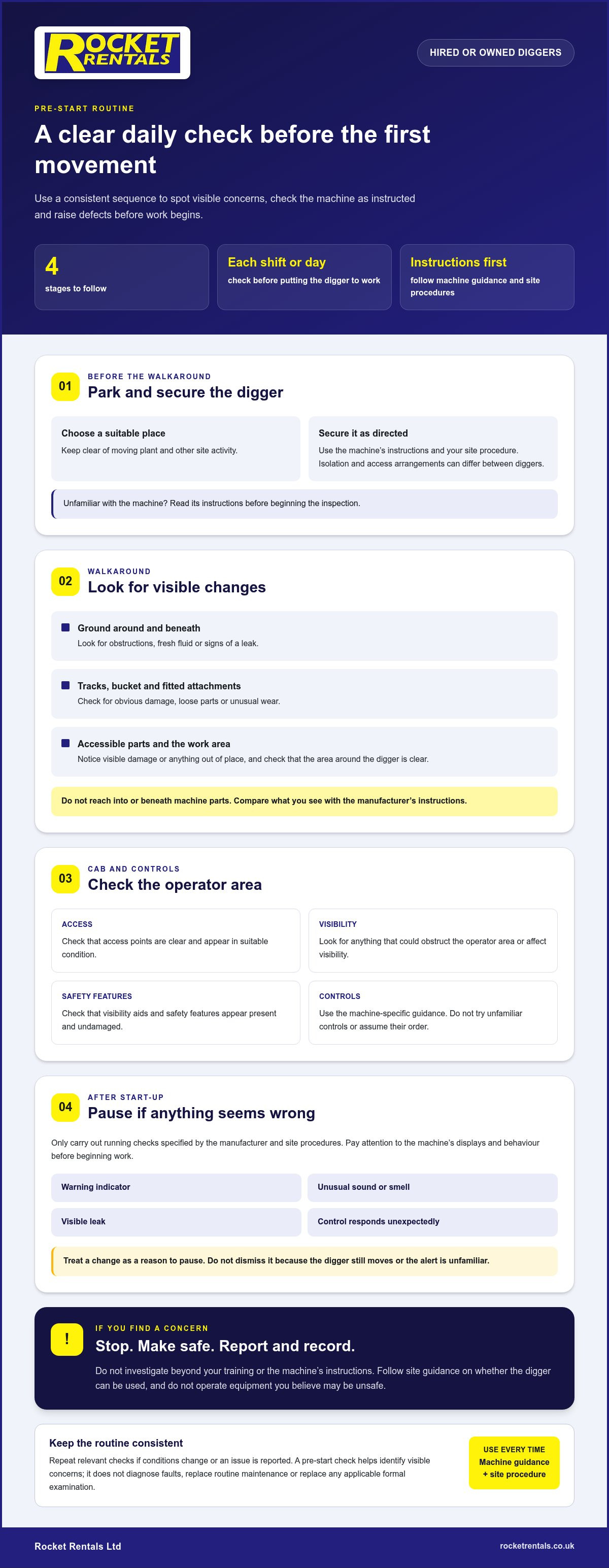
Start with the machine parked in a suitable place, away from moving plant and other site activity. Follow the site procedure and the manufacturer’s instructions to secure it before you begin. Diggers can differ in their isolation, access and control arrangements, so don’t assume the sequence is the same across machines. If you’re unfamiliar with the digger, read its instructions before starting the inspection.
Work methodically around the machine and look for changes that could affect safe operation. Check the ground around and beneath it for obstructions, fresh fluid or signs of a leak. Look over accessible parts for visible damage, loose components or anything that appears out of place. Poor visibility, damage or a leak is a concern to report, not something to overlook because the machine worked on the previous shift.
A methodical walkaround helps you spot visible defects before they become problems during work.
Walkaround checks: ground, tracks, bucket and visible damage
As you move around the machine, inspect the tracks, bucket and any fitted attachment for obvious damage, loose parts or unusual wear. Check that the area around the digger is clear, and note fresh marks or leaks. Don’t reach into or beneath parts of the machine to inspect them. Compare what you see with the manufacturer’s instructions and report anything that causes concern through your site’s process.
Cab, access points and operator controls
Before entering the cab, check that access points are clear and appear in suitable condition. Once inside, look for anything that could obstruct the operator area or affect visibility. Check that visibility aids and safety features appear present and undamaged. Use the machine-specific instructions to understand how to access the cab and check the controls. Avoid trying unfamiliar controls or assuming their order of operation from experience with another digger.
If you can’t see clearly, find damage or spot a possible leak, pause the inspection and report what you’ve found. Don’t start the engine simply to see whether the issue clears. The appropriate next step depends on the machine instructions and site procedures, especially if the condition could affect safe operation.
Keep the sequence consistent: park and secure the machine as directed, complete the walkaround, then check the cab and controls using the relevant guidance. This makes it easier to notice changes and communicate a concern clearly. If you’re planning a project that needs a machine, you can view excavator hire options.
What to check on a digger after start-up and before digging
Once the pre-start walkaround is complete, any checks with the engine running must follow the manufacturer’s instructions and site procedures. Diggers differ, so don’t assume the same start-up sequence, control test or observation applies to every machine. Carry out only the checks you’re instructed to perform, from the position and in the way the guidance specifies.
Before beginning work, pay attention to what the machine displays and how it behaves. A warning indicator, unusual sound, unexpected smell, visible leak or control that doesn’t respond as expected is a reason to pause. Don’t dismiss a change because the digger still moves or the alert is unfamiliar.
Warning indicators, sounds and fluid levels
Check the displays and warning indicators as directed in the operating instructions. If an alert appears, use the machine guidance and site procedure to decide what action to take. Don’t guess at the meaning of an unfamiliar symbol or silence a warning without understanding it.
Be alert to unusual noise, smell, vibration or behaviour during the instructed start-up checks. Look for signs of fluid leaking, but don’t put yourself near moving parts or leave the operator position unless the instructions say it’s safe to do so. If you notice an unexpected change in fluid levels or see a leak, stop and report it through the site process.
Safety features and basic function checks
Check safety features and controls only as described in the machine-specific operating instructions. Those instructions set out which basic functions to check and how to check them safely. Don’t try an unlisted test, change a setting or assume a control works in the same way as it did on another digger.
If a function doesn’t respond as expected, stop the check and report the issue. Don’t attempt adjustments or repairs unless you’re authorised and instructed to do so. A check is for observing the machine, not diagnosing the cause or fixing a fault. Record what you saw or heard, when it happened and which indicator or function was involved, without guessing why it occurred.
Proceed towards digging only when the start-up checks have been completed as instructed and no unresolved concern remains. If anything seems wrong, follow the site procedure rather than continuing to test the machine. Clear observations help the responsible person decide what happens next and can reduce the chance of a small concern leading to disruption or avoidable downtime.
What to do when a daily digger check finds a defect
A check only helps if you act on what you find. If a defect could affect the digger’s safe operation, stop the check or work, make the area safe in line with site procedures, then report the concern to the responsible person. Don’t use equipment you believe may be unsafe, and don’t try to diagnose or repair a fault unless you’re authorised and instructed to do so.
Describe what you observed rather than guessing at the cause. For example, report a visible leak, an unexpected warning or a control that didn’t respond as expected. Clear, prompt information helps the responsible person decide what action is needed.
Prompt reporting gives the responsible person an earlier chance to address a defect and can help limit avoidable downtime.
When a digger should not be put to work
Pause operation if a defect could affect safe use, or if you’re unsure whether it’s safe to continue. Keep others clear of the machine or affected area as site procedures require, and follow the escalation process and supervisor instructions. Don’t restart or move the digger just to see whether the issue has cleared. Wait for direction on what happens next.
Recording checks and reporting defects
Use your site’s process to notify the responsible person and record the inspection result. Where required, include:
the date of the check and the machine identification;
whether the check was completed and its outcome;
what you found, where you noticed it and when it occurred;
who you told and any instructions received.
Keep the description factual and readable. If the same issue is noticed again, make a new report or update the record according to site procedure, rather than assuming someone else has logged it. This helps the next operator and the person responsible for the equipment understand what has happened.
An operator’s daily inspection record is not the same as service records. The daily record captures the check and any concern raised; service records document maintenance and repairs. Follow the site’s recording process so these details remain clear and are passed on appropriately.
For your next project, view excavator hire options from Rocket Rentals Ltd.
Build a reliable daily check routine for hired or owned diggers
A reliable routine makes checks easier to complete consistently, whether you operate a hired or owned digger. Use the same ordered checklist and recording process each time, following the machine instructions and your site procedures. A familiar sequence helps you keep track of what you’ve checked and pass clear information to the next operator.
Make checks part of the site routine
Set a clear point in the work routine for the inspection, before the machine is put to work. Allow time to complete the checks and record the outcome rather than relying on memory or a quick glance. If operators change during the shift, include reported concerns and relevant machine information in the handover, so the next person knows what has been observed and what action has been taken.
Keep the checklist consistent, but adapt it when the situation changes. A different digger, attachment, task or site condition may affect which instructions or checks apply. Review the relevant guidance when circumstances change, and follow site procedures for any additional steps. Digger operator daily checks are most useful when the routine is repeatable and findings are shared clearly.
Keep equipment ready for the work ahead
Timely reporting gives the responsible person a chance to respond to a concern before it leads to further disruption. It also helps keep a useful record of the machine’s condition from one operator or shift to the next. Daily checks don’t replace routine maintenance, but they can help identify visible changes that need attention and reduce the risk of avoidable downtime.
If you’re planning work with a mini excavator, Rocket Rentals Ltd’s professional guide to mini excavator hire offers related equipment context. Whatever machine you use, keep its instructions and site process to hand, and make sure inspection findings are passed on rather than left for the next operator to discover.
Rocket Rentals Ltd is an independent, family-run plant hire business with a focus on inspection. Explore Rocket Rentals Ltd plant hire options when you’re planning your next project.
Make every pre-start check count
A consistent inspection helps you spot visible concerns before operating and notice changes in how the digger looks or behaves. Follow the machine instructions and site procedures for walkaround and start-up checks, and don’t use equipment you believe may be unsafe.
If you find a defect, stop, make the area safe, report it and record what you observed. Keep the same ordered process for hired or owned machines, and share relevant findings at handover. These habits help support reliable work and reduce avoidable downtime.
Rocket Rentals Ltd is an independent, family-run plant hire business, and inspection is one of its strengths. For your next project, explore plant hire from Rocket Rentals Ltd. With a steady approach to digger operator daily checks, you can start each shift with greater confidence.
Frequently Asked Questions
What should a digger operator check before starting work?
Before starting work, check the digger for visible damage, loose parts, leaks and obstructions, then inspect the tracks, bucket and fitted attachments. Check access points, the operator area, visibility aids and safety features for visible concerns. Once started, follow the manufacturer’s instructions for checking warning indicators and basic functions. The exact checks vary by machine, so use its instructions and your site procedures rather than relying on a generic sequence.
Are daily digger checks a legal requirement in the UK?
UK work equipment rules require suitable inspection and maintenance arrangements, but the precise checks and frequency depend on the equipment and how it’s used. HSE guidance supports daily visual checks as part of keeping machinery safe. A daily pre-start inspection is a practical way to identify visible concerns before use, but it doesn’t replace other inspections or examinations that may apply. Follow your employer’s site procedures and the machine instructions.
How often should a digger be inspected by its operator?
Complete the operator’s pre-start checks before the digger is put to work each shift or day, following site procedures and the manufacturer’s instructions. Repeat relevant checks if conditions change or a concern is reported. The inspection should suit the machine and task, so don’t assume one checklist covers every digger or situation. Record the outcome as required by your site process, and pass relevant findings on at handover.
What should I do if I find a fault during a digger check?
Stop, make the area safe in line with site procedures, report the fault to the responsible person and record what you observed. Don’t use equipment you believe may be unsafe. Describe the symptom, such as a visible leak or warning indicator, without guessing at its cause. Follow supervisor instructions and the site escalation process. Don’t attempt a repair or diagnosis unless you’re authorised and instructed to do so.
Do daily digger checks replace routine maintenance?
No. A daily check is an operator’s visual and functional inspection before use, while routine maintenance is scheduled work to keep equipment in operating condition. A pre-start check can identify signs that need attention, but it won’t detect every hidden fault or carry out maintenance tasks. Formal examinations, where applicable, are also separate. Follow the machine’s maintenance guidance and the site arrangements for inspections and servicing.
Should I check fluid levels on a digger every day?
Check fluid levels as directed by the manufacturer’s instructions and your site procedures. The correct method and timing can vary by machine, so don’t assume where or how to check. Look for visible leaks during the walkaround, and report unexpected changes in fluid levels or any signs of leakage. Don’t remove covers, reach near moving parts or top up fluids unless the instructions and your training allow you to do so safely.
What should a digger daily inspection record include?
Follow your site’s recording process. Where required, note the date, machine identification, check outcome and any concern found. Record what you observed and who you reported it to, along with any relevant instructions received. Keep descriptions factual rather than suggesting a cause. A daily inspection record captures the operator’s check and findings; service records document maintenance and repairs, so keep the two distinct as your site procedure requires.


Comments