
Site Setup and Plant Hire: How to Create a Practical Site Management Plan
What if the machine you hire is ready, but the site isn’t? A site setup plant hire plan can still fall behind if access routes, ground conditions, welfare and the work sequence haven’t been considered together.
It’s easy to focus on choosing machinery first. But matching equipment to the site and the order of work helps you prepare properly, avoid unsuitable hires and reduce the risk of preventable delays. You need a clear plan for what must be arranged before work begins, along with a practical list of equipment and access requirements.
This guide sets out a straightforward sequence for planning your site setup, from checking conditions and access to identifying plant for each stage. It also covers what to consider when arranging excavators, dumpers, rollers, telehandlers and welfare units. Once you have a clear equipment brief, Rocket Rentals Ltd can discuss its self-drive plant and site equipment options. The aim is to help you coordinate early and prepare for the work ahead.
Table of Contents
Why a site setup plan should include plant hire from the start
A site setup plan is a working document that brings together the practical arrangements for carrying out work: the layout, activities, people, access and equipment. Include plant hire while you’re planning, rather than leaving it until the last minute. This gives you time to check whether equipment can reach and work in the areas needed, where it will be positioned, and how its arrival fits the sequence of tasks.
The plan supports day-to-day coordination, but it isn’t a substitute for project-wide safety or construction documentation. Treat it as a practical companion that reflects how the site will operate. As Construction Management covers, construction work involves coordinating areas such as planning, time, quality and safety. The specific setup requirements depend on your project, site conditions and work activities.
What should a site setup plan cover?
Record the information people need to organise work on the ground. This may include:
Layout: work areas, access routes, storage locations and welfare arrangements.
Activities: the planned tasks and the order they are expected to happen.
People and responsibilities: who is making or confirming each setup decision.
Equipment: what may be needed, where it will work and when it is expected on site.
Review points: when to check the plan again or update it after a change.
Use the actual site as your guide. A template can help organise information, but it won’t account for available space, access constraints or changing work areas unless you check and adapt it.
How does plant hire fit into site setup?
Plant hire is the rental of machinery for construction or industrial work. To plan it well, connect each task with the equipment category that may be required, then check the fit against the working area, access and timing. Excavation, material movement, ground preparation and work at height can each call for different equipment. These are starting points, not machine recommendations: suitability depends on the job and site details.
Rocket Rentals Ltd provides self-drive equipment including mini diggers, excavators, dumpers, rollers, telehandlers, scissor lifts, welfare units and excavator attachments. Once you’ve outlined the task, site conditions and intended timing, use that brief to discuss which hire options may be suitable. Early planning can reveal missing details before they affect the work sequence.
How to create a site management plan step by step
Build the plan around the work you actually expect to carry out. A clear sequence for site setup plant hire helps you link tasks, access and equipment needs before they become urgent. The Construction Management Association of America describes construction management in terms of coordinating areas such as schedule, quality, safety, scope and function. Use that wider view to keep practical site arrangements connected to project decisions.
1. Define the work. List the activities, key milestones and expected order of tasks. Record who is responsible for each planning decision, including confirming equipment requirements and site arrangements.
2. Assess the site. Note known access limits, working areas, ground conditions and nearby site interfaces. Mark anything that still needs confirmation rather than treating an assumption as fact.
3. Plan the layout. Show where work will take place and consider how people, equipment, materials and welfare facilities will move around the site as tasks progress.
4. Identify resources. For each activity, note the plant or site equipment that may be needed, when it is required and what information must be checked before arrangements are confirmed.
5. Review and update. Set review points around project milestones and changes to work phases, access or site conditions. Assign an owner to each open action.
Assess site conditions before planning the layout
Start with what’s known: where equipment can enter, where it may need to work, and how materials and people will reach the relevant areas. Include ground conditions and interfaces with other site activities where these are known. If a detail needs a site visit or confirmation from a competent project contact, record it as an open question and name the person responsible for checking it.
Turn the work sequence into a site setup checklist
Translate each planned activity into an action. Note the task, possible equipment category, required working area, access arrangements and timing. Then check whether the space and access suit the sequence, rather than planning each item in isolation. Add a responsible contact, confirmation date and review trigger so the checklist stays useful as work develops.
Keep the plan easy to amend. A change in sequence or site conditions may affect equipment timing, routes or available working space, so update linked actions and flag anything that needs reconfirmation. Once you have a clear equipment brief, you can review Rocket Rentals plant hire options against your project requirements.
How to match plant hire to site tasks and conditions
Choose equipment by starting with the job, then checking the site and planned timing. A machine that suits the task may still be unsuitable if it can’t reach the work area or there isn’t enough room to operate. Use the comparisons below as prompts for discussion, not as a substitute for a site assessment. Your site setup plant hire brief should make clear what needs doing and what still needs checking.
What equipment might different site tasks require?
Compare each activity with the site conditions and the details you need to confirm:
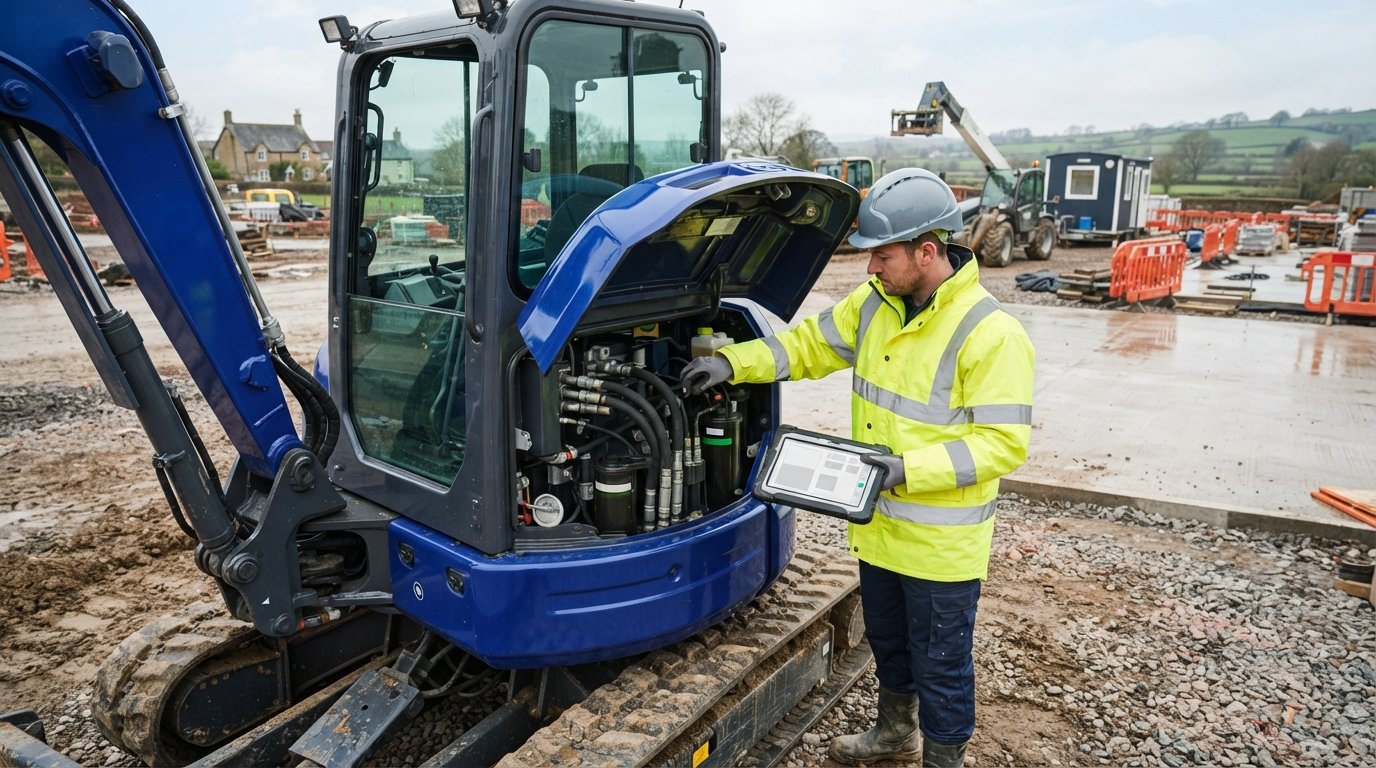
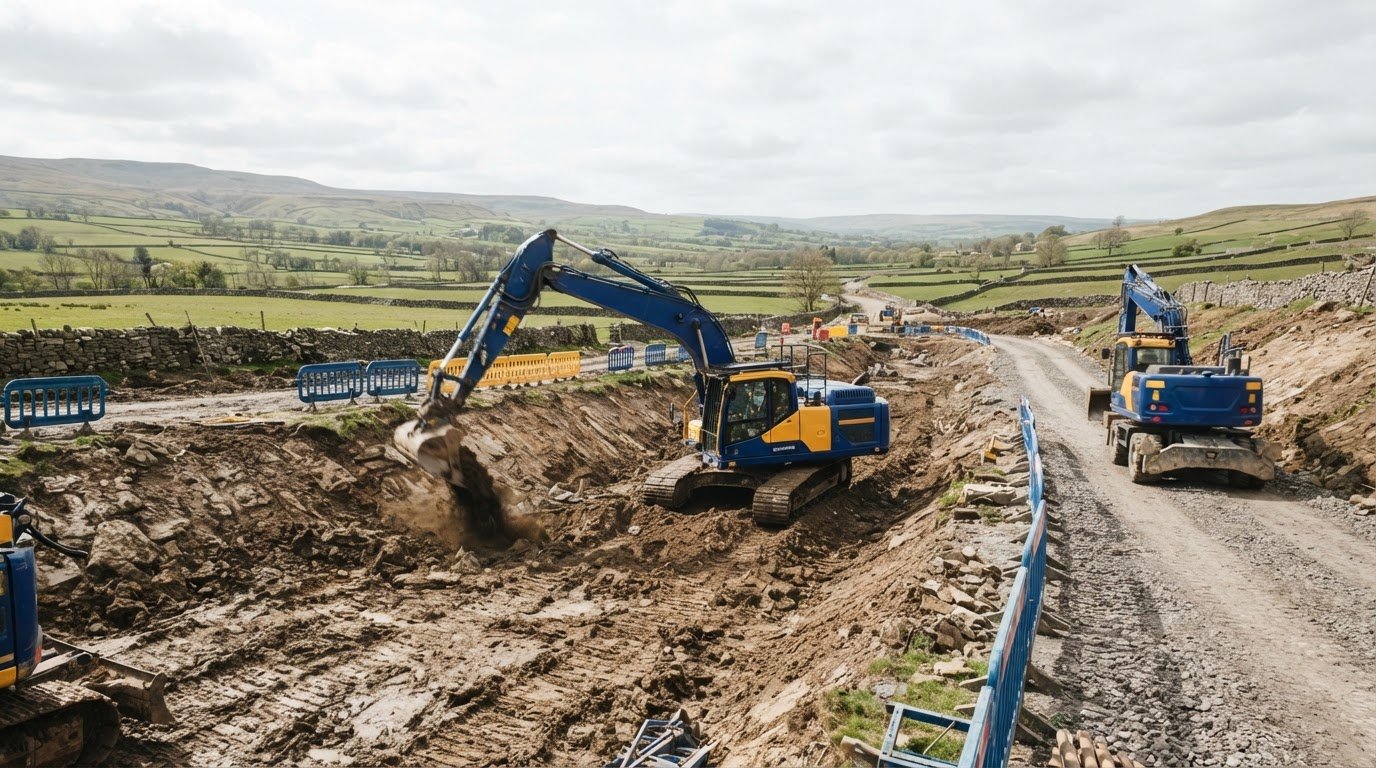
Excavation: excavator or mini digger hire may be relevant. Check the work area, access and task details before selecting equipment.
Material movement: a dumper or telehandler may be worth discussing, depending on what needs moving, where it needs to go and the available working space.
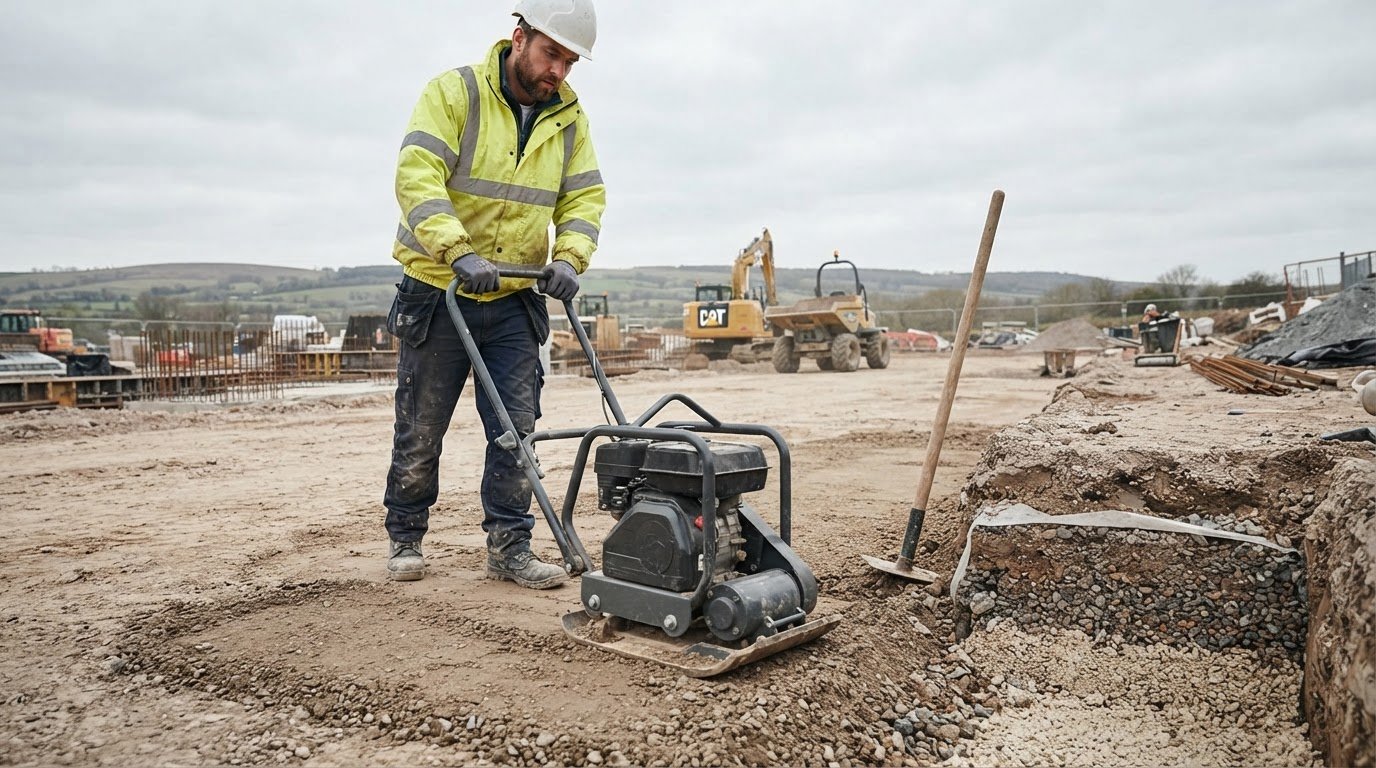
Ground preparation: a roller may be relevant for planned ground works. Confirm the task and site conditions with the supplier.
Work at height: a scissor lift may suit some tasks, subject to the work area and access. Confirm whether this equipment category fits your requirements.
Site welfare: a welfare unit may be needed as part of your site arrangements. Consider where it will be positioned and how it can be accessed.
Excavation attachments: an attachment may be relevant if it matches the planned task and excavator. Confirm compatibility and suitability before arranging hire.
For more detail on excavation planning, read this mini excavator hire guide.
What should you confirm before arranging plant hire?
Give the supplier a clear outline of the intended task, where the equipment will work, access constraints and the hire period you’re considering. Explain any known limits on space or movement, and identify details that still need confirmation. Ask what further information about the site or job is needed to assess which equipment may be suitable.
Rocket Rentals Ltd provides self-drive plant hire, including excavators, mini diggers, dumpers, telehandlers, rollers, scissor lifts, welfare units and excavator attachments. It doesn’t provide an operated plant service, so confirm that self-drive hire suits your project arrangements. Before making arrangements, check equipment suitability and any site-specific requirements with the hire supplier and relevant project contacts.
How to prepare the site before hired equipment arrives
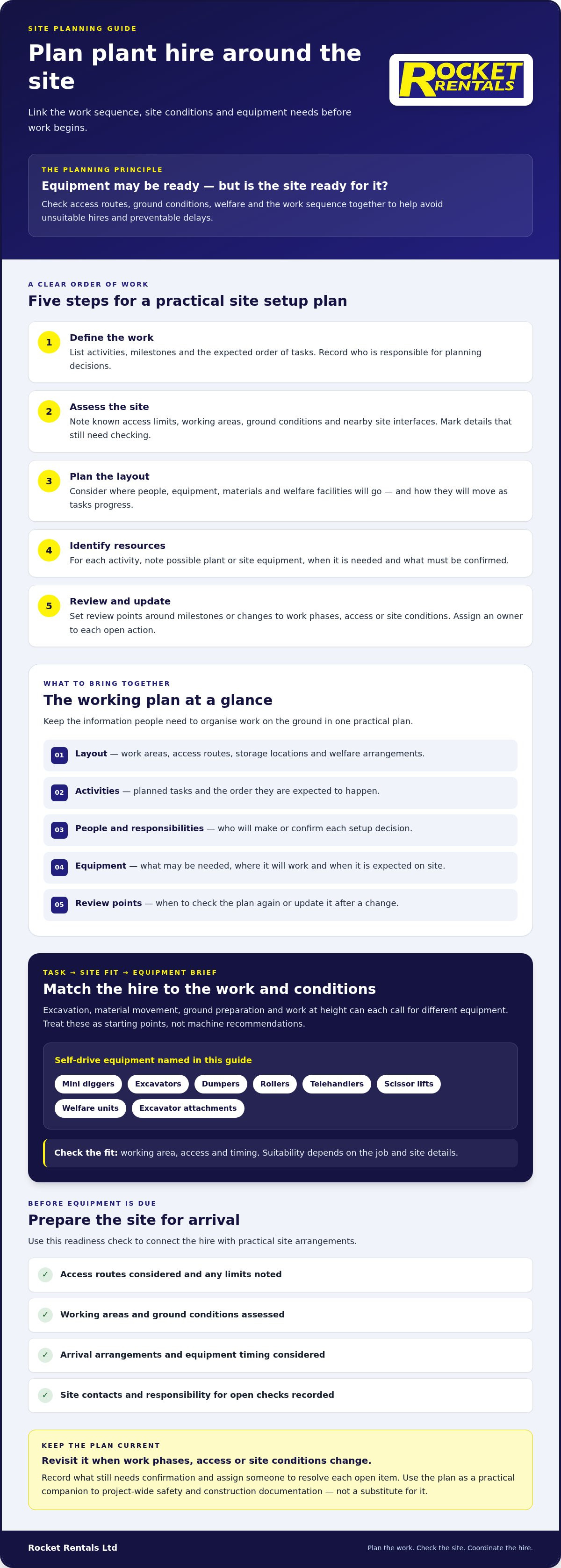
A clear pre-arrival check helps confirm the site is ready for the equipment and planned work. Add each action to your setup plan, name the person responsible and record anything that still needs confirmation. For site setup plant hire, agree access and arrival arrangements with the relevant project personnel and hire supplier before the equipment is due.
Access: confirm the intended route into the site and any known restrictions or shared access points.
Working area: identify where the equipment is expected to work or be positioned, and check that the area is prepared for the planned activity.
Coordination: confirm arrival arrangements and consider whether other work could affect access or movement.
Contacts: record a nominated site contact and the relevant supplier contact for queries or changes.
Inspection and handover: note the checks and records required by your project procedures, and verify applicable requirements with the appropriate project contact.
Check access, working areas and site interfaces
Before equipment arrives, look for possible conflicts between its route, other site activities and access needed by people or materials. Confirm that the planned working area is ready for the intended task. Don’t assume a route or space is suitable until it has been checked. If the sequence changes or site conditions differ from what was expected, review the arrangements and confirm any necessary updates with the people involved.
Plan access equipment and site welfare
Include welfare arrangements in your setup plan where the project requires them, and decide where a welfare unit may need to be positioned. For work at height, consider whether access hire such as a scissor lift fits the task and site conditions. Check the intended working area and access details before confirming suitability. For further planning considerations, see this electric scissor lift hire guide.
Rocket Rentals provides self-drive plant hire, including welfare units and scissor lifts. Once you’ve checked your site requirements, review Rocket Rentals’ equipment hire options and confirm relevant arrangements with the supplier.
Keep the site setup plan current throughout the project
A site setup plan should change as the work changes. Treat it as a live record, not a document to file away once equipment has been arranged. Regular reviews help you spot when a change to the sequence, access or working area affects plant requirements or other site arrangements.
When should you review a site management plan?
Schedule a review before a new work phase begins and whenever planned equipment changes. Review it too if access routes, working areas or the order of tasks shifts. For example, if an activity moves to a different part of the site, check whether the equipment can still reach the new area and whether other work could conflict with its movement.
Keep a simple record of each update so the relevant site team knows what has changed. Track:
Confirmed actions: what’s been agreed, by whom and when.
Open questions: what still needs checking and who will follow it up.
Review triggers: the next work phase, equipment change or site change that should prompt another check.
This makes it easier to follow up unresolved details rather than allowing assumptions to become part of the plan. Share relevant updates with the people whose tasks or arrangements may be affected.
How can a plant hire supplier support your planning?
Prepare a clear brief before discussing site setup plant hire. Describe the tasks, site conditions, access arrangements and expected hire timing. Explain what’s confirmed and flag anything that still needs checking. Ask the supplier what equipment details or further site information they need to assess suitability.
Agree how inspection and handover checks will be recorded, following your project procedures and confirming applicable requirements with the relevant project contact and hire provider. Rocket Rentals provides self-drive plant hire. Confirm that this arrangement fits your project, and clarify equipment details with the supplier before finalising your plan.
Once your brief is ready, discuss your plant hire requirements with Rocket Rentals and check which self-drive equipment may suit the work you’ve planned.
Put your site plan into action with confidence
A practical site setup plant hire plan connects the work sequence with site access, working areas and equipment needs. Start by recording what’s known, assigning responsibility for open questions and checking that planned equipment suits the task and site conditions. Before equipment arrives, confirm access, working areas, arrival arrangements and handover checks with the relevant people.
Keep the plan current as work phases or site conditions change. This helps your team act on confirmed information and review arrangements before they affect the next task. When you have a clear equipment brief, Rocket Rentals can discuss self-drive plant and site equipment options, including excavators, dumpers, telehandlers, rollers, scissor lifts and welfare units.
Discuss your plant hire requirements with Rocket Rentals and share the tasks, access details and timing you’ve identified. Clear coordination and a plan that reflects the real site can help you prepare for the work ahead.
Frequently Asked Questions
What is a site management plan?
A site management plan is a working document that coordinates site layout, activities, access, welfare and equipment. It should reflect the project and actual site conditions, rather than rely on a generic template. Make responsibilities clear and record questions that still need answers. Review the plan when work phases or conditions change. It supports day-to-day coordination, but doesn’t replace project-specific safety or construction documentation.
How do you create a site setup plan?
Start by defining the work and its sequence, then assess access, site conditions and working areas. Record the proposed layout, welfare arrangements and equipment needs, and name the people responsible for key decisions. Keep unresolved questions visible so assumptions aren’t mistaken for confirmed details. Check information with relevant project contacts and the hire supplier, then review and update your site setup plant hire plan as the project develops.
What should be included in a construction site management plan?
Include the site layout, access arrangements, work areas, planned activities, equipment requirements, welfare arrangements, responsibilities and review points. Add details that apply to your project, and clearly mark anything awaiting confirmation. The plan should help your team coordinate the work in practice. Follow the project’s own processes for safety and compliance, and check current requirements with the appropriate competent person rather than relying on the plan alone.
How do you choose plant hire for a construction site?
Match potential equipment to the task, working area, access conditions and planned sequence. For example, excavation may call for an excavator or mini digger, but the right option depends on project and site details. Share those details with the hire supplier and ask what further information they need to assess suitability. Don’t choose solely by machine category: equipment capabilities and actual site conditions need to be considered together.
When should you arrange plant hire for a project?
Identify likely equipment needs while preparing the site plan, then check the timing against the work sequence and site readiness. Contact the supplier early enough to discuss the task, access and relevant site conditions. Confirm current availability and arrangements directly with the hire provider, as these can’t be assumed. Recheck timing if the planned work phase, equipment requirement or access arrangements change before the hire is due.
What should you check before hired plant arrives on site?
Confirm the planned arrival arrangements, site access, working area, relevant contacts and equipment requirements. Make sure the site team knows where the equipment is expected to work and how its arrival fits the sequence. Check that any outstanding site details have been resolved or assigned to someone. Follow your project’s inspection and handover processes, and raise unanswered equipment or access questions with the supplier before arrival.
Does a plant hire company provide an operator?
It depends on the provider and service you arrange. Rocket Rentals Ltd supplies self-drive plant hire and doesn’t offer operated plant hire. If your project needs an operator, confirm this directly with a provider before making arrangements. Include who will operate the equipment and how this fits your project’s arrangements in the site plan. Rocket Rentals hires self-drive equipment such as excavators, mini diggers, dumpers and rollers.
Comments