
Digger weight restrictions on roads, load limits and penalties
There is no single road-weight allowance for diggers that applies across every UK route. Digger weight restrictions on roads depend on the limit signed for each restricted road and the transport vehicle’s permitted gross and axle weights. A route suitable for one transport vehicle may not be suitable for another.
Planning a move involves more than the machine’s weight: signs may also restrict vehicle width, and some loads require advance notice to authorities. Getting these details right before setting off matters, since a wrong turn or an overloaded vehicle can have legal consequences. This guide explains how road limits work and what to consider when transporting a digger.
You’ll learn how weight, height and width restrictions affect access, when abnormal loads need notification, and what drivers may face for breaches or overloading. The guidance will help you understand the rules and plan transport with fewer surprises.
Table of Contents
Road weight, height and width restrictions
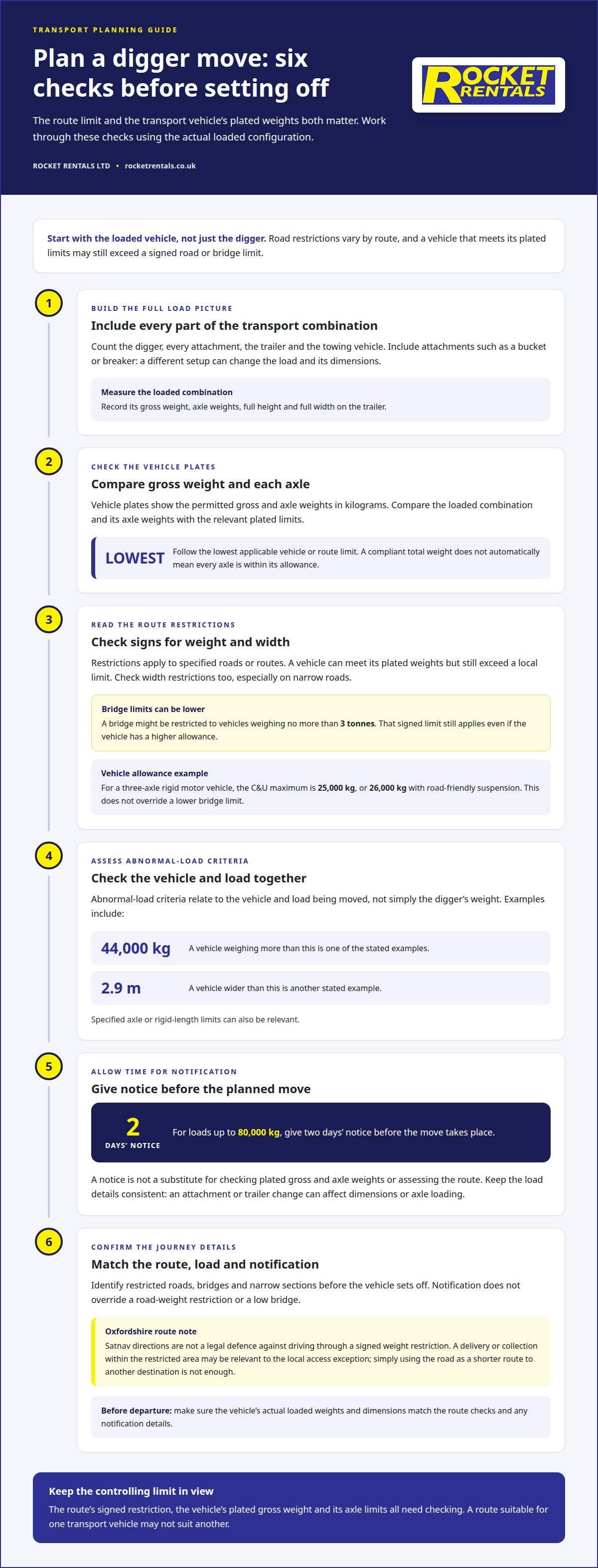
Digger weight restrictions on roads depend on the transport vehicle and the limits signed for each route. Height and width restrictions matter too, particularly near bridges and on narrow roads.
Road weight and size limits
A road restriction sets a legal limit on vehicle weight or width for a specified road or route. These digger weight restrictions on roads matter because the transport vehicle may exceed a local limit, even if it meets its plated weights. Compare signs with the loaded vehicle’s gross weight and dimensions, including its full height and width on the trailer. Abnormal-load criteria are separate: examples include a vehicle wider than 2.9 metres or weighing more than 44,000 kg.
Bridge and road capacity
Bridge and road capacity describes the weight a structure or route can safely carry. A weak bridge may have a lower signed limit, and a structural restriction typically covers the short road section where the structure stands. For example, a bridge might be restricted to vehicles weighing no more than 3 tonnes. Road-friendly suspension can affect permitted weights for some vehicle types: a three-axle rigid motor vehicle’s C&U maximum is 25,000 kg, or 26,000 kg with road-friendly suspension. That allowance doesn’t override a lower bridge limit.
Calculating the combined load
To calculate transport weight, include the digger, attachments, trailer and towing vehicle. Compare the loaded combination and axle weights with the relevant plated limits. Vehicle plates show gross and axle weights in kilograms. Include every attachment, such as a bucket or breaker, and account for the trailer and towing vehicle. The lowest applicable vehicle or route limit is the one to follow. Mini Digger Hire and Excavator Attachments are useful when choosing equipment, but transport calculations must reflect the actual loaded configuration.
Notifying authorities about abnormal loads
An abnormal load exceeds ordinary vehicle weight or dimension limits, so notification may be needed before travel. A load may be treated as abnormal when its transport weight exceeds ordinary limits. UK criteria also identify vehicles over 44,000 kg, vehicles wider than 2.9 metres, and vehicles exceeding specified axle or rigid-length limits. These thresholds relate to the vehicle and load being moved, not simply the digger’s weight.
For loads up to 80,000 kg, give two days’ notice before moving can take place. That makes the planned movement date important: leave time to notify the relevant authorities before the vehicle sets off. A notice is not a substitute for checking the load against its permitted gross and axle weights or assessing the route for restrictions.
Start by recording the loaded vehicle’s gross weight, axle weights, width and rigid length. Include the digger, attachments, trailer and towing vehicle in the transport calculation. Compare those details with the abnormal-load thresholds, then identify the planned route and any bridges or narrow sections that could affect passage. For example, a load below 80,000 kg may still need attention if its width exceeds 2.9 metres.
The notice period allows authorities to consider the proposed movement and route conditions. Keep load details consistent in the notification and transport plan: a different attachment or trailer can change the dimensions or axle loading. If police stop the vehicle, accurate information helps explain what it is carrying and how it is configured. Notification does not override a weight restriction or low bridge on the route.
Driver liability and maximum fines
In Oxfordshire, driving a vehicle through a weight-restricted area above its limit is an offence unless you are delivering or collecting within that area. A destination inside the restriction can therefore be relevant. The restriction is made under a Traffic Regulation Order (TRO), and regulatory signs show where it applies.
For an Oxfordshire weight-restriction offence, the driver is liable, and the company may also be responsible as the vehicle’s user. A prosecuted driver may face a maximum fine of £1,000. The council will also seek prosecution costs, so the consequences can extend beyond the fine itself. Liability is not avoided simply because the vehicle belongs to an employer.
Satnav directions are not a legal defence in Oxfordshire. An automatically selected route can still take a vehicle through a restricted road, so drivers need to follow the signs and plan their route accordingly. Before travelling, check the vehicle’s plated gross and axle weights, identify restricted roads and plan to avoid them where necessary. If an applicable exemption permit is required, display it as directed.
Oxfordshire Trading Standards and the police can enforce weight-restriction orders under the Road Traffic Regulation Act 1984. Enforcement concerns the restriction and the vehicle’s journey, not only whether the driver intended to breach it. For example, a delivery vehicle may fall within the local access exception when it is delivering inside the restricted area. That exception does not apply simply because the road offers a shorter route to another destination.
Keep route details and any relevant permit available during the journey. If stopped, explain the destination and purpose clearly, particularly if relying on a delivery or collection exception. These checks help drivers and vehicle operators understand their responsibilities before entering a signed restriction.
Overloading penalties
Overloading occurs when a transport vehicle exceeds its permitted weight limit. The relevant limit may be the gross weight or an axle weight, so a compliant total does not guarantee that each axle is within its allowance. Assess the digger, trailer and towing vehicle as a loaded combination, including all attachments.
In the UK, vehicle weight offences can result in an unlimited fine. One offence concerns exceeding a vehicle weight limit; another concerns driving through a restricted area above its posted limit.
A defence may apply if a UK vehicle exceeds its weight limit by no more than 5%. It applies only if the limit wasn’t exceeded when loading was completed and nobody added to the load afterwards. The conditions are specific, so a small overload alone doesn’t establish that the defence applies. Section 41B(2) of the 1988 Act contains the described defences.
Weight offences in the UK do not carry penalty points or disqualification. However, an unlimited fine is a serious consequence for a driver or operator. For example, adding an attachment after weighing could change the loaded vehicle’s weight and take it over its limit.
Before transport, compare the planned load with the vehicle’s plated gross and axle weights. Include the digger, attachments and trailer, and record the loading details accurately. Using certified industrial weighing solutions, such as those featured at independentscale.au, helps operators ensure their measurements are dependable. If the load changes after weighing, recalculate instead of relying on the earlier figure. This helps identify a potential excess before the vehicle enters a public road.
Review your project equipment options as part of planning a compliant transport load.
Rocket Rentals: Mini Digger Hire
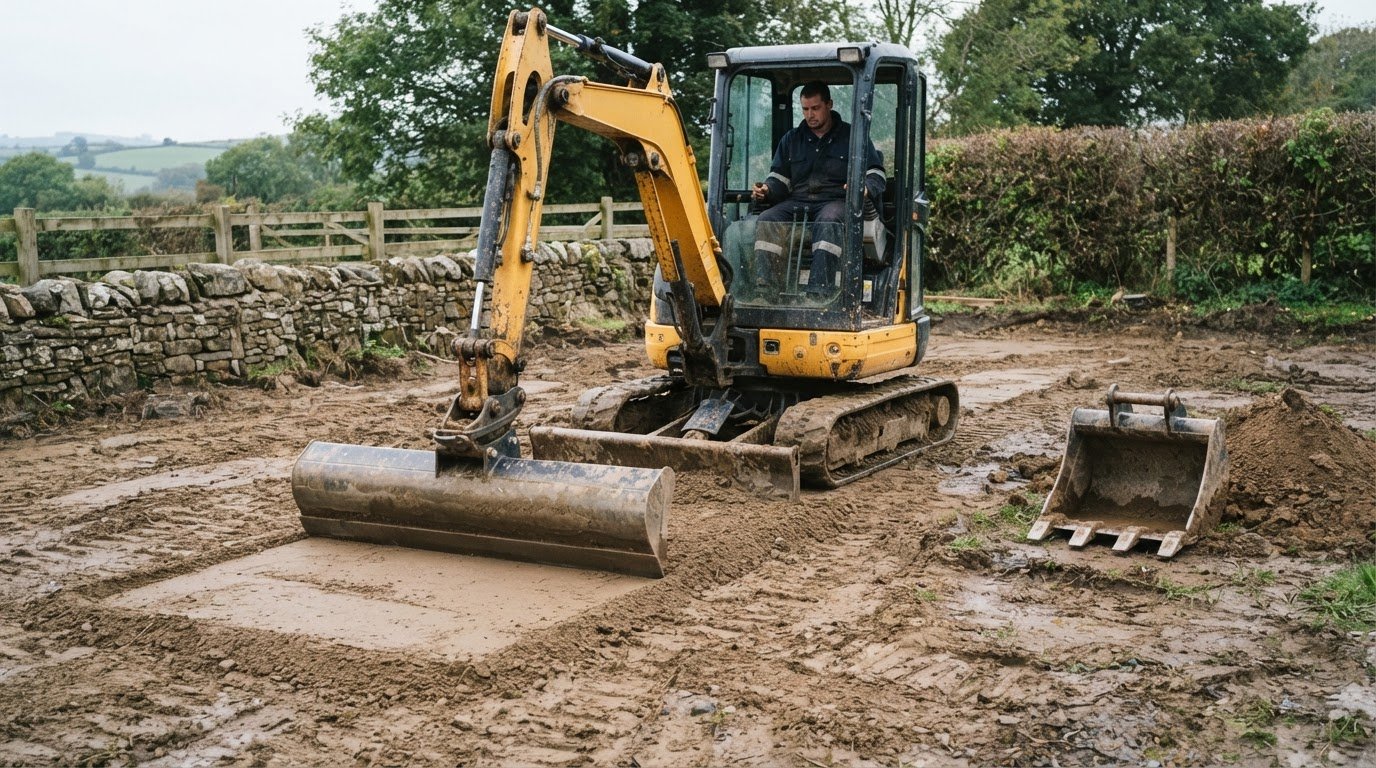
Rocket Rentals Ltd offers Mini Digger Hire for construction and groundworks projects where compact digging equipment suits the task. As a local, family-run business, it provides a personal approach to plant hire. The range also includes Excavator hire, Roller Hire and Welfare Unit Hire for other project needs.
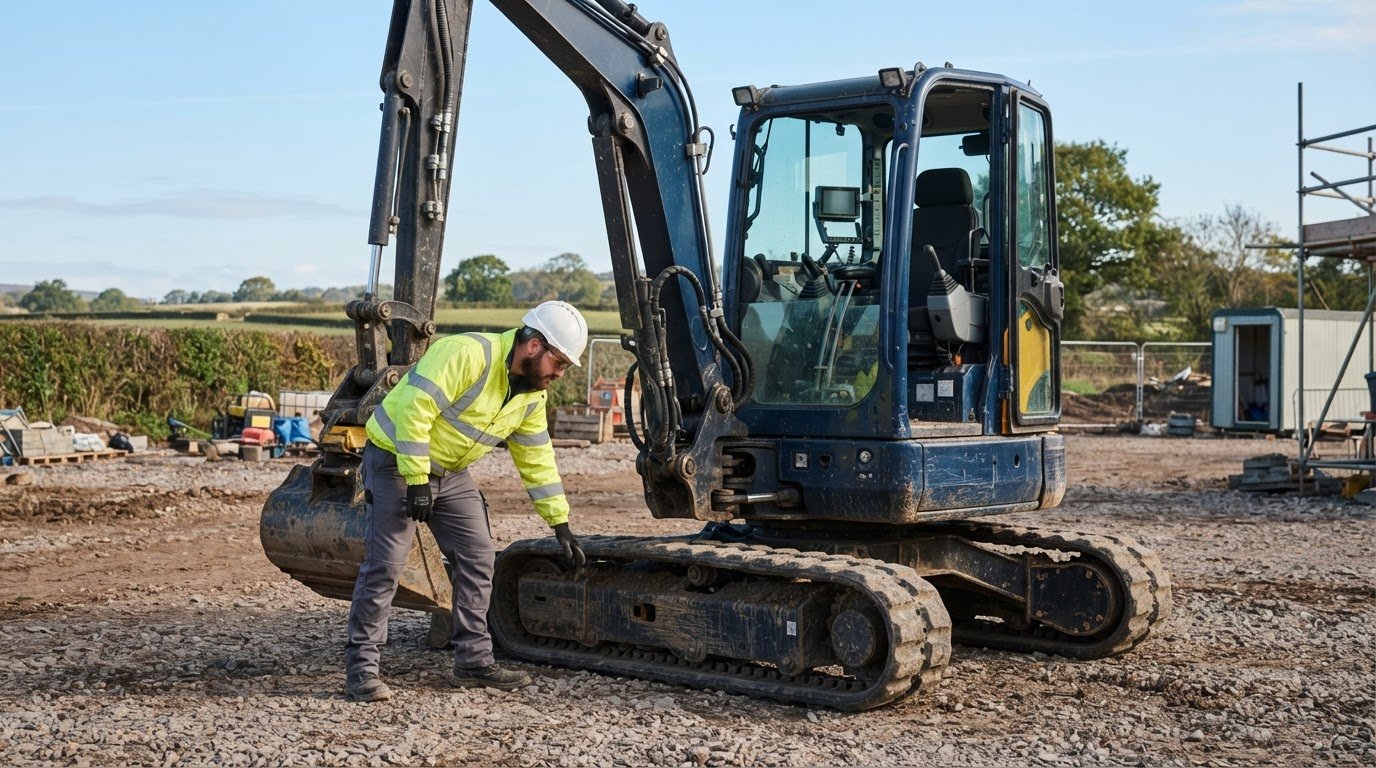
Before arranging transport, consider the machine and attachment combination, then account for the vehicle carrying it. Rocket Rentals Ltd inspects equipment as part of preparing it for hire.
For a project that needs a mini digger, contact Rocket Rentals Ltd or visit rocketrentals.co.uk.
Plan your next move with confidence
Once you’ve considered digger weight restrictions on roads, focus on what the work itself demands. Think about the tasks the machine must complete, the space available on site and whether attachments could help. A clear brief makes it easier to choose suitable equipment for your project.
For groundworks, choose equipment that fits the job without adding unnecessary complexity. Rocket Rentals Ltd offers Mini Digger Hire and Excavator hire for projects that need digging equipment, as well as Roller Hire for other site work.
Talk through your requirements with Rocket Rentals Ltd and ask about digger transport for your project. A straightforward conversation can help you take the next step with confidence.
Frequently Asked Questions
What are the UK legal weight limits for diggers travelling on public roads?
There is no single legal weight limit for a digger: the limit depends on the road-going vehicle carrying it. Regulations 75-80 of the Road Vehicle (Construction and Use) Regulations 1986 set vehicle maximums. For example, a five-axle articulated vehicle has a C&U maximum of 38,000 kg, or an AWR maximum of 40,000 kg. These figures concern the transporter, not the excavator alone.
What are the maximum axle weights and gross vehicle weights for excavators and plant machinery in the UK?
Limits depend on the transporter’s axle arrangement, rather than the excavator or plant type. A rigid motor vehicle with four or more axles has a C&U maximum of 30,000 kg, rising to 32,000 kg with road-friendly suspension. A four-axle articulated vehicle’s C&U maximum is 32,520 kg, or 35,000 kg with road-friendly suspension; its AWR maximum is 36,000 kg.
Do road weight restrictions apply to diggers being transported on low loaders or trailers?
Yes. The digger is cargo, but the road-going vehicle carrying it must still comply with applicable restrictions. This differs from driving a digger on a public road under its own power, when the machine itself is the vehicle being assessed. For a low-loader journey, consider the transporter’s configuration and loaded combination; the trailer is not exempt from road restrictions.
What do UK road weight limit signs mean for diggers and plant transport vehicles?
The sign’s stated limit applies according to the vehicle category and restriction shown, not simply to HGVs by default. For example, Newbridge in Oxfordshire has an 18-tonne maximum gross weight restriction applying to all vehicles. A plant transporter should therefore not assume a restriction is irrelevant because it is not a conventional lorry. Read the full sign, including any stated exceptions, before entering the restricted road.
Are there exemptions or permits for moving an overweight digger on UK roads?
There is no general permit that makes an overloaded vehicle lawful on every road. A permit or access exemption applies to particular restrictions and their stated conditions; it does not replace the transporter’s legal weight limits. Check what the relevant order allows, including whether an exemption permit must be displayed. A structural restriction may have no access exemption because excess weight could endanger a bridge.
How can I check local weight restrictions on roads in England, Scotland, Wales and Northern Ireland?
For a route crossing different areas, identify the authority responsible for each road section and consult its restriction information or relevant traffic order. Check the exact road, direction of travel, vehicle category and any exemptions instead of relying on a general map label. Record the applicable limits for each section: a route may pass through several authorities’ areas, each with separate restrictions.

Comments