
Low ground pressure excavator hire for soft ground sites
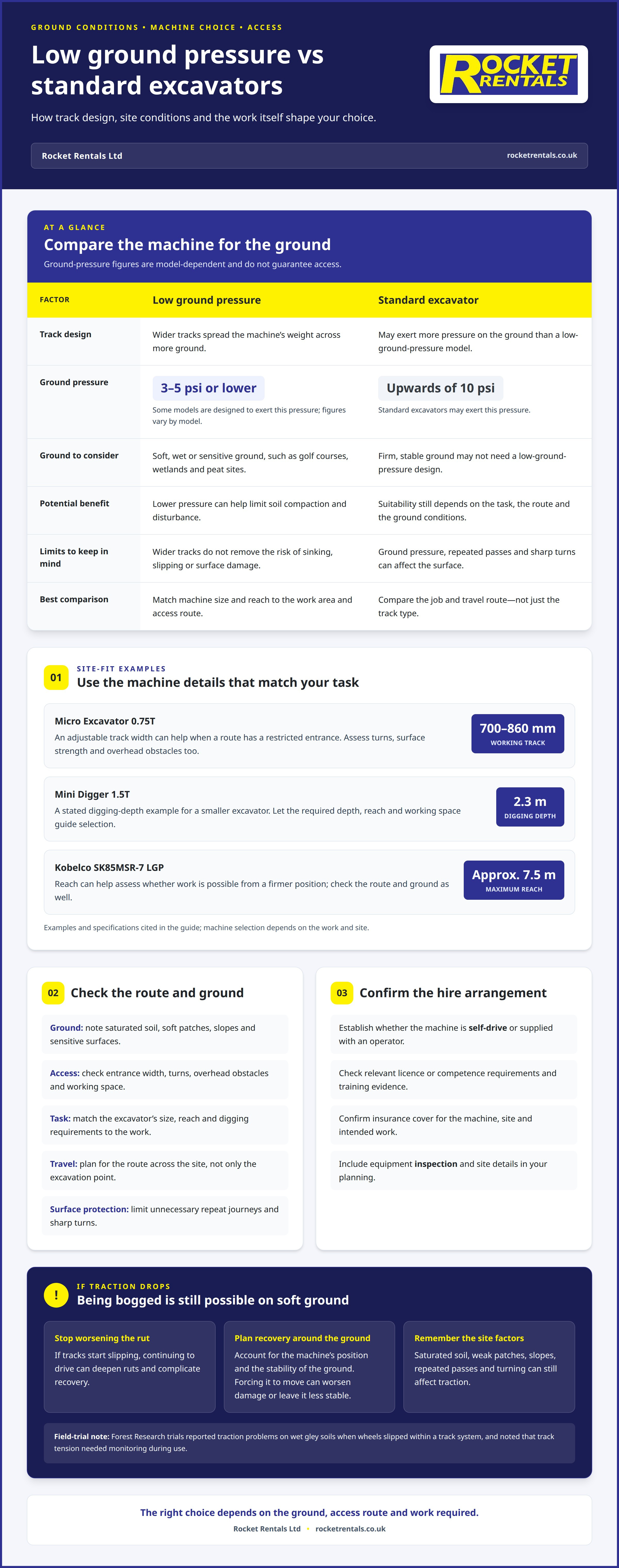
What if the tracks that help an excavator cross soft ground also make the difference between reaching the work area and damaging the surface? Low ground pressure excavator hire can be a practical option for sites with wet, soft or sensitive ground. LGP excavators are designed to spread their weight across wider tracks, and some models can exert ground pressure of 3 to 5 psi or lower, compared with standard excavators that may exert upwards of 10 psi.
It’s understandable to ask whether you can hire one without an operator. That depends on the hire arrangement, while the right machine also depends on access, ground conditions and the work required. This guide explains how LGP excavators work, how they can help limit ground damage and what affects access on a soft site.
You’ll also learn what to consider if an excavator gets bogged, including why wider tracks don’t remove every risk. With these points in mind, you can make a more informed choice about the machine and hire arrangement your project needs.
Table of Contents
What is a low ground pressure excavator?
A low ground pressure excavator spreads its weight across wider tracks, helping it work on ground that could deform under heavier, narrower equipment. Golf courses, wetlands and peat sites need careful matching of the machine to the surface, access route and task.
Sensitive-site plant hire
On a golf course, work near greens, tees and fairways can leave marks that affect play and require repairs. Wider tracks spread the machine’s weight across more ground, helping reduce pressure on turf. The site layout still matters: narrow entrances, slopes and soft patches can limit access. Match the excavator’s size and working reach to the task and the route into position.
Wetland and peat projects
Wetlands and peat can become unstable or suffer surface damage when heavy machinery crosses saturated ground. A low ground pressure machine is designed for soft, wet or sensitive terrain, but its suitability depends on the actual ground and planned work. For example, excavating beside a wetland may call for different access planning from travelling across peat. Consider the route as well as the work area.
Reducing soil compaction
Compaction occurs when machine weight presses soil particles together, affecting its structure and drainage. Standard excavators may exert ground pressure upwards of 10 psi; low-ground-pressure models can be designed for 3 to 5 psi or lower. Less pressure can help limit compaction and disturbance, but does not remove all risk. Soil moisture, repeated passes and turning on the spot also affect the surface.
Ground suitability and machine comparisons
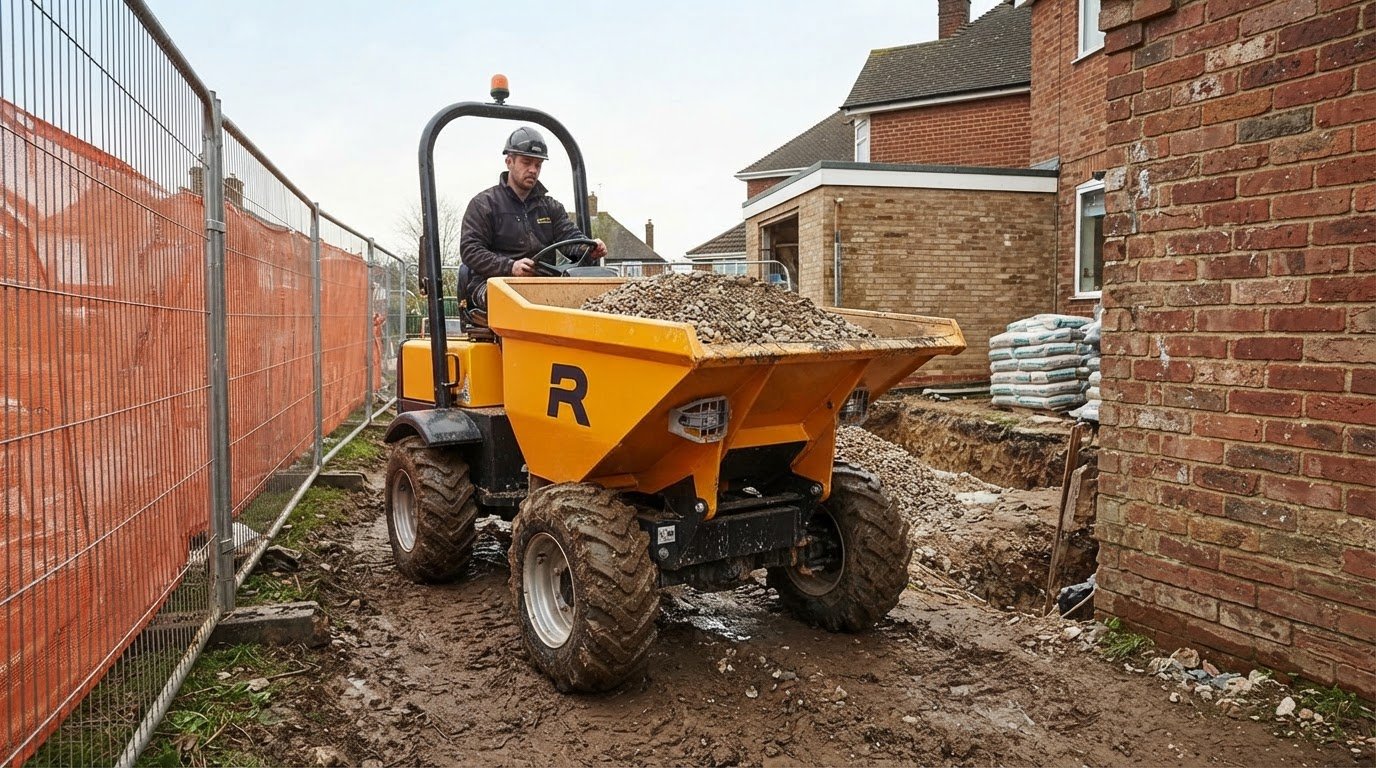
This design can help on soft, wet or sensitive ground; firm, stable ground may not need it. An excavator digs and moves material with its boom and bucket, while a tracked dumper carries loads around site. They serve different tasks, so compare the work and travel route, not just track type. For UK hire, establish whether the machine is self-drive or supplied with an operator, then confirm relevant licence or competence requirements, training evidence and insurance cover for the machine, site and intended work.
What happens if a machine gets bogged on my site?
Wider tracks help spread an excavator’s weight, but soft ground can still cause it to lose traction. With low ground pressure excavator hire, plan for the site conditions and what to do if the machine becomes stuck.
Track weight distribution
Wider tracks increase the area supporting a machine, spreading its weight and reducing pressure at each point of contact. This can help a tracked excavator travel over soft ground, but slopes, turns and repeated passes still affect traction. If tracks start slipping, continuing to drive can deepen ruts and complicate recovery. Forest Research field trials found traction problems on wet gley soils when wheels slipped within a track system. The trials also noted that track tension needed monitoring during use.
Site surveys and machine selection
A site assessment helps match machine size and reach to the work area and access route. The provider should consider ground conditions, slopes, entrance width, working space and the material being moved. For example, the Kobelco SK85MSR-7 LGP has an approximate maximum reach of 7.5 m. That figure helps assess whether the machine can reach the work from a firmer position. For low ground pressure excavator hire near you, look for a provider that can discuss these site details and inspect equipment before hire. Machine sizes depend on the hire fleet, so selection should reflect the job rather than weight alone.
Ground pressure, risks and limitations
Low-ground-pressure excavators can be designed to exert 3 to 5 psi or lower, depending on the model. Standard excavators may exert upwards of 10 psi. These ratings help compare machines, but they don’t guarantee access. Saturated soil, weak patches and slopes can still cause sinking or loss of traction. If a machine gets bogged, recovery planning needs to account for its position and the ground’s stability. Forcing it to move can worsen surface damage or leave it less stable.
Soft ground access and reduced ground damage
Soft ground can restrict routes into a work area, particularly where larger excavators risk rutting turf or sinking into wet soil. Machine width, track design and access constraints all affect the choice.
Soft-ground access
For restricted entrances, a micro excavator may fit where a larger machine cannot pass. A Micro Excavator 0.75T has an adjustable working track from 700mm to 860mm, which can help with access through narrow areas. The route still needs assessment for surface strength, turns and overhead obstacles.
On a golf course, for example, the route to a drainage repair may cross a fairway or soft verge. A compact machine can reduce the space needed to reach the work, while suitable tracks help spread its load. Identify vulnerable ground and turning areas in the site plan before machinery arrives.
Reducing ground damage
Damage can result from concentrated machine weight, repeated travel and sharp turns. Wider tracks spread the load over more surface area, which can limit pressure on the ground. Avoiding unnecessary journeys across the same patch also helps protect turf and soil structure.
Machine size matters too. A Mini Digger 1.5T has a stated digging depth of 2.3m, giving a useful example of how a smaller excavator can suit a defined task. The required depth, reach and space should guide selection, rather than choosing a larger machine without need.
Forestry and peatland access
Forestry tracks and peatland routes can combine uneven surfaces with wet, sensitive ground. Plan the access route around soft patches, slopes and turning space, not just the excavation point. A machine that reaches the work but cannot travel safely across the site is not a suitable choice.
In peatland, repeated passes can disturb the surface and leave lasting ruts. Set out a clear route and keep movements focused on the work area. For forestry drainage, for instance, match machine size and digging reach to the channel location, available working space and ground conditions along the route.
How low ground pressure excavators work
An excavator’s tracks support the machine and spread its weight across the ground. Low ground pressure designs increase the contact area, distributing the load over more surface. The principle is straightforward: a broader footprint places less pressure on each part of the track’s path. This explains why track design matters on soft sites.
The undercarriage carries the machine’s weight, while the boom and bucket do the digging. As the boom moves, the load shifts across the tracks. Digging beside a wet verge, for example, places different demands on the machine from travelling across level ground. The machine’s size, working reach and task all affect how it behaves on site.
Consider the Kobelco SK85MSR-7 LGP: its stated operating weight range is 8,400-9,600 kg, with 53.7 kW engine power and an approximate maximum dig depth of 4.44 m. Those specifications describe capacity, but they don’t alone establish suitability. A hire decision also needs to account for access, ground conditions and the position from which the excavator must work.
Track contact helps the machine travel, but it doesn’t make every movement safe on soft ground. Turning sharply can disturb the surface, and digging can change how weight presses through the undercarriage. A planned route and working position can reduce unnecessary movement. For a drainage trench near a sensitive grassed area, positioning the machine within reach of the work may limit repeated trips across the same ground.
For a project that needs the right machine and setup, discuss excavator hire for your site.
Rocket Rentals Ltd
Rocket Rentals Ltd is a local, family-run business supporting plant hire projects nationwide. Its excavator hire and Mini Digger Hire options suit different project requirements. Share details of your site surface, access width, required digging reach and planned tasks to guide the hire discussion.
For soft or sensitive ground, explain where the machine needs to travel and work, including slopes, narrow entrances and areas to protect. Inspect the equipment before hire to assess its condition. If your project requires an attachment, excavator attachments may also be relevant.
Contact Rocket Rentals Ltd to discuss the machinery your project needs.
Set up your next hire decision
Before arranging a machine, turn your site observations into a clear hire brief. Set out the work, the route from the delivery point to the work area, the ground the tracks will cross, and any limits on space or reach. This keeps the discussion focused on how the job will run, rather than a machine label alone. Include changes in access between work stages, such as when excavation narrows turning space.
For low ground pressure excavator hire, explain whether you need a machine only or an operator, and note any attachment requirements. Describe sensitive areas to protect and how material will move around the site. These details give the hire discussion a practical starting point.
With a clear brief, you can take the next step with confidence. Discuss your excavator hire requirements with Rocket Rentals Ltd.
Frequently Asked Questions
Can I hire an LGP excavator without an operator?
Check with Rocket Rentals Ltd whether self-drive excavator hire is available. If you’re arranging an operator, make sure they’re suitably competent and plan the machine’s movements. For soft-ground work, include the surface type, intended digging task and access route in your hire brief so the machine choice reflects the conditions it will face.
What size LGP excavators do you have?
Rocket Rentals Ltd offers Mini Digger Hire and excavator hire, giving you options across these equipment categories. The right class depends on the job’s digging depth and reach, plus your access width and available turning room. A mini digger may suit a restricted entrance, while a larger excavation may call for a different excavator class. Include site constraints in your hire brief.
What sizes and operating weights of low ground pressure excavators can be hired?
Operating weights vary by model. Market examples include the CAT 312E LGP at approximately 12 tonnes and the Hitachi ZX130 LGP at approximately 13 tonnes. These give you a sense of machine scale, but don’t establish which models are in a particular hire fleet. Compare weight with digging reach, access limits and ground conditions, rather than using weight alone to judge suitability.
Are low ground pressure excavators available with rubber tracks or wide track pads?
Some excavators use rubber tracks, while others have wider track pads; the arrangement varies by machine. Rubber tracks can suit finished surfaces, and wider pads spread contact over a larger footprint. Neither setup removes the risk of ground damage or sinking. Include surfaces such as turf, gravel, hardstanding or wet soil in your site brief, as the ground affects which configuration is suitable.
What site conditions and ground types are low ground pressure excavators suitable for?
They’re designed for soft, wet or sensitive terrain, including peat, waterlogged field margins and golf course turf. Suitability still depends on moisture, slope, ground strength and the route into the work area. On a mixed site, for example, plan for both firm access tracks and softer work zones. A machine can struggle if the route is less stable than the excavation point.
What should your provider check before hiring and transporting a low ground pressure excavator to your site?
Match the machine’s dimensions, weight and reach to the work, ground conditions and full access route. Consider entrance width, overhead clearance, turning room, unloading position and any attachments needed. Inspect the equipment before hire to assess its condition. Sharing site details early supports a practical transport and delivery plan.
Comments