
Roller Hire Gloucester: A Professional Comparison Guide to Compaction Equipment (2026)
Updated: Jun 30
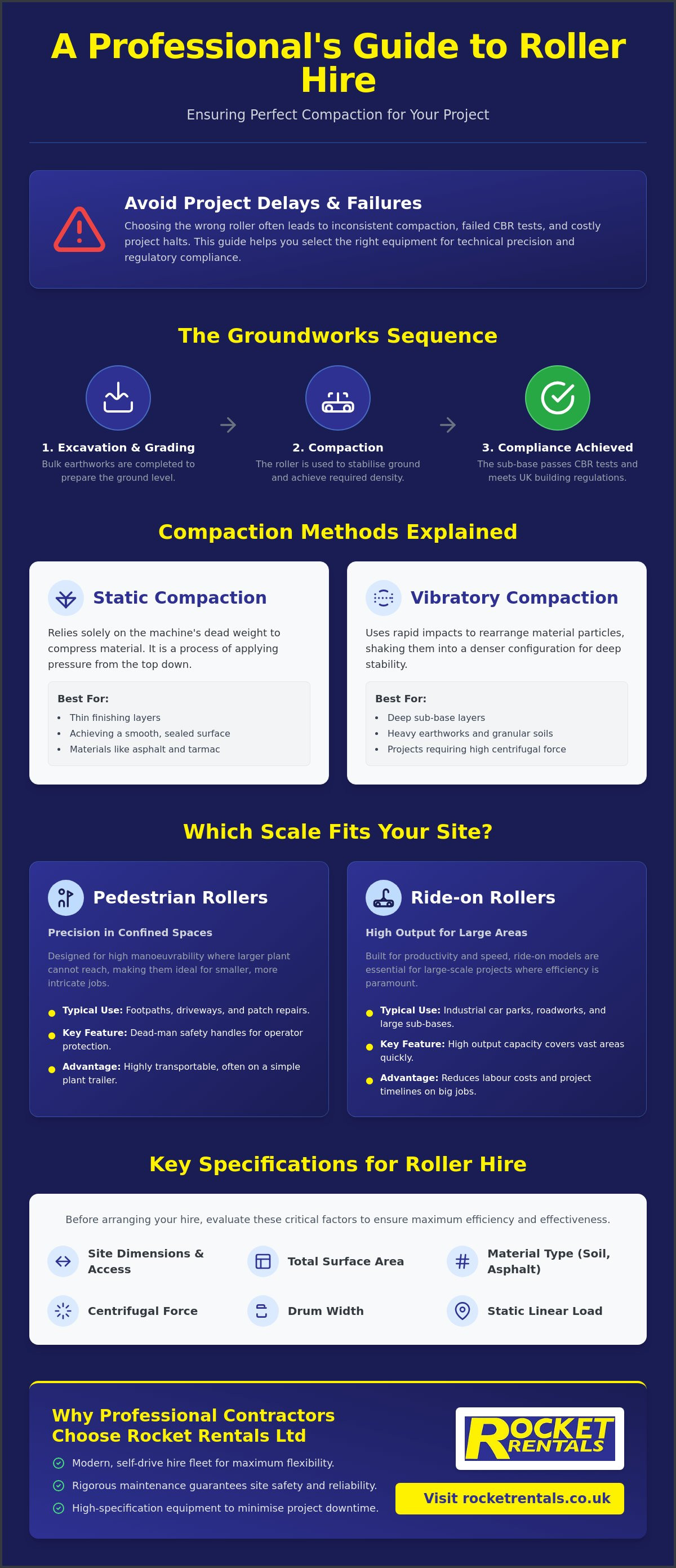
The heaviest machine on the fleet isn't always the most effective choice for your sub-base. Selecting the wrong equipment for your roller hire often leads to inconsistent compaction density or a failed California Bearing Ratio (CBR) test that halts your project. We know it's a challenge to balance efficiency with the latest UK safety standards, particularly with the 2026 introduction of the General Safety Requirement (GSR) and the PAS 2000:2026 code of practice. You need equipment that provides peace of mind and technical precision, not just raw power.
This professional comparison guide provides a detailed look at compaction machinery to help you select the precise drum frequency and centrifugal force for your specific site material. We'll review machine specifications and modern compliance needs to ensure you achieve required density values whilst keeping hire costs under control. By matching the right roller to your project scale, you can maintain a safe, high-performing site that meets every regulatory standard.
Table of Contents
Navigating Roller Hire for Professional Compaction Projects
Compaction is far more than just a finishing touch; it is the fundamental process that ensures the structural integrity of foundations, roadworks, and hardstanding areas. Without precise compaction, even the best-engineered designs risk subsidence or structural failure. This makes roller hire Gloucester a critical final step in the groundworks sequence. By selecting the correct machinery, site managers can ensure that the sub-base is sufficiently dense to support the intended load for decades to come.
Professional contractors often prefer self-drive hire for these tasks because it offers superior flexibility. When you manage the machinery yourself, you maintain total control over project timelines and cost-efficiency. You aren't tied to an operator's schedule, allowing you to react immediately as soon as a material layer is ready for treatment. A key concept here is matching the machine to the "lift," which refers to the thickness of the material layer being compacted. If the machinery is underpowered for the lift, the lower portion of the layer will remain loose, leading to future settlement issues.
The Role of Rollers in the Groundworks Sequence
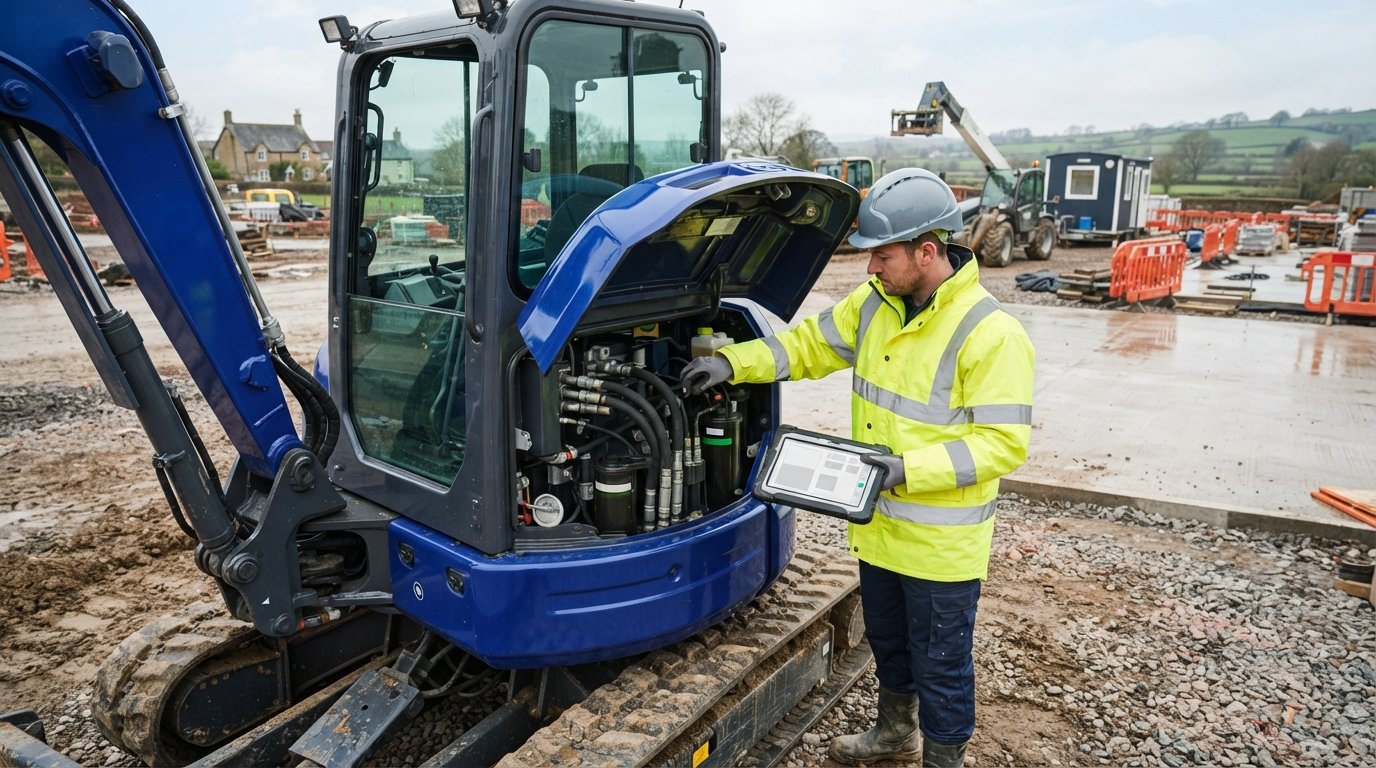
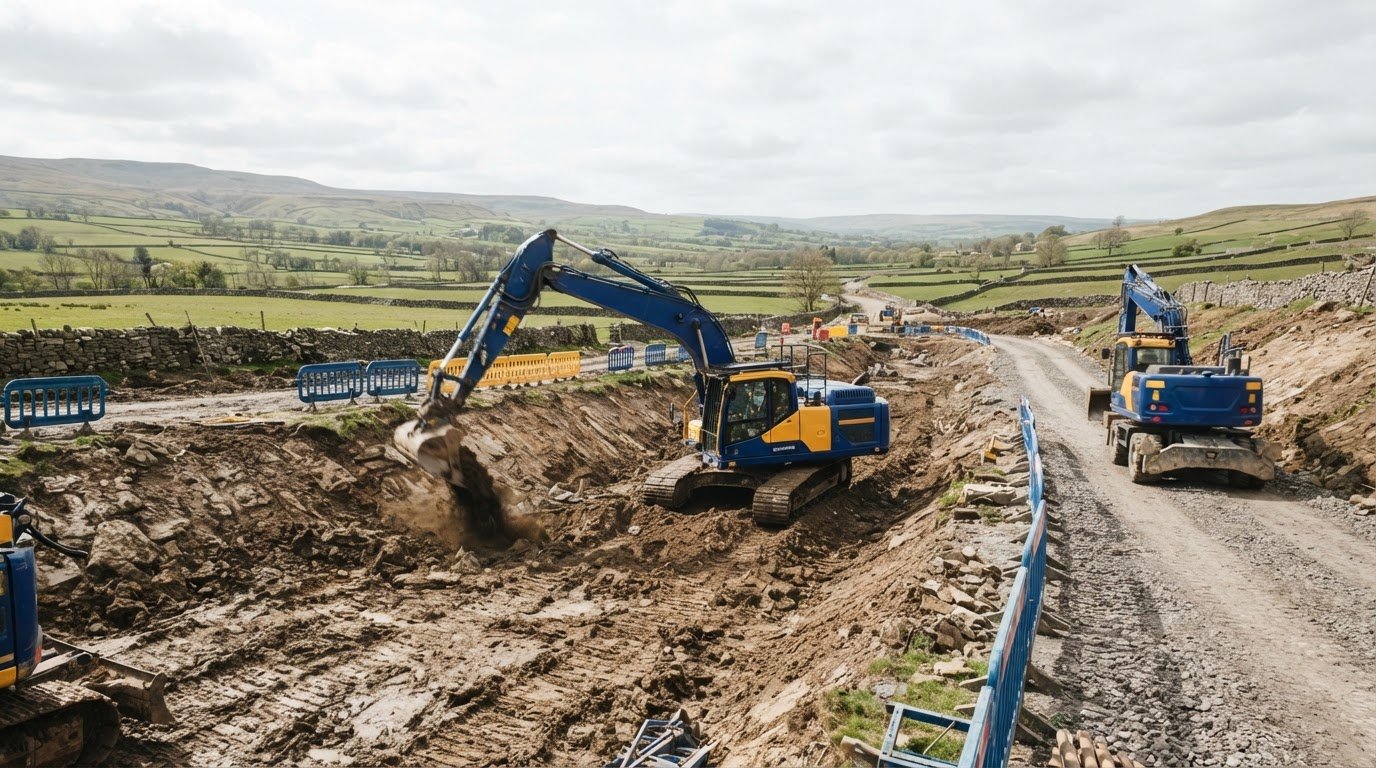
The compaction process typically begins once the mini excavator hire phase has concluded. After an excavator has finished the bulk earthworks and grading, the roller is brought in to stabilise the disturbed ground. This sequence is vital for achieving the specific density requirements mandated by UK building regulations. Professional contractors prioritise modern, high-specification rollers because they provide the reliability needed to pass stringent California Bearing Ratio (CBR) tests on the first attempt. Using well-maintained equipment reduces the risk of project delays and ensures every square metre meets the necessary compliance standards.
Static vs Vibratory Compaction: A Technical Overview
Understanding the mechanical differences between static and vibratory methods is essential for selecting the right plant. Static compaction relies solely on the dead weight of the machine to compress the material, which is often sufficient for thin finishing layers. In contrast, vibratory compaction uses rapid impacts to rearrange material particles, effectively shaking them into a denser configuration.
Whilst static rollers are excellent for achieving a smooth finish on asphalt or tarmac, vibratory rollers are the industry standard for deep sub-base layers and heavy earthworks. The effectiveness of a vibratory model is determined by its centrifugal force. This force dictates the total depth of compaction achieved on site, allowing the energy to penetrate through the material lift to ensure the entire layer is uniform and stable. When arranging your roller hire Gloucester, always consider whether you need the deep-reaching power of vibration or the delicate touch of static pressure.
Comparing Pedestrian and Ride-on Rollers: Which Scale Fits Your Site?
Selecting machinery depends on site dimensions, access constraints, and total surface area. A large ride-on model offers high productivity but is useless if it cannot navigate narrow residential or urban access. Conversely, relying on a pedestrian model for an industrial car park leads to unnecessary labour costs and project delays. You must balance the physical footprint of the machine against the volume of material that needs consolidating. Consider these criteria before booking:
Site dimensions: Can the machine physically fit and turn within the workspace?
Access: Are there narrow gates, low-clearance entries, or weight-restricted bridges?
Surface area: Is the volume of work high enough to warrant the speed of a ride-on model?
Pedestrian Rollers: Precision in Confined Spaces
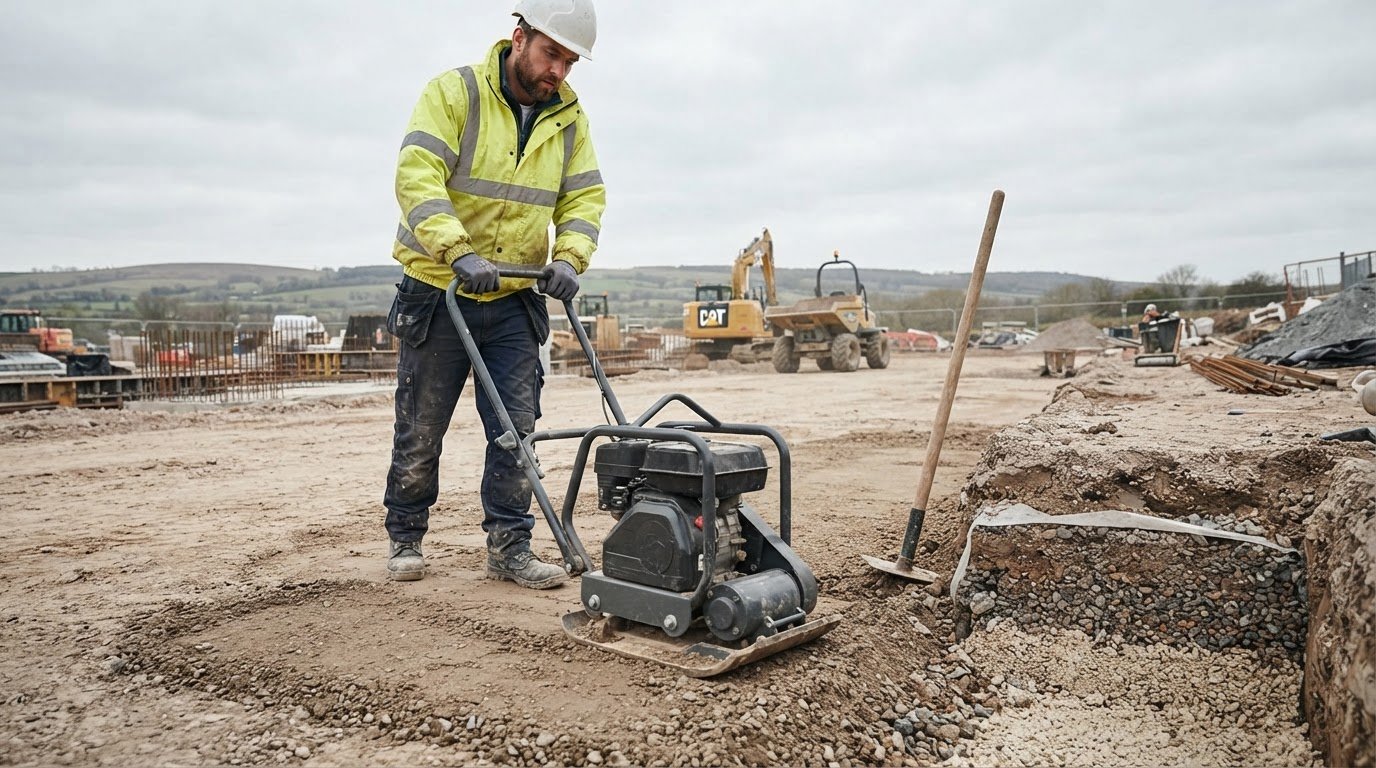
The 800mm twin-drum pedestrian roller is the industry standard for footpaths, driveways, and patch repairs. These machines are designed for precision in confined spaces where larger plant cannot reach. Safety is a paramount concern for self-drive operators; modern units feature dead-man safety handles that automatically stop the machine if the operator loses control. Because of their compact size, they are highly transportable and can often be moved on a plant trailer, making them a favourite for smaller contractors. They are frequently paired with small dumper hire to create an efficient groundworks kit that manages both material movement and compaction in tight quarters.
Ride-on Rollers: Maximising Hectares per Hour
When the project scale increases, ride-on rollers provide significant productivity gains, often measured in hundreds of square metres per hour. Professional self-drive fleets typically offer drum widths ranging from 80cm to 135cm. Articulated steering is a vital feature here, allowing the operator to navigate around manholes, kerbs, and building corners with ease. Many of these models also include dual-frequency vibration settings. This allows the operator to adjust the compaction force based on the material, whether they are working on granular sub-bases or finishing tarmac. This versatility means one machine can handle multiple stages of the project, from the initial stone layer to the final wearing course.
Visibility and operator comfort are where ride-on models excel for longer shifts. High-seated positions provide a clear view of the drum edges, reducing the risk of site accidents and ensuring edges are compacted right up to the kerb line. These machines also feature Roll-Over Protective Structures (ROPS) as standard, providing an essential layer of safety for the operator. When considering roller hire Gloucester, evaluating the total area and the number of passes required will dictate whether the investment in a ride-on model is justified. Finding the right partner for roller hire Gloucester ensures you have access to both equipment types as the project needs shift. If you're unsure which scale fits your current project, exploring the available roller hire options can help clarify the most cost-effective choice for your specific site layout.
Tandem vs Single Drum Rollers: Matching Machinery to Material
A frequent misconception in the groundworks industry is that a tandem roller is the superior choice for every stage of a project. Whilst the dual-drum setup is visually impressive, it is engineered for a specific set of tasks. Choosing the wrong configuration for your roller hire Gloucester can lead to material "shoving" or insufficient traction on loose ground. Effective compaction requires matching the machine's mechanical behaviour to the specific properties of the material layer you are treating.
Tandem Vibratory Rollers for Finishing and Asphalt
The dual-drum configuration is the industry standard for achieving a level, sealed finish on asphalt and tarmac. Because both drums are made of steel and both typically vibrate, the machine can compact the material without pushing it forward. This is essential for maintaining a flat, mirror-like surface on road maintenance or car park projects. High-quality tandem rollers are equipped with pressurised water sprinkler systems. These systems are a technical necessity to prevent hot bitumen from sticking to the cold steel drums, which would otherwise tear the surface and ruin the texture. When you require a professional finish on a wearing course, the tandem roller is the undisputed tool for the job.
Achieving this level of smoothness is also a prerequisite for specialised applications like tennis court construction; if you are planning such a project, you can visit Sturdy Racquets to explore professional-grade equipment for your finished court.
Single Drum Rollers for Sub-base and Earthworks
When the project involves heavy-duty earthworks or deep sub-base layers, the single drum roller is the more effective choice. Unlike tandem models, single drum rollers feature large, rear-drive tyres that provide exceptional traction on uneven or loose ground. This grip makes them indispensable for working on steep gradients or embankments where a dual-drum machine might lose purchase. They are designed to deliver massive centrifugal force through a single point of contact, driving energy deep into the material lift.
For cohesive soils like clay or silt, a smooth drum is often ineffective as it simply slides over the surface. In these scenarios, professional contractors utilise padfoot (or sheep's foot) shells. These attachments feature protruding lugs that penetrate the soil surface to provide deep compaction from the bottom up. By concentrating the machine's weight on these small points, the roller breaks down the soil structure and removes air pockets more effectively than a smooth surface. Understanding these material-specific requirements ensures your roller hire Gloucester delivers the structural density required for a successful build.
Asphalt and Tarmac: Use tandem rollers for a smooth, sealed finish.
Granular Sub-base: Use single drum rollers for the traction needed on loose stone.
Cohesive Soils: Use single drum rollers with padfoot attachments to penetrate clay and silt.
Key Specifications for Roller Hire: Weight, Width, and Vibration
Selecting a machine for roller hire Gloucester requires looking beyond the basic tonnage listed on a spec sheet. While operating weight represents the total mass of the unit, the static linear load is often the more critical metric for meeting technical compaction targets. This figure, measured in kilograms per centimetre of drum width, tells you exactly how much pressure the machine applies to the surface. You should balance the drum width against the estimated number of passes required to reach the desired density. A wider drum reduces the time spent on large areas but can become a liability if the site has tight corners or narrow access points.
Modern fleets now prioritise Stage V engine compliance and superior fuel efficiency. These technical standards aren't just about environmental responsibility; they reflect a machine's overall performance and reliability. Using the latest equipment ensures you meet the strictest site emissions standards whilst benefiting from lower fuel costs over the duration of a long-term hire.
Understanding Compaction Forces and Frequency
Centrifugal force is the power generated by internal eccentric weights rotating within the drum. This force determines the machine's ability to consolidate deep material lifts. High-frequency vibration is typically best for thin layers, such as asphalt wearing courses, because it prevents the material from being over-stressed. Conversely, low-frequency vibration is better for deep sub-base layers where the energy needs to penetrate further into the ground. You must monitor the ground's response to avoid over-compaction. Over-working the material can crush the aggregate structure and actually reduce the stability of the final surface, leading to a failed inspection.
Logistics and Site Access Requirements
Always verify the transport dimensions and total weight before booking delivery to a restricted or narrow site. Many projects in Gloucester involve urban environments where narrow gateways or low-clearance entries are common. Site safety and compliance require that every machine is fitted with a Roll-Over Protective Structure (ROPS) as standard. If your groundworks involve significant inclines or ramps, check the gradeability specification. A machine with high gradeability can safely navigate slopes whilst maintaining consistent vibration, ensuring the entire site is stabilised regardless of the terrain. If you need assistance matching these specifications to your site plan, you can view our full range of roller hire equipment to find the perfect fit.
Why Professional Contractors Choose Rocket Rentals Ltd for Roller Hire
Rocket Rentals Ltd is a specialist in high-quality, self-drive plant for the UK construction sector. We recognise that project success depends on the immediate readiness and mechanical reliability of the machinery on your fleet. Every unit in our modern inventory undergoes rigorous pre-hire inspections and comprehensive maintenance to ensure it performs to its technical specifications from the moment it arrives on site. For those seeking roller hire Gloucester, we provide a service that combines the scale and efficiency of a national provider with the dedicated, personal touch of an independent specialist. You aren't just hiring a piece of equipment; you're partnering with a team that prioritises your project's productivity and safety.
Our technical team is available to assist in matching the specific roller to your site’s ground conditions. We understand the nuances of soil behaviour and material lifts, helping you select a machine with the correct centrifugal force and drum frequency for your compaction targets. This proactive support helps you avoid the common pitfalls of hiring underpowered equipment or encountering unexpected delays during CBR testing. By providing the right machinery for the specific material, we help you maintain a steady workflow and keep hire costs under control.
A Safe Pair of Hands for Your Machinery Needs
With a 30-year heritage amongst UK plant hire providers, Rocket Rentals Ltd is a mark of trust and expertise in the industry. We've built our reputation by being a "safe pair of hands" for contractors who require reliable machinery and clear communication. Our commitment to safety is absolute; we provide clear operation manuals and safety briefings for all self-drive equipment to ensure your team can work with confidence. Our diverse fleet is designed to support total site solutions. For example, projects that require clean-energy access for internal fit-outs can utilise our electric scissor lift hire options, allowing you to source multiple plant types from a single, dependable partner.
Streamlined Hire Process and Expert Support
Organising your roller hire Gloucester is a streamlined process thanks to our dedicated logistics and transport team. We manage national delivery with precision, ensuring your compaction equipment arrives on site exactly when your groundworks sequence requires it. We encourage site managers to consult our experts on specific compaction targets or complex soil requirements before finalising a booking. This collaborative approach ensures you have the technical precision needed to achieve a stable, compliant sub-base. Explore our full range of roller hire options and request a quote today.
Securing Structural Integrity with Professional Compaction
Achieving the required density for your project is a precise science that depends on matching the mechanical capabilities of your plant to the specific site material. Whether you are finishing a residential driveway with a pedestrian model or stabilising a major industrial sub-base with a single drum roller, the right choice prevents project delays and ensures long-term stability. Selecting high-specification equipment is the most effective way to meet modern safety standards whilst keeping your operational costs efficient.
When you partner with Rocket Rentals Ltd for your roller hire Gloucester, you gain more than just machinery. You benefit from over 30 years of independent industry expertise and a modern fleet featuring the latest Stage V engines for maximum reliability. Our national delivery and dedicated technical support ensure you have a "safe pair of hands" for every stage of your groundworks. Contact Rocket Rentals Ltd for a Professional Roller Hire Quote and ensure your next project starts on solid ground.
Frequently Asked Questions
Do I need a special licence for self-drive roller hire on a private site?
You don't need a standard UK driving licence to operate a roller on private land, but you must be competent. On commercial construction sites, most managers require a recognised certification like a CPCS or NPORS card. It's your responsibility to ensure the operator is trained to handle the specific weight class of the machine safely and effectively.
What is the difference between a static roller and a vibratory roller?
A static roller relies purely on its dead weight to compress material, whereas a vibratory roller uses internal eccentric weights to create rapid impacts. This vibration reduces friction between material particles, allowing them to settle into a much denser state. Vibratory models are generally more efficient for reaching deep into sub-base layers during heavy groundworks.
Can I use a tandem roller on soil or is it just for asphalt and tarmac?
Whilst tandem rollers are optimised for asphalt, they can be used on granular soils and stone sub-bases. However, they lack the traction provided by a single drum roller's rear tyres. If you are working on loose or cohesive soils like clay, a single drum model with a padfoot shell is a much more effective choice for roller hire Gloucester.
How do I determine what size roller I need for a standard domestic driveway?
An 80cm twin-drum pedestrian roller is the most common choice for a standard domestic driveway. It provides enough compaction force for stone sub-bases and tarmac finishing whilst being narrow enough to fit through standard gates. For larger driveways with open access, an 80cm or 120cm ride-on model can significantly speed up the work and reduce labour time.
What happens if I over-compact the ground during the groundworks project?
Over-compaction can damage the material structure by crushing the aggregate into smaller, less stable pieces. It often causes the ground to "heave" or move in waves behind the drum, which actually reduces the final density and structural integrity. Monitoring the number of passes is essential to ensure you stop once the material has reached its maximum consolidation.
Are your rollers compliant with the latest Stage V emission standards for UK sites?
Yes, our modern fleet is fully compliant with the latest Stage V emission standards for UK construction sites. These engines are designed to reduce particulate matter and nitrogen oxides, making them suitable for use in urban areas and on projects with strict environmental requirements. This ensures your site meets all current regulatory obligations whilst maintaining high performance.
Do you provide safety equipment and operation manuals with every roller hire?
We provide comprehensive operation manuals and essential safety features with every machine we supply. Each roller is equipped with a Roll-Over Protective Structure (ROPS) and clear safety decals for the operator's protection. We recommend that all self-drive operators review the manual thoroughly to familiarise themselves with the specific controls and emergency stop locations before starting work.
What is the minimum hire period for a ride-on vibratory roller?
The minimum hire period for a ride-on vibratory roller is typically one day, though many contractors prefer weekly rates for better value on longer groundworks projects. When arranging your roller hire Gloucester, we can discuss flexible durations to suit your specific timeline. This allows you to scale your equipment needs as the project progresses without incurring unnecessary costs.
Comments