
Self Drive Excavator Hire: The Contractor Guide to Plant Machinery Selection
Updated: Sep 29
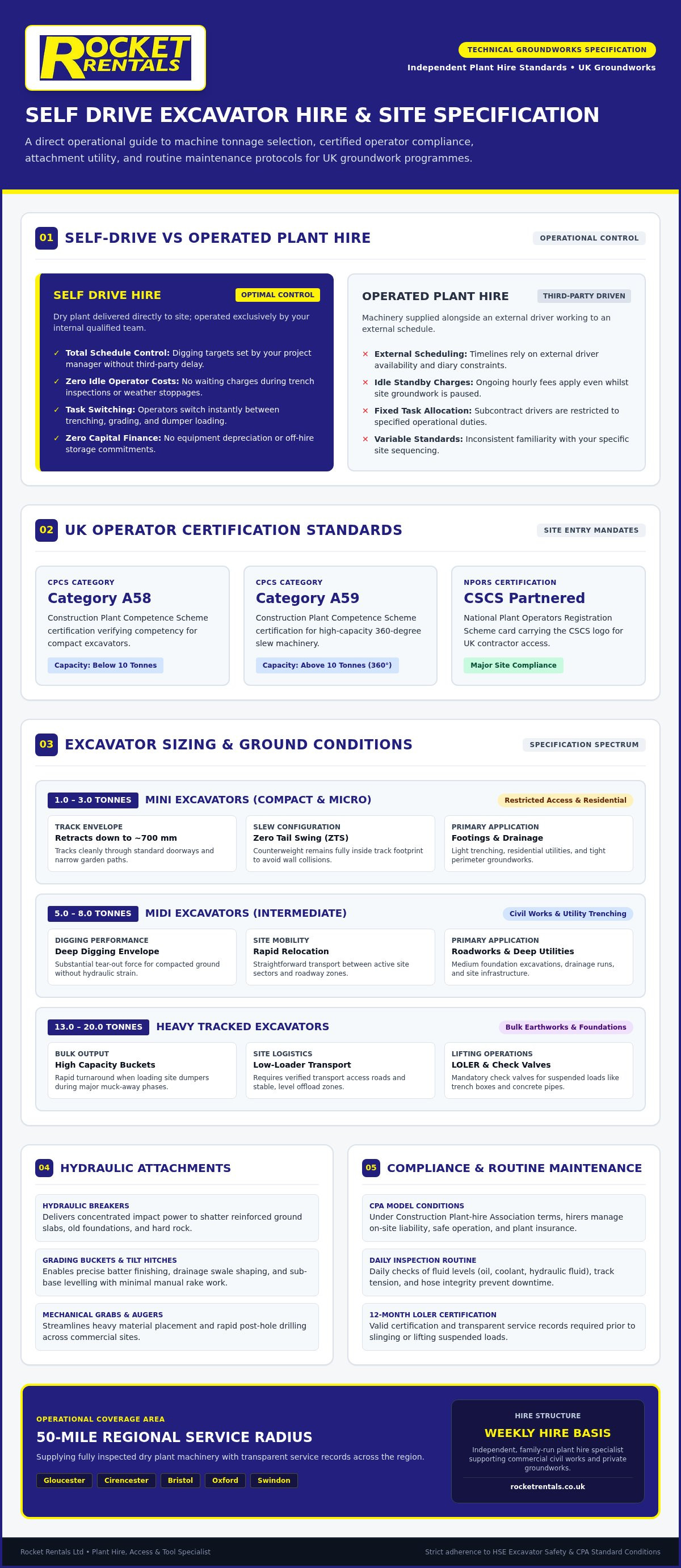
The easiest way to lose control of your project timeline is waiting on an external operator who works to someone else's calendar. When project milestones press, self drive excavator hire puts daily productivity directly back into your hands. You already know how quickly an unexpected breakdown or mismatched machine tonnage can bring an entire groundworks schedule to a standstill, leaving your team idle while site costs tick over.
Choosing the right machine does not have to mean guessing ground conditions or untangling hire compliance on your own. In this guide, you will discover how to select the precise excavator size for your site, manage contractor insurance under standard CPA terms, and retain total control of your digging schedule. Backed by our family-run commitment to thorough pre-hire inspection and transparent service records, this guide details everything you need to run an efficient, uninterrupted dig.
Table of Contents
Understanding Self Drive Excavator Hire for Modern Sites
Opting for self drive excavator hire provides dry plant machinery directly to your project, leaving operation in the hands of your qualified site team. Rather than managing an external plant driver whose availability fluctuates, your groundwork schedule stays under your direct supervision. This arrangement eliminates machinery depreciation, capital finance commitments, and off-hire storage logistics, allowing you to deploy the right machine solely for the duration of the build.
Self-Drive Versus Operated Plant Hire
Relying on external operators introduces scheduling bottlenecks that can stall your groundwork programme. When you source an unoperated machine through excavator sizes and configurations matched to your site conditions, your project manager dictates daily digging targets directly. You maintain absolute control over operator standards, ensuring tasks follow your exact sequence without paying for idle driver hours during site delays.
To operate safely and comply with main contractor standards, your in-house personnel must hold recognised qualifications:
CPCS Certification: The Construction Plant Competence Scheme card confirms verified competency under category A58 (compact machines below 10 tonnes) or A59 (360-degree excavators above 10 tonnes).
NPORS Certification: The National Plant Operators Registration Scheme card, carrying the CSCS logo, satisfies site entry mandates across major UK contractors.
Core Benefits of Self-Drive Machinery
Unoperated plant hire integrates smoothly into fast-paced commercial civil works. Because your own team operates the plant, you can adjust daily tasks instantly when unexpected ground conditions appear or bad weather halts work. You never face waiting charges from an idle subcontract driver while a trench box is repositioned or a drainage run is inspected.
Self-drive flexibility also simplifies machinery coordination across the site footprint. An in-house operator can switch between strip foundations, trench digging, and loading site dumpers to keep materials moving without logistical friction. The result is higher daily output, lower operational overheads, and a dig that runs strictly to your plan.
Selecting the Right Excavator Size and Specification
Machine tonnage dictates trenching depth, safe working load, and track ground pressure. Choosing the correct specification for self drive excavator hire protects finished surfaces and ensures your machine's breakout force matches tough clay or compacted sub-bases without hydraulic strain. Adhering to HSE guidance on excavator safety and inspection also requires planning around working boundaries, swing radiuses, and overhead services before equipment lands on site.
Mini and Midi Excavators for Confined Spaces
For residential plots, drainage installations, and restricted footing work, compact machines between one and three tonnes provide necessary agility. Many micro and compact diggers feature hydraulically retractable undercarriages, narrowing down to around 700 mm to track cleanly through standard doorways and garden paths. When tight boundary walls leave no margin for error, reviewing professional mini excavator hire options with zero tail swing ensures the counterweight rotates completely within the track footprint, eliminating impact risks.
Midi excavators ranging between five and eight tonnes bridge the gap for utility trenching and civil roadworks. They deliver deeper digging envelopes and substantial tear-out force while remaining straightforward to transport between working zones.
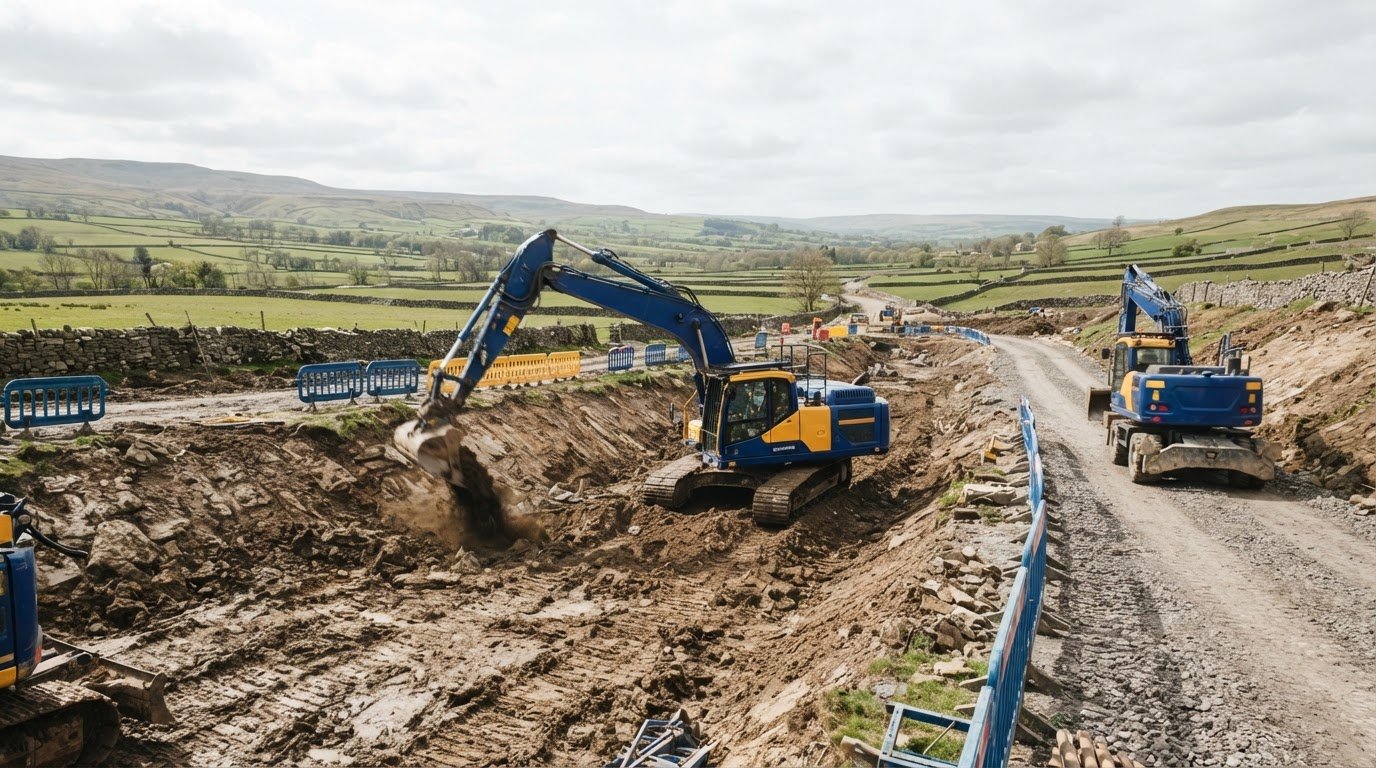
Heavy Tracked Excavators for Bulk Earthworks
Matching Excavator Attachments to the Task
Hydraulic Breakers: Deliver focused impact power to shatter reinforced ground slabs, old foundations, and hard rock.
Grading Buckets and Tilt Hitches: Allow operators to finish batters, shape drainage swales, and level sub-bases accurately with minimal manual rake work.
Mechanical Grabs and Augers: Facilitate rapid timber handling, site clearance, and post-hole boring across diverse terrains.
Always verify auxiliary hydraulic flow rates and operating pressures before coupling non-standard attachments. If you need guidance on configuring machine tonnages for upcoming groundworks, consult our plant hire team to verify exact site requirements before delivery.
Site Safety, Compliance, and Insurance Requirements
Taking delivery of plant on an unoperated basis places site management in direct control of both productivity and legal compliance. When you arrange self drive excavator hire, standard industry contracts shift operational and asset liability to your business. Establishing clear protocols around insurance, certified operator qualifications, and ground stability protects your workforce while shielding your business from unexpected commercial claims.
Understanding Hired-In Plant Insurance
Most plant suppliers across the UK operate under Construction Plant-hire Association (CPA) Model Conditions. Under these terms, you take full financial responsibility for the excavator from handover until off-hire collection. If a machine suffers vandalism, site collision, or theft, your business is responsible for repair or replacement values alongside continuing hire charges during repair periods.
Before machinery arrives, confirm that your hired-in plant insurance covers the total replacement cost of the specific excavator class. Insurers typically mandate strict site security terms, including locked perimeter compounds, dual-layer immobilisation, and secure key management. Reviewing policy clauses regarding track detachment, panel scuffs, and hydraulic hose damage ensures your cover matches actual working conditions on site.
Statutory Operator and Site Standards
Handing over keys requires verified proof of competence. Site managers must inspect valid CPCS or NPORS operator cards before permitting personnel into the cab. Competent operators understand load charts, working boundaries, and the importance of daily pre-shift walkarounds.
Managing the physical work area is just as vital as checking driver credentials:
Trench Setbacks: Establish safe offset distances from open edges, adhering to principles reflected in OSHA trenching and excavation standards to avoid surcharge loads causing bank collapses.
Slew Exclusion Zones: Erect physical barriers or signage around the maximum slewing radius of the counterweight to protect passing site personnel.
Utility Locating: Complete cable avoidance tool (CAT) scans and review statutory utility plans prior to breaking ground.
Following these procedures ensures your self drive excavator hire operations comply fully with PUWER safety standards while maintaining productive, uninterrupted site workflows.
Preventing Downtime Through Daily Maintenance and Inspection
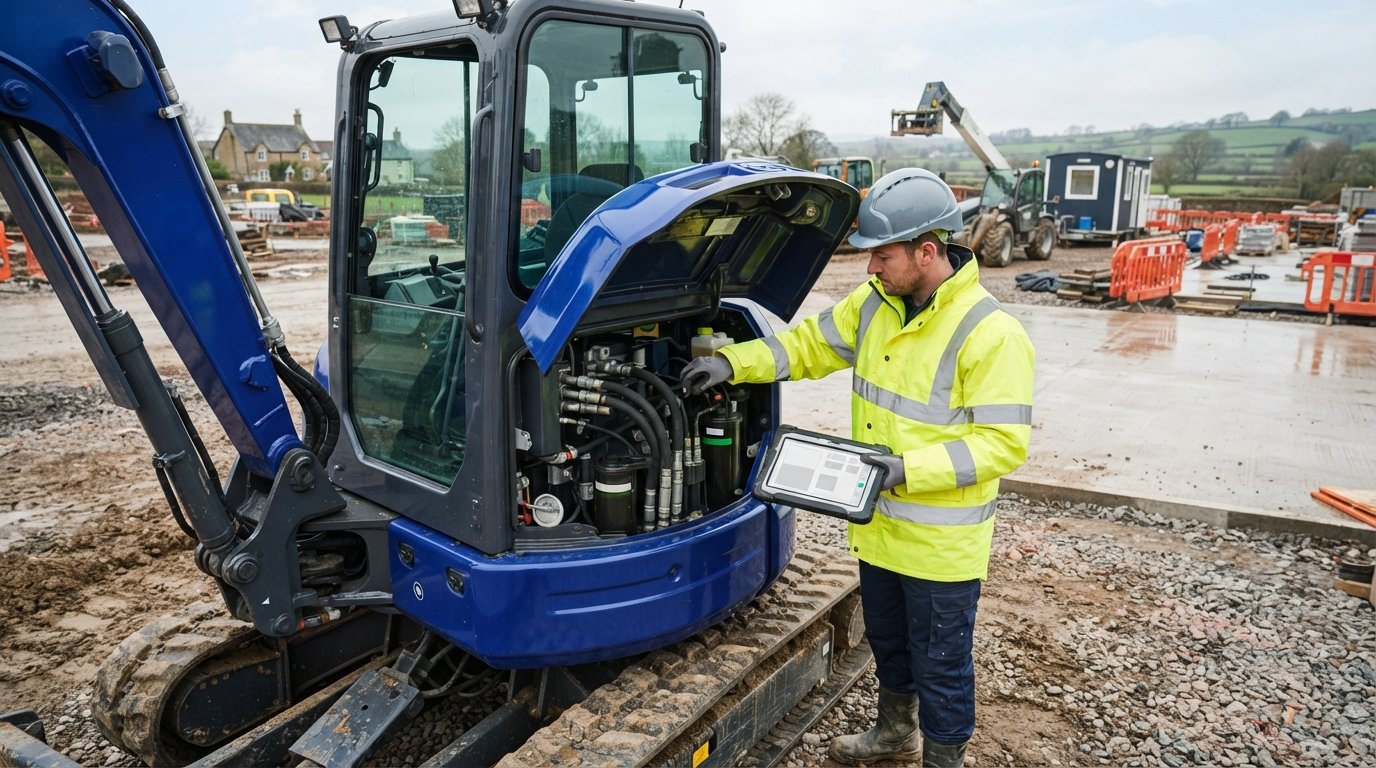
Unscheduled machine downtime halts groundworks and leaves site teams idle. While self drive excavator hire puts you in control of daily productivity, keeping plant operational requires disciplined preventative maintenance. A structured morning routine spots early mechanical wear before it creates costly failures during critical excavations.
Daily Pre-Start Walkaround Routine
Before turning the ignition key each morning, your operator should conduct a systematic walkaround check. This habit protects both operator safety and machinery health across demanding groundworks programmes.
Boom, Dipper, and Bucket Structure: Check welds and steel plates for fatigue cracks, stress fractures, or structural deformation caused by heavy breakout loads.
Hydraulics and Quick Hitch: Inspect exposed hoses for chafing, weeping seals, or fluid leaks around rams. Verify the automatic double-locking hitch mechanism engages firmly with bucket pins.
Cab Controls and Safety Devices: Ensure seat belts, mirrors, horn, reversing travel alarms, and high-visibility flashing beacons function properly before tracking out of the compound.
Running Gear and Track Tension: Examine rubber tracks for deep cuts, torn drive lugs, or excessive slack that could cause site de-tracking. Clear heavy packed clay and aggregate from lower track rollers to reduce roller wear.
Monitoring Running Fluids and Greasing Cycles
Hydraulic pumps and Stage V diesel engines rely on clean oils and proper lubrication to withstand intense working pressures. Checking vital fluid levels before morning startup is essential:
Engine Oil and Coolant: Pull dipsticks and check expansion reservoirs while the engine rests cold on level ground.
Hydraulic Reservoirs: Verify hydraulic oil levels via the sight glass with cylinders retracted in the recommended parking stance.
Fuel Filters and Water Traps: Inspect fuel sediment bowls daily. Draining accumulated water protects sensitive common-rail fuel injectors from contaminated fuel supplies.
Grease Points: Lubricate all bucket pins, slew rings, and dipper pivot points according to manufacturer greasing intervals, keeping pins shielded from abrasive grit.
Managing Machine Handover and Service Records
Proper record-keeping creates clear accountability throughout your hire term. Always complete a joint condition check upon site delivery, noting pre-existing paint scuffs and initial hour-meter readings. Keep manufacturer operating handbooks and up-to-date service records inside the cab so they remain readily accessible for site safety audits. If your operator notices abnormal hydraulic sluggishness, pressure drops, or unusual engine vibrations, report these symptoms immediately rather than continuing work. For dependable machinery backed by meticulous maintenance, book your excavator hire with Rocket Rentals today.
Partnering with an Independent Plant Hire Specialist
Large national plant chains often treat machine bookings like automated ticket numbers. In contrast, working with an independent provider brings direct accountability and attentive customer care to your project. Every machine in a dedicated fleet undergoes a thorough pre-delivery inspection before transport, arriving on site backed by complete service records so your groundwork team can dig with absolute confidence.
The Advantage of Dedicated Family-Run Service
Site ground conditions change quickly, and projects rarely run without occasional adjustments. When you need advice or schedule adjustments, an independent, family-run plant hire partner provides direct communication without call-centre delays. You speak with experienced staff who understand trenching, drainage, and foundation requirements on a practical level.
Building a long-term partnership with a dedicated specialist offers distinct operational benefits:
Direct Accountability: Deal directly with knowledgeable decision-makers who take personal ownership of your equipment needs.
Flexible Hire Terms: Adjust hire durations smoothly if unexpected weather or site delays alter your handover target.
Practical Fleet Guidance: Receive honest machinery advice tailored to your exact site footprint, ensuring you avoid over-hiring or underspecifying equipment.
Arranging Your Self-Drive Excavator Delivery
Smooth site logistics depend on early preparation. When scheduling your self drive excavator hire, share precise site access constraints with the transport desk well in advance. Inform them of narrow access lanes, weak ground conditions at the drop-off point, and overhead services that could obstruct beaver-tail lorries or low-loaders.
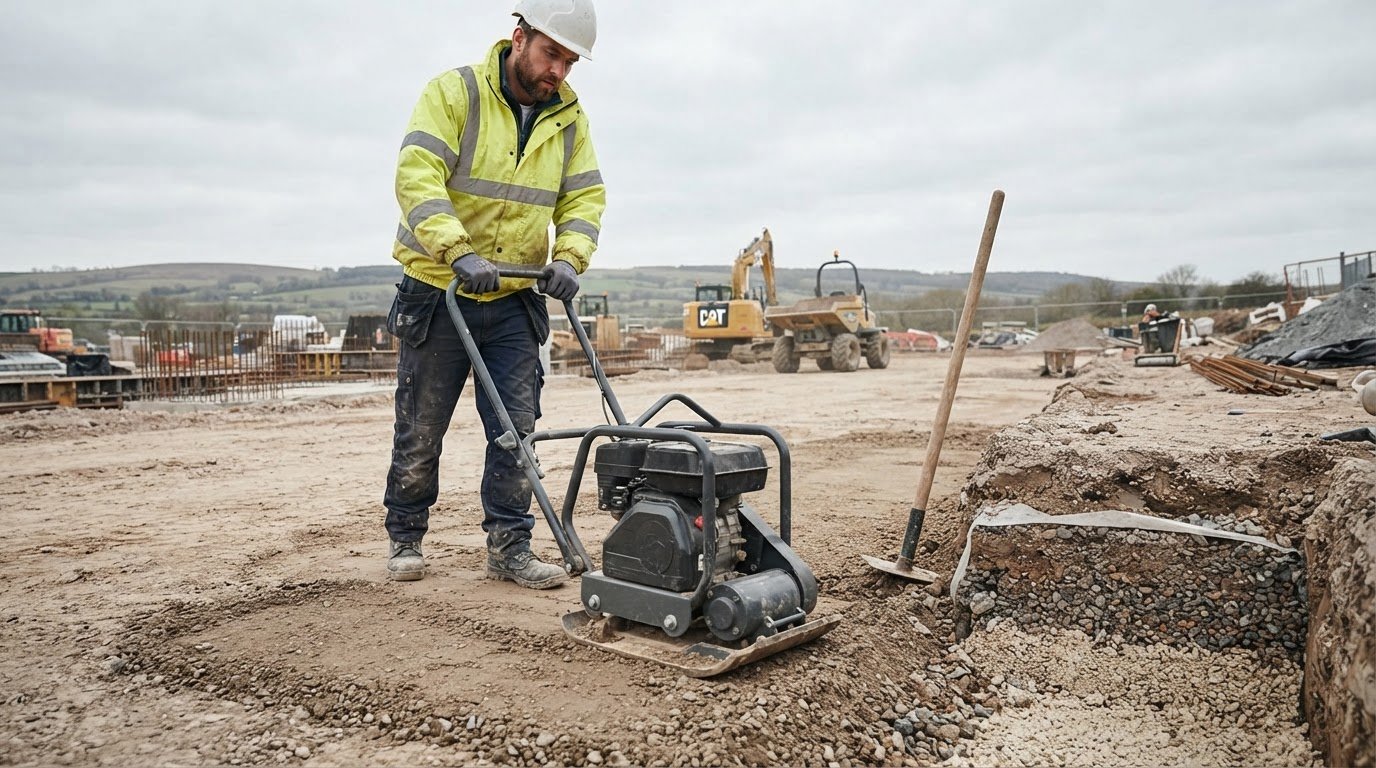
Consolidating your plant requirements also saves valuable time. You can arrange matching site dumpers, compaction rollers, or excavator attachments alongside your excavator delivery, ensuring all essential machinery arrives in a coordinated handover. Preparing your hired-in plant insurance details and confirming valid CPCS or NPORS operator credentials beforehand guarantees a fast, compliant start to work.
To discuss machinery specifications, verify fleet availability, or schedule your upcoming project delivery, contact the team at Rocket Rentals Ltd to organise your self drive excavator hire today.
Take Control of Your Next Groundworks Project
Selecting the correct machine tonnage, enforcing daily pre-start checks, and establishing clear compliance under CPA model conditions gives you total command over your groundwork timeline. By keeping machine operation in-house with qualified operators, you eliminate external scheduling bottlenecks, prevent idle standing hours, and maintain daily digging productivity on your own terms.
Success on site starts with plant you can trust. Rocket Rentals Ltd is an independent, family-run specialist dedicated to eliminating preventable downtime on site. Every machine across our fleet undergoes a thorough pre-delivery inspection and arrives backed by verified service records, ensuring your operators can work safely and efficiently from the very first trench.
Take the uncertainty out of your plant machinery selection. When you want reliable equipment that keeps your programme moving forward, contact our team to organise dependable self drive excavator hire today.
Frequently Asked Questions
What licences or qualifications do I need for self drive excavator hire?
For commercial self drive excavator hire, your operator must hold a recognised competence card such as CPCS or NPORS bearing the CSCS logo. For compact excavators below 10 tonnes, CPCS category A58 is standard, while larger excavators above 10 tonnes require category A59. Private works on enclosed sites do not legally require a driving licence, but site managers remain responsible for ensuring the operator is competent.
What is the difference between self drive and operated plant hire?
Self drive hire supplies the excavator dry without an operator, giving your own qualified workforce complete control over daily operations. Operated plant hire provides both the machine and an external driver supplied by the hire company. Rocket Rentals Ltd focuses strictly on self drive plant hire, allowing contractors to manage daily schedules, eliminate third-party delays, and maintain direct oversight of on-site productivity.
Do I need hired-in plant insurance before the machine arrives on site?
Yes, you must secure adequate hired-in plant insurance before delivery commences. Standard Construction Plant-hire Association (CPA) model conditions transfer total responsibility for machinery loss, theft, and damage to the hirer from handover until collection. Your policy indemnity limit must match or exceed the full replacement value of the specific excavator class and cover ongoing hire charges during any recovery or repair period.
Who is responsible for daily routine maintenance on a self drive digger?
Under standard hire contracts, the hirer is responsible for daily routine maintenance throughout the rental period. Your site team must check engine oil, coolant, and hydraulic fluid levels every morning before startup. Operators are also expected to grease bucket pins, dipper joints, and slew rings daily, while clearing mud and aggregate from the track gear to prevent track throw.
Can I hire specialized attachments alongside a self drive excavator?
Yes, pairing attachments with your self drive excavator hire expands machine capabilities across civil engineering, demolition, and landscaping tasks. You can hire hydraulic breakers for breaking reinforced concrete slabs, grading buckets for accurate sub-base levelling, and mechanical grabs for clearing site debris. Always confirm your excavator's auxiliary hydraulic flow rates and coupling dimensions match your chosen attachments before commencing work.
How do I choose between zero tail swing and conventional tail swing models?
Choose zero tail swing (ZTS) when operating within confined boundaries, utility trenches, or road corridors. Counterweights on ZTS machines rotate completely within the track width, preventing impact damage against adjacent walls or passing plant. Conventional tail swing models feature an extended rear counterweight that provides increased lifting capacity and stability at full reach, making them ideal for unrestricted bulk earthworks.
What happens if a hired self drive excavator develops a fault on site?
Stop work immediately and contact the hire desk to report the fault. Continuing to operate a machine with hydraulic faults or warning indicators can cause severe mechanical damage. An independent specialist will deploy a mobile service engineer to inspect the machine on site. Transparent service records and rigorous pre-hire checks ensure faults remain rare and are resolved swiftly to prevent extended downtime.
Comments