
Site Dumper Hire Guide: Choosing Plant for Your Project
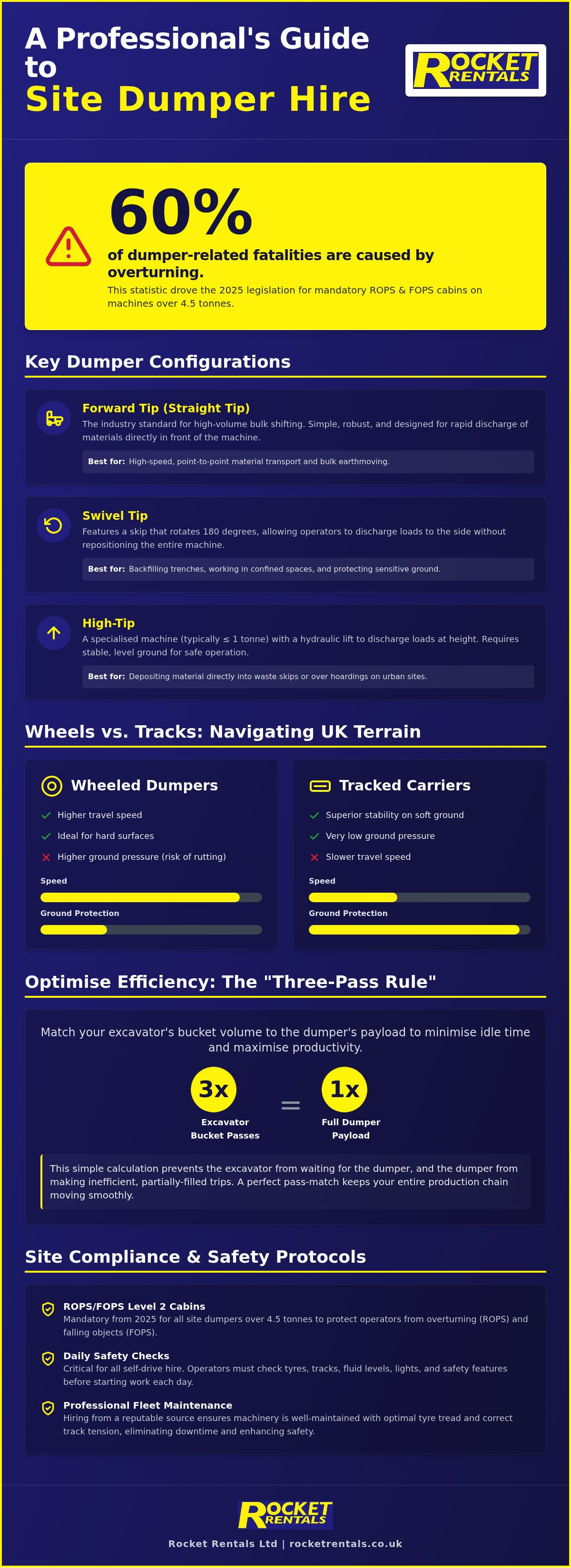
Did you know that overturning accounts for 60% of dumper-related fatalities? This sobering statistic was a primary driver for the 2025 legislation requiring ROPS and FOPS Level 2 cabins on all machines over 4.5 tonnes. Choosing the right machinery isn't just about moving soil; it's about managing risk and maintaining a seamless workflow. Most site managers recognise that a dumper is a critical link in the production chain, yet it's still common to see projects hampered by mismatched equipment.
You've likely experienced the frustration of an excavator sitting idle because a dumper's cycle time is too slow, or the anxiety of seeing heavy tyres churn up a sensitive site. This site dumper hire guide provides the technical clarity you need to avoid these pitfalls. We'll show you how to master dumper selection to improve site safety, ensure ground protection, and maximise your material handling efficiency. From understanding pass-matching to evaluating the latest electric and dual-drive models, we'll ensure your next hire is a calculated success. By the end of this guide, you'll have the confidence to select the perfect plant to keep your site safe and your costs predictable.
Table of Contents
Understanding Site Dumpers: Key Configurations for Professional Use
The site dumper serves as the primary backbone for material movement across UK groundworks projects. It's the essential link between the excavation point and the stockpile or waste collection area. Unlike road-going tippers that require paved surfaces and large turning circles, a site dumper is designed specifically for the rigours of off-road terrain and tight site boundaries. For a foundational look at the machine's evolution, one might ask What is a Dumper; however, for the modern contractor, the focus is on utility and configuration. Choosing the right configuration is a core part of any site dumper hire guide, as the wrong machine can quickly become a bottleneck.
Self-drive dumper hire is the preferred model for professional contractors seeking full site control, as it allows project managers to dictate exactly how and when material moves without relying on external schedules. By managing the equipment in-house, you ensure that the machinery is always ready when the excavator is, minimising idle time and maximising productivity across the site.
Forward Tip vs Swivel Tip Dumpers
Straight-tip, or forward-tip, dumpers remain the industry standard for high-volume bulk shifting. Their design is simple and robust, allowing for rapid discharge of soil, aggregate, or hardcore directly in front of the machine. They're built for speed and durability during the heavy-lifting phases of a project where material needs to be moved from A to B as quickly as possible. However, they lack the versatility required for more intricate tasks or confined spaces.
This is where swivel-tip models excel. By allowing the skip to rotate 180 degrees, operators can discharge loads to either side without needing to reposition the entire chassis. This is particularly advantageous when backfilling trenches or working within narrow corridors where space for manoeuvring is non-existent. A swivel skip prevents the constant shunting that leads to ground churn and increased fuel consumption, making it a more sympathetic choice for sites with strict ground protection requirements. By reducing the number of turns required to position the skip, you also lower the risk of side-wall collapses in freshly dug trenches.
High-Tip Dumpers for Waste Management
High-tip dumpers are specialised tools, typically capped at a 1-tonne payload capacity to maintain stability during operation. Their defining feature is a hydraulic lift mechanism that raises the skip before tipping, allowing the contents to be discharged at height. This synergy is perfect for sites where material must be deposited directly into standard waste skips or over high hoardings. It's an efficient solution for urban renovation or projects with a limited footprint for stockpiling.
Safety is paramount when using these machines. Discharging loads at height shifts the machine's centre of gravity, requiring a stable, level surface to prevent accidents. This site dumper hire guide highlights that whilst these machines are compact, they require a disciplined approach to operation to ensure site safety remains uncompromised. Always ensure the ground is firm and the machine is stationary before engaging the lift mechanism to maintain the highest standards of on-site security.
Wheeled vs Tracked Dumpers: Navigating Terrain and Ground Conditions
UK ground conditions vary significantly by region and season. Silt and clay soils behave very differently under the weight of heavy plant. Saturated clay becomes incredibly slick, while wet silt can lose its structural integrity entirely. This site dumper hire guide highlights that your choice between wheels and tracks often determines whether your project stays on schedule or grinds to a halt. High ground pressure on saturated ground leads to deep rutting. This doesn't just slow down your cycle times; it significantly increases remediation costs when it's time to hand over the site or begin landscaping.
Maintenance standards are just as important as the machine configuration itself. We ensure our self-drive fleet features optimal tyre tread depth and correct track tension before every hire. Poorly maintained tyres lose grip on greasy surfaces, while loose tracks can de-track in heavy mud, causing immediate downtime. Traction is a vital safety component. The HSE guidance on the Safe use of site dumpers makes it clear that maintaining control on gradients is a primary responsibility for site managers and operators alike.
When to Choose Wheeled Site Dumpers
Wheeled dumpers are the traditional workhorses for projects with established haul roads or firm sub-bases. They offer superior travel speeds compared to tracked counterparts, making them highly cost-effective for long-duration hires where material needs to be moved over greater distances. Most modern wheeled models use articulated steering. This allows the machine to pivot in the middle, making it easier to navigate narrow site entrances or tight corners without scuffing the tyres excessively. If your project has firm, well-drained surfaces, a wheeled model is usually the most efficient choice for maintaining high productivity.
The Advantages of Tracked Dumper Hire
When ground conditions deteriorate, particularly during the wet winter months, Tracked Dumper Hire becomes the professional choice. Tracks distribute the machine's weight over a much larger surface area, often resulting in ground pressure lower than a human footprint. This floatation effect allows the dumper to operate on boggy ground or sensitive topsoil without causing terminal damage. By opting for tracks, you mitigate the risk of a machine getting bogged down. A single recovery operation can cost hundreds in lost labour and potential machine damage. For projects involving peat, heavy clay, or sandy soils, tracks provide the reliability needed to keep the job moving. Our team can help you select the right dumper for your specific site conditions to ensure you remain productive regardless of the weather.
Matching Dumper Capacity to Your Excavator and Payload
Success in material handling depends on the synchronisation of your loading and hauling plant. This site dumper hire guide emphasises the "Three-Pass Rule" as the industry standard for operational efficiency. Ideally, your excavator should fill the dumper skip in exactly three bucket loads. If it takes six or seven passes, your dumper operator spends too much time stationary. Conversely, if a large excavator fills a small dumper in a single pass, the excavator will inevitably sit idle while the dumper travels. This mismatch directly reduces your ROI and extends project timelines.
Beyond efficiency, capacity matching is a critical safety concern. Overloading a machine with heavy, dense materials like wet clay or wet concrete significantly alters the centre of gravity. Adhering to HSE dumper safety guidelines is crucial here; a machine operating at or beyond its rated limit is far more prone to overturning, especially on uneven ground. Wet clay is particularly deceptive. It's far heavier than dry topsoil. The 6-tonne dumper is widely considered the "all-rounder" for medium-scale UK construction projects due to its balance of payload and manoeuvrability.
Small Scale: 1 to 3 Tonne Dumpers
These compact machines are usually paired with mini excavators ranging from 1.5t to 3t. They are the staple of residential landscaping and utility works where space is at a premium. The 1-tonne "skip loader" is particularly valuable for its narrow-access capabilities. It can often fit through standard garden gates or narrow alleys that larger plant simply cannot reach. For a detailed breakdown of how to pair these effectively, refer to our Professional Guide to Mini Excavator Hire. These smaller units are efficient for moving material in confined spaces without the risk of significant ground damage.
Large Scale: 6 to 9 Tonne Dumpers
For bulk earthworks and major infrastructure projects, pairing 6-tonne to 9-tonne dumpers with 8-tonne to 13-tonne excavators is standard practice. These larger tonnage machines benefit from wider wheelbases, which provide enhanced stability when travelling across churned or uneven terrain with a full payload. However, site managers must consider the logistics of transporting these larger units. Unlike mini dumpers that can be moved on plant trailers, 6-tonne and 9-tonne models require dedicated low-loader transport. This requirement should be factored into your initial hire schedule to avoid delivery delays. Choosing the right scale ensures your bulk material movement remains predictable and safe.
Safety Protocols and Site Requirements for Self-Drive Hire
Safety is the non-negotiable cornerstone of professional plant operation. Any reputable site dumper hire guide must emphasise that high-spec machinery is only as safe as the protocols surrounding its use. Every dumper in a professional fleet must be equipped with ROPS (Roll Over Protective Structure) and FOPS (Fall On Protective Structure) to protect the operator from overturning or falling objects. Modern site compliance also demands features like seatbelt interlocks and green beacons. The interlock ensures the machine cannot be operated unless the belt is fastened, whilst the green beacon provides a visual signal to site managers that the operator is following safety procedures.
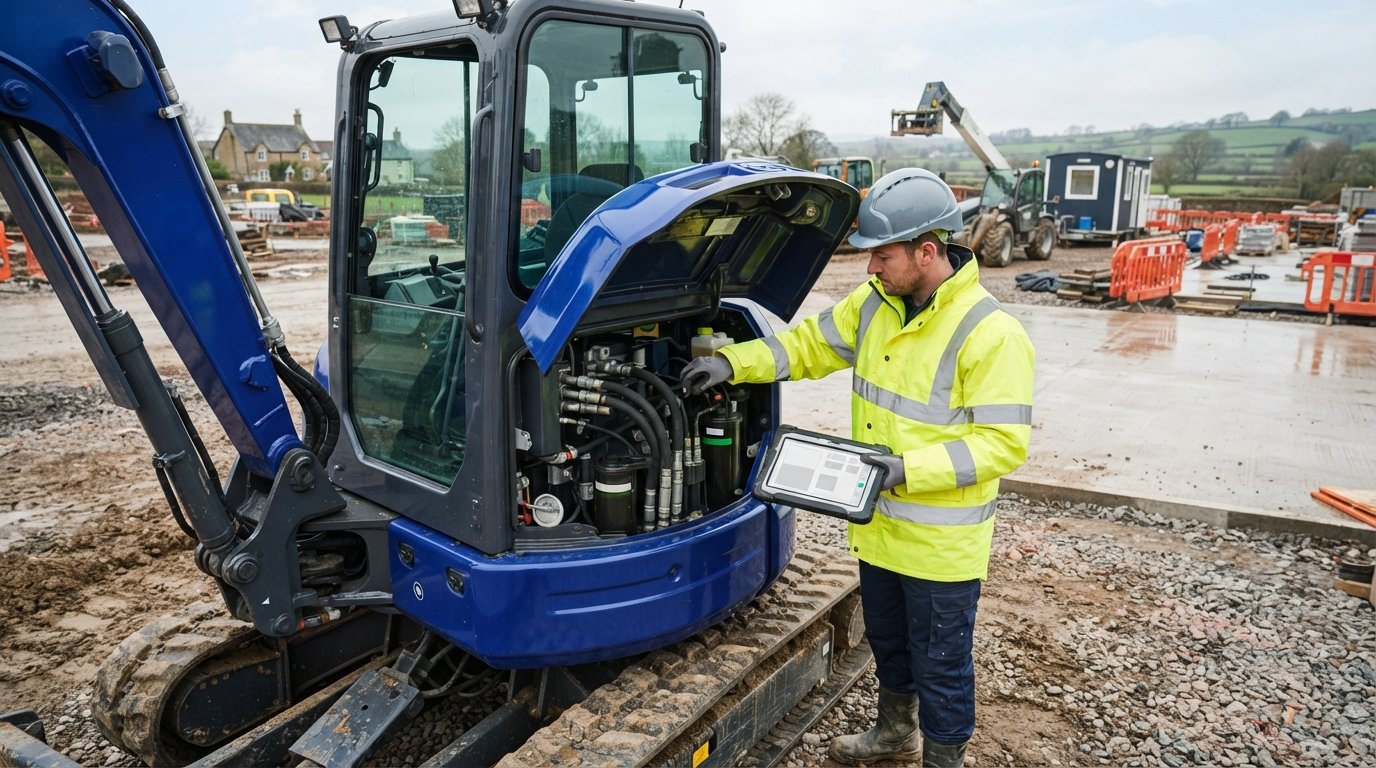
Operating a dumper on a professional construction site requires more than just basic driving skills. Operators must hold a valid CPCS or NPORS card to demonstrate their competency. For those managing a project, ensuring self-drive operators perform daily walk-around checks is vital. These checks, covering tyre condition, fluid levels, and mirror alignment, are essential for machine longevity and preventing avoidable downtime. At Rocket Rentals, we maintain our fleet to the highest standards to ensure your site remains compliant and productive. You can view our dumper hire options to find machines that meet these rigorous safety specifications.
Visibility and Exclusion Zones
Forward-tipping dumpers present significant "blind spot" challenges, particularly when the skip is fully loaded and obstructing the forward view. To counter this, larger machines are often fitted with VCAS (Visual Control Aid System) and advanced camera kits to provide the operator with a 360-degree view. However, technology is not a substitute for robust site organisation. It is critical to establish clear exclusion zones that separate pedestrians from plant machinery. Site traffic should be managed through one-way systems and designated crossing points to minimise the risk of collisions in busy work areas.
Stability and Gradient Management
Tipping on an incline or an uneven stockpile is one of the most frequent causes of site accidents. When using a swivel skip, the machine's centre of gravity shifts the moment the skip begins to rotate. If the dumper is positioned on a slope, this shift can easily lead to an overturn. This site dumper hire guide recommends that operators follow a strict discharge checklist: always ensure the machine is on level ground, the handbrake is fully engaged, and the transmission is in neutral before tipping. By following these disciplined steps, you protect both the operator and the integrity of the machine.
Why Professional Contractors Choose Rocket Rentals for Dumper Hire
With over 35 years of industry experience, Rocket Rentals has established itself as a cornerstone of the UK plant hire sector. We understand that for professional contractors, machinery is more than just a tool; it's a vital component of project success. Our commitment to providing a modern, high-spec self-drive fleet ensures that mechanical failures are a rarity rather than a risk. This reliability is why we're often described as a "safe pair of hands" for high-stakes construction projects. By choosing a partner with deep technical heritage, you ensure your site remains productive and your timelines predictable. We handle the complexities of plant maintenance so you can focus on the build.
Organising national delivery for large-scale projects requires a provider with the scale and logistical expertise to match your ambitions. We provide a seamless service that bridges the gap between hire agreement and on-site operation. This methodical approach to service is a core reason why professional firms return to us for every new project phase. We don't just deliver a machine; we deliver the peace of mind that comes from knowing your equipment is ready for immediate, professional-grade performance.
A Fleet Built for Professional Performance
Our fleet consists of machinery from the world's leading manufacturers, selected specifically for their durability and performance in harsh UK site conditions. We don't just provide standard machines. We invest in high-specification models that prioritise operator comfort and advanced safety features. This approach doesn't just improve the daily experience for your team; it directly impacts site productivity by reducing fatigue and enhancing machine control. Whether you need a compact skip loader for a utility project or a heavy-duty articulated model for bulk earthworks, you can find the right match in our full Excavator and Dumper range.
Streamlined Hire and Support
We pride ourselves on a straightforward and efficient approach to customer service. Opening a trade account is a simple process, designed to get your project moving without unnecessary delays. Our team provides expert technical support, helping site managers calculate the exact tonnage required based on the material handling logic discussed in this site dumper hire guide. We manage the logistics of national delivery, ensuring your plant arrives on-site exactly when needed. This level of comprehensive coverage allows you to maintain full control of your site through our self-drive model. Contact Rocket Rentals today to secure your site dumper hire and experience a partnership built on trust and professional excellence.
Optimising Your Site Efficiency with Professional Plant Hire
Selecting the right machinery is a technical decision that impacts every facet of your project, from ground protection to operator safety. As this site dumper hire guide has explored, success depends on matching your dumper's capacity to your excavator's output and choosing the correct drivetrain for your specific terrain. Whether you require the speed of a wheeled model on established haul roads or the low ground pressure of a tracked carrier in saturated conditions, the right configuration ensures your material movement remains predictable and safe.
Rocket Rentals provides the expertise and high-specification machinery needed to maintain these professional standards. With over 35 years of specialist plant hire experience, we offer a modern, high-specification self-drive fleet that meets the most rigorous safety audits. Our national UK coverage ensures that construction and industrial sectors can access reliable plant wherever the project is located. We invite you to view our full range of professional site dumpers and request a quote to see how we can support your next project. We're ready to help you keep your site moving efficiently and safely.
Frequently Asked Questions
Do I need a special licence to hire a site dumper on a self-drive basis?
You don't need a standard UK driving licence to operate a dumper on a private construction site. However, health and safety regulations require all operators to be competent and adequately trained. Most professional sites insist on a recognised qualification, such as an NPORS or CPCS operator card. When arranging a hire, it's essential to ensure your operator has the correct ticket for the specific machine tonnage to remain compliant with site safety audits.
What is the difference between a swivel tip and a forward tip dumper?
A forward tip dumper discharges its load directly in front of the chassis, making it the standard choice for bulk material movement on open sites. In contrast, a swivel tip dumper allows the skip to rotate 180 degrees. This flexibility is invaluable for backfilling trenches or working in confined corridors where manoeuvring the entire machine is impossible. Choosing the right configuration is a key part of any site dumper hire guide to ensure maximum efficiency.
Can I use a site dumper on a public road?
You can use a site dumper on a public road, provided the machine is registered with the DVLA, taxed, and insured for road use. Additionally, the operator must hold a valid UK driving licence. Most dumpers are intended for off-road use, so you should verify the machine's road-legal status before attempting to travel between sites. It's often safer and more efficient to transport larger machines using a dedicated low-loader.
Which dumper size is best for a 3-tonne mini digger?
A 3-tonne dumper is generally the best match for a 3-tonne mini digger. This pairing follows the "three-pass rule," where the excavator fills the dumper skip in approximately three bucket loads. Using a machine with a similar payload ensures that neither the excavator nor the dumper operator spends unnecessary time idling. This balance maintains a steady workflow and optimises your material handling cycle times during residential or utility projects.
What safety features should I look for when hiring a dumper?
You should look for machines equipped with ROPS and FOPS structures to protect the operator in the event of an overturn or falling debris. Modern sites also require seatbelt interlocks and green beacons to ensure compliance with safety protocols. On larger tonnage machines, visual aids like VCAS or camera kits are essential for managing blind spots. We maintain our fleet to the highest standards, ensuring every machine arrives with these critical safety features fully operational.
Are tracked dumpers better than wheeled dumpers for winter projects?
Tracked dumpers are often superior for winter projects because they provide better floatation on saturated ground. This site dumper hire guide highlights that whilst wheeled dumpers are faster on firm haul roads, they can easily become bogged down in wet clay or mud. Tracks distribute the machine's weight over a larger surface area, reducing ground pressure and preventing site damage. Opting for tracks during the wetter months helps maintain productivity and avoids costly downtime.
How is dumper hire cost calculated for long-term projects?
Dumper hire costs for long-term projects are typically calculated on a weekly basis. While daily rates are available for short tasks, extended hire periods often benefit from a reduced weekly standing charge. It's important to account for additional variables such as delivery and collection fees, fuel consumption, and insurance. We offer transparent pricing for our self-drive fleet, helping site managers maintain predictable costs whilst using high-specification machinery for the duration of their project.
What insurance do I need for self-drive plant hire?
You need "Hired-in Plant" insurance to cover the machine against theft, loss, or damage whilst it's in your care. This is a standard requirement for all self-drive hire agreements. The policy should cover the full replacement value of the specific dumper tonnage you're hiring. Most commercial contractors have this as part of their annual business insurance, but it's vital to check your policy limits and coverage terms before the equipment arrives on-site.
Comments