
The Site Manager’s Checklist: 6 Tonne Dumper Hire for Large-Scale Projects
Could a single decision regarding skip configuration be the difference between hitting your daily haulage targets and facing a costly site bottleneck? For many large-scale projects, the 6 tonne dumper is the essential mid-range workhorse, but its efficiency relies on more than just engine power. You're likely balancing the need for rapid material movement with the strict requirements of the EN474 2022 safety standards, all whilst managing tight site access and ground pressure concerns. It's a lot to coordinate, and getting your 6 ton dumper hire wrong can lead to unnecessary delays or safety risks.
We understand the pressure to keep a site running smoothly and safely. This article provides a comprehensive professional checklist to help you master the selection process and meet every UK safety requirement with confidence. We'll walk you through choosing between swivel and forward tips, understanding the latest ROPS and FOPS cab mandates, and optimising your logistics to ensure your plant is a safe pair of hands for your team.
Table of Contents
Understanding the 6 Tonne Dumper: The Mid-Range Workhorse
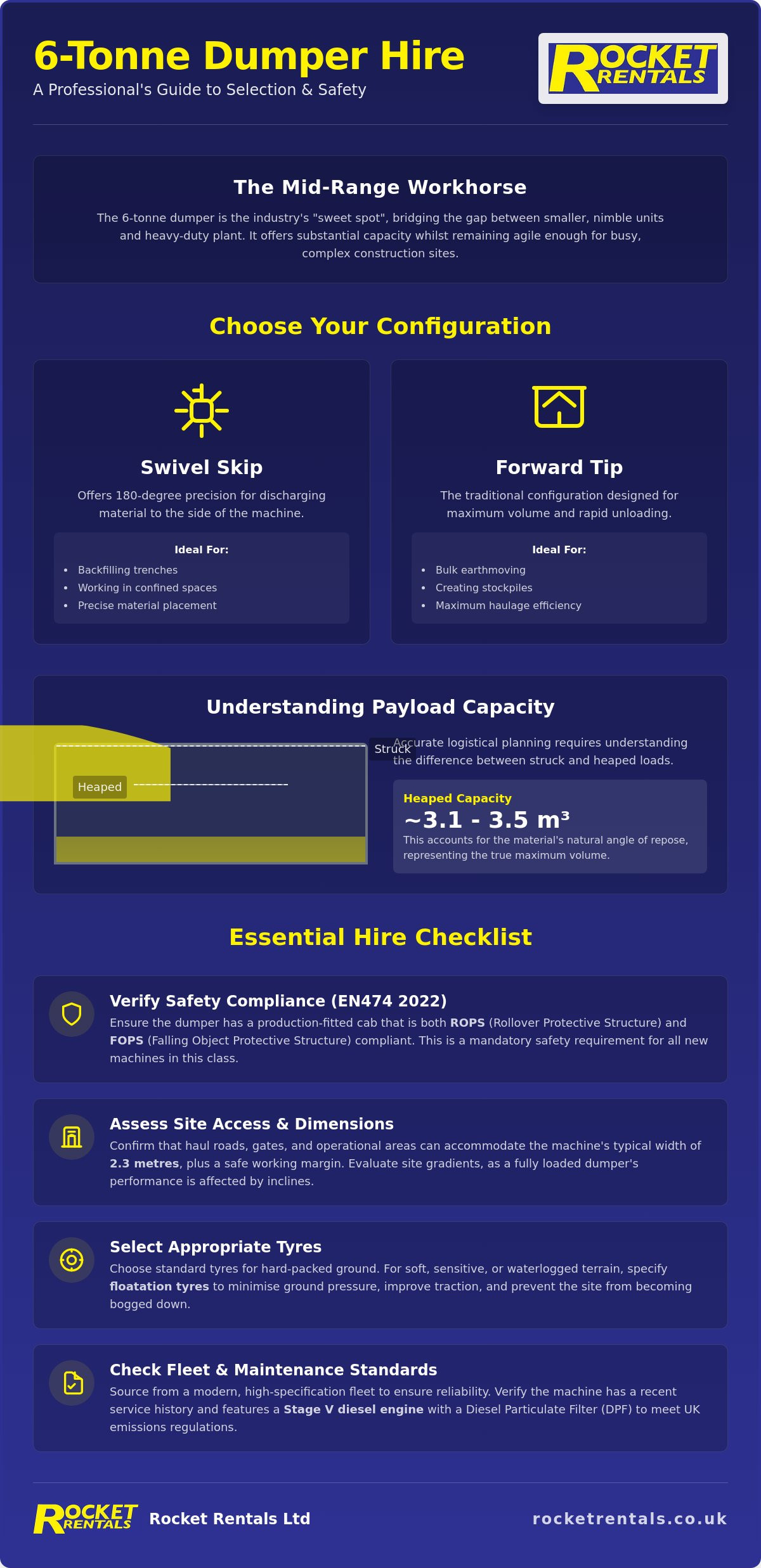
The 6-tonne dumper occupies a critical position in the hierarchy of site machinery. It acts as the functional bridge between the nimble units used for residential landscaping and the heavy-duty plant required for major civil engineering. For many site managers, 6 ton dumper hire represents the "sweet spot" of productivity; it offers enough capacity to clear substantial spoil whilst remaining compact enough to navigate around established structures or tight site boundaries. It's an asset that balances raw power with the agility needed for busy, multi-trade environments.
Understanding the technical specifications is vital for accurate project planning. Whilst the name implies a 6,000kg payload, the physical volume this represents depends on whether you're measuring "struck" or "heaped" capacity. A heaped load takes advantage of the material's natural angle of repose, often allowing for a capacity of roughly 3.1 to 3.5 cubic metres. For a broader overview of dumper vehicles and their various configurations, looking at technical developments helps illustrate why this specific weight class became an industry standard. Modern fleets also prioritise environmental standards. You'll find that the latest models feature Stage V diesel engines equipped with Diesel Particulate Filters (DPF) to meet strict UK emissions regulations.
When to Choose 6 Tonnes Over Smaller Models
Selecting the right machine often comes down to a choice between the 3-tonne and 6-tonne classes. If your project involves bulk earthmoving, the 6-tonne model is significantly more efficient; it moves double the material per cycle, which reduces fuel consumption and operator hours. However, you must assess your site footprint carefully. These machines usually require a width of at least 2.3 metres for safe passage. Their permanent 4WD systems and articulated steering make them exceptionally capable in the challenging, often waterlogged conditions found on UK construction sites, providing a level of traction that smaller models simply can't match.
Key Applications in Modern Construction
The versatility of this machine makes it a staple for various high-demand tasks. In large-scale groundworks, it's the primary tool for transporting spoil from foundation excavations to stockpiles or waiting lorries. On road-building and infrastructure projects, its ability to carry heavy loads of sub-base or asphalt over uneven terrain is invaluable. It also excels in major commercial site clearances, where the volume of debris requires a robust solution that can still operate within the confines of a developing site. Opting for 6 ton dumper hire ensures you have the power required for heavy lifting without the logistical burden of oversized plant.
The 6 Tonne Dumper Hire Checklist: Essential Selection Criteria
A successful hire starts long before the machine arrives on site. For a site manager, the goal is to eliminate variables that lead to delays or safety incidents. When arranging 6 ton dumper hire, a structured verification process ensures the equipment is fit for purpose and compliant with current UK legislation. It's about matching the machine's specific capabilities to the unique demands of your project's geography and schedule.
Skip Configuration: Determine if you need a 180-degree swivel skip for side-discharging into trenches or a forward tip for maximum bulk haulage.
Safety Systems: Confirm the machine meets EN474 2022 standards. All new dumpers in this weight class must feature production-fitted ROPS and FOPS cabs to protect operators from rollovers and falling objects.
Tyre Suitability: Assess if the ground is soft or boggy. Whilst standard tyres work well on compacted haul roads, floatation tyres are essential for minimising ground pressure on sensitive or waterlogged terrain.
Maintenance History: Request the most recent service records. A reliable provider should offer complete transparency regarding their fleet's upkeep to prevent mid-project breakdowns.
Choosing a specialist provider for high-specification dumper hire ensures you receive a machine that is both modern and meticulously maintained, providing you with a safe pair of hands for your material movement needs.
Assessing Site Access and Terrain
A 6-tonne machine isn't a small piece of plant. You must measure gate widths and haul road clearances, allowing for the standard 2.3-metre width plus a safe working margin. Evaluate site gradients too. A fully loaded dumper behaves differently on a slope; you need to ensure the machine's braking and climbing capabilities match your topography. Identify any "soft spots" where the weight might cause sinking, as these areas will require additional ground protection or specific tyre choices to maintain productivity.
Operator Requirements and Compliance
Safety doesn't end with the machine's build. Every operator must hold a valid CPCS or NPORS certification specifically for this category of plant. Before work begins, verify that the machine is accompanied by a current Report of Thorough Examination, proving it has passed its mandatory safety inspections. Modern site standards also frequently demand green beacon seatbelt indicators. These provide a visual confirmation to site supervisors that the operator is safely secured. These details are the foundation of a professional, incident-free project and should be non-negotiable during your 6 ton dumper hire process.
Swivel Skip vs. Forward Tip: Choosing the Right Configuration
Selecting the correct skip configuration is just as vital as choosing the weight class itself. Whilst two machines might both be rated for 6,000kg, their operational utility varies significantly based on how they discharge material. For most site managers, the decision between a swivel skip and a forward tip comes down to the specific geometry of the site and the nature of the haulage task. It's a choice that directly impacts your cycle times and, ultimately, your project's bottom line. When arranging 6 ton dumper hire, you must evaluate whether the versatility of a rotating skip justifies the investment over a standard bulk carrier.
The fundamental difference lies in the discharge mechanism. A swivel skip dumper features a hydraulic slew ring that allows the skip to rotate 180 degrees, enabling the operator to tip material to the left or right of the machine. In contrast, a forward tip dumper is a fixed-axis machine designed for traditional straight-ahead discharge. Whilst the swivel mechanism adds mechanical complexity, it provides a level of precision that a fixed skip cannot match, particularly when working in linear or restricted environments.
The Case for Swivel Skip Dumpers
Swivel skips are the undisputed champions of precision. They're essential for linear projects such as utility trenching, road widening, or any task where the dumper must discharge material into a narrow opening whilst parked parallel to it. This configuration dramatically reduces the need for complex multi-point turns, which preserves the ground surface and lowers the risk of site collisions. Safety is also enhanced; the operator can often discharge a load whilst facing the direction of travel, maintaining better situational awareness. If your site involves backfilling trenches or working in confined housing developments, the swivel option is usually the most efficient choice for your 6 ton dumper hire requirements.
The Case for Forward Tip Dumpers
If your project involves high-volume material shifting across open ground, the forward tip model is often the superior tool. These machines generally have a lower centre of gravity because they lack the heavy slew ring assembly, making them feel more stable when traversing uneven or steeply graded terrain with a full load. They also tend to offer a slightly higher heaped capacity, as the skip design is optimised for bulk haulage rather than rotational clearance. Because they're mechanically simpler, forward tip models often come with lower hire rates, making them a cost-effective solution for major earthworks where precision tipping isn't a priority.
Maximising Site Productivity and Operational Safety
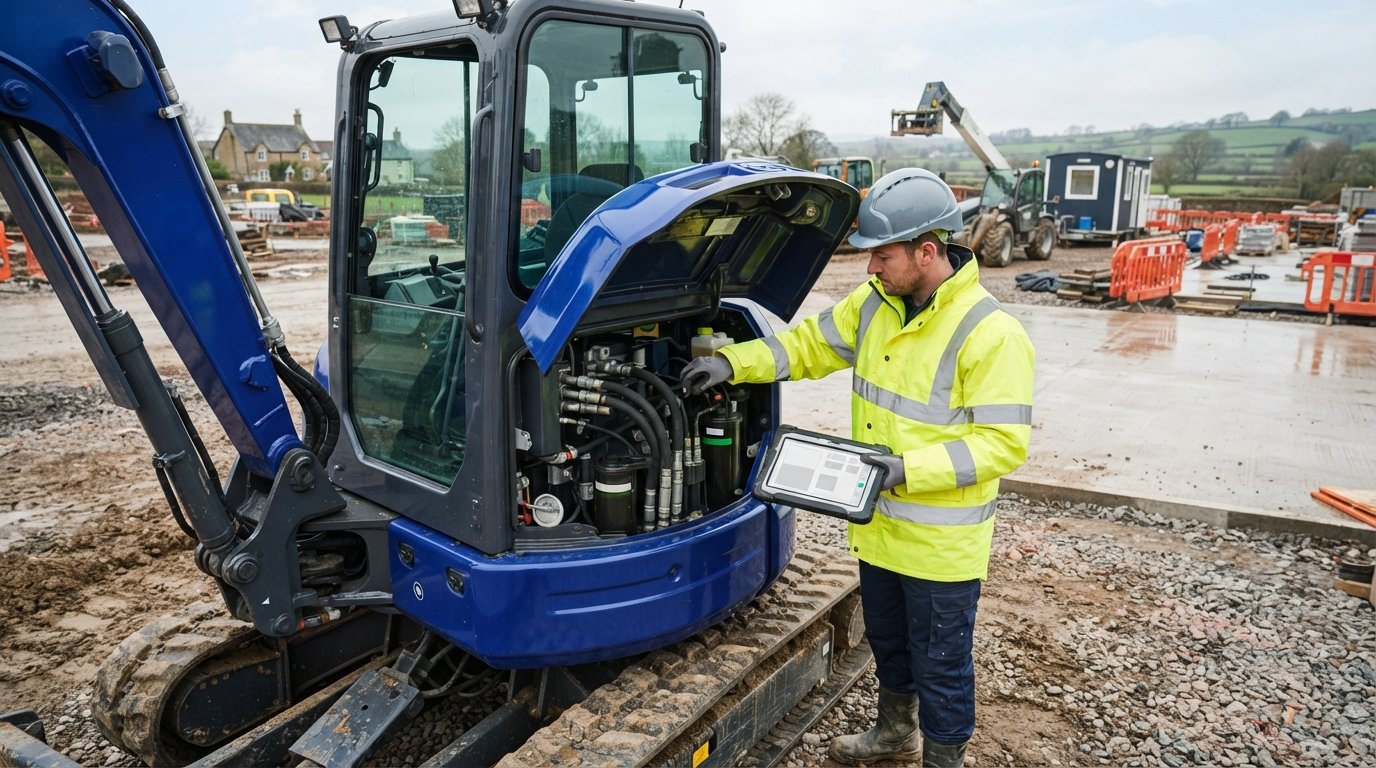
Achieving peak performance with a 6-tonne machine requires more than just a skilled operator; it demands a disciplined approach to maintenance and site logistics. Once you've secured your 6 ton dumper hire, the focus shifts to operational consistency. Daily pre-start checks are the first line of defence against site downtime. Operators should systematically inspect for oil, water, and hydraulic leaks whilst ensuring that tyre pressures are optimal for the day's terrain. These small, methodical actions prevent minor issues from escalating into major mechanical failures that could halt your project's progress.
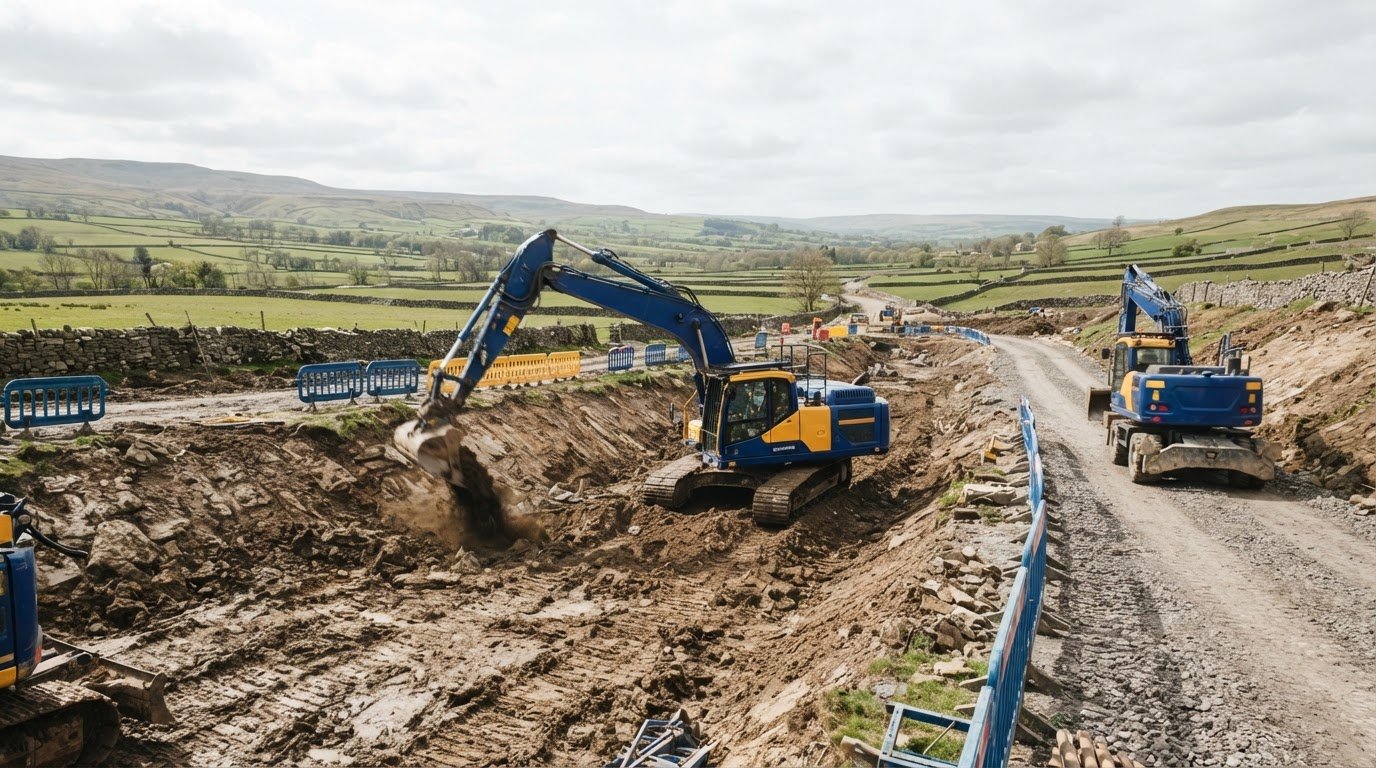
One of the most significant challenges with larger machines is managing "dead ground." This refers to the area immediately in front of the skip that is invisible to the operator from the cab. For a 6-tonne model, this blind spot can extend several metres, especially when the skip is heaped with material. To mitigate this risk, site managers should establish clear exclusion zones and ensure that haul roads are kept free of pedestrian traffic. Integrating your material movement with professional excavator hire ensures a continuous, safe cycle; the excavator operator often acts as a second pair of eyes, helping to guide the dumper into the optimal loading position.
Loading best practices are equally vital for safety and machine longevity. The excavator should deposit material centrally in the skip to maintain a balanced weight distribution. This prevents the dumper from becoming unstable when traversing slopes or turning. You must strictly prohibit "shunting," which is the practice of using the excavator bucket to push the dumper into position. This can cause severe damage to the chassis and skip mechanism. If you're ready to secure reliable machinery for your next project, you can explore our full range of self-drive dumper hire options with Rocket Rentals Ltd today.
Safety Features to Look For
Modern machines are equipped with technology designed to protect both the operator and the wider site team. Start-stop technology is increasingly common, automatically cutting the engine during idle periods to reduce fuel costs and site emissions. High-visibility steps and handrails are essential for preventing slips during ingress and egress, particularly in wet UK weather. Operators also benefit from machines fitted with 360-degree camera systems and proximity sensors, which provide much-needed awareness of their immediate surroundings.
Environmental and Noise Considerations
As environmental regulations tighten, selecting Stage V compliant engines is no longer optional for many urban projects. These engines significantly reduce nitrogen oxides and particulate matter, making them suitable for sensitive low-emission zones. Noise management is another critical factor, especially on sites near residential areas. Modern acoustic dampening in newer machines helps keep decibel levels within acceptable limits. To support your groundworks team during long shifts, consider how welfare unit hire can provide a safe, clean space for breaks, ensuring your crew remains focused and productive throughout the 6 ton dumper hire period.
Sourcing Reliable Self-Drive Dumper Hire
Finding a dependable partner for 6 ton dumper hire is the final, most critical step in your site planning. At Rocket Rentals Ltd, we focus exclusively on high-specification, self-drive machinery because we understand that site managers need equipment they can trust without the variables of operated plant. Our commitment to maintaining a fleet with a low average age isn't just about aesthetics; it's a strategic decision to ensure maximum reliability for large-scale civil engineering projects. When your schedule is tight, you can't afford the delays caused by aging equipment or poor maintenance standards.
By specialising in self-drive plant, we empower site managers to maintain full control over their operational pace and personnel. We provide the tools, but you retain the flexibility to manage your team as you see fit. Every machine in our fleet undergoes rigorous inspections between hires, ensuring that when a dumper arrives on your site, it's ready for immediate, heavy-duty service. This proactive approach to maintenance is backed by expert support, providing you with a safe pair of hands for all your material movement requirements.
Why Fleet Quality Matters
A modern fleet significantly reduces the risk of mechanical failure and the costly site delays that follow. When you hire a machine that is only a few years old, you're benefiting from the latest advancements in hydraulic efficiency and engine performance. Ergonomics also play a vital role in project success; a comfortable operator is a productive one. Modern cabs offer better visibility, intuitive controls, and reduced vibration, allowing your team to work effectively throughout the shift. Accessing the latest safety technology through a modern hire fleet ensures your site remains compliant with the highest UK industry standards without the capital expense of purchasing equipment outright.
Partnering with Rocket Rentals Ltd
Choosing the right equipment shouldn't be a guessing game. Our experts are available to consult with you, ensuring you select the optimal skip configuration and tyre type for your specific terrain. For a complete site solution, many of our clients choose to integrate their 6 ton dumper hire with our mini excavator hire services. This coordinated approach ensures that your loading and hauling capacities are perfectly matched, preventing bottlenecks and maximising material flow. Contact us today to discuss your project requirements and discover why a professional plant hire partnership is the most efficient way to power your next large-scale development.
Secure the Right Plant for Your Next Project
Successful site management requires a strategic approach to plant selection that balances high productivity with uncompromising safety. As we have explored, the efficiency of your material movement depends on matching the 6 ton dumper hire skip configuration to your specific site geometry whilst ensuring every machine meets the latest EN474 2022 standards. By prioritising modern cabbed units and conducting rigorous pre-start checks, you mitigate operational risks and maintain a steady project tempo.
Choosing Rocket Rentals Ltd means partnering with a specialist who understands the demands of large-scale civil engineering. Our low-age fleet and dedication to self-drive excellence provide the reliability you need to meet tight deadlines without the burden of mechanical failure. We offer more than just machinery; we provide a safe pair of hands to support your groundworks team from initial excavation to final clearance.
Explore our range of professional 6 tonne dumpers for hire to find the ideal configuration for your site. We look forward to helping you deliver your next project with the quiet confidence that only high-specification plant can provide.
Frequently Asked Questions
How much can a 6 tonne dumper carry in terms of volume?
A 6-tonne dumper typically carries between 3.1 and 3.5 cubic metres of material when measuring a "heaped" load. The exact volume depends on the material's density and how it sits in the skip. For project planning, it's safer to calculate based on a "struck" capacity of approximately 2.3 cubic metres to ensure the load remains stable during transit across uneven site terrain.
Do I need a special licence to operate a 6 tonne dumper on-site?
You require a valid CPCS or NPORS operator card to use a 6-tonne dumper on a construction site. These certifications prove you've undergone specific training for the weight class and machinery type. If you intend to drive the vehicle on public roads, you also need a valid UK driving licence with the appropriate category and the vehicle must be road-registered and insured.
What is the difference between a forward tip and a swivel skip dumper?
The primary difference lies in the discharge mechanism; a forward tip discharges straight ahead, whilst a swivel skip rotates 180 degrees. Forward tip models are generally more stable for bulk earthmoving on open ground. Swivel skips are indispensable for precision tasks, such as backfilling trenches or working in confined spaces where the machine cannot easily turn to face the discharge point.
Can a 6 tonne dumper be used on public roads?
Yes, a 6-tonne dumper can be used on public roads provided it is fully road-legal and registered with the DVLA. This requires the machine to be fitted with lights, indicators, and number plates. The operator must also hold the correct driving licence category. For 6 ton dumper hire intended for road use, always confirm the machine's road-legal status with your provider before it is delivered to the site.
What are the fuel requirements for a modern 6 tonne dumper?
Modern 6-tonne dumpers are powered by Stage V diesel engines that require high-quality white diesel or HVO (Hydrotreated Vegetable Oil) for road use, or gas oil for off-road applications. These engines are equipped with Diesel Particulate Filters (DPF) to meet emissions standards. It's essential to use clean fuel and monitor AdBlue levels if the specific model requires it to prevent engine derating and maintain site productivity.
How wide is a 6 tonne dumper for site access purposes?
A standard 6-tonne dumper is approximately 2.3 metres wide, though you should allow a minimum of 2.5 metres for safe site access. This width ensures the machine can pass through standard site gates and navigate haul roads without risking damage to the plant or surrounding structures. Always measure the narrowest point of your access route before confirming your 6 ton dumper hire to avoid logistical delays.
Is a 6 tonne dumper suitable for soft or muddy ground?
Whilst these machines feature permanent 4WD and articulated steering for better traction, standard tyres can struggle on very soft or boggy ground. If your site conditions are particularly challenging, you should request floatation tyres. These wider tyres distribute the machine's weight over a larger surface area, reducing ground pressure and preventing the dumper from sinking or damaging sensitive soil structures.
What happens if the dumper breaks down on-site?
If a machine fails on-site, you should immediately contact your hire provider to arrange a professional repair or replacement. Reliable plant hire companies prioritise minimal downtime and will dispatch a technician to your location. Choosing a provider with a modern fleet reduces this risk, but having a "safe pair of hands" available for technical support ensures your project remains on schedule despite unforeseen mechanical issues.
Comments