
Welfare Unit Hire: The Essential FAQ Guide for Site Compliance
How much is a single day of site downtime actually worth when the HSE arrives to find your welfare provisions don't meet the legal minimum? Most project managers recognise that providing high-quality facilities isn't just about crew morale; it's a strict requirement under the Construction (Design and Management) Regulations 2015. However, the logistical strain of moving static cabins and the rising fuel costs of older generators often make compliance feel like a constant uphill battle. It's a common frustration that can lead to unnecessary risks and inflated site overheads.
This guide explores how modern mobile welfare unit hire can transform these challenges into a seamless part of your site setup. We'll walk you through the essential HSE requirements for toilets, washing facilities, and rest areas whilst highlighting how the latest eco-hybrid models can significantly reduce your environmental impact. By the end of this article, you'll have a clear roadmap for maintaining full site compliance, improving your operational agility, and ensuring your team has the dependable support they need from day one through to completion.
Table of Contents
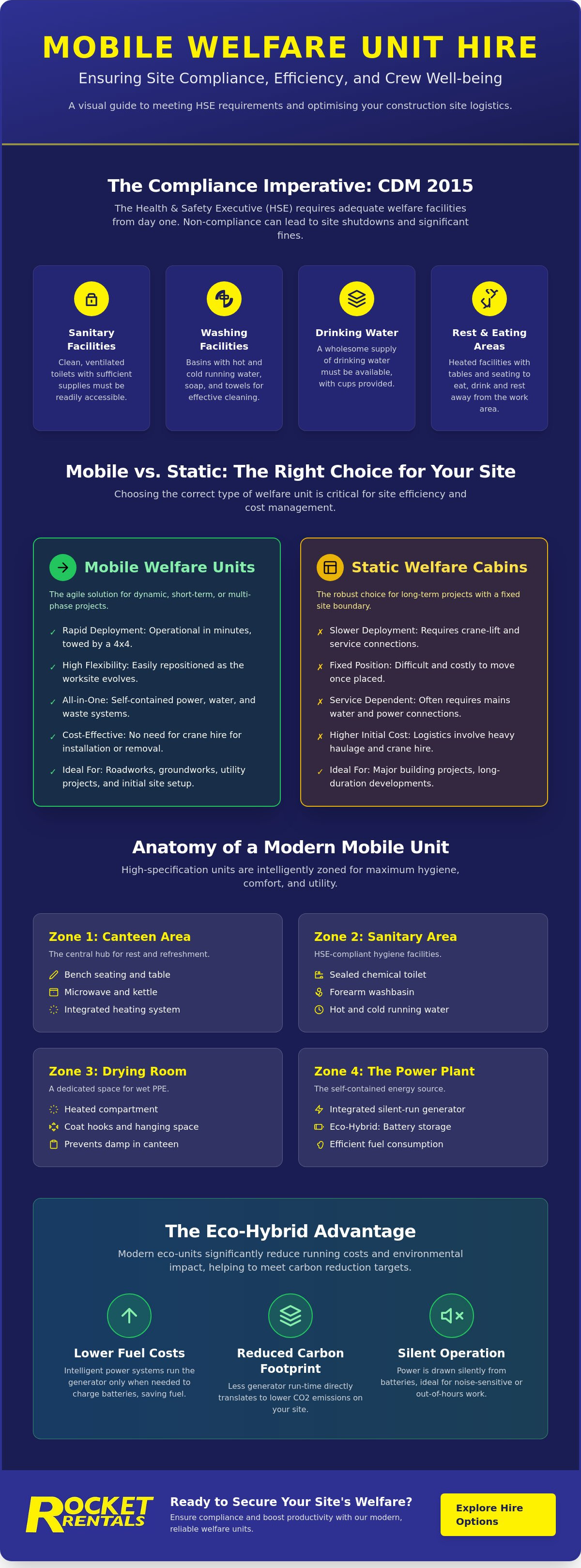
What is Welfare Unit Hire and Why is it Essential?
A welfare unit is far more than just a portable cabin; it's a self-contained hub designed to provide essential facilities for teams working on sites without permanent infrastructure. These units typically combine a canteen area, hygienic toilets, and drying rooms within a single, towable frame. At its heart, construction site welfare is about more than just ticking a box. It's about protecting the health, safety, and dignity of your workforce, ensuring they have a warm, clean space to rest and recharge throughout the day.
For projects like roadworks or initial groundworks, static cabins are often impractical. This is where mobile welfare unit hire excels. These units are engineered to be towed by a standard 4x4, allowing them to be repositioned as the site boundary moves. They contain everything required for daily operations in one package:
Power source: Integrated silent-run generators or modern solar-hybrid systems for off-grid energy.
Water supply: Internal fresh water storage tanks to serve both forearm washbasins and canteen kettles.
Waste management: Sealed chemical toilet systems and greywater collection for easy servicing.
Opting for a professional mobile welfare unit hire service provides the reliability required for fast-paced projects. It ensures your site is ready for operation within minutes of arrival, offering a "safe pair of hands" for your logistical needs.
The Legal Framework: HSE and CDM 2015 Regulations
The Construction (Design and Management) Regulations 2015 (CDM 2015) place a strict legal duty on contractors to provide adequate facilities before any work begins. The HSE is clear: if a site lacks basic amenities, it can be shut down immediately. Mandatory requirements include clean, ventilated toilets, washing facilities with hot and cold running water, and a supply of wholesome drinking water. The HSE defines 'adequate' welfare as the provision of clean, easily accessible facilities, including toilets, washing stations, and rest areas, that are sufficient in number for the entire workforce from the first day of the project.
The Benefits of Mobility for Modern Groundworks
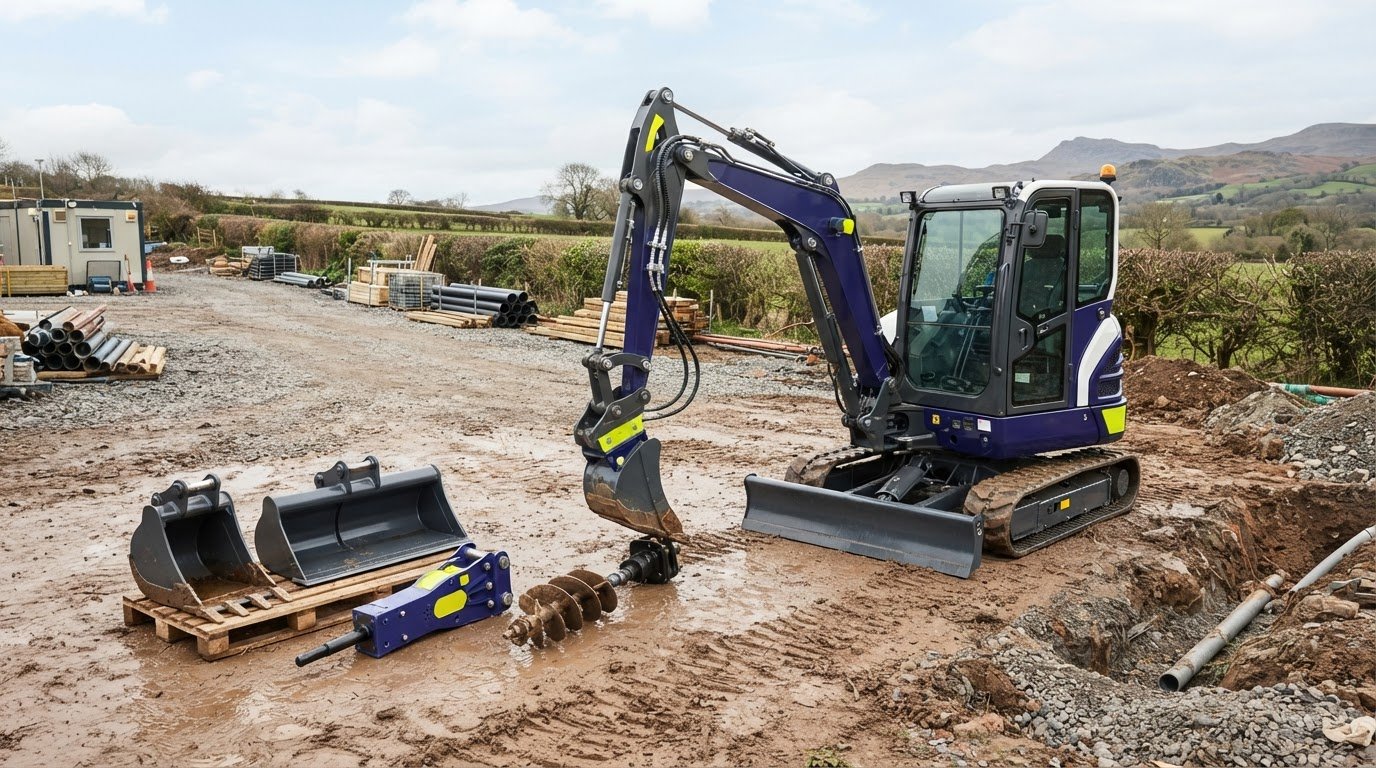
Efficiency on a busy site often comes down to smart logistics. When you've arranged for mini excavator hire to handle precision digging, you don't want your operators walking ten minutes across a muddy field just to reach a kettle. Towable units allow the facilities to follow the "dig" as it progresses. This reduces "travel to rest" time and keeps the team focused. Most modern mobile units offer rapid deployment, moving from arrival to being fully operational and lowered to the ground in under three minutes.
Anatomy of a Modern Mobile Welfare Unit
Step inside a high-specification unit and you'll find a layout designed for maximum utility within a compact footprint. Whilst the exterior is built for the rigours of a construction site, the interior is divided into four distinct functional zones. This zoning ensures that hygiene standards are maintained even on the busiest sites, providing a clear separation between "clean" eating areas and "dirty" changing spaces. When considering mobile welfare unit hire, understanding these internal divisions is key to ensuring the facility meets your crew's daily needs.
Zone 1: The Canteen Area – This serves as the primary rest space. It's equipped with bench seating, a table, a microwave, and a kettle. Integrated heating ensures the crew stays warm during winter months.
Zone 2: The Sanitary Area – Compliance with Health and Safety Executive (HSE) regulations is built into this section. It features a chemical toilet and a forearm washbasin with hot running water to allow for thorough cleaning.
Zone 3: The Drying Room – A dedicated, heated space specifically for hanging wet PPE and high-visibility clothing. It prevents damp gear from being brought into the canteen area.
Zone 4: The Power Plant – The engine room of the unit, containing the generator and, in modern models, the battery storage systems.
By opting for a well-organised layout, you provide an environment that respects worker dignity. If you're planning your next site setup, you can browse our welfare options at Rocket Rentals Ltd to see how these zones are integrated into a single towable package.
Eco-Hybrid Technology and Silent Running
The industry standard for 2026 has shifted towards battery-first systems. These eco-hybrid units use a large battery bank to power the lights, sockets, and water pumps, only firing up the generator when the batteries need a top-up. This drastically reduces generator run time, leading to significant fuel savings compared to traditional diesel-only units. For sites located in residential areas or those requiring night works, the silent-running capability of these units is invaluable for maintaining good relationships with the local community.
Security and Anti-Vandal Features
Security is a primary concern for any remote site. Modern units feature hydraulic lowering systems that allow the entire cabin to sit flush with the ground. This "ground-level" sitting serves two purposes: it eliminates the need for external steps, reducing trip hazards, and it makes the unit nearly impossible to tow away once the drawbar is retracted. Combined with steel shutter windows and high-security locking mechanisms, these features provide peace of mind when the site is unattended overnight. It's a robust, dependable solution for any project.
Mobile vs. Static Welfare: Choosing the Right Solution
Choosing between a mobile unit and a static cabin often dictates the logistical rhythm of your entire project. Whilst both provide the necessary facilities to remain compliant, they serve very different operational needs. For many contractors, the decision hinges on how often the work area moves and how much space is available for setup. If you're managing a site that evolves daily, the choice becomes a matter of operational efficiency rather than just simple convenience.
Static welfare cabins are typically large, heavy structures that require a Hiab lorry for delivery and a crane for precise positioning. These are excellent for major construction projects where the site office and welfare hub will stay in one place for six months or more. However, the transport fees and the need for specialised lifting equipment make them less cost-effective for shorter durations. In contrast, mobile welfare unit hire offers a level of agility that static units simply cannot match. Because they're towable, they can be delivered by a standard 4x4, avoiding the high costs of heavy haulage and the complexities of lifting plans.
Crew size is another vital factor to consider. Mobile units are specifically designed to cater for transient workforces, typically accommodating between 6 and 10 people comfortably. If your project involves a larger team, you might find that multiple mobile units or a single large static cabin is required to meet the legal ratio of facilities to workers. It's about finding the balance between site capacity and the physical footprint available.
When to Opt for Towable Mobile Units
Towable units are the preferred choice for roadworks, utility repairs, and the initial groundworks phases of a build. In these scenarios, the site footprint is often narrow or restricted, making it impossible to manoeuvre a large delivery lorry. Because a mobile unit doesn't require a crane, it can be positioned in tight urban spaces or moved along a pipeline route as the digging progresses. This flexibility ensures that welfare is always close to the point of work, keeping the team productive and minimising downtime.
Assessing Site Duration and Footprint
As a general rule, projects with a duration of under three months favour the lower transport and setup costs associated with mobile welfare unit hire. For semi-permanent requirements, some contractors look at "skid-mounted" units, but these still lack the immediate towability of a standard mobile model. Before the unit arrives, it's essential to ensure the ground is level and stable. The footprint must not only accommodate the unit itself but also allow enough clearance for the hydraulic system to lower the cabin safely to the ground. If the surface is uneven, the unit's internal systems, particularly the waste management and water flow, might not function at peak efficiency.
Logistics and Compliance: Setting Up for Success
Setting up for success starts long before the unit arrives on-site. When you opt for mobile welfare unit hire, the first step in your pre-hire checklist should be verifying the towing capacity of your site vehicles. Whilst most modern 4x4s are capable of towing these units, it is vital to check the manufacturer’s gross towing weight against the specific weight of the unit. Once the unit arrives, the ground conditions become the primary focus. The surface must be level and stable to support the weight of the cabin when it is lowered hydraulically to the ground. Placing a unit on soft or uneven earth can lead to structural strain or internal drainage issues that compromise hygiene standards.
For transport operators managing the movement of site equipment, maintaining compliance with road safety regulations is also a key priority. Utilising a service like Fleetalyse for remote tachograph downloads and driver hours monitoring ensures that your logistics stay as professional and compliant as your site setup.
Beyond its primary function, the welfare unit often serves as the central hub for the site. It is the logical location for conducting daily health and safety briefings or displaying mandatory posters and site plans. This centralised approach ensures that compliance is integrated into the daily routine of the crew, making the unit a tactical asset rather than just a regulatory requirement. It provides a clean, dry environment where safety protocols can be discussed without the distractions of the active dig zone.
Positioning for Safety and Accessibility
Strategic placement is essential for maintaining a clear and safe workflow. You must ensure the unit is positioned where it does not obstruct the movement of heavy plant or interfere with electric scissor lift hire operations. These access machines require clear, level paths to move safely, and a poorly placed welfare unit can create unnecessary bottlenecks or hazardous blind spots.
Additionally, you should maintain a clear exclusion zone around the generator exhaust and ventilation points to prevent fumes from entering the cabin or surrounding workspaces. Think about the long-term logistics, too. Avoid parking the unit in a tight corner where a service tanker cannot reach the waste tanks. If the service vehicle cannot get within a few metres, you will face significant challenges when it comes to the essential weekly maintenance visits.
Maintenance and Servicing Schedules
A welfare unit is only as compliant as its maintenance record. Weekly service requirements are the minimum standard for a busy site; this includes emptying the chemical waste tanks, replenishing the fresh water supply, and checking the fuel levels for the generator. Daily cleaning protocols are equally important to maintain high hygiene standards amongst the crew, particularly in high-traffic areas like the canteen and sanitary zone. Rocket Rentals Ltd can organise professional servicing for your hired units to ensure continuous compliance and peace of mind throughout your project. If you're ready to secure your site facilities, you can view our range of welfare units and speak to our team about your specific requirements.
Why Professional Contractors Trust Rocket Rentals Ltd for Welfare
Choosing a partner for your site facilities is a decision that impacts both your operational budget and your legal standing. At Rocket Rentals Ltd, we operate with a "Safe Pair of Hands" philosophy, ensuring that every piece of equipment we provide is reliable, meticulously maintained, and ready for immediate deployment. When you invest in mobile welfare unit hire, you aren't just renting a cabin; you're securing the welfare of your team and the continuity of your project. Our approach is built on providing peace of mind through equipment that performs exactly as expected from the moment it arrives on your site.
Environmental responsibility is no longer a secondary concern for modern contractors. We've committed to the latest eco-hybrid technology, allowing you to meet increasingly stringent carbon reduction targets whilst significantly lowering fuel consumption. Unlike some providers, Rocket Rentals Ltd maintains transparent pricing with no hidden environmental surcharges. This clarity allows you to forecast your site overheads with precision, knowing that the price you see is the price you pay for premium, sustainable equipment.
One of the primary advantages of working with us is the ability to integrate your plant hire requirements. By sourcing your excavators, dumpers, and welfare units from a single, dependable partner, you reduce the administrative burden of managing multiple suppliers. This streamlined approach ensures that all your site essentials arrive with the same high standard of care and maintenance that has defined our service for decades.
A Reputation Built on Reliability
Since 1988, Rocket Rentals Ltd has operated as an independent specialist, providing high-quality plant to projects across the UK. Our reputation is built on more than just the machines we rent; it's founded on the personal touch of a knowledgeable team that understands the complexities of site logistics. We know that every project has unique challenges, and our staff are always on hand to offer expert guidance. Our self-drive model provides maximum flexibility for your project management, giving you full control over how and when your equipment is utilised on the ground.
Streamlining Your Site Hire
Efficiency is the cornerstone of a successful construction project. Having a single point of contact for all your site essential equipment simplifies communication and ensures that delivery schedules are coordinated perfectly. We take quality control seriously, ensuring every unit is deep-cleaned and fully tested before it leaves our depot. This commitment to hygiene and functionality means your team can move in and start work immediately without delay. If you're ready to secure a compliant, efficient workspace for your crew, enquire about our mobile welfare unit hire today.
Securing a Compliant and Productive Site Environment
Establishing high-quality welfare facilities is a fundamental step in project planning that directly impacts team morale and legal standing. Meeting CDM 2015 regulations doesn't have to be a logistical burden. By choosing mobile welfare unit hire, you gain the flexibility to reposition facilities as your project evolves, ensuring that canteens and sanitary zones are always within reach of your workforce. This strategic approach, combined with modern eco-hybrid technology, helps you maintain full compliance whilst actively reducing site overheads and carbon emissions.
Rocket Rentals has served as a dependable partner to the construction industry as independent plant hire specialists since 1988. Our modern fleet is maintained to the highest standards, providing comprehensive site-ready equipment for national delivery. Whether you need a single unit or a complete package of plant, we offer a safe pair of hands for your project needs. View our range of Mobile Welfare Units and Get a Quote today to ensure your next site setup is seamless, sustainable, and fully compliant. We look forward to helping you build a safer, more efficient site.
Frequently Asked Questions
How many people does a standard mobile welfare unit accommodate?
A standard mobile welfare unit is typically designed to accommodate between 6 and 10 people comfortably. For example, a 12ft unit generally suits a crew of 7, whilst a 16ft model is built for up to 10 workers. If your site team is larger, you may need to hire multiple units or a larger 20ft static cabin to remain compliant with the required ratio of facilities to personnel.
Is it a legal requirement to provide a drying room on-site?
Providing a drying room is a legal requirement under CDM 2015 if workers are required to wear special clothing or PPE that may become wet. The HSE mandates that facilities must be available for workers to change and dry their wet work clothes. Most mobile welfare units include a dedicated, heated drying zone to fulfil this specific obligation, ensuring the team stays warm and dry throughout their shift.
How often do the toilets and water tanks need servicing?
Toilets and water tanks generally require servicing on a weekly basis to maintain hygiene and functionality on a busy site. This service includes emptying the chemical waste, replenishing the fresh water supply for washing, and ensuring the unit is deep-cleaned. For high-occupancy sites with intensive use, you might choose to increase this frequency to twice weekly to ensure continuous compliance with health and safety standards.
Can I tow a mobile welfare unit with a standard 4x4 vehicle?
You can tow a mobile welfare unit with a standard 4x4 vehicle, provided the vehicle's manufacturer-rated towing capacity matches or exceeds the unit's weight. Most mobile units weigh between 1,800kg and 2,500kg, which falls within the 3,500kg limit of many professional-grade 4x4s. It's essential to verify the specific gross weight of the unit before transit to ensure you're operating within legal and safe towing limits.
What is the difference between a chemical toilet and a fresh water flush system?
The primary difference lies in how the waste is processed and the water used for flushing. A chemical toilet uses a self-contained tank treated with biocides to break down waste, which is common in mobile welfare unit hire due to its off-grid efficiency. In contrast, a fresh water flush system uses clean water from a dedicated tank or mains connection, offering a more traditional experience but requiring more frequent water replenishment.
Do mobile welfare units require an external power supply?
Mobile welfare units don't require an external power supply as they are fully self-contained with integrated power sources. Most models feature a silent-run diesel generator or a modern eco-hybrid system that combines battery storage with a generator for efficiency. This makes them ideal for remote locations or initial groundworks phases where mains electricity has not yet been established on the construction site.
Are these units secure against theft and vandalism when left overnight?
These units are highly secure against theft and vandalism due to their specialised design. Once positioned, a hydraulic system lowers the unit flush to the ground, making it impossible to tow away without the keys to the internal controls. Combined with steel shutters, anti-jemmy doors, and high-security locks, they provide a robust "safe pair of hands" for your equipment when the site is unattended overnight.
What happens if the generator fails during the hire period?
If the generator fails during your hire period, you should contact the plant hire provider immediately to arrange a repair or a replacement unit. Professional suppliers typically offer rapid response support to minimise downtime, as a loss of power can compromise site welfare compliance. Modern eco-hybrid units often have battery backups that can maintain basic lighting and water pumps for a short period whilst the generator issue is being resolved.
Comments