
A Complete Guide to Modern Plant Hire: Maximising Site Efficiency in 2026
Updated: Aug 25
Could your project milestones be at the mercy of equipment that isn't up to the task? It's a frustration many contractors face. The sudden halt of a project because of mechanical failure or a complex compliance hurdle that wasn't anticipated can be incredibly costly. You're likely already aware that maintaining a tight schedule requires more than just having machines on-site; it demands a level of operational autonomy that keeps you in the driving seat.
By choosing a strategic approach to self drive plant hire, you can ensure your site operates with the precision and reliability required in today's demanding construction environment. We'll show you how to master plant procurement from the initial selection through to full site compliance. This guide explores the latest 2026 machinery innovations, such as the next-generation Hyundai crawler excavators, and provides clear steps to simplify HSE welfare management while securing seamless equipment delivery and collection. You'll gain the insights needed to eliminate hidden costs and maintain a well-maintained, high-specification fleet that works as hard as your team does.
Table of Contents
Understanding the Strategic Role of Plant Hire in Construction
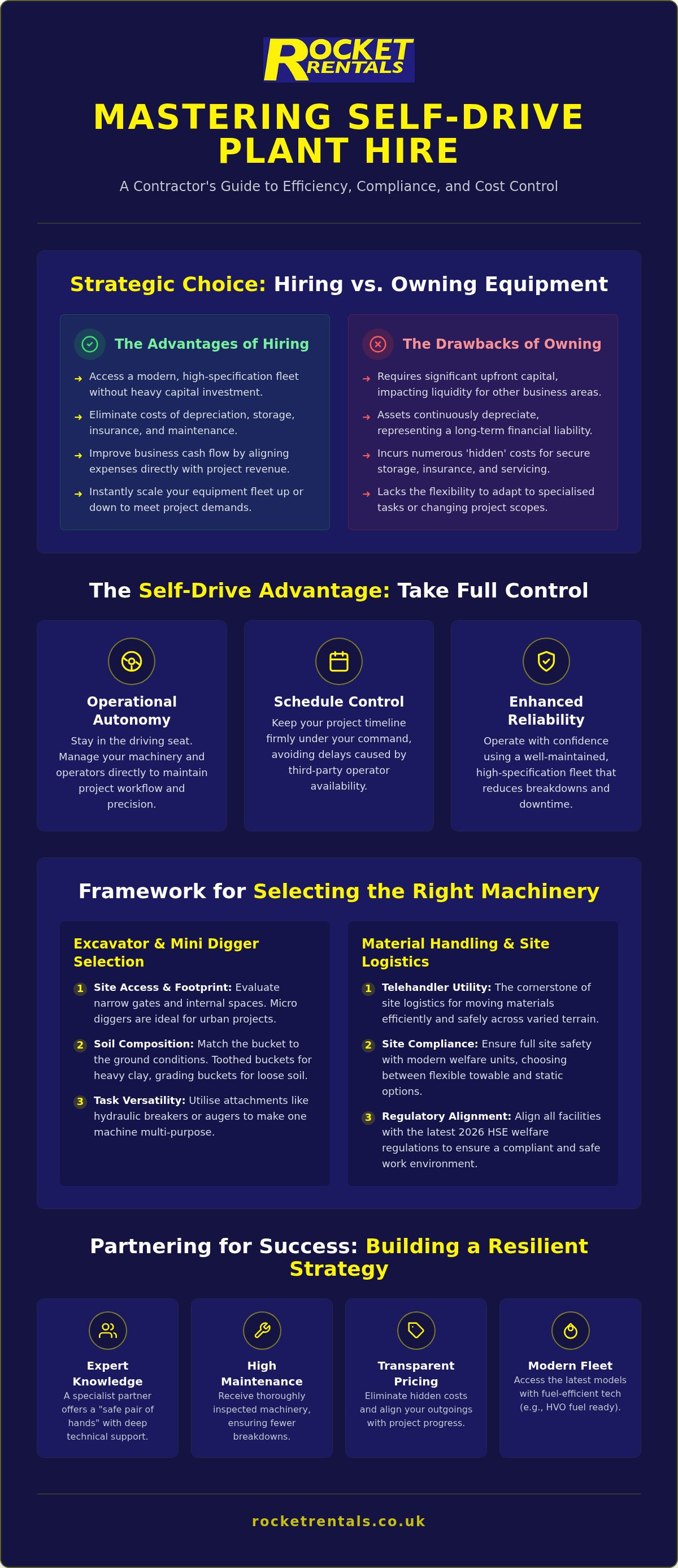
Modern construction demands a level of agility that traditional machinery ownership rarely provides. For many professional contractors, the shift from heavy capital investment to a strategic rental model isn't just about saving money; it's about maintaining a competitive edge. Relying on self drive plant hire allows your business to access specialised equipment for niche groundworks or industrial tasks without the long-term liability of a depreciating asset. This flexibility ensures you always have the right tool for the specific job at hand, whether that involves high-reach telehandlers or specialized excavator attachments.
Choosing an independent specialist over a general tool hire shop is a hallmark of a professional operation. Generalists often lack the technical depth required to support complex projects, whereas a dedicated plant partner offers a "safe pair of hands" through expert knowledge and high-maintenance standards. This partnership ensures that the machinery you receive is not only fit for purpose but is also the latest model available, featuring the most recent safety and efficiency innovations. It's a methodical way to ensure your site remains productive and compliant without the distractions of fleet management.
The Economic Case for Machinery Rental
The traditional equipment rental business model has become a cornerstone of efficient project management. By opting to hire rather than buy, you significantly improve business cash flow by reducing upfront expenditure. This approach eliminates the "hidden" costs of ownership that often drain a project's budget. You don't have to worry about secure storage, expensive insurance premiums for idle machines, or the constant requirement for mechanical servicing. When a project scales up, you can expand your fleet instantly. When the work finishes, the costs stop. It's a transparent, logical progression that aligns your outgoings directly with your project's revenue.
Reliability and Performance Standards
Site efficiency is built on the reliability of your equipment. Utilising professional self drive plant hire ensures you are operating high-specification machinery that meets the rigorous demands of a 2026 construction site. Modern plant is designed to reduce on-site emissions and fuel consumption, often supporting sustainable alternatives like HVO (Hydrotreated Vegetable Oil). This focus on performance means fewer breakdowns and less downtime. Every machine should arrive on-site thoroughly inspected and ready for immediate deployment, having undergone strict safety checks. This commitment to quality ensures that your operators can focus on the task, backed by the security of well-maintained, reliable machinery. For those looking to document their site's progress with high-end cinematography, you can discover Junction Rentals for professional camera and lens hire.
Selecting the Right Machinery: A Framework for Site Managers
Selecting equipment requires a methodical evaluation of site-specific variables. A site manager must consider the physical footprint of the workspace alongside the technical requirements of the task. For instance, whilst a heavy excavator offers superior breakout force, it's useless if the access lane won't accommodate its width. Conversely, using a machine that's too small leads to excessive cycles and mechanical strain. Effective self drive plant hire relies on matching the machine's capacity to the volume of material being moved, ensuring that the workflow remains steady and predictable.
Excavator and Mini Digger Selection
Urban projects often present the most significant logistical hurdles. In these environments, micro diggers are indispensable for passing through narrow gates or working within internal spaces. For more standard residential or commercial groundworks, mini excavator hire provides the ideal balance of compact dimensions and powerful hydraulics. It's also vital to consider the soil composition. Heavy clay may require a toothed bucket for penetration, whereas loose sand is better handled with a wider grading bucket. By utilising specialised attachments like hydraulic breakers or augers, you can transform a single excavator into a multi-purpose tool. This reduces the total number of machines required on-site and simplifies your logistics.
Material Handling and Compaction
Efficient site logistics depend on the seamless movement of materials. Telehandlers are the workhorses here. When selecting one, you must calculate the maximum lift height and forward reach needed to place loads safely, especially when working over trenches or onto scaffolding. New 2026 models, such as the Avant e727 electric telehandler or the updated Claas Scorpion range, offer enhanced specifications for these tasks. This coordination is particularly important when managing spoil. Integrating professional excavator hire with a correctly sized dumper fleet prevents bottlenecks. Effective self drive plant hire strategies also involve evaluating site terrain to choose between tracked and wheeled dumpers, ensuring that work continues regardless of the weather.
Finally, don't overlook the foundation stage. Achieving the correct compaction density is a legal and structural requirement. Using a vibrating roller ensures the sub-base is stable before any concrete is poured. Every site has unique challenges, from tight access to difficult terrain. Taking the time to evaluate these factors before the equipment arrives prevents unexpected downtime. If you need assistance in tailoring a fleet to your specific site, you can browse our professional excavator options to find the exact specifications required. This level of planning is what separates a successful project from one plagued by logistical delays.
The Self-Drive Advantage: Why Independent Plant Hire Wins
Many contractors find that the traditional operated model introduces unnecessary variables to a project. When you opt for self drive plant hire, you eliminate the friction of managing external personnel and put yourself in direct control of your site’s tempo. You aren't reliant on a third-party operator’s schedule or their specific working habits. Instead, you integrate high-specification machinery into your own established team, ensuring that every hour on-site is utilised to its full potential. This autonomy is often the difference between meeting a milestone and facing a costly delay.
Independent hire provides a level of agility that operated agreements simply cannot match. If a project phase finishes early or weather forces a sudden change in plan, your own qualified operators can pivot immediately. This internal scheduling prevents the "standing time" costs often associated with operated plant when work is delayed. It also maintains a consistent team dynamic. Your staff already understand your site’s specific challenges and communication styles, which reduces the risk of errors or misunderstandings during complex manoeuvres. It’s a logical, professional approach to fleet management, and you can discover Fleetsauce to apply this same level of strategic oversight to your company’s vehicle leasing requirements.
Integrating hired plant into existing site workflows becomes a seamless process when your own team handles the controls. You have the freedom to reassign operators across different machines as project needs shift throughout the day. This flexibility is vital for multi-stage groundworks where an operator might move from an excavator to a dumper or roller as the task evolves. By managing these resources internally, you significantly reduce the administrative burden of verifying external certifications or managing additional site inductions for temporary staff. It's a more methodical way to run a lean, efficient site without sacrificing quality.
Safety and Accountability
Accountability is naturally higher when your own employees operate the machinery. They are already familiar with your company’s specific safety protocols and the unique risks of the project. This familiarity is a significant safety asset. Professional self drive plant hire also encourages a culture of equipment care. Because the same team uses the machine daily, they are more likely to perform the necessary daily checks and treat the asset with respect. A thorough handover and familiarisation session at the start of the hire period ensures your team is comfortable with the specific controls of a new model. This proactive approach to safety protects both your workforce and your project’s timeline, providing the peace of mind that comes from a "safe pair of hands" at the controls.
Beyond the Digger: Essential Site Welfare and Safety Compliance
Site efficiency isn't solely defined by the speed of an excavator's cycle. It's equally dependent on the environment you create for your workforce and the rigour of your safety protocols. High-quality self drive plant hire provides the tools for the job, but true operational success requires a holistic view of site management. This includes meeting legal obligations for workforce wellbeing and ensuring every piece of machinery on-site is backed by comprehensive documentation. A safe site is a productive site, and cutting corners on compliance often leads to the very delays you're trying to avoid.
Site Welfare Regulations
HSE requirements for site welfare are non-negotiable. Under Schedule 2 of the CDM 2015 regulations, contractors must provide adequate toilets, washing facilities with hot and cold water, and a clean area for rest and meals. These aren't just boxes to tick; they're essential for maintaining workforce morale. When your team has access to high-standard facilities, productivity remains steady throughout the shift. Choosing between towable and static welfare units depends on your project's geography. Towable units are ideal for linear projects like roadworks where the site office needs to move frequently. Static units provide a more robust solution for long-term builds with a higher peak headcount. Sizing your welfare provision correctly for your maximum staff numbers prevents congestion during breaks and keeps the project moving.
Safety Compliance and Documentation
Maintaining a "safe pair of hands" approach requires strict adherence to PUWER and LOLER inspections. PUWER ensures that all work equipment is fit for purpose and safe to use, whilst LOLER specifically covers lifting equipment like telehandlers and excavators. Professional self drive plant hire providers should supply machines with current certificates, but the responsibility for daily checks lies with your site team. Keeping a daily log of pre-start inspections isn't just a safety requirement; it's a diagnostic tool that catches minor mechanical issues before they become project-halting breakdowns. Documentation should be easily accessible on-site to satisfy any HSE inspections.
Environmental compliance is also becoming a priority for indoor and urban projects. If you're working in enclosed spaces, utilising electric scissor lift hire allows you to meet strict emission standards whilst maintaining access. This proactive approach to safety and welfare demonstrates a commitment to professional standards that clients value. If you're ready to upgrade your site's compliance and facilities, you can view our range of site solutions to ensure your project meets every regulatory standard for 2026.
Partnering for Success: How to Organise Your Plant Hire Strategy
A successful project isn't just about the first day of digging; it's about the entire lifecycle of the equipment on your site. Developing a long-term relationship with an independent specialist provides a level of consistency that transactional hiring lacks. You gain a partner who understands your operational preferences and specific site requirements. This relationship is built on transparent pricing and clear hire terms, ensuring you aren't surprised by hidden costs when the final invoice arrives. It's a methodical approach that prioritises trust and professional reliability.
Streamlining the Procurement Process
Efficiency starts with communication. Having a single point of contact for all your plant and welfare needs significantly reduces administrative friction. Instead of juggling multiple suppliers, you deal with one expert who understands the nuances of your project. This person can provide expert advice to refine your equipment list, ensuring you don't over-specify for simple tasks or under-equip for complex ones. Clear communication regarding site access and delivery windows is also essential. By providing precise instructions, you minimise site congestion and ensure that your self drive plant hire arrives exactly when your operators are ready to begin work.
Planning for Project Milestones
Strategic scheduling is what separates profitable projects from those that struggle with overheads. You must coordinate the arrival of excavators, dumpers, and rollers to ensure a seamless workflow during groundworks. If the excavator arrives two days before the dumper, you're paying for idle machinery. Managing these hire periods requires a proactive view of your project timeline. As phases conclude, ensure you're ready for collection. Finalising the hire involves more than just making a phone call; equipment should be clean and positioned in a safe, accessible area. This attention to detail ensures a smooth handover and maintains the high standards expected in professional self drive plant hire agreements.
Finally, conducting a post-hire review is a valuable tool for future success. Take the time to evaluate which machines performed best and whether the delivery logistics worked as planned. This review allows you to optimise your future machinery procurement, making each subsequent project more efficient than the last. By treating plant hire as a strategic partnership rather than a simple transaction, you secure a "safe pair of hands" for your business. This ensures that every project is backed by reliable machinery and expert support.
Securing Your Project's Future Efficiency
Mastering site efficiency in 2026 requires a methodical approach to procurement and a firm commitment to high standards. By prioritising self drive plant hire, you've got the operational autonomy needed to navigate complex project timelines whilst ensuring your team works with the best available machinery. From selecting the correct excavator size for tight access to providing compliant, modern welfare units, every decision you make contributes to a safer and more productive workspace.
Choosing a partner with over 35 years of experience as independent specialists gives you the security of a "safe pair of hands." You'll have access to an extensive fleet of high-specification machinery and comprehensive site welfare solutions designed for full regulatory compliance. This strategic focus on quality and reliability allows you to focus on project delivery instead of equipment downtime. It's about building a foundation of trust that supports your project from the first dig to the final collection.
Contact Rocket Rentals Ltd today to discuss your next project and discover how our tailored solutions can support your site's success. We look forward to helping you build with confidence and precision.
Frequently Asked Questions
What is the difference between self-drive and operated plant hire?
Self-drive hire means you provide your own qualified operator for the machinery, whereas operated hire includes a driver provided by the hire company. Professional self drive plant hire offers greater site autonomy and control over your daily schedule. This model is often more cost-effective for contractors who already have CPCS or NPORS qualified staff, as it eliminates the high daily rates associated with external operators.
Do I need a special licence to hire a mini digger for a professional site?
You don't need a standard driving licence to operate a mini digger on private land, but professional sites require proof of competence. Site managers usually insist on recognised qualifications like CPCS or NPORS cards. These certifications ensure the operator understands safety protocols and machine handling. It's vital to check your specific site insurance requirements, as they often mandate these professional credentials for all machinery operators.
How is the delivery and collection of heavy plant machinery organised?
Delivery and collection are typically scheduled during the procurement process to align with your project’s milestones. Specialist low-loader vehicles transport the machinery to your site within an agreed window. You must ensure that the site entrance is accessible for heavy haulage and that a competent person is available to sign for the equipment. Clear communication regarding site constraints helps avoid delays and ensures the machinery is positioned correctly.
What are the legal requirements for site welfare units in the UK?
The CDM 2015 regulations mandate that contractors provide adequate welfare facilities for all workers. These facilities must include clean toilets, washing stations with hot and cold running water, and a sheltered area for rest and meals. The size of the unit should reflect the peak headcount on site. Providing these facilities isn't just a legal duty; it's essential for maintaining workforce morale and ensuring high productivity levels.
How do I ensure the plant machinery I hire is compliant with safety regulations?
Reputable providers ensure all equipment meets PUWER and LOLER standards. You should receive copies of the latest inspection certificates upon delivery to confirm the machine's safety status. It's also a legal requirement for your team to perform daily pre-start checks and maintain a log. This proactive approach ensures that self drive plant hire equipment remains in safe working order throughout the duration of your project.
Can I hire specialised attachments for an excavator I already have on site?
Yes, hiring specialised attachments is a cost-effective way to increase the versatility of your existing fleet. You can source hydraulic breakers, augers, or grading buckets to suit specific ground conditions. It's vital to confirm that the attachment's hydraulic flow requirements and hitch configuration match your machine's specifications. Using the correct attachments prevents mechanical damage and ensures the task is completed efficiently without needing additional heavy plant.
What happens if a hired machine develops a fault during the project?
If a machine develops a mechanical fault, you should contact your hire provider immediately. Professional partners prioritise rapid support to minimise project downtime. A mobile technician is usually dispatched to assess and repair the machine on-site. If a repair isn't possible within a reasonable timeframe, a replacement unit is typically organised. This "safe pair of hands" approach ensures your site's operational capacity is restored as quickly as possible.
Is insurance included in the plant hire agreement, or do I need my own?
Standard hire agreements usually require the contractor to provide "Hired-in Plant" insurance. This covers the equipment against theft, accidental damage, or loss whilst it's under your care. You should check your existing commercial policy to see if it includes this cover or if you need to arrange a specific short-term policy. Ensuring you have the correct insurance in place provides peace of mind and protects your business from significant financial liability.


Comments