
Best Site Clearance Equipment: A Practical Guide for 2026
What is the best equipment for site clearance? It isn’t necessarily the biggest machine on the hire list. The right choice depends on the work, access, ground conditions and how materials will move around your site. Poorly matched equipment or an unclear sequence can leave machines waiting and materials blocking work areas.
Start by dividing the job into tasks: clearing vegetation and surface debris, excavation, moving arisings and preparing the ground for the next stage. Then match equipment to each task and plan the order of work. This guide explains how to make those decisions and reduce avoidable downtime.
Before arranging plant hire, assess access, working space, ground conditions and material routes. Rocket Rentals is an independent UK plant hire business offering self-drive mini diggers, excavators, dumpers, rollers and excavator attachments for professional projects. A clear plan helps you select equipment that fits the job and organise its use with confidence.
Table of Contents
What does site clearance involve, and where does equipment fit?
Site clearance prepares land for planned construction. It may involve removing vegetation and surface debris, excavating, moving materials and preparing the ground. The scope depends on the site and the next stage of work. Clearing vegetation is only one part: you may also need clear working areas, a plan for materials and ground that is ready for what follows.
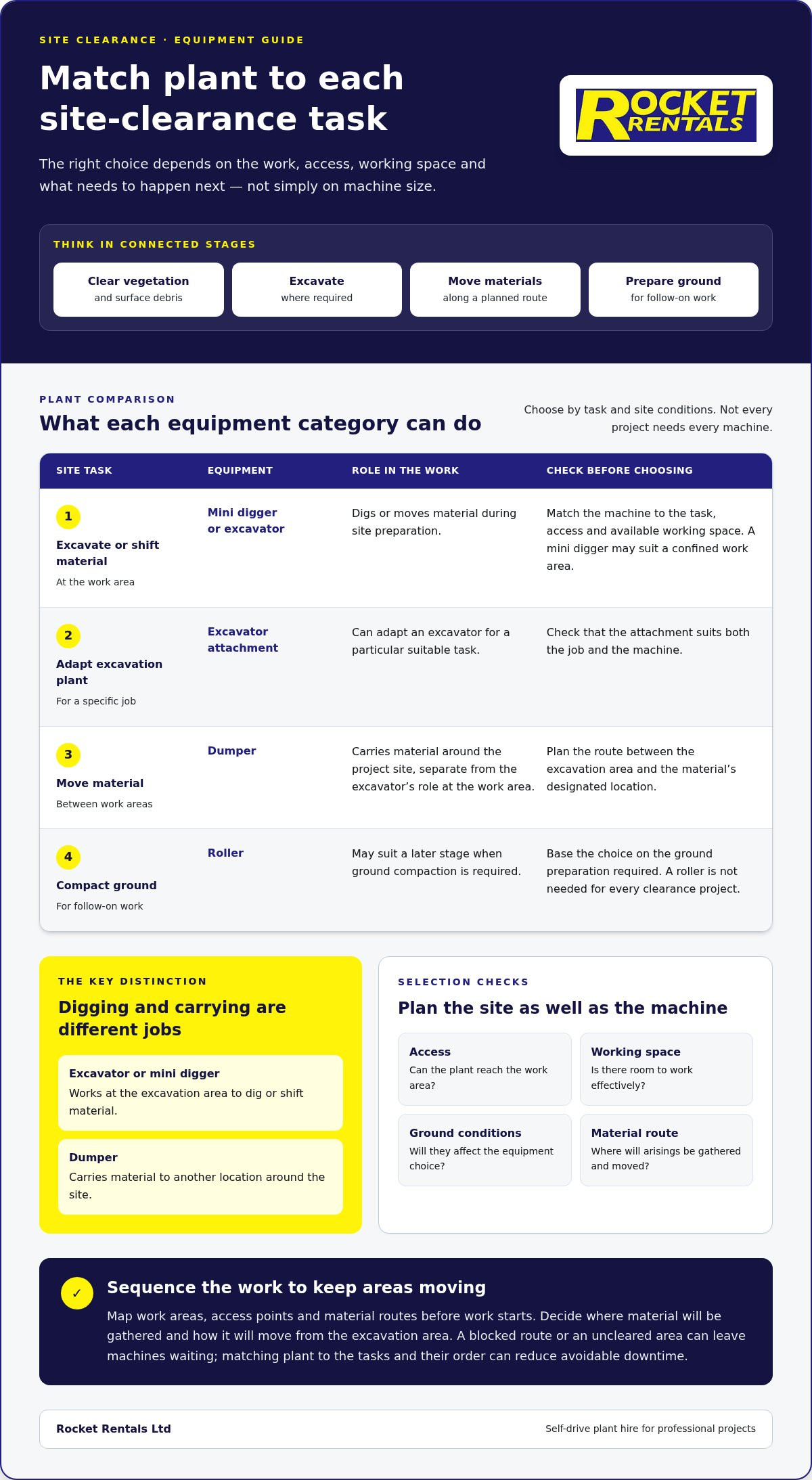
Choose equipment according to how these tasks connect. An excavator or mini digger may suit excavation, a dumper can move material between work areas, and a roller may be relevant when ground preparation includes compaction. These machines have different roles, and not every project needs all of them. For a general introduction to machinery types, see Heavy equipment for site clearance.
Which tasks can site clearance include?
Break the scope into tasks before choosing plant. Initial clearing may involve vegetation and loose surface debris. Excavation removes or shifts ground where the project requires it. Material movement transports arisings to a designated area, while ground preparation readies the site for planned follow-on work. Some projects need only a few of these tasks; others involve several. Use the construction plan, existing site conditions and agreed scope to determine what belongs in the clearance phase.
This breakdown helps you identify what each machine needs to do instead of hiring against the broad label of “site clearance”. Cutting back surface growth is different from digging, and moving excavated material is a separate task. Define each job to create a clearer basis for selecting plant.
Why plan equipment before work starts?
A machine may be capable of a task but still be a poor fit for your site. Restricted access, narrow routes, nearby buildings or boundaries, and limited working space can all affect your choice. Ground conditions matter too. Check these factors early so you can avoid planning around equipment that cannot reach the work area or move effectively within it.
Plan the sequence as well. Decide where material will be gathered and how it will travel from the excavation area. If a route is blocked, or the next stage cannot begin until an area is clear, machines may be left waiting. Matching equipment to each task and scheduling it around the work sequence can reduce avoidable downtime.
Before choosing the best equipment for site clearance, map the working areas, access points and material routes. Note what the site must be ready for afterwards. This gives you a practical starting point for choosing plant and setting the order of use. Keep the planned work and site conditions in view so the equipment plan supports safe, organised working.
Which site clearance equipment suits each stage of the work?
Choose plant by the task and available space, then consider how it fits into the wider job. Excavators and mini diggers can support excavation and material handling. Dumpers move material around the site, while a roller may suit ground preparation that requires compaction. Excavator attachments can adapt a machine for a suitable task, so match the attachment to the work and the machine.
Machine size is only one consideration. Access routes, working room and the position of the task all affect suitability. A mini digger may fit a confined work area, while another excavation task may call for an excavator. The professional guide to mini excavator hire offers further guidance on selecting this type of plant for a project.
Excavators and attachments for excavation tasks
Excavators are used to dig and move material during site preparation. Mini diggers can also suit excavation, depending on the task, access and available working space. An attachment can adapt an excavator for a particular job, but it needs to suit both the task and the machine. Define the work first, then choose the equipment category that fits.
Plant hire covers machinery rented for project work. Hand tools may support smaller activities, but they are separate from plant used for mechanical excavation or material movement.
Dumpers and rollers for moving and preparing ground
A dumper transports material around the project site. This is distinct from the excavator’s role at the work area: one machine digs or shifts material, while the other carries it to another location. Map the route between those areas to decide whether a dumper has a useful role in the sequence.
A roller may suit a later stage when ground compaction is required. It is not needed for every clearance project, so base the decision on the follow-on work and the ground preparation required.
Use this table to compare common tasks with equipment categories that may suit them. It describes plant roles, rather than listing every tool a project could require.
For professional projects, explore Rocket Rentals’ self-drive plant hire for relevant machinery categories.
How do you compare site clearance equipment for your project?
Compare plant against the task, the space available and what needs to happen next. A machine’s capability describes the work it can perform; site suitability depends on whether it can reach and work effectively in your layout and conditions. A larger machine is not automatically a better choice if access is restricted or the work area is compact.
Consider the complete sequence rather than treating each task in isolation. Excavation may produce material that needs moving, and ground preparation may follow once the work area is clear. Different stages may call for different machines, each doing a distinct job at the point it is needed.
What site conditions should shape the choice?
Walk the site before settling on equipment. Note the access route, available working space, position of the work area and route materials need to travel. Check ground conditions alongside the task. Avoid choosing by machine size alone: consider whether the equipment can reach and work in the planned area.
Use the comparison below to link each task with a selection factor. It is a starting point, not a specification sheet. The right choice depends on the actual project and site.
When is a combination of machines more suitable?
Different tasks call for different plant roles. An excavator can dig or shift material at the work face, while a dumper can carry it elsewhere on site. If the project also requires compaction, a roller may be needed at a later stage. Use the work sequence to decide whether machines are needed at the same time or at separate stages, rather than arranging every item for the full clearance period.
For example, map where excavation will take place and where the resulting material needs to go. If transport is a separate task, include it in the plant plan. Readers looking for more detail on excavator selection can refer to Rocket Rentals’ excavator hire guide, which covers machinery considerations for professional projects.
The best equipment for site clearance fits both the task and the site, in the order the work requires. If you’re planning a professional project, explore self-drive plant hire from Rocket Rentals for relevant machinery categories.
How can you plan a site clearance equipment hire?
Start your hire plan with the work, not a list of machines. Set out what needs clearing, where each task will happen and what the site must be ready for next. This gives you a basis for selecting plant and scheduling it by project stage, rather than having equipment arrive before the work area is ready.
Set out the work area, access and sequence
Make a simple site plan showing the areas to clear, access routes, working areas and where materials will go. Mark restricted spaces or routes that could affect plant movement. Separate excavation, material transport and compaction into distinct tasks. Set the sequence to match the project plan, so each machine can work where and when it is needed.
Define the clearance tasks. Record what needs to be removed, excavated, moved or prepared. List only the tasks required for your project rather than assuming every site needs every stage.
Map the site. Mark access points, work areas and routes between them. Include where material will be gathered or moved, so you can see how plant needs to travel around the site.
Match plant to each job. Consider whether excavation calls for a mini digger or excavator, whether material movement needs a dumper, and whether a roller suits the planned ground preparation. Base your choices on the task and available working space.
Set the order of work. Identify tasks that depend on one another. For example, material may need to be moved away from an excavation area before ground preparation can begin. A clear sequence helps prevent machines waiting for access or space.
Schedule equipment by project stage. Align each machine’s use with the point in the work plan when it is needed. If the work changes, review the sequence rather than leaving plant scheduled for a stage that is not ready.
Coordinate equipment around the hire period
With self-drive hire, you plan the machinery’s use around your project work. Before arranging plant, have the task list, site plan and intended sequence to hand. These details help you describe what the equipment needs to do and how it fits the work areas and material routes.
Plan handovers between tasks, too. If excavation and material movement are scheduled together, make sure each machine has room to work without obstructing the next stage. If compaction is planned, schedule it after the relevant ground preparation, rather than adding a roller to the initial equipment list without a clear role. A well-ordered plan can reduce idle time between tasks.
Once you have mapped the work and sequence, arrange self-drive plant hire with Rocket Rentals for your professional site clearance project. A clear plan helps you select equipment for each stage and organise its use with confidence.
How can Rocket Rentals support site clearance with plant hire?
Rocket Rentals is an independent UK plant hire business offering self-drive machinery for professional construction and industrial projects. Relevant equipment for site clearance includes mini diggers, excavators, dumpers, rollers and excavator attachments. These categories can support different stages of a planned job, from excavation and material movement to ground preparation where compaction is required.
The best equipment for site clearance depends on the task and the site, so start with your work plan rather than selecting machines by name alone. Consider what needs digging, where material will go and what the ground must be ready for next. Rocket Rentals identifies inspection as a business strength when arranging plant for a project.
Match Rocket Rentals equipment to your clearance plan
Match mini diggers or excavators to the planned excavation work, taking access and working space into account. A dumper can support material movement around the project, while a roller may suit ground preparation when compaction is part of the next stage. Excavator attachments offer task-specific options. For more detail on choosing excavation plant, consult Rocket Rentals’ excavator hire guide.
Arrange the next step with a clear project brief
A clear brief connects the equipment to the work. Before arranging self-drive plant hire, set out the stages involved and the order in which they’ll happen. Include site access details, the areas where machines will work and how material is expected to move between them. This gives you a practical basis for planning equipment around the project.
Your brief could cover:
The tasks requiring excavation, material movement or ground preparation.
Access routes and the working space available on site.
Where materials need to move during the work.
The intended follow-on work and when each machine is needed.
Use these details to organise equipment around the actual work stages, rather than arranging plant without a clear role. This can help coordinate machine use and limit avoidable waiting between tasks. Keep the plan practical and revise it if the project sequence changes.
For self-drive plant to support your professional site clearance project, discuss plant hire for your project with Rocket Rentals.
Set your clearance plan in motion
Keep your equipment plan flexible. If the work order or site access changes, review the timing and adjust your arrangements to reflect the new sequence. This helps you keep the next stage in view as the project progresses.
Rocket Rentals is an independent plant hire business founded circa 1988. Prepare a brief outlining the work stages, access details and equipment you’re considering. This gives you a clear starting point for arranging self-drive hire.
The best equipment for site clearance is what fits your site and the work ahead. With a considered plan, you can organise the next step with confidence. Discuss plant hire for your site clearance project with Rocket Rentals.
Frequently Asked Questions
What is the best equipment for site clearance?
The best equipment for site clearance depends on the tasks, access and ground conditions. A mini digger may suit excavation in a confined work area, while an excavator may fit other digging requirements. A dumper is useful when material needs moving around the site, and a roller may suit follow-on work that requires compaction. Consider each task separately before deciding which plant is appropriate.
Can an excavator clear a site on its own?
An excavator can handle excavation and move material at the work area, but it may not cover every stage efficiently. If material needs transporting elsewhere on site, a dumper has a separate role. Ground preparation may also call for a roller if compaction is required. One machine may be enough for a small scope. For a sequence of distinct tasks, plan plant around the work instead of expecting one machine to do everything.
How do you choose equipment for a site with restricted access?
Measure the access route and working area before selecting plant. Note clear widths, headroom, turning space and narrow points along the route, then compare these with the equipment dimensions. Consider where the machine must position itself to do the work. A compact machine may be more suitable in a confined area, provided it can perform the required task.
What happens to vegetation and debris after site clearance?
Handle vegetation and debris according to the project plan and the materials involved. Before work starts, identify what will be removed, what may be kept for reuse and where separate materials should be gathered. This helps prevent useful material being mixed with unwanted debris and gives the site team a clear approach to removal. The project’s arrangements determine where materials go next.
Do you need a dumper for site clearance?
A dumper may be useful if material needs moving from the work area to another part of the site. For example, an excavator can dig or gather material, while a dumper carries it along the planned route. If material can be handled without separate transport, a dumper may not be needed. Base your decision on the distance and sequence of movement, as well as site access.
Can site clearance equipment also prepare the ground for construction?
Some plant can support ground preparation, but clearing a site and preparing it for construction are distinct stages. Excavation may remove or shift ground, while a roller may suit a later stage that requires compaction. The required finish depends on the planned construction work. Set out the intended ground condition with your project team so equipment selection reflects what needs to happen after clearance.
Comments