
Choosing the Right Size Dumper: Practical Site Guide
Hiring the largest machine available often slows groundworks down instead of speeding them up. When haul cycles stall, diggers sit idle, and narrow access tracks turn into rutted quagmires, labour hours quickly pile up. Every site manager knows the frustration of haulage bottlenecks caused by plant that simply doesn't fit the terrain or match the loading shovel. That is why choosing the right size dumper is less about chasing maximum payload volume and far more about balancing cycle times, ground conditions, and site access limits.
In this guide, you will discover how to select the ideal site dumper capacity to keep groundworks moving safely and efficiently. We will examine how to match skip volumes to your excavator, negotiate narrow site boundaries, and determine whether a straight tip, swivel skip, or high-tip mechanism suits your job. You will also see how hiring dependable, self-drive equipment backed by routine maintenance and thorough pre-delivery inspection prevents costly downtime and keeps your project firmly on schedule.
Table of Contents
Why Choosing the Right Size Dumper Protects Site Productivity
Moving soil, crushed aggregate, and demolition rubble demands continuous material handling. Groundworks quickly lose momentum when haulage cannot keep pace with excavation. A dedicated site dumper acts as the vital link between the digging face and spoil heaps or waiting road lorries. If this link breaks down, entire site schedules slip. That is why choosing the right size dumper is critical for protecting daily site productivity, balancing payload requirements against physical access limits and surface stability.
The Problem with Undersized Site Dumpers
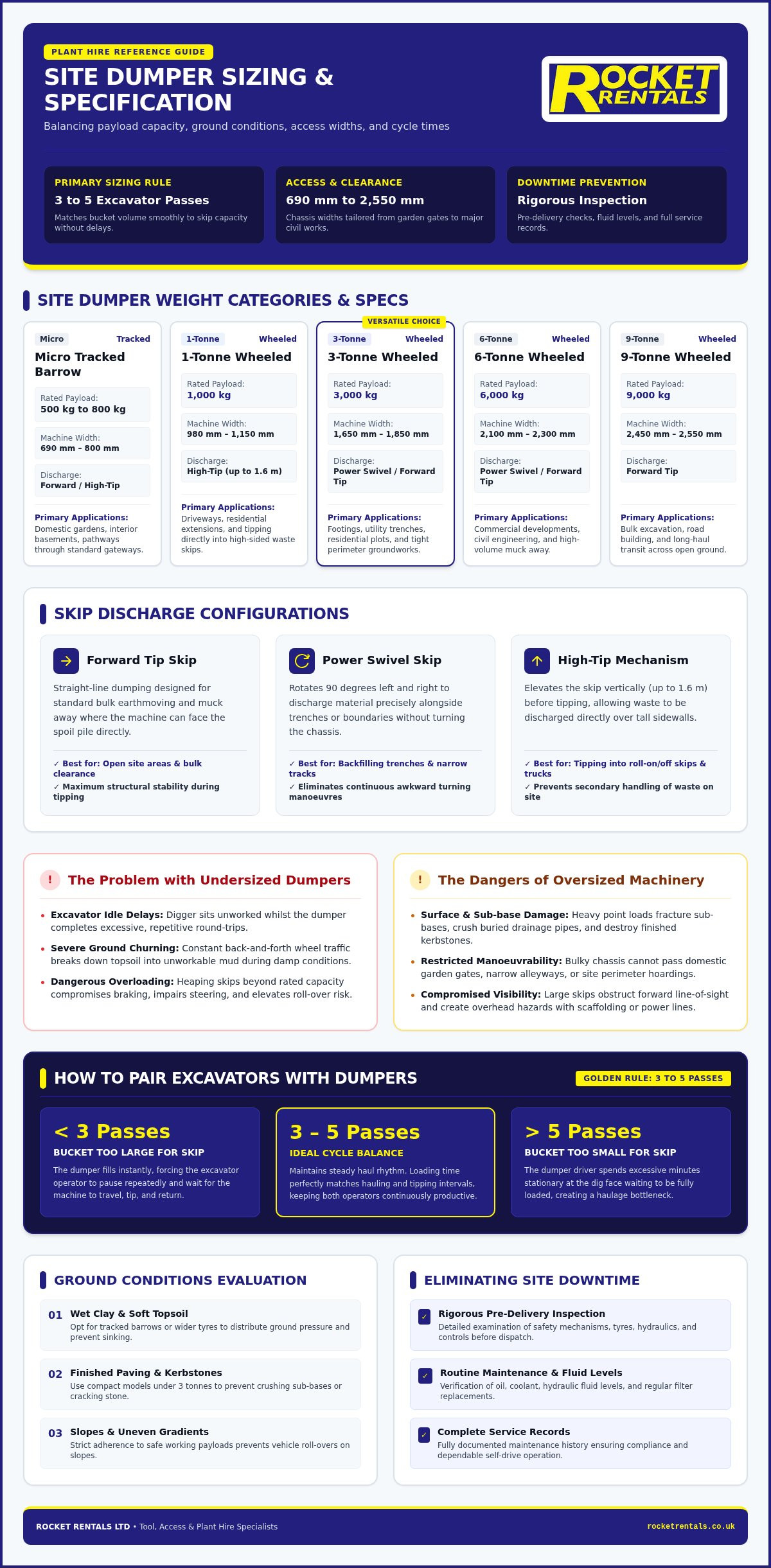
Selecting a machine that lacks sufficient capacity creates immediate haulage bottlenecks. When a dumper takes too long to haul and return, your excavator operator spends costly minutes sitting idle over an unworked trench. These micro-delays add up fast across an eight-hour shift. Relying on an undersized machine introduces specific operational issues:
Excessive haul cycles: Multiple short trips burn more diesel and increase wear on temporary site roads.
Ground churning: Constant back-and-forth wheel traffic quickly breaks down topsoil, turning haul roads into unworkable mud during damp weather.
Overloading risks: Site teams facing tight deadlines often heap skips beyond rated capacity. Overfilling compromises steering, reduces braking performance, and dramatically increases the risk of a roll-over on uneven surfaces.
The Dangers of Operating Oversized Machinery
Hiring excessive capacity brings a different set of severe project headaches. Heavy machinery exerts high point loads that can fracture sub-bases, crush buried drainage pipes, and destroy finished kerbstones. When space is tight, sheer bulk becomes an expensive liability:
Restricted manoeuvrability: Bulky chassis dimensions simply cannot negotiate domestic garden gates, narrow alleyways, or tight site perimeter hoardings.
Compromised visibility: Large skips obstruct the forward line of sight when loaded, elevating safety risks in busy areas where plant and site groundworkers interact.
Overhead hazards: Tall cabs and high-tipping skips risk striking low branches, scaffolding, or overhead power lines.
Correct plant selection avoids both extremes. Choosing the right size dumper ensures your haul cycle matches your digging rate smoothly, keeping labour hours productive and your ground conditions intact from start to finish.
Site Dumper Weight Categories: Payloads and Specifications Compared
Dumpers are classified primarily by their safe working payload, but discharge mechanisms matter just as much as weight limits. Choosing the right size dumper requires looking beyond raw carrying capacity to consider overall machine width and how the skip empties. Forward-tipping skips suit open earthmoving, swivel skips provide precise placement alongside trenches, and high-tip mechanisms allow discharge into high-sided waste skips. Consult the Health and Safety Executive guidance on the safe use of compact dumpers to ensure your planned operations align with statutory safety practices.
Compact Tracked Barrows and 1-Tonne High-Tip Dumpers
Micro tracked barrows slip effortlessly through standard garden gates under 800 mm wide, distributing weight over rubber tracks to protect established turf. When jobs involve moving waste off-site, a 1-tonne high-tip dumper proves invaluable. Its hydraulic mast raises the skip rim above 1.5 metres, letting you tip spoil straight over the sides of a standard 8-yard builder skip or high-sided trailer without manual shovelling.
Mid-Range 3-Tonne Forward and Swivel Skip Dumpers
The 3-tonne unit remains the workhorse of UK residential construction. Power swivel variants rotate the skip 90 degrees to either side of the chassis centreline. This mechanism lets the driver drive parallel to an open excavation and discharge pea gravel or pipe bedding directly into the trench, eliminating difficult three-point turns around tight scaffold runs.
Heavy-Duty 6-Tonne and 9-Tonne Earthmoving Dumpers
Built for substantial groundworks and major muck-away operations, 6-tonne and 9-tonne dumpers transport massive volumes across sprawling civil sites. Their sheer size demands established, compacted haul routes and strict pedestrian segregation. Selecting these heavy units pays dividends on long cycle routes where smaller skips would cause excavator idling.
If you need expert help assessing site clearances or matching machinery to your digging schedule, speak to the team at Rocket Rentals Ltd for dedicated dumper hire across our fully inspected self-drive fleet.
Essential Site Factors for Selecting Your Dumper Capacity
Payload figures look tidy on a manufacturer spec sheet, but physical ground realities dictate what actually works on site. Choosing the right size dumper means looking past nominal tonnage and rigorously mapping every metre of the planned haul route. Physical pinch points, substrate strength, transit distances, and disposal heights must directly guide your equipment selection before you place an order for plant hire with Rocket Rentals Ltd.
Access Restrictions and Ground Conditions
Begin by measuring the tightest bottlenecks across your site footprint. Standard gate posts, narrow alleys between houses, and overhead scaffold ties often rule out mid-sized machines immediately. When access width falls below one metre, ultra-compact machinery remains the only viable option. Check clearances not just at ground level, but at skip height and canopy level as well.
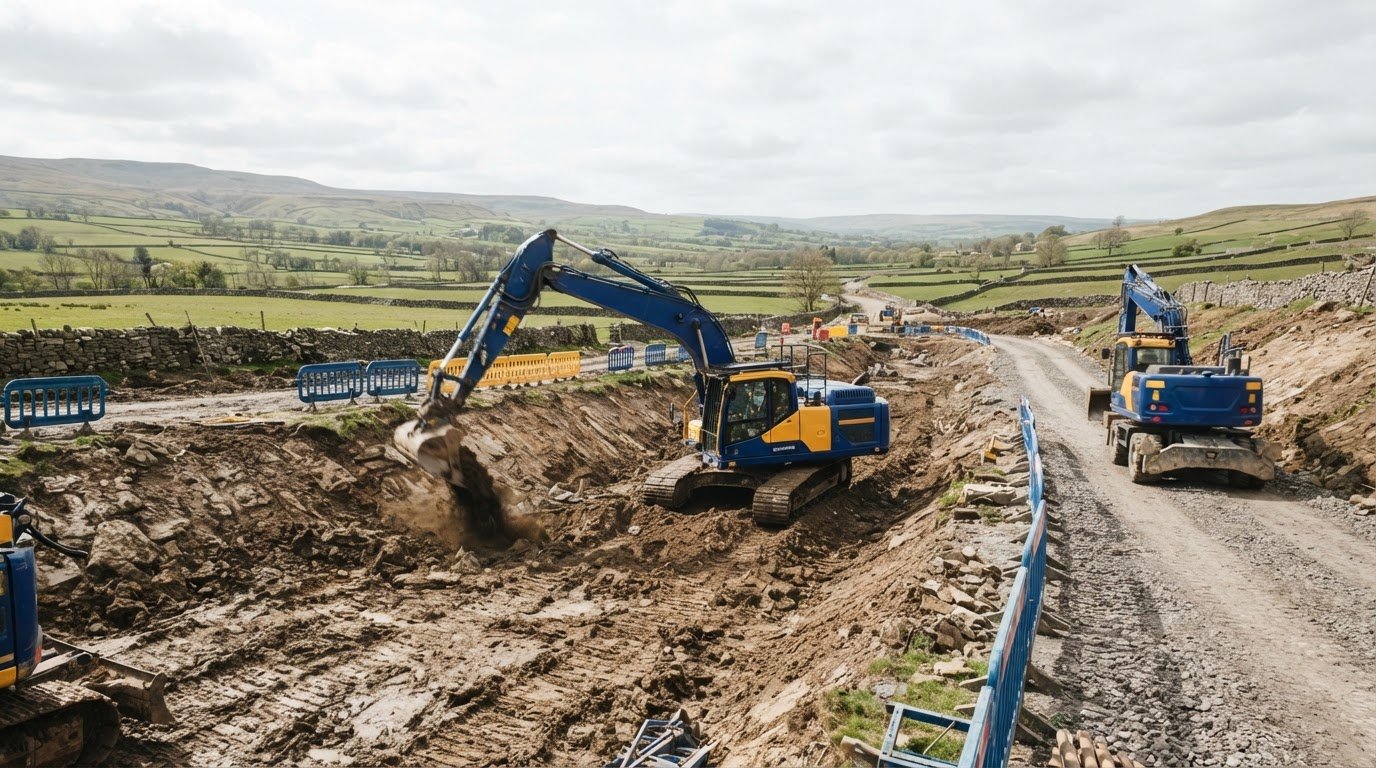
Ground bearing capacity is equally decisive. Heavy wheeled dumpers exert substantial point pressure, especially when cornering under load. On waterlogged clay or loose topsoil, repeated passes quickly cause deep rutting and loss of traction, turning haul roads into impassable mud. In these wet conditions, tracked carriers spread the operating weight across a broad footprint, preventing ground churning. When operating wheeled plant on inclines, consult established safety guidance on steep ground navigation to ensure your gradients remain well within the manufacturer's rated climbing and braking limits.
Haul Distances and Discharge Requirements
Haul run length determines your required payload. A short 20-metre run from a back garden footing allows a compact 1-tonne machine to keep pace easily. Conversely, hauling across an expansive industrial estate over several hundred metres requires a 6-tonne or 9-tonne machine. Small machines travelling long distances burn excessive fuel, tire operators, and leave excavators waiting.
Discharge points determine the skip configuration you need:
Roadside waste skips: High-tip skips are mandatory here, raising the pivot point above the high sidewalls of standard 8-yard skips to prevent double handling.
Trench backfilling: Swivel skips rotate 90 degrees left or right, letting the operator travel parallel to open trenches and discharge pipe bedding aggregate without dangerous multi-point turning manoeuvres on trench edges.
Bulk spoil heaps: Heavy forward-tip skips empty straight ahead onto flat stockpiles quickly, offering maximum tipping speed and lower centre-of-gravity stability.
Carefully auditing these practical site conditions ensures choosing the right size dumper delivers seamless, trouble-free material handling from day one.
How to Pair Your Dumper with Excavators for Maximum Efficiency
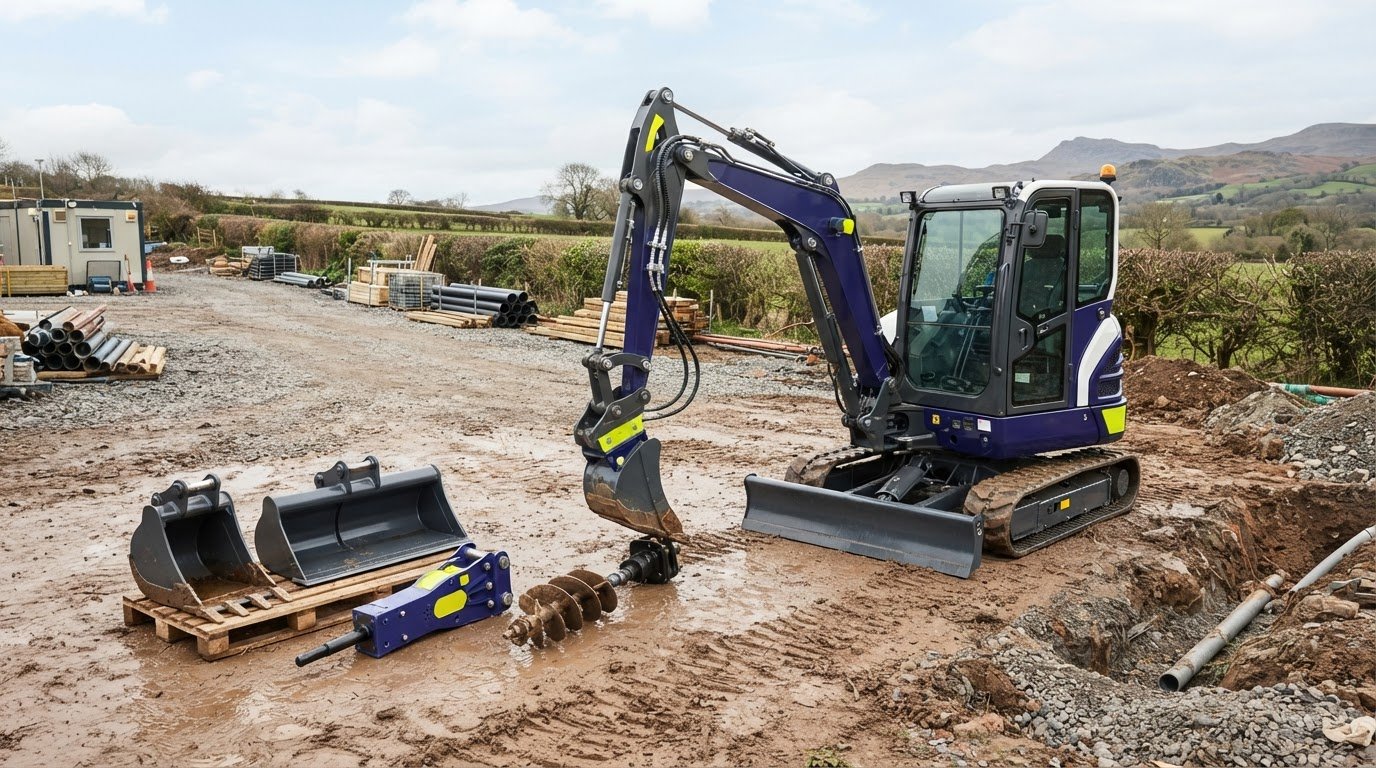
Choosing the right size dumper requires looking closely at what feeds it. When your excavator bucket and dumper skip don't match, you create an unbalanced haul cycle. Either your digger operator sits idling while waiting for the dumper to return, or the dumper queues needlessly at the loading zone. For detailed digging specifications and bucket capacities, consult our mini excavator hire guide. The golden industry rule is aiming for three to five excavator bucket passes to fill a dumper skip comfortably. This ratio keeps loading rapid without demanding excessive slewing or causing material spillages.
Calculating Bucket Passes and Volume Ratios
A smooth cycle relies on calculated volumes rather than guessing on site. Follow these numbered steps to calculate the correct machine pairing:
Check bucket capacity against material density: Identify your excavator bucket's liquid rating in cubic metres and adjust for the swell factor of the material you are moving, whether dense clay, loose gravel, or broken concrete.
Compare bucket volume against heaped skip capacity: Divide the dumper's heaped skip volume by your bucket's working payload. If filling requires more than five passes, the dumper is too large for the digger; if it takes fewer than three, the excavator spends too much time repositioning.
Benchmark the loading cycle at two minutes: Complete skip loading should take between 90 and 120 seconds. This timeframe gives the dumper driver ample time to travel, tip, and return just as the digger finishes stockpiling the next run.
Establish clear line-of-sight communication protocols between operators during every pass. Hand signals or two-way site radios prevent accidental skip strikes and keep the loading area safe.
Recommended Excavator and Dumper Pairings
To eliminate guesswork across your groundworks, match plant sizes within these proven pairings:
Micro and 1.5-tonne mini diggers: Pair with micro tracked carriers or 1-tonne high-tip dumpers. Their 0.03 to 0.05 m³ buckets fill these compact skips in four to five neat passes.
3-tonne to 5-tonne midi excavators: Match with 3-tonne or 6-tonne swivel dumpers. A 3-tonne excavator loads a 3-tonne swivel skip smoothly, creating the ideal setup for foundation trenching.
Heavy excavators exceeding 8 tonnes: Combine with 6-tonne or 9-tonne dumpers to shift bulk spoil rapidly across large development footprints.
Ready to synchronise your digging and haulage operations? Contact our experienced, family-run team today to hire self-drive excavators and site dumpers matched precisely to your project scope.
Safe Operation, Routine Maintenance, and Reliable Self-Drive Hire
Even after choosing the right size dumper to match your excavation tempo, long-term site productivity still hinges on operational safety and machine upkeep. A correctly specified dumper cannot deliver results if low hydraulic pressure slows skip discharge or neglected fluid levels cause an unexpected engine seizure. Protecting your timeline means backing up smart machine selection with structured pre-start checks and trustworthy equipment hire.
Daily Operator Checks and Site Safety Standards
Site dumpers require methodical checks at the start of every shift. Catching minor wear early prevents hazardous mechanical failures and maintains safe working environments across shared haul routes:
Mechanical and tyre checks: Inspect hydraulic hoses for weeping oil or chafing, confirm skip safety props function properly, and check tyres for cuts and correct pressures.
Restraints and roll protection: Always verify that Roll-Over Protective Structures (ROPS) remain locked in position. Wearing a seatbelt on seated dumpers is essential; it keeps the driver safely inside the roll cage profile if the machine encounters unstable ground.
Visibility and access: Check fluid levels daily, including engine oil, coolant, and hydraulic reservoirs. Clear mud from access steps and grab rails to prevent slips, and clean all mirrors and camera lenses before driving.
The Rocket Rentals Ltd Advantage for Contractors
Partnering with an experienced, family-run plant hire specialist gives you confidence that every machine delivered to your site is prepared for immediate work. At Rocket Rentals Ltd, we focus exclusively on high-performing self-drive plant hire, supporting groundworkers and civil contractors nationwide:
Meticulous pre-delivery inspection: Every machine undergoes a detailed multi-point inspection before dispatch, verifying all fluid levels, brakes, and safety systems to eliminate costly on-site downtime.
Complete service records: All plant is supported by strict routine maintenance and up-to-date documentation, ensuring your site complies with UK plant regulations.
Dependable self-drive hire: We provide straightforward, flexible self-drive agreements tailored to short groundwork phases or long-term developments.
When choosing the right size dumper for your upcoming project, our knowledgeable team is on hand to guide you through skip options, track clearances, and excavator combinations so you secure the exact machine for the job.
Streamline Your Groundworks with Confident Plant Selection
Delivering an efficient groundworks schedule comes down to precision planning. Choosing the right size dumper means looking past sheer payload capacity to respect narrow access boundaries, soft ground bearing pressures, and the proven three-to-five pass excavator loading rule. When your digging and haulage plant work in synchronised balance, you eliminate costly bottlenecks, prevent operator idling, and protect temporary site roads from unnecessary churn.
At Rocket Rentals Ltd, we take the stress out of plant hire. As an independent, family-run specialist, we supply an extensive modern fleet of self-drive dumpers, excavators, rollers, and telehandlers across the UK. Every machine arrives backed by documented service records and a rigorous pre-delivery inspection to ensure complete reliability from the moment it hits your site. Explore our reliable self-drive dumper hire fleet today, and let our experienced team help you keep your next project moving safely, smoothly, and firmly on schedule.
Frequently Asked Questions
What size dumper fits through a standard garden gate?
A micro tracked dumper or powered barrow fits comfortably through a standard garden gate. These compact units typically measure between 690 mm and 800 mm wide, allowing them to pass through standard domestic openings that usually range around 750 mm to 850 mm. If you have a wider entrance or removable fence panels offering at least one metre of clearance, a compact 1-tonne high-tip wheeled dumper is also a viable option.
What is the main difference between a forward tip and a swivel skip dumper?
A forward tip dumper discharges its payload directly ahead over the front wheels, which suits open earthmoving or large stockpile areas. In contrast, a swivel skip mechanism rotates 90 degrees in either direction. This lets the driver tip material sideways alongside trenches or into narrow utility runs without having to turn the entire vehicle. Choosing the right size dumper often involves deciding between these mechanisms based on how confined your unloading area is.
Do I need a special licence to operate a self-drive dumper on site?
You don't legally need a standard road driving licence to operate a dumper on an enclosed private construction site. However, UK health and safety regulations require employers and contractors to prove operator competence. For commercial sites, this typically means holding a recognised qualification such as a CPCS or NPORS card. If you plan to drive the machine on public highways between work zones, a valid UK driving licence and road registration are mandatory.
Can a 1-tonne high-tip dumper discharge straight into a standard skip?
Yes, a 1-tonne high-tip dumper is designed specifically to empty directly into a standard 8-yard builder skip. Its hydraulic scissor lift raises the skip lip to approximately 1.6 metres before tipping forward. Because standard skip sides stand around 1.2 metres tall, this clearance allows operators to deposit muck or rubble over the rim cleanly, eliminating manual shovelling and saving substantial labour time during driveway and domestic excavation projects.
How do I know if my site needs a wheeled or tracked dumper?
Wheeled dumpers work best on firm, compacted surfaces and offer faster haul speeds across longer runs. Tracked dumpers distribute machine weight evenly over rubber tracks, reducing ground-bearing pressure. They are ideal for wet clay, boggy turf, steep gradients, or soft sand where wheeled models risk churning up the ground or getting bogged down. Ground stability, weather conditions, and surface protection dictate which running gear suits your site.
How many bucket loads from a mini digger fill a 3-tonne dumper?
When choosing the right size dumper, you should aim for three to five passes to fill the skip. Loading a 3-tonne dumper with a typical 1.5-tonne mini digger requires far too many small bucket cycles, causing haulage delays. However, pairing a 3-tonne dumper with a 3-tonne or 5-tonne midi excavator takes around four to six heaped bucket passes, which comfortably fills the skip in under two minutes to maintain optimal cycle times.
What daily maintenance checks should operators perform on a hired dumper?
Operators should carry out a thorough walk-around inspection before turning the ignition key each morning. Verify fluid levels, including engine oil, coolant, and hydraulic reservoirs. Inspect tyres or rubber tracks for cuts, debris, and correct inflation. Check that the Roll-Over Protective Structure (ROPS) is secured, seatbelts latch properly, and reversing mirrors remain clean. Finally, test the service and parking brakes alongside the skip hydraulic controls before starting haul runs.
Comments