
Cost of hiring a digger for a day, including extra costs
Choosing a digger for a day involves more than selecting a machine. Its size, site access, delivery arrangements and damage-cover terms can all shape your hire plan. Understanding these details helps you prepare for the work and make a suitable choice.
The machine rate is only part of the decision. Check the hire period, delivery arrangements and any additional items in the quote, so you can budget for the job and choose equipment that suits your site.
This guide explains how VAT and damage cover relate to hire arrangements, which factors to consider when choosing a machine size, and how micro, mini and 2-tonne diggers differ. You’ll learn how to match the equipment to your site access, digging depth and planned work.
Table of Contents
VAT on hire prices
VAT is one detail to establish when arranging a digger hire. According to the UK Government, the UK standard VAT rate is 20%, which is relevant when checking whether a digger-hire quote includes VAT. Look for the VAT treatment on the written paperwork, rather than assuming it is included in a headline figure.
Check whether a quote includes VAT before comparing totals. A rate quoted before VAT will not match the final amount if tax is added later. Keep the written quote with your booking details so you have a clear record of the agreed price and VAT treatment.
Machine size still matters to the hire arrangement, but the figures for different machines are not directly interchangeable. A micro digger, a 1.5-tonne mini digger and a 2-tonne machine are separate options. Each may have different hire terms, and the job’s access and digging requirements help determine which category is suitable. Ask for the machine size and hire period to be clearly identified in the written details.
Duration also affects how a hire agreement is structured. A single-day booking and a multi-day booking may have different terms for the hire period and return. Confirm the start and end times, how additional time is handled, and what happens if the work finishes early. Clear dates and times make it easier to plan delivery, use and return.
How do self-drive and operated digger hire costs compare? Self-drive hire provides the machine for you to operate; operated hire includes an operator. These are different services, so compare what each covers, including who operates the machine and what work is included. Rocket Rentals provides self-drive plant hire.
What are typical digger hire prices in London compared with other parts of the UK? Location can affect delivery and collection arrangements, so London and other UK locations may have different hire terms. The machine type and hire duration also matter when comparing arrangements across areas.
What licences or training are needed to operate a hired digger in the UK? A digger licence isn’t required to hire a digger for a day. Hiring the machine and meeting any worksite expectations for operating it are separate considerations, so plan who will operate it and how the work will be managed.
Before booking, review the written terms for VAT, hire duration, delivery, collection, fuel and damage cover. Keep these details together so you can see what the quote includes and plan around the machine’s arrival and return.
Choosing a digger size
Choose a machine by starting with the task and the space available. Digging depth, ground conditions, access routes and any required attachments all help determine which size suits your site.
Matching digger size to the job
List the tasks before choosing a machine. A garden trench, for example, needs different reach and working space from excavating a larger area. Consider how much material needs moving and where it will go. Choose equipment that can do the work without restricting movement around the site.
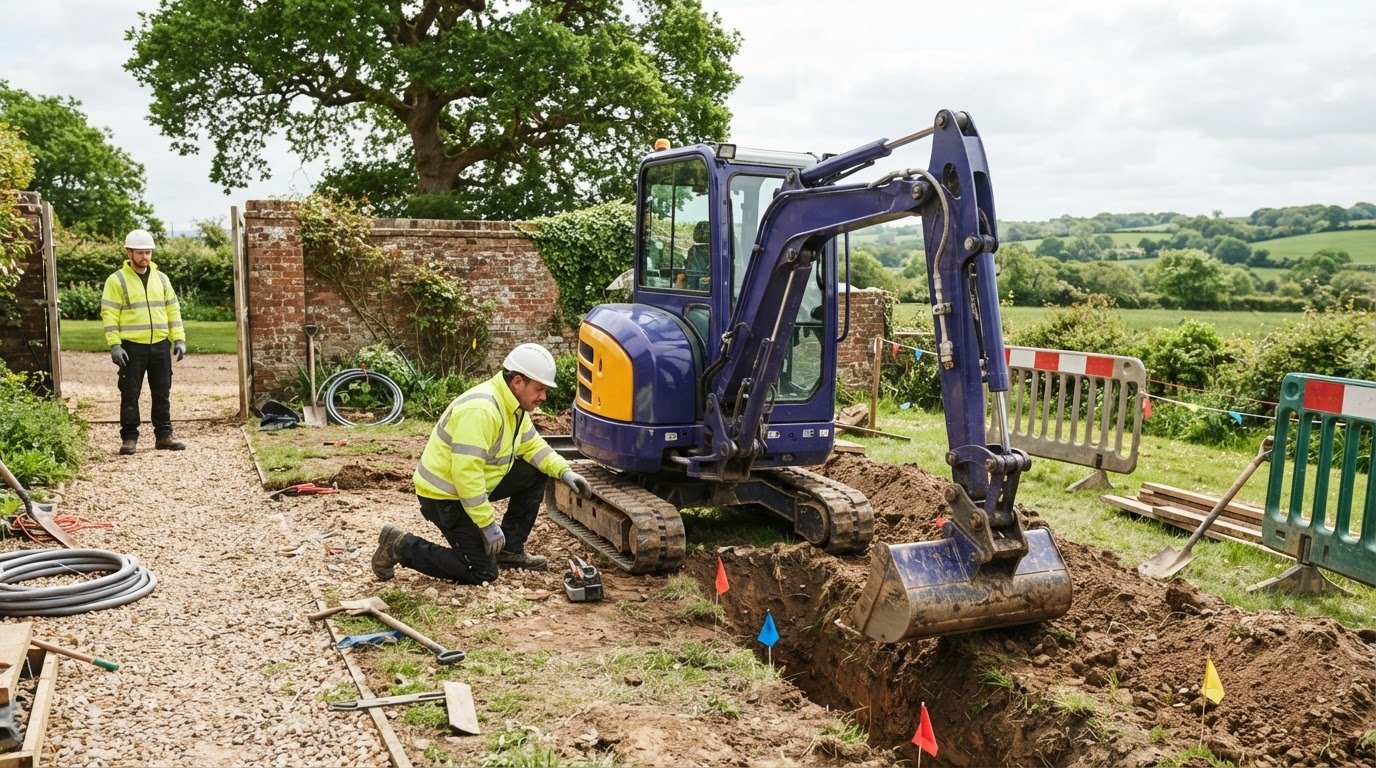
Site access can rule out an otherwise suitable machine. Walk the route from the delivery point to the work area, noting tight turns, uneven ground and overhead obstacles. Consider where the machine will operate and where people need to move. A clear route and working area help you plan around the machine’s footprint.
Ground conditions matter as well. Soft or uneven ground may affect where the machine can travel and work, whilst firm, open ground gives you different working conditions. Identify slopes, buried services and obstacles before booking. These details help you describe the task accurately and avoid choosing equipment that cannot safely reach the work area.
Factors and checks before booking
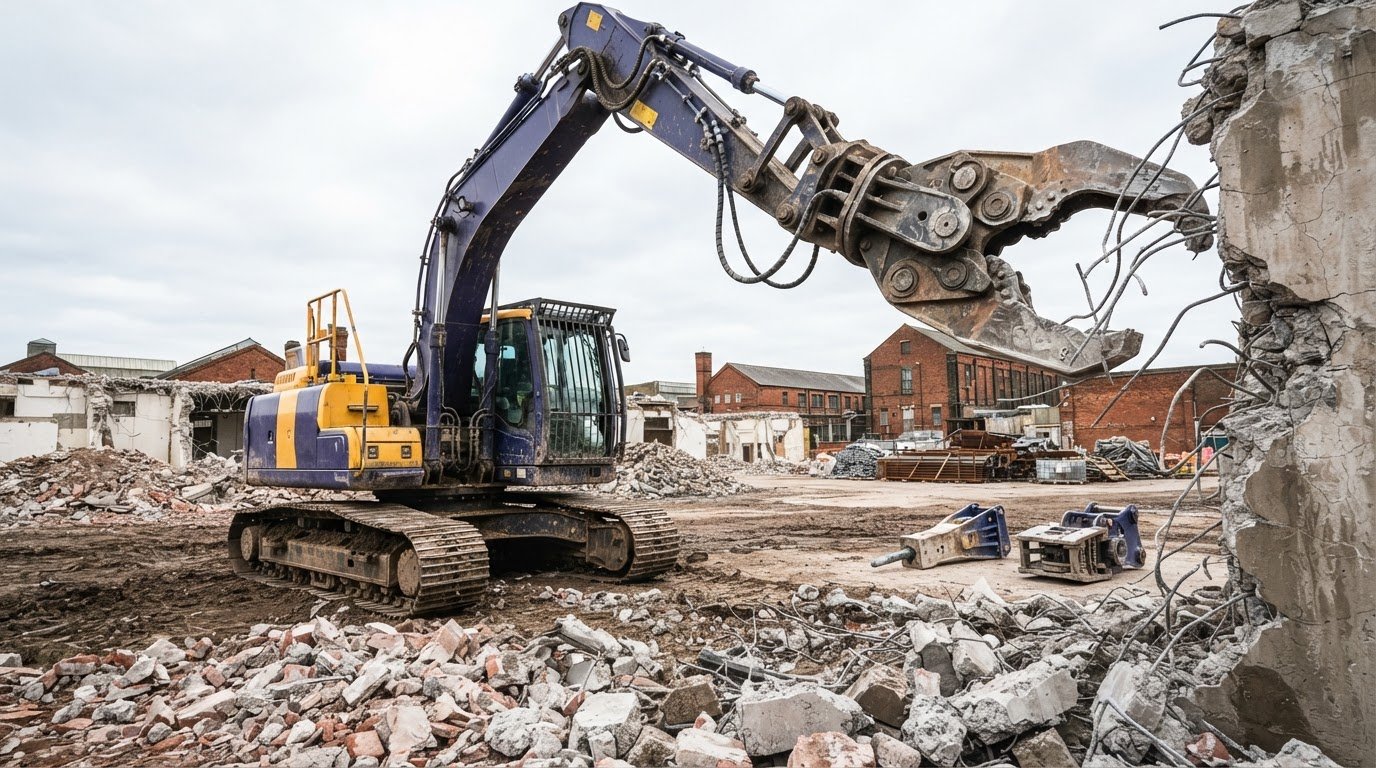
Attachments determine which tasks a machine can perform. A bucket is suited to digging, an earth drill makes holes and a breaker works on stone. Identify the job and the attachment it requires. Include the site location and access details in your enquiry so the equipment and delivery arrangements can be considered together.
Before booking, describe the work clearly. Include the material to be moved, the space available and where spoil will be placed. Note obstacles and access restrictions. If the job involves several tasks, list them in order, such as breaking hard material before excavating. This makes the equipment requirements easier to assess.
Use this checklist to prepare:
Describe the task and the material you need to move.
Identify access restrictions, ground conditions and obstacles.
Decide whether an attachment is needed for a specific task.
Plan where the machine will work and where excavated material will go.
Share the site location and working area details when arranging the hire.
These checks help you choose equipment for the job and site, rather than relying on machine size alone.
Micro, mini and 2-ton digger options
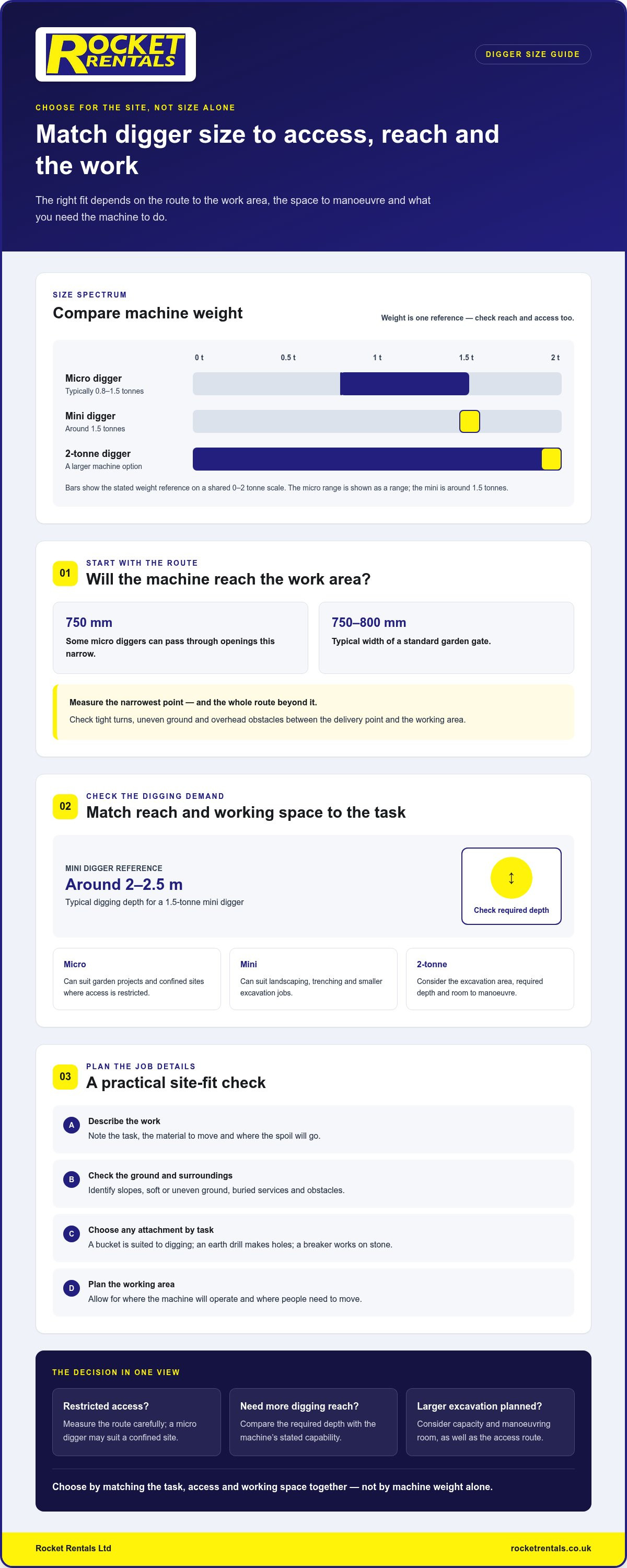
Choosing between a micro, mini and 2-tonne digger means balancing access, reach and the work planned. The lightest machine isn’t automatically the best fit: a suitable choice must reach the work area and handle the task without unnecessary size.
Micro diggers typically weigh between 0.8 and 1.5 tonnes. They can suit garden projects and confined sites where access is restricted. Some micro diggers can pass through openings as narrow as 750mm, while a standard garden gate is typically 750-800mm wide. Measure the narrowest point, including the route beyond the gate, before deciding.
Mini diggers include machines around 1.5 tonnes. This class can suit landscaping, trenching and smaller excavation jobs where a micro machine may not provide the reach needed. A 1.5-tonne mini digger typically digs to around 2-2.5m. Compare that depth with the job requirements, rather than assuming the machine’s weight alone tells you what it can do.
2-tonne diggers offer another option where the planned work calls for a larger machine than a micro model. Think about the excavation area, required depth and room to manoeuvre. If access is tight, the extra size may create practical difficulties; if the job needs more reach or capacity, choosing a machine that is too small can slow progress.
As machine size increases, hire costs can also rise. The exact difference depends on the machine and hire terms, so compare quotes for the same size category and period. Don’t compare a micro digger’s rate directly with a 2-tonne machine and assume the cheaper option will complete the work as effectively.
Use this quick guide to narrow the choice:
Choose a micro digger when restricted access is the main concern, and confirm the route’s narrowest opening.
Consider a 1.5-tonne mini digger when the job needs digging depth around 2-2.5m.
Look at a 2-tonne option when the work calls for a larger machine, while checking site space and access.
Match the attachment to the task. An earth drill makes holes, while a breaker works on stone. Attachments can affect the quote, so include any required attachment and the delivery location when requesting a price. Compare the full hire terms, not just the machine rate.
If a mini digger suits your site and workload, explore Mini Digger Hire for a suitable plant hire option.
Rocket Rentals: Mini Digger Hire
Rocket Rentals Ltd offers Mini Digger Hire for projects where a compact machine suits the access and excavation work. Once you have assessed the site and identified the right size, a mini digger can be a practical option for your project.
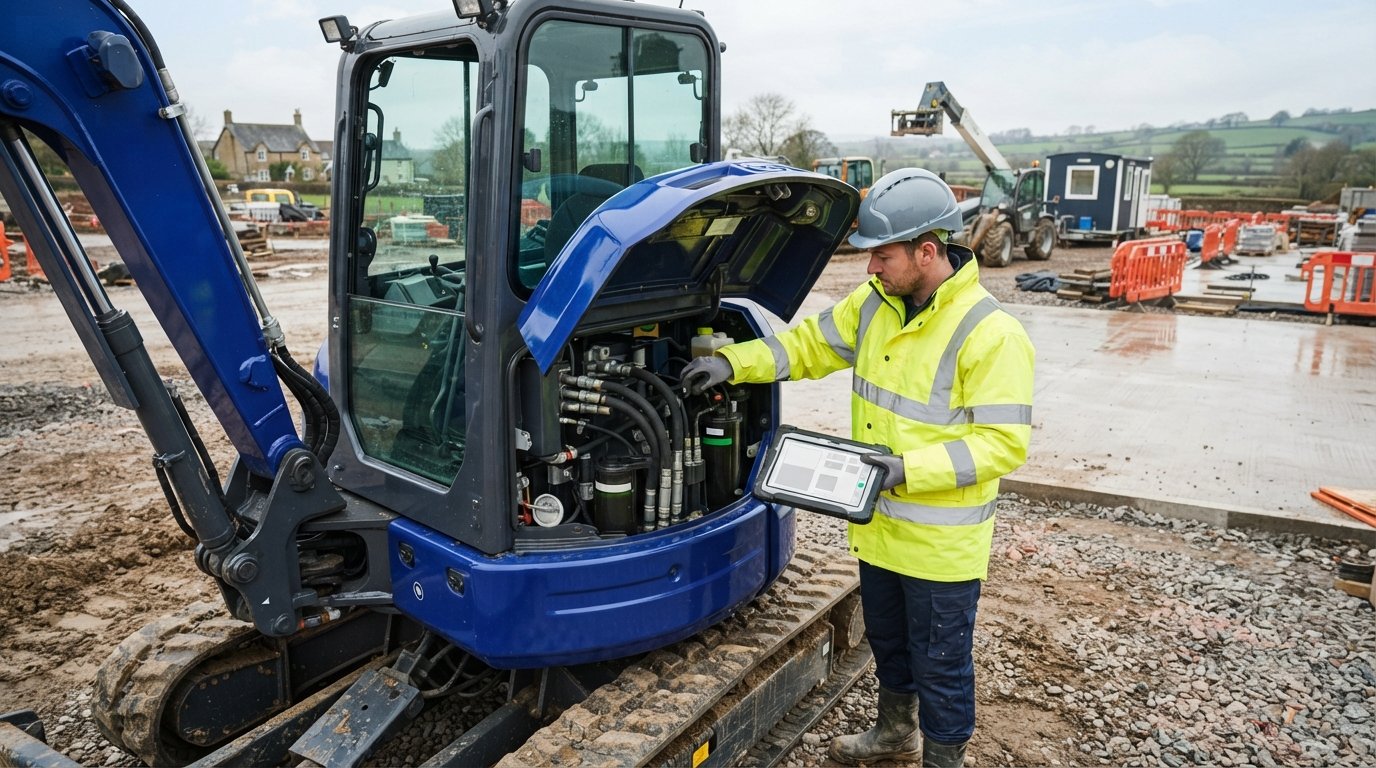
As an established, family-run business, Rocket Rentals Ltd supplies machinery for construction and industrial projects. Equipment inspection is a key strength, helping you make hire decisions with attention to the machine's condition. For broader site requirements, excavator hire, roller hire and welfare unit hire are also available.
When discussing your requirements, describe the planned work and site access so the hire can be considered in context. Contact Rocket Rentals Ltd to discuss Mini Digger Hire for your project.
Plan your next site move with confidence
Once you’ve matched the machine to the work, use your hire plan to keep the site moving. Set out the tasks, their order and any other equipment required. This gives you a clear basis for discussing the cost of hiring a digger for a day and arranging suitable plant for the project.
Rocket Rentals offers Mini Digger Hire and Excavator Hire for digging, as well as Roller Hire for compaction. Choosing equipment to suit the work helps you plan site operations without hiring machinery you don’t need.
Ready to discuss your project? Contact Rocket Rentals about digger hire and take the next step towards getting your site work underway.
Frequently Asked Questions
Are There Any Additional Costs Beyond Hire Rate?
Yes. The daily hire rate may not include delivery and collection, fuel, VAT, insurance or damage waiver. Attachments can also affect the quote. If your job needs a breaker, include it when comparing hire terms. Check each item separately to understand what the quoted total covers and budget accordingly.
What’s The Minimum Period To Hire A Digger?
A digger hire commonly has a minimum period of 24 hours, although this can vary by supplier and machine size. A short excavation may still require a full hire period. Plan preparation, digging and site clean-up within the booking window, and factor in the agreed return arrangements so the work doesn’t run beyond the hire period.
How much does it cost to hire a mini digger for a day in the UK?
There isn’t one fixed UK-wide rate for every mini digger. The daily charge depends on the machine, hire period and location, as well as which additional items are included. The cost of hiring a digger for a day is best assessed from the complete quote. Compare equivalent machine sizes and check whether VAT and delivery are included.
What is the daily hire price for a 1-tonne, 1.5-tonne or 3-tonne digger?
Each size is a different machine category, so one daily rate won’t apply to all three. The model, hire duration and quote terms affect the price. For a useful comparison, note the machine size, VAT treatment, delivery arrangements and any attachments. Don’t estimate the rate for a larger machine by scaling up a smaller one’s price.
Are VAT, fuel, insurance or damage waiver included in UK digger hire prices?
These items aren’t necessarily included in the base hire rate. VAT may be added if a rate is quoted excluding it; fuel, insurance and damage waiver depend on the hire terms. Treat each as a separate quote component and read its description carefully to understand what the machine hire and other charges cover.
Comments