
Electric Scissor Lift Hire: The Professional Buying Guide for Vertical Access
Did you know that entrapment fatalities involving mobile elevating work platforms rose by 62% between 2023 and 2024? This startling statistic highlights why selecting the right equipment is far more than a simple procurement task; it's a critical safety decision. Most project managers understand the frustration of an electric scissor lift hire arriving with poor battery health or finding that a machine is too wide to navigate a standard doorway. It's easy to feel overwhelmed by technical specifications and the constant pressure to remain compliant with evolving UK regulations.
We agree that vertical access should be predictable and safe, not a source of site delays. This guide will help you master the technical nuances of selecting the correct lift to ensure full site safety, regulatory compliance, and maximum operational efficiency. We'll examine the crucial differences between platform and working height, the latest 2026 mandates for secondary guarding, and how to secure a machine that fits your specific floor loading constraints without hidden maintenance costs. By the end of this article, you'll have the expertise to choose a machine that integrates perfectly with your site requirements.
Table of Contents
Understanding Electric Scissor Lift Hire for Modern Indoor Projects
What exactly makes an electric scissor lift the preferred choice for modern fit-out projects? It's a question of both efficiency and environment. At its core, an electric scissor lift is a zero-emission aerial work platform (AWP) designed to provide stable, vertical access in confined internal spaces. Unlike their diesel counterparts, which are engineered for rough terrain and require outdoor ventilation, electric models thrive in finished environments. Choosing electric scissor lift hire ensures your project remains free from exhaust fumes and the heavy noise pollution associated with internal combustion engines. This silent operation is particularly beneficial when working in occupied commercial offices or retail centres where business must continue as usual.
Diesel machines have their place, but they don't belong inside a warehouse. Beyond the obvious lack of emissions, electric lifts require significantly less on-site maintenance. There are no oil filters to change or fuel leaks to manage on your client's floor. Reliability is built into the design; modern battery technology has evolved to provide enough duty cycle for a full day of intensive work on a single overnight charge. You can expect consistent power delivery from the first lift of the morning to the final task of the afternoon.
The Shift Toward Sustainable Site Access
Many contractors now face strict Environmental, Social, and Governance (ESG) targets that dictate the type of plant machinery allowed on site. In many UK urban centres, zero-emission zones are no longer a suggestion; they're a requirement. By opting for electric machinery, you directly reduce the carbon footprint of your maintenance schedule. It's a practical way to meet compliance standards whilst maintaining high productivity levels. It shows your clients that you value modern, responsible working practices.
Indoor Versatility and Surface Protection
Indoor projects often involve delicate surfaces that require a soft touch. Most models used for electric scissor lift hire come equipped with non-marking tyres. These are essential for protecting polished concrete, tiled floors, or expensive carpets in warehouse centres and showrooms. Their compact dimensions are another significant advantage. Most smaller models are slim enough to navigate through standard internal doorways and into passenger lifts. This level of accessibility makes them indispensable for sensitive environments such as hospitals and schools, where both hygiene and quietness are paramount.
Navigating Technical Specifications: Height, Reach, and Capacity
Selecting the wrong machine for your site isn't just a minor inconvenience; it's a primary cause of project delays and budget overruns. When you arrange an electric scissor lift hire, you must look beyond the basic model name. The technical specifications define exactly what the machine can achieve and, more importantly, what it cannot. Understanding these nuances ensures your team remains productive and safe throughout the duration of the works.
Working Height vs Platform Height Explained
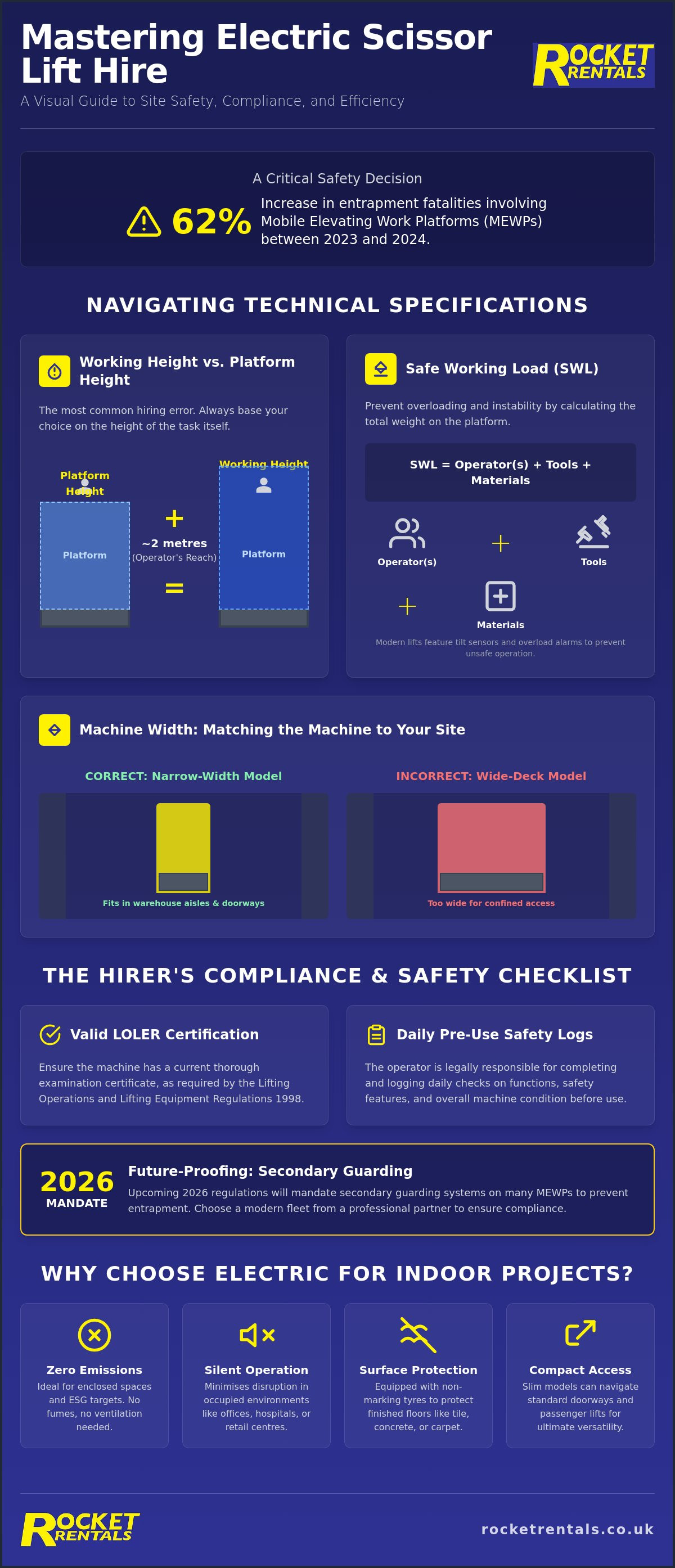
Confusion between these two terms is the most frequent error made during the hire process. Platform height refers specifically to the distance from the ground to the floor of the basket when fully elevated. Working height, however, is a theoretical measurement that adds approximately 2 metres to the platform height. This accounts for the reach of an average operator. If your task is at 8 metres, hiring a machine with an 8-metre platform height means your operator's head will be roughly 10 metres in the air. This often results in the operative being unable to work comfortably or safely. Always verify the exact height of the task before confirming your order.
Weight Capacity and Personnel Limits
Every machine has a strictly defined Safe Working Load (SWL). This figure represents the total weight the platform can carry, including the operator, their tools, and any materials. It's vital to differentiate between "one-man" and "two-man" platform ratings. Overloading a lift is a serious risk that can lead to instability or mechanical failure. Modern electric lifts are equipped with tilt sensors and overload alarms to prevent operation if these limits are exceeded. Following established OSHA safety guidelines regarding load management helps maintain a secure working environment. If you're unsure which capacity fits your team's needs, our experts at Rocket Rentals can provide tailored advice based on your specific equipment requirements.
Beyond height and weight, consider the duty cycle and reach. Most electric models feature deck extensions. These slide-out sections increase the horizontal reach, allowing operators to work over obstacles like fixed machinery or racking. Regarding productivity, the duty cycle is key. You should expect a modern battery to handle multiple lift cycles throughout a standard shift. Finally, check the wind speed rating. Whilst most electric lifts are indoor-only, some are "dual-rated" for outdoor use. These machines have restricted height limits when used outside to account for wind force. Never use an indoor-only machine in an exposed or outdoor area.
Narrow vs Wide Aisle Models: Matching the Machine to Your Site
Selecting the right machine footprint is just as critical as choosing the correct height. If a lift is too wide to fit through an internal doorway or too heavy for a mezzanine floor, the project stops before it begins. When considering electric scissor lift hire, you must evaluate the specific physical constraints of your work zone. This includes doorway widths, the density of warehouse racking, and the presence of fixed industrial machinery that limits your turning circle.
Floor loading is a technical detail that often gets overlooked. You need to distinguish between the gross vehicle weight and the point load exerted by the tyres. Whilst a concrete slab might support the overall weight of the machine, the pressure concentrated through the small contact area of the wheels can cause damage to tiles or raised access floors. This is particularly vital when working on suspended slabs or mezzanine levels common in modern logistics hubs. Adhering to industry standards for scissor lifts ensures that you are selecting a machine with a weight distribution profile appropriate for your site's structural capacity.
Identifying Narrow-Track Advantages
Narrow-width scissor lifts, typically measuring around 800mm wide, are the standard for internal office fit-outs. Their slim profile allows them to pass through standard internal doors without removing the frames. This manoeuvrability is essential for tasks like electrical installations, sprinkler system maintenance, or HVAC repairs in tight corridors. A tight turning circle allows the operator to navigate around pillars and office furniture with precision, reducing the risk of accidental site damage.
Wide-Deck and Rough Terrain Electric Options
Sometimes, platform space is more important than a compact footprint. Wide-deck models offer a larger work area, which is necessary when multiple operatives need to work together or when bulky materials are required at height. We're also seeing an increase in electric rough terrain models. These machines combine the clean, quiet power of electricity with the oscillating axles and high ground clearance needed for semi-finished external sites. Integrating electric scissor lift hire into large-scale logistics hub projects allows for a seamless transition between indoor and outdoor tasks without switching machines.
The Hirer’s Compliance and Safety Checklist
Securing an electric scissor lift hire is only the first step in maintaining a safe site. The legal responsibility for the equipment's safe operation rests with you, the hirer, once the machine is in your possession. This duty of care extends beyond the operator's skill to include the rigorous verification of the machine’s safety credentials and the daily management of its mechanical health whilst on your premises.
LOLER Inspections and Certification
Under the Lifting Operations and Lifting Equipment Regulations (LOLER) 1998, every scissor lift must undergo a thorough examination by a competent person at least once every six months. This results in a Report of Thorough Examination. You shouldn't accept any machine delivery without verifying this document is current. At Rocket Rentals Ltd, we maintain a meticulous digital archive of all certifications, ensuring your plant arrives with a clear, valid audit trail. This commitment to safety provides the peace of mind needed to focus on the project at hand without worrying about regulatory gaps.
Operator Competence and Training
Site safety depends heavily on the person at the controls. The industry standard for demonstrating competence is the International Powered Access Federation (IPAF) PAL card. For scissor lifts, operators typically require Category 3a (Mobile Vertical) certification. It isn't just about moving the machine; it's about knowing the emergency lowering procedures. Every operator must be familiar with the ground-level emergency controls before they ever leave the floor. Additionally, basic Personal Protective Equipment (PPE), such as safety boots and hard hats, remains mandatory, whilst harness requirements are dictated by your specific site risk assessment.
Maintaining a compliant site often requires coordinating multiple types of plant. For instance, ensuring your team has adequate facilities through mobile welfare unit hire is just as vital for health and safety as the lift itself. Don't forget the practicalities of charging your electric lift. Most modern machines require a 110V supply for overnight charging to comply with site safety standards. Always check your charging lead for damage and ensure it doesn't create a trip hazard in high-traffic areas.
If you need to verify the safety specifications for your next project, view our range of certified scissor lifts today.
Securing Reliable Self-Drive Access with Rocket Rentals Ltd
Choosing a plant partner is just as critical as selecting the machinery itself. Whilst large national chains offer scale, they often lack the technical depth and personal accountability of an independent specialist. When you opt for electric scissor lift hire through Rocket Rentals Ltd, you aren't just getting a machine; you're gaining a partner that understands the high-stakes nature of industrial fit-outs and construction. We focus on providing a modern fleet from leading global manufacturers, ensuring that every piece of equipment is at the peak of its service life and ready for immediate deployment.
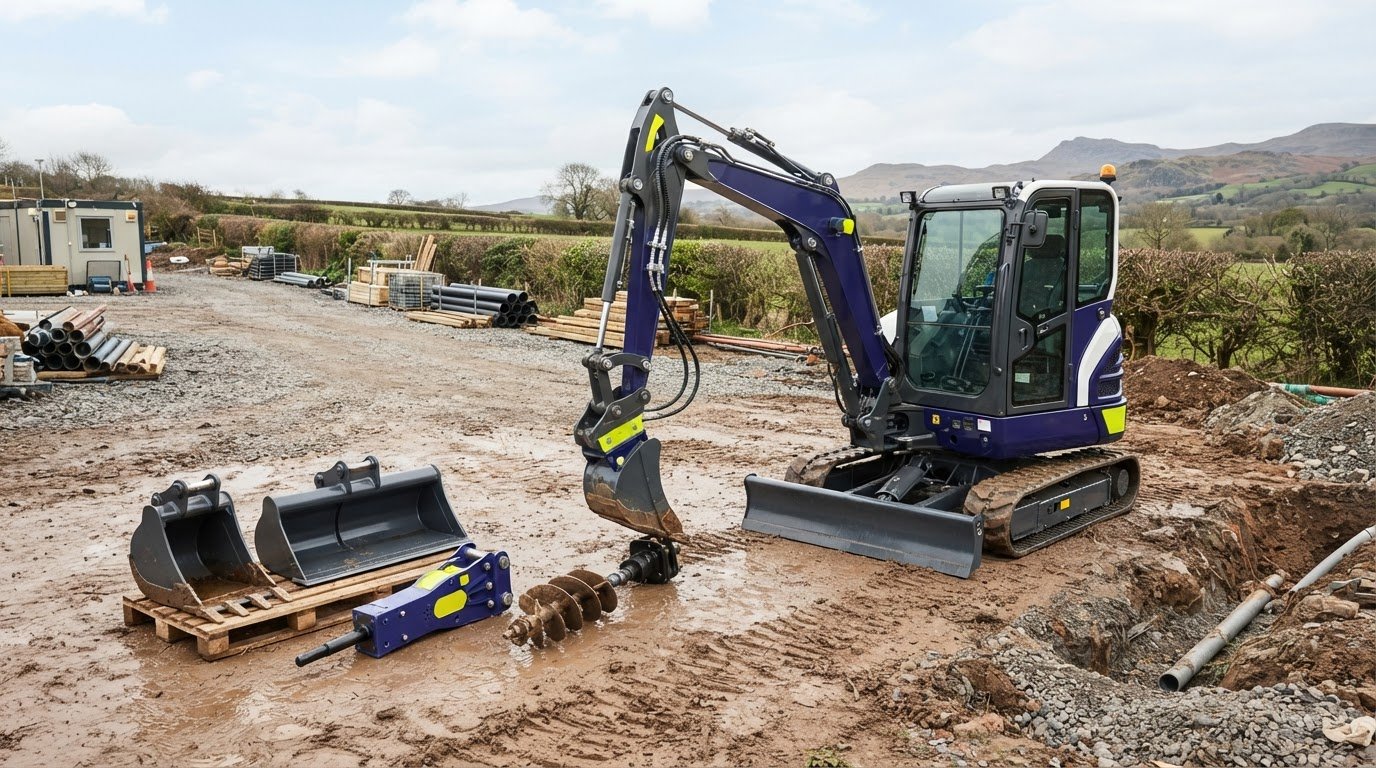
Self-drive hire provides the ultimate flexibility for long-term industrial projects. It allows your qualified team to manage their own workflows without the scheduling constraints of external operators. This autonomy is vital for civil engineering and large-scale construction projects where timelines can shift rapidly. We support these complex requirements with reliable national delivery and a robust support network. If your site needs extend beyond vertical access, you can streamline your logistics by combining your order with mini excavator hire. Managing multiple machine types through a single, dependable provider reduces administrative friction and ensures consistent maintenance standards across your entire site.
A Safe Pair of Hands for Your Project
Our approach to plant hire is methodical and detail-oriented. We don't just offer a catalogue listing; we provide technical advice that helps you avoid common site pitfalls. Our heritage in the industry means we've seen almost every site challenge imaginable, from restrictive floor loading on mezzanine levels to the tightest warehouse aisles. Every machine undergoes a rigorous readiness programme before it leaves our depot. This ensures that when the lift arrives at your site, the batteries are healthy, the controls are responsive, and the LOLER certification is fully up to date. It's this commitment to excellence that makes Rocket Rentals Ltd a trusted partner for contractors who cannot afford downtime.
How to Organise Your Hire Today
The process for organising your electric scissor lift hire is designed to be as efficient as possible. We offer flexible hire periods that suit everything from a weekend maintenance task to a six-month warehouse fit-out. You can contact our expert team today to discuss your site constraints and receive a bespoke quote tailored to your project's specific needs. We'll help you navigate the technical specifications to ensure the machine you receive is the machine you actually need. Our goal is to provide a seamless service that allows you to focus on your project whilst we handle the complexities of plant reliability and safety compliance.
Elevating Your Site Productivity with Precision
Successful vertical access is the result of aligning technical specifications with specific site constraints. As we have explored, mastering the nuances of floor loading, height requirements, and safety mandates is what separates a smooth project from one plagued by delays. By choosing a machine that integrates perfectly with your environment, you protect both your operatives and your project timelines. It's about moving beyond a simple equipment request to a considered access strategy.
Rocket Rentals Ltd has been a trusted, independent plant hire specialist since 1988. We understand that reliability is non-negotiable; that's why every machine in our fleet is LOLER certified and maintained to the highest industry standards. Whether you are managing a local fit-out or a complex industrial project requiring national delivery, our expert team is ready to support your electric scissor lift hire needs with technical precision. Our heritage ensures we provide more than just plant; we provide the peace of mind that comes from a safe pair of hands.
Enquire about electric scissor lift hire from Rocket Rentals Ltd today to secure the precise access solutions your project deserves. We look forward to helping you reach your goals safely and efficiently.
Frequently Asked Questions
What is the difference between a scissor lift and a cherry picker?
A scissor lift moves strictly in a vertical direction, providing a large, stable platform for multiple workers and heavy equipment. Cherry pickers, or boom lifts, feature an articulated or telescopic arm that allows for significant horizontal outreach. Whilst scissor lifts offer more workspace at height, cherry pickers are better suited for reaching over obstacles or accessing awkward angles.
Do I need a special licence to hire an electric scissor lift for self-drive?
There is no government-issued licence, but UK health and safety law requires all operators to be trained and competent. The IPAF PAL Card for Category 3a is the industry standard proof of competency for electric scissor lift hire. Holding this certification ensures you understand the machine's safety limits, pre-use inspection requirements, and emergency lowering protocols.
Can electric scissor lifts be used outside on uneven ground?
Standard electric scissor lifts are designed for use on flat, level surfaces such as concrete slabs or warehouse floors. They feature tilt sensors that will prevent the machine from elevating if the ground is not perfectly level. If your project involves uneven terrain, you'll require a specific rough terrain electric model equipped with oscillating axles and outriggers for stability.
How long does the battery typically last on a single charge?
A modern battery pack typically provides enough power for a standard eight-hour shift of intermittent lifting and driving. The actual duty cycle depends on the weight of the load and how frequently the machine is elevated. To maintain maximum productivity, it's essential to charge the machine overnight so it's ready for the next day's work.
What are the charging requirements for an electric scissor lift on site?
Most machines used for electric scissor lift hire require a 110V power supply to meet UK construction site safety standards. You'll need a suitable transformer and a heavy-duty charging lead. It is vital to ensure the charging point is on a dedicated circuit to prevent voltage drops that can lead to incomplete battery charging or damage.
Is a harness required when operating a scissor lift?
A harness is not a legal requirement on a scissor lift because the integrated guardrails provide the primary fall protection. This differs from boom lifts where a harness is mandatory. However, many Tier 1 contractors in the UK mandate the use of a short restraint lanyard and harness as part of their specific site safety rules and risk assessments.
What should I do if the scissor lift stops working whilst at height?
You should use the manual emergency lowering system located at the base of the machine. This valve or pull-handle allows the platform to descend safely using gravity, even if the electrical system fails. Every operator must be briefed on the location and operation of this emergency control before they ascend for the first time.
Comments