
Excavator Hire Safety Checklist: The Professional Guide for 2026
Updated: Sep 1
Could a single overlooked safety lever be the difference between a productive shift and a legal prosecution? As of 2026, the HSE has formalised excavator isolation as a strict legal requirement rather than just best practice. If you're managing a busy site, the fear of an equipment-related accident or an unexpected liability claim for pre-existing damage is a constant pressure. You understand that a well-maintained fleet is the foundation of a secure workplace, yet keeping up with shifting PUWER and LOLER standards can often feel like a moving target.
This guide provides the clarity you need to operate with absolute confidence. By using our professional excavator hire safety checklist, you'll master site safety and ensure full compliance through a rigorous inspection framework. We'll walk you through the essential daily checks, from Stage V emission standards to lifting attachment certifications. You'll learn how to identify potential failures before they cause downtime, ensuring your project achieves zero accidents and maintains peak machine performance throughout the hire period.
Table of Contents
Why a Robust Excavator Hire Safety Checklist is Essential
Safety on a modern construction site isn't a suggestion; it's a legal mandate. As of 2026, the Health & Safety Executive (HSE) has tightened the rules on excavator isolation, making it a legal requirement to engage safety control levers or isolation devices whenever the machine is at rest. This shift highlights why a robust excavator hire safety checklist is the most critical document in your site folder. It bridges the gap between a machine arriving on a low-loader and the first bucket hitting the ground. Negligence doesn't just risk physical harm; it invites crippling financial penalties, insurance voidance, and prolonged project downtime that can derail a commercial contract.
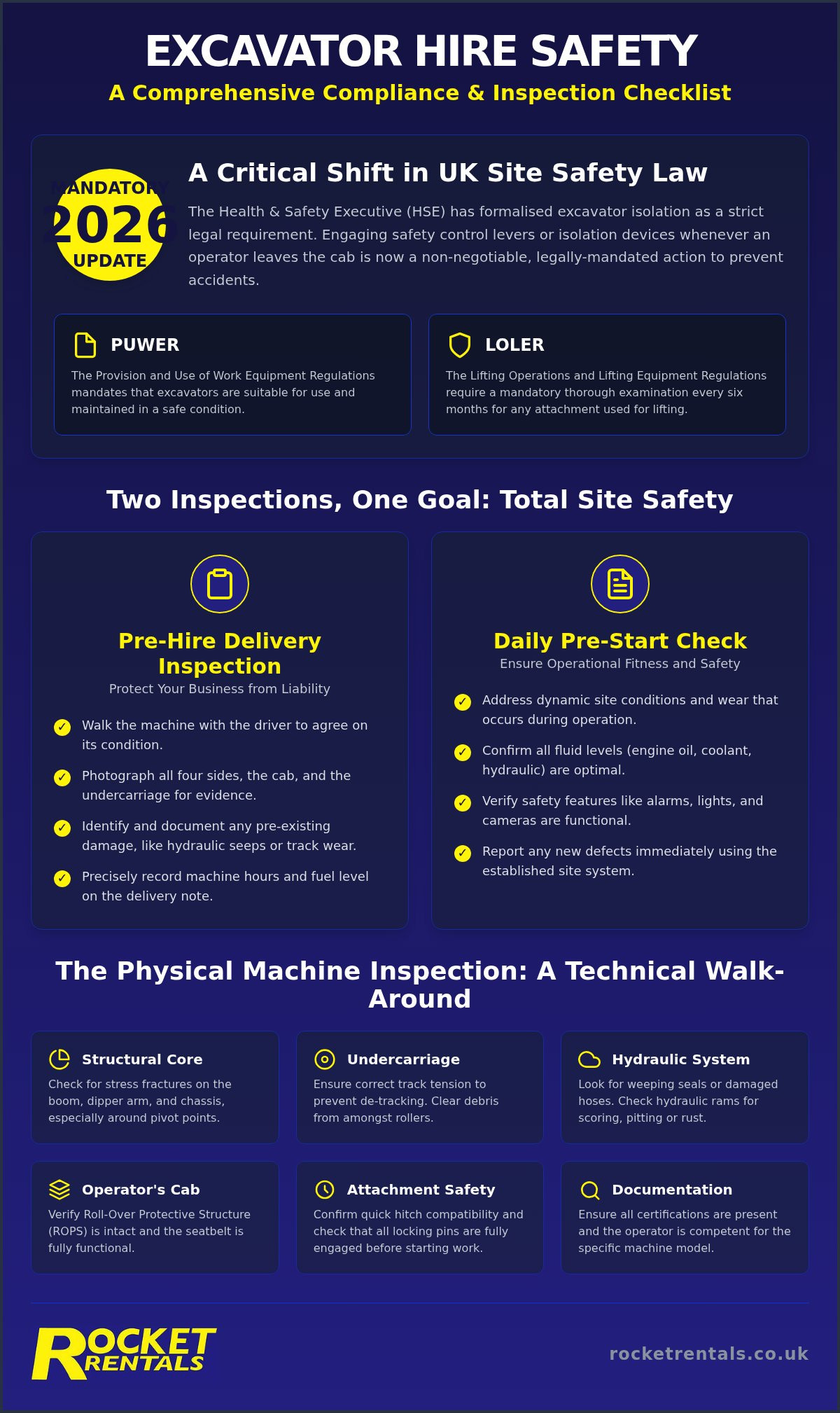
Beyond the legalities, these checks are the foundation of a proactive site culture. When operators see that equipment standards are non-negotiable, it encourages a higher level of care throughout the project. It's vital to distinguish between the initial delivery inspection and the daily pre-start check. The delivery inspection is about contractual liability and baseline safety, whilst the daily check addresses dynamic site conditions and wear that occurs during operation. Both are essential components of a high-standard Construction Site Safety protocol that protects your workforce and your reputation.
Regulatory Compliance in the UK
Under the Provision and Use of Work Equipment Regulations (PUWER), you're required to ensure the excavator is suitable for its intended use and maintained in a safe condition. If you're using attachments for lifting, the Lifting Operations and Lifting Equipment Regulations (LOLER) also apply. In 2026, any excavator attachment used for lifting requires a mandatory thorough examination every six months to remain legally compliant on UK sites. Site managers must verify that documentation is present and that the operator is specifically competent for the exact machine model hired, rather than just holding a general ticket.
The Pre-Hire Damage Assessment
When your excavator hire arrives, the first ten minutes are the most important for protecting your bottom line. Walking the machine with the delivery driver allows you to identify pre-existing wear, such as hydraulic seeps or track damage, before you take possession. Record the machine hours and fuel levels precisely. We recommend taking high-resolution photographs of all four sides, the cab interior, and the undercarriage amongst the tracks. This evidence is your best defence against liability disputes when the hire concludes and ensures you aren't held responsible for damage you didn't cause.
The Physical Machine Inspection: A Technical Walk-Around
A professional excavator hire safety checklist begins with a methodical circuit of the machine. This technical walk-around is your opportunity to verify that the equipment is fit for purpose before work commences. Whilst a reputable provider ensures machines are in peak condition upon delivery, site conditions change quickly. Start by examining the structural core. Look for stress fractures along the boom, dipper arm, and chassis, particularly around high-stress pivot points. Small cracks often hide behind dirt; identifying them early prevents a catastrophic failure during heavy lifting operations.
Move your focus to the undercarriage next. Ensure the track tension is correct, as loose tracks can de-track on uneven ground, causing significant delays. Look for debris trapped amongst the rollers which can cause premature wear or seized components. Following this, inspect the hydraulic system for signs of trouble. Identify any weeping seals or damaged hoses that could lead to pressure loss. Pay close attention to the hydraulic rams; look for scoring or pitting on the chrome surface, as these imperfections can shred seals and lead to internal leaks. If you're looking for modern, well-maintained machinery, our excavator hire fleet is rigorously inspected to these exact standards.
Inside the cab, the operator station must be a secure environment. Verify the Roll-Over Protective Structure (ROPS) is intact and that the seatbelt functions perfectly. Don't forget the vital fluid levels. Check that engine oil, coolant, and hydraulic fluid are at the manufacturer's optimal marks. Whilst UK sites follow HSE guidelines, international standards like OSHA's Specific Excavation Requirements provide an excellent benchmark for hazard mitigation during these technical inspections.
Critical Component Checklist
Hydraulic Rams: Check for scoring, pitting, or rust on the cylinders that could compromise the seals.
Visibility: Inspect all mirrors and light lenses for cracks or clouding that could obscure the operator's view.
Decals: Verify that all safety decals, load charts, and warning signs are legible and firmly attached.
Ground-Engaging Tools (GET)
The business end of the excavator requires specific attention. Assess the bucket teeth for excessive wear or loose pins; blunt teeth significantly reduce digging efficiency and increase fuel consumption. Check the cutting edges of blades and buckets for structural thinning, which can lead to buckling under load. Finally, ensure the bucket linkage is well-greased and moving freely. A dry pin can seize or snap, leading to expensive repairs and site downtime.
Operational Safety and Site Environment Protocols
The safety of an operation extends beyond the iron of the machine itself. Even a perfectly maintained excavator becomes a hazard if the surrounding environment isn't properly managed. A comprehensive excavator hire safety checklist must therefore account for site-specific risks, ensuring that ground staff remain outside the full slew radius whilst the machine is in motion. If a worker needs to approach, the operator must ground the bucket and engage the safety isolation lever before the "thumbs up" signal is given to confirm it's safe to enter the zone.
Underground services present one of the most significant risks to site safety and project budgets. Before the first bucket tooth touches the soil, a thorough CAT scan is essential to map out buried utilities. Where services are suspected, hand-dug trial holes provide the only reliable method of verification. This methodical approach prevents the catastrophic consequences of striking high-voltage cables or gas mains, which can lead to severe injury and costly repairs.
Ground stability is another critical factor that requires constant monitoring. You must assess whether the terrain can support the machine's operating weight, especially when the boom is at full reach. Soft ground or uncompacted fill can lead to an overturn, particularly on sloping ground. Clear communication via standardised hand signals ensures that the operator and ground crew work in harmony, effectively reducing the risk of accidents caused by blind spots or noise interference.
Site Hazard Identification
Managing the site layout is as important as managing the machine. Scan the area for overhead power lines and maintain the minimum safe clearance distances required by the HSE. Identify any soft spots amongst the terrain or uncompacted fill that could cause instability. To further enhance safety, organise the site to minimise reversing manoeuvres, as these account for a high percentage of site incidents. Using a designated signaller for any necessary reversing is best practice.
The Safe Start Procedure
Once the environment is secure, the operator should perform a safe start by testing all controls and levers for smooth, responsive behaviour. Verify that the horn and travel alarms are functioning correctly to alert others of the machine's movement. Finally, check the "dead man" safety lever or armrest lockout. This device must effectively isolate the hydraulics to prevent accidental movement when the operator is entering or exiting the cab. Incorporating these steps into your daily excavator hire safety checklist ensures that every shift begins with a focus on precision and control.
Managing Attachment Safety and Quick Hitches
Attachments are the versatile tools that turn a standard machine into a specialised asset, yet they are also the leading cause of detachment accidents on site. A robust excavator hire safety checklist must prioritise the integrity of the quick hitch system above all else. Whether you're using a standard bucket or a heavy breaker, your primary goal is ensuring the attachment remains firmly connected throughout the operation. Before starting any task, verify that the attachment is specifically rated for your machine's weight and hydraulic capacity; using an oversized tool can lead to instability or severe structural damage.
Cleanliness is a technical necessity when managing hydraulic connections. Before coupling any hoses, wipe the faces of the connectors to prevent dirt and grit from entering the machine's sensitive hydraulic circuit. Contamination is a leading cause of pump failure and sluggish performance. When you've finished with an attachment, store it on level ground in a designated area. Positioning idle tools correctly prevents them from becoming tripping hazards or shifting unexpectedly, which could lead to crushing injuries amongst the ground crew. If you need advice on the right tool for your project, explore our range of excavator attachments to find the perfect match for your machine.
Securing the Load
Modern sites utilise both manual and automatic quick hitches, each requiring a distinct safety approach. For manual hitches, the operator must physically exit the cab to ensure the locking pin is correctly seated and secured with a lynchpin. Automatic hitches rely on hydraulic pressure and visual indicators; however, these should never replace a physical check. Every time a tool is changed, perform a "bump test" by grounding the attachment and applying slight pressure to confirm it's locked. For more detail on managing smaller machines, see The Professional Guide to Mini Excavator Hire.
Specialised Attachment Safety
Specialised tools such as breakers, augers, or munchers introduce unique dynamic forces that the operator must account for. These attachments often require specific hydraulic pressure and flow settings to prevent overheating the system or blowing seals. It's essential that operator training covers the specific behaviour of these tools, as a breaker's vibration or an auger's torque can affect machine stability differently than a standard bucket. Always consult the load chart for the specific excavator hire model to ensure the machine remains within its safe working limits whilst the specialised tool is equipped.
Professional Standards for Self-Drive Hire Compliance
Maintaining high standards during a self-drive hire period is a continuous commitment that extends far beyond the initial delivery. It's about the daily discipline of documentation and the rigour of your site's safety culture. A completed excavator hire safety checklist serves as your primary defence in the event of a site audit or an incident investigation. It provides a clear, chronological record that you've exercised due diligence and prioritised the safety of your operators. Without these records, proving compliance with PUWER or LOLER becomes significantly more difficult if a dispute or accident occurs.
When a defect is identified during these checks, your protocol must be immediate. The machine should be isolated, the keys removed, and a "Do Not Operate" tag attached to the controls. Professionalism on site means knowing when to stop; trying to work through a minor hydraulic seep or a flickering warning light is a risk that rarely pays off. You should notify your hire partner immediately to arrange a repair or replacement. This proactive approach prevents minor issues from escalating into major breakdowns that could stall your entire project.
Refuelling also requires a structured, safety-first approach. Spills aren't just environmental hazards; they're significant fire risks and slip hazards for ground staff. While managing fire safety on-site is a serious operational priority, those who appreciate the engineering of emergency response vehicles can find highly detailed replicas at Darlington Diecast Models Limited. Always refuel in designated areas, use plant nappies to catch drips, and ensure the engine is fully switched off before starting. This level of care reflects the standards we maintain at Rocket Rentals. Our focus on providing a modern, high-specification fleet ensures you start your project with equipment that meets the most stringent safety and environmental requirements in the industry.
Organising a dedicated site safety folder, whether digital or paper-based, is essential for long-term projects. This folder should house all daily inspection sheets, operator certificates, and the machine's specific LOLER certification. If you're managing a machine on long-term hire, tracking maintenance intervals becomes your responsibility. Ensure that scheduled servicing is booked in advance to maintain the machine's peak performance and safety standards. For a deeper dive into managing your fleet, read Excavator Hire: The Professional’s Guide.
Choosing a Safety-First Hire Partner
The foundation of site safety is the quality of the machinery you hire. By choosing a partner that invests in a modern, well-maintained fleet, you significantly reduce the risk of equipment failure. Professional plant hire support means you have access to technical expertise and rapid response times if an issue arises, keeping your site both safe and productive. If you're ready to secure reliable machinery for your next project, view our range of safety-inspected excavators for hire and experience the difference that professional-grade equipment makes.
Securing Your Site with Professional Standards
Mastering site safety is an ongoing commitment that requires both the right equipment and a disciplined approach to inspection. By integrating a comprehensive excavator hire safety checklist into your daily routine, you move beyond mere compliance; you create a culture of reliability and precision. We've explored how technical walk-arounds, environmental awareness, and rigorous attachment protocols form a multi-layered defence against site accidents. These steps ensure your project remains on schedule and within regulatory boundaries whilst protecting your most valuable assets.
At Rocket Rentals, we support your commitment to excellence by providing a modern fleet featuring the latest safety technology. As specialists in high-quality self-drive plant hire, we ensure all machinery undergoes rigorous pre-hire safety inspections before it reaches your site. This gives you the peace of mind that you're starting from a position of strength with a partner who values site security as much as you do.
When you're ready to elevate your operational standards, explore our range of professionally maintained excavators for hire. We're here to provide the dependable machinery and technical support you need for a safe, successful project.
Frequently Asked Questions
What is the most important check on an excavator hire safety checklist?
The quick hitch and attachment security is arguably the most critical check because bucket detachment remains a leading cause of site fatalities. Every professional excavator hire safety checklist must prioritise the physical verification of the locking pin. You should also ensure the safety isolation lever is fully functional. These two components prevent the most common and severe accidental movements during operation, protecting everyone within the slew radius.
Do I need a specific licence for self-drive excavator hire in the UK?
You don't legally require a driving licence to operate an excavator on private land, but you must demonstrate professional competence. Most commercial sites require a recognised qualification such as a CPCS or NPORS card to satisfy insurance requirements. Since we specialise in self-drive hire, the responsibility falls on the hirer to ensure the operator is trained and capable of handling the specific machine class safely.
How often should I perform safety checks on a hired excavator?
You must perform a full safety inspection at the start of every shift before the engine is started. This daily routine ensures that any wear or damage from the previous day is identified before it becomes a hazard. Continuous monitoring throughout the shift is also expected, particularly when changing attachments or moving to a different area of the site where ground conditions might be less stable.
What should I do if I find a defect during my pre-start inspection?
You should immediately isolate the machine and report the fault to your site manager and the hire company. Don't attempt to operate the excavator if a safety-critical component is compromised. Professional hire providers will prioritise a repair or replacement to minimise your downtime. Keeping a written record of the defect and the subsequent notification is essential for your site's safety documentation and liability protection.
Is a quick hitch safety pin always required?
Yes, if the quick hitch is designed to use a manual safety pin, it must be inserted and secured every time an attachment is changed. Even with modern semi-automatic systems, the pin provides a vital mechanical fail-safe. Many site managers now insist on seeing the pin in place before allowing work to continue. Failing to use this simple device is a major breach of site safety protocols.
How do I check the hydraulic system safely?
You should always check the hydraulic system whilst the engine is off and the internal pressure has been relieved. Look for visible signs of weeping fluid or damaged hose braiding from a safe distance. Never use your hands to search for high-pressure leaks, as hydraulic injection injuries are extremely dangerous. A methodical excavator hire safety checklist will guide you to inspect the rams and couplings for scoring.
Who is responsible for the daily maintenance of a hired excavator?
The hirer is responsible for all daily checks and basic maintenance tasks whilst the machine is in their possession. This includes checking fluid levels, greasing pivot points, and keeping the undercarriage free from debris. Whilst the hire company handles major servicing and mechanical repairs, this day-to-day care is essential for maintaining the machine's performance and ensuring it remains safe for everyone on the construction site.
What are the ROPS and FOPS standards on modern excavators?
ROPS and FOPS are critical cab safety standards designed to protect the operator during accidents. ROPS (Roll-Over Protective Structure) ensures the cab frame can withstand the weight of the machine in an overturn, whilst FOPS (Falling Object Protective Structure) provides a reinforced roof to resist impacts from falling debris. Modern, high-specification fleets are built to these standards as a baseline to provide maximum security in hazardous environments.


Comments