
Excavator Maintenance Tips for Renters: A Practical Checklist
These excavator maintenance tips for renters start with a simple rule: spot changes, but don’t try to fix faults unless your hire instructions allow it. A leak, warning light or change in how the machine operates can disrupt work and may raise a safety concern. Knowing what to check and what to report helps you respond appropriately.
Use this checklist to prepare for work, inspect the excavator and attachments, and care for the machine during your hire. Visual checks and careful operation can help you notice concerns early. Follow the machine manual and hire terms for model-specific checks and maintenance responsibilities.
Rocket Rentals is an independent plant hire specialist, and inspection is a key strength. A careful handover and prompt communication help support reliable work throughout your hire.
Table of Contents
Why excavator maintenance matters when you are renting
When you hire an excavator, your role is to follow the machine’s instructions, monitor its condition and report concerns using the process in your hire terms. You are not expected to diagnose a fault or carry out unauthorised repairs.
An excavator may be in good working order at handover, but site conditions change. Mud and debris can build up, damage can go unnoticed, and unsuitable operation can place extra strain on the machine. Reporting a concern early can help prevent avoidable wear or downtime that interrupts planned work.
What counts as routine maintenance on a hired excavator?
Routine maintenance is scheduled care intended to keep equipment in working condition. It differs from an inspection, which checks the machine’s condition, and from fault repair, which involves diagnosing or fixing a problem. Basic cleanliness and visual checks may form part of day-to-day care, but don’t assume servicing or component repairs are your responsibility.
Use the machine manual and hire terms for model-specific instructions and to understand what you’re expected to do. Check fluid levels only as directed and if you’re suitable to carry out the check. Don’t top up fluids, remove covers or make adjustments unless the instructions and hire arrangements allow it. General information about Preventive Maintenance can explain the purpose of planned care, but it doesn’t replace the machine’s own guidance.
How renter care supports reliable work
Careful checks help you notice a change before it becomes a bigger interruption. A fresh leak, attachment damage or a warning indicator may mean the machine needs attention. Record what you see and report it promptly through the process in your hire terms. If you’re unsure whether it’s safe to continue, stop and report the concern rather than attempting a repair.
Operate the excavator according to its instructions and intended use. Avoid careless handling, and keep the machine reasonably clear of accumulated dirt where the manual and hire terms permit. These habits can reduce avoidable strain and make changes easier to spot. Rocket Rentals’ focus on inspection complements renter checks and clear reporting, without replacing servicing or technical repairs.
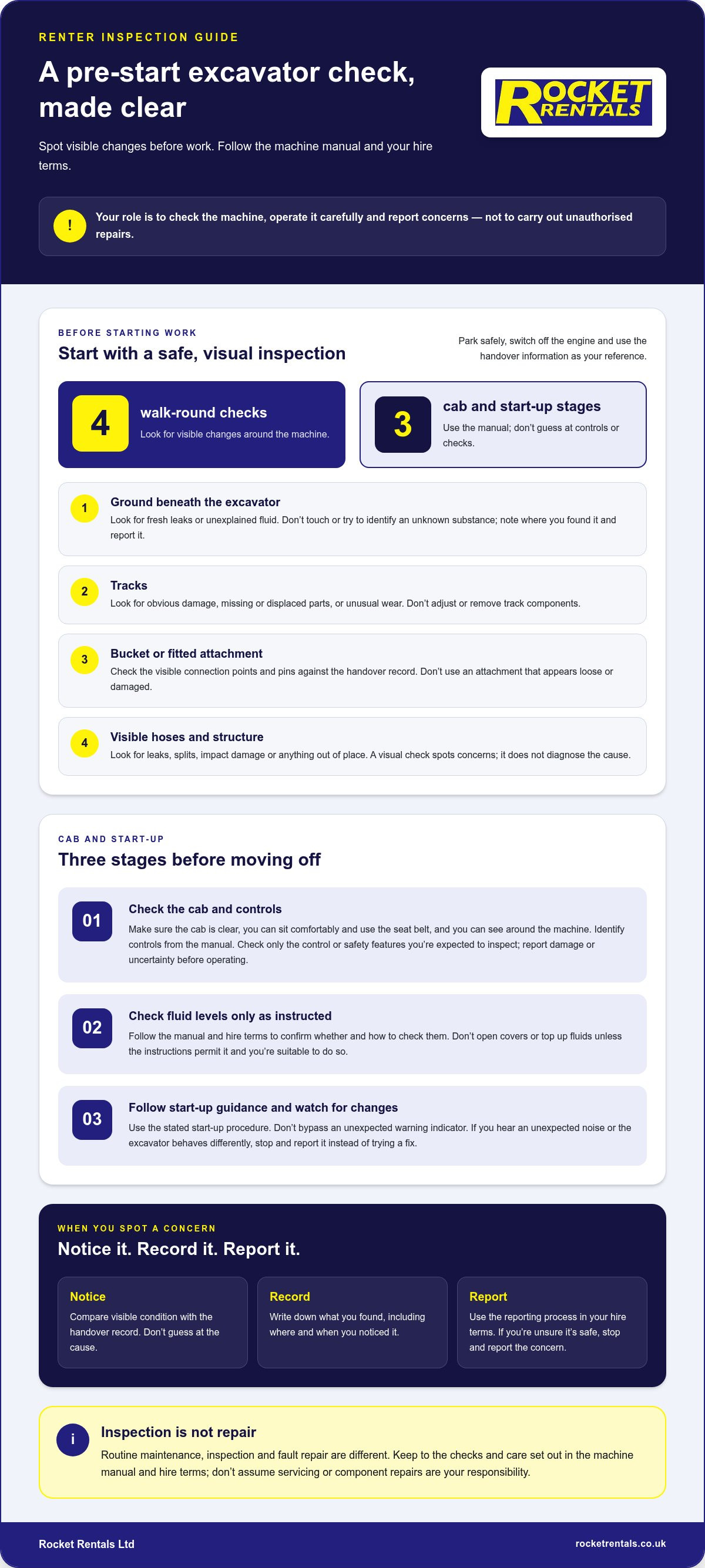
Your role as a renter is to check the machine, operate it carefully and report concerns, not to carry out unauthorised repairs. Keep that principle in mind as you follow the excavator maintenance tips for renters below.
Before starting work: inspect the excavator step by step
A pre-start inspection gives you a chance to notice changes before the excavator goes to work. Begin with the machine parked safely and the engine switched off. Use the handover information and machine manual as your guide, since checks and controls vary between machines. These practical excavator maintenance tips for renters cover visual checks, not adjustments or repairs.
Walk-round checks: look for visible changes
Walk around the machine in good light where possible. Compare its condition with the handover record and note anything new or unclear. General heavy equipment maintenance tips can offer context, but the hired excavator’s instructions take priority.
Check the ground. Look beneath the excavator for fresh leaks or unexplained fluid. Don’t touch or try to identify an unknown substance. Note where you found it and report it.
Look over the tracks. Check for obvious damage, missing or displaced parts, or unusual wear. Don’t adjust or remove track components.
Inspect the attachment. Look over the bucket or fitted attachment and its visible connection points and pins. Compare their condition with the handover record. Don’t use an attachment that appears loose or damaged.
Scan visible hoses and structure. Look for leaks, splits, impact damage or anything out of place. A visual check can identify a concern, but it won’t diagnose the cause.
Cab and start-up checks: follow the machine guidance
Before moving the excavator, check that the cab is clear, you can sit comfortably and use the seat belt, and you can see around the machine. Identify the controls using the manual rather than guessing. Check any control or safety feature you’re expected to inspect, and report damage or uncertainty before operating.
Check fluid levels only as instructed. Follow the manual and hire terms to confirm whether and how to check them. Don’t open covers or top up fluids unless the instructions permit it and you’re suitable to do so.
Follow the stated start-up procedure. Once the walk-round is complete, use the machine manual for start-up checks and warning indicators. Don’t bypass a warning or continue if an unexpected indicator appears.
Pay attention to changes. If you notice an unexpected noise or the excavator behaves differently, stop and report it instead of trying a fix.
Record what you found, including where and when you noticed it, then follow the hire company’s reporting instructions before work begins. Don’t operate the machine if you consider it unsafe. Clear reporting helps the hire company understand the concern and advise on the next step. If you’re arranging self-drive excavator hire, include the handover and reporting details in your preparation.
Who is responsible for maintenance on a hired excavator?
Responsibility depends on the hire terms and the instructions supplied with the machine. You’re expected to understand the checks and operating guidance that apply to your hire, but that doesn’t automatically make you responsible for servicing or repairing the excavator. Read the documentation at handover and keep the reporting route close to hand.
Noticing and reporting a concern is different from diagnosing or repairing it. Use the table below as a guide to the distinction, then follow your hire terms for the process that applies to your machine.
Renter checks versus servicing and repairs
Your checks involve observing the excavator and using it as instructed. Servicing and repair can involve work on components or systems, so don’t treat them as ordinary renter checks. The hire terms explain who arranges or carries out each task. If a responsibility is unclear, use the contact route in the hire documentation before taking action.
This distinction is central to safe excavator maintenance tips for renters. You can identify a concern without being expected to find its cause. For example, noting a warning on the display is useful; opening a panel to investigate it may not be an authorised task.
When to stop work and report a concern
If visible damage, a warning or unusual behaviour raises a safety concern, stop operating the machine. Don’t bypass the warning, test the excavator to see whether the issue clears or attempt an adjustment. Move to a safe position and follow the machine’s stopping instructions.
Make a clear record while the details are fresh. Note the time, the machine’s condition and what you observed, such as a warning indicator or change in operation. Describe symptoms rather than guessing at a cause. Report the issue using the contact route and process supplied with the hire, then follow the instructions you receive before using the excavator again. Prompt, factual communication helps clarify what happened and supports an orderly response.
Daily excavator maintenance checklist for renters
A repeatable routine makes it easier to spot a change and report it before it disrupts work. Use the checklist below alongside the machine manual and your hire terms. It covers observation, careful operation and basic cleanliness, not servicing or repair. These excavator maintenance tips for renters are a practical prompt, not a substitute for instructions specific to your machine.
Before work: get ready to operate
Follow the machine’s pre-use guidance and check the excavator’s visible condition before starting. Look for changes since the previous shift, including fresh fluid beneath the machine, visible damage, concerns around the tracks or attachment, and warning indicators. Check that the cab and controls appear ready for use and that you can see clearly from the operator’s position.
Compare new concerns with the handover notes or your previous record.
Follow the manual for start-up steps and any permitted fluid level checks.
Report a fault or uncertainty through the agreed contact route before work begins.
During the shift: operate with care
Use the excavator only as directed for that machine and task. Pay attention to changes in movement, sound or control response, as well as warning indicators. Avoid unnecessary impacts and use attachments according to their instructions. If something changes or raises a safety concern, stop and follow the reporting process rather than carrying on to finish the task.
Stay alert to how the machine responds as work progresses.
Use attachments according to the machine and attachment guidance.
Don’t ignore a warning or try an unauthorised adjustment.
At shift end: leave a clear record
Park and secure the excavator as its operating guidance directs. If the manual and hire instructions allow, remove loose dirt that could hide visible damage or make the next inspection harder. Don’t wash down the machine or clean around components unless those instructions permit it. Note new damage, faults or other concerns, even if the machine completed the shift.
Record what changed and when you noticed it.
Report concerns through the agreed process, including issues that seem minor.
Follow the stated instructions for leaving the machine at the end of the shift.
After unusual events: check, record and report
If the excavator experiences an impact, behaves unexpectedly or displays a warning, pause work and consider whether it is safe to continue. Don’t diagnose the cause or attempt a repair. Make a factual note of what happened and the visible symptoms, then report it using the hire documentation and follow the instructions you receive.
A repeatable check-and-report routine helps protect excavator uptime. Filter replacements and other service tasks aren’t automatically renter jobs; follow the hire terms and machine instructions. For self-drive excavator hire, keep checks within the machine’s guidance and report concerns clearly.
Keep your hired excavator ready with a clear handover and reporting plan
A clear record helps distinguish the machine’s condition at handover from changes during the hire. It also gives you and the hire company a shared account of what you observed, when you noticed it and how you reported it. Keep the process simple, factual and consistent with the hire documentation.
Make handover notes useful
At handover, follow the supplied process to record the excavator’s visible condition and any existing concerns. Note the date, the part of the machine involved and a plain description of what you see. If the process allows photographs, they can help show the condition at that point. Keep your notes, hire details and communications together so they’re easy to find during the hire.
Choosing equipment suited to the task also supports a clear start. If you’re weighing up machine size or site requirements, Rocket Rentals’ professional guide to mini excavator hire offers further context for planning. Use the machine’s own guidance and the hire terms for operating and care instructions.
Report issues and prepare for return
If you notice a change during the hire, record what happened in direct terms. For instance, note when a warning appeared, what the machine was doing and any visible change in its condition. Avoid guessing at a mechanical cause. Report the concern promptly using the contact route and process supplied with your hire, then keep a note of the communication and any instructions you receive.
Before returning the excavator, follow the supplied return instructions. Check your records for unresolved concerns and make these clear at handover. A concise timeline can include the condition recorded at the start, when a change appeared, what you observed and when you reported it. This is more useful than an uncertain diagnosis and helps both parties understand the issue.
Good documentation complements careful daily checks. It can prevent small uncertainties from becoming gaps in communication, particularly when more than one person uses or oversees the machine. These excavator maintenance tips for renters work best when inspection, responsible operation and timely reporting are supported by clear notes.
Consistent records give the hire company useful context and help you track concerns as the project progresses. Treat handover notes as part of your site paperwork, and make any outstanding issue clear before returning the machine.
For information about self-drive excavator hire, see Rocket Rentals’ excavator hire.
Plan your next hire with confidence
Make machine care part of your site planning from the outset. Before the hire begins, decide who will carry out daily checks, where handover notes will be kept and how the team will report a concern. A shared plan helps everyone know what to do if the excavator’s condition changes, without leaving operators to guess or attempt work outside their responsibilities.
Keep the machine manual and hire terms accessible to everyone using it. They’re the right reference for instructions that depend on the excavator and hire arrangement. Apply these excavator maintenance tips for renters as your project develops, and make clear communication part of the way your team works.
With a clear plan and careful preparation, you can approach your next hire with greater confidence.
Frequently Asked Questions
How often should I check a hired excavator?
Check it before each shift, following the machine manual and hire instructions. A brief look at the start of work helps you notice changes since the previous check, such as fresh fluid on the ground or visible damage. Check again if something unusual happens during the shift. These excavator maintenance tips for renters are a guide, so use the instructions supplied for your specific machine.
Can I top up the fluid levels on a hired excavator?
Only top up fluid levels if the machine instructions and hire terms allow it and you’re suitable to do the task. Check the manual for the correct procedure and fluid. Don’t open covers or guess which product is needed. If a level appears low or you see a leak, report it through the supplied contact route rather than treating a top-up as a repair.
What should I do if a hired excavator develops a fault?
Stop using the excavator if the fault could affect safe operation, then report it using the process in your hire documents. Explain what you noticed, when it started and whether a warning appeared. Don’t restart the machine, test it to see if the problem clears or try to identify the cause unless instructed to do so. Follow the next-step guidance you receive before continuing work.
Can renters carry out repairs on a hired excavator?
Don’t carry out repairs unless the hire terms and supplier instructions specifically allow the task and you’re able to do it appropriately. A repair can involve more than making a visible part look secure, and an attempted fix may hide useful evidence of a fault. Record what you observed and report it instead. Check the agreement for how servicing and repairs are handled during your hire.
What should I record during an excavator hire?
Keep a simple record of the machine’s condition and any changes you notice. Include the date and time, the area or component involved, what you saw or heard, and when you reported it. Keep related messages and instructions together. For example, write “warning indicator appeared during operation” rather than naming a cause you haven’t confirmed. This creates a useful timeline for the hire period.
Should I clean a hired excavator before returning it?
Follow the return instructions, machine manual and hire terms for cleaning. If they permit basic cleaning, removing loose dirt may make the machine’s condition easier to see. Don’t wash, scrape or clean around components unless the instructions allow it, and don’t use a cleaning method you haven’t been told is suitable. If dirt is covering a concern or you’re unsure what’s expected, record it and report it through the agreed process.
What happens if I notice damage when the excavator arrives?
Record visible damage through the handover process before using the excavator, so its condition on arrival is clear. Describe where the damage is and what it looks like, without guessing how it happened. If the handover process allows photographs, take clear images and keep them with your notes. Report the concern using the contact route provided, and wait for instructions if it could affect safe operation.


Comments