
Flail Attachment for Excavator: How to Choose the Right Setup
The toughest-looking flail head isn’t automatically right for your site. A flail attachment for excavator work needs to suit both the vegetation you’re clearing and the excavator powering it. If the head and machine are mismatched, cutting performance can suffer and avoidable downtime may follow.
Choosing a head involves more than deciding whether it can handle grass, brambles or thicker scrub. The excavator’s hydraulic capabilities matter too, as do ground conditions, access and the finish you need. Check these details before arranging hire to plan a suitable working setup.
This guide compares common flail head types and explains how to match an attachment to an excavator. It also covers vegetation, site conditions and safe working. Rocket Rentals is a family-run plant hire specialist offering self-drive excavators and attachments, with equipment inspection as a focus. Use these checks to plan your vegetation work with confidence.
Table of Contents
What does a flail attachment for an excavator do?
A flail attachment is a vegetation-cutting head fitted to a compatible excavator. It uses the excavator’s reach and the head’s cutting action to manage growth on site. A bucket, by contrast, is designed for digging, moving or placing material. Neither attachment is right for every job: choose according to the task.
A flail mower cuts vegetation with a rotating assembly. For a wider overview of how flail mowers work, see Flail Mower. An excavator-mounted head follows the same broad principle, but its suitability depends on the specific attachment and excavator combination.
How does an excavator-mounted flail work?
The head contains a rotating cutting assembly. The excavator supplies the movement and hydraulic power, while the operator positions the attachment over the work area. Requirements vary by model, so don’t assume that every excavator can power every flail head.
This differs from using a bucket, which engages with the ground or material rather than cutting vegetation. Connect and operate the head in line with the machine and attachment instructions.
What work is a flail attachment suited to?
Flail attachments are used for vegetation management, such as controlling growth along a site boundary, clearing an overgrown area or maintaining vegetation within a working site. Suitability depends on the type and density of growth, available access and ground conditions.
Thick or uneven growth can place different demands on the setup than lighter vegetation. Restricted access may also affect where you can position the excavator. When planning hire, describe the vegetation and site conditions, then check the attachment’s stated limits. Don’t expect the same result from every head or across every task.
A suitable setup brings the attachment, excavator and working conditions together. Rocket Rentals is a family-run plant hire specialist offering self-drive excavators and attachments, with equipment inspection as a focus.
How flail attachment types differ for excavator work
Start with the vegetation and the finish you need, then compare attachment details. Manufacturers may use different names for similar designs, so treat type labels as a starting point, not a guarantee of what a head can cut. The attachment must also suit the excavator, site and planned operation.
Which attachment features should you compare?
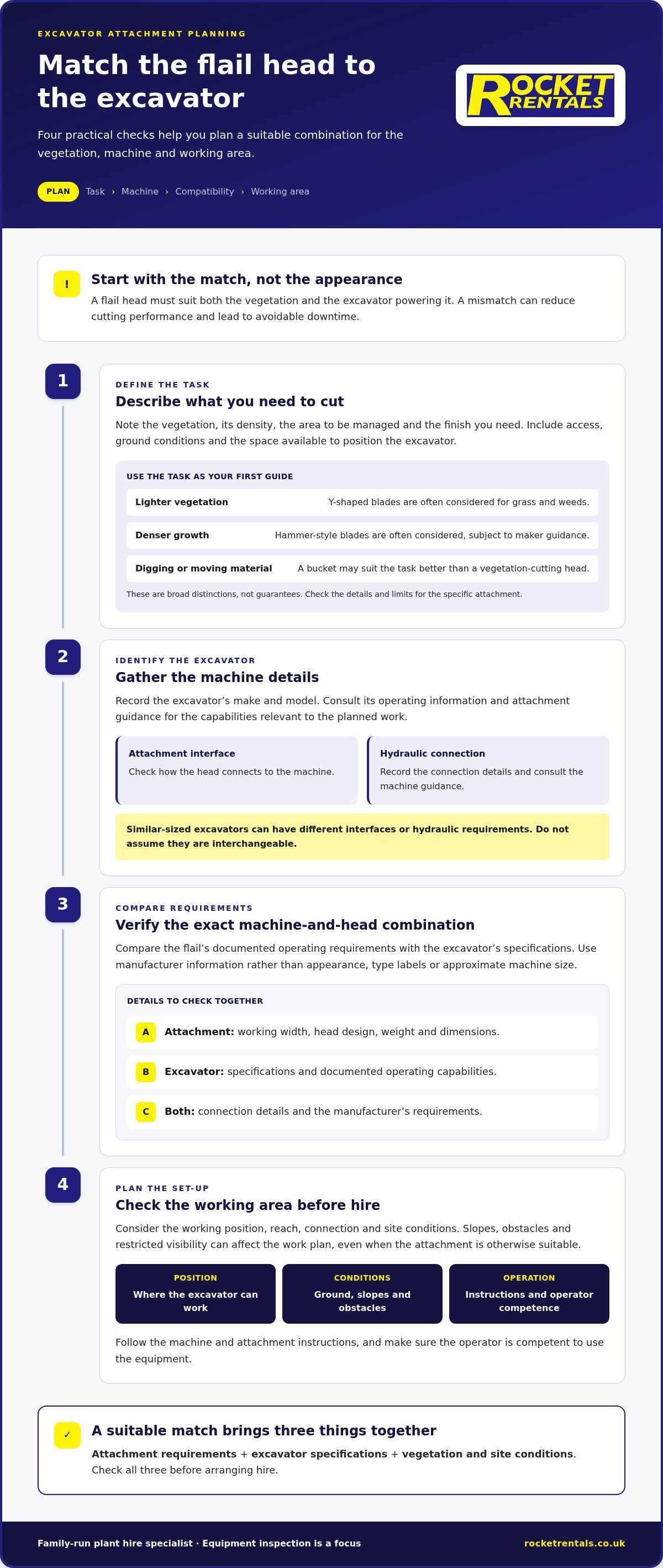
Some flail heads use Y-shaped blades, commonly associated with lighter vegetation such as grass and weeds. Others use heavier hammer-style blades, generally intended for denser growth. These are broad distinctions, not universal standards. Check the manufacturer’s description and documented limits for the specific attachment rather than relying on its name.
Compare the working width, head design, weight and dimensions with the excavator’s specifications. These details affect whether the combination is suitable. The table is a starting point, not a replacement for checking the requirements for the exact machine and head.
How do vegetation and site conditions affect the choice?
Consider what is growing, how dense it is and what you want the cleared area to look like. Then assess access, ground conditions and the space available to position and operate the excavator. Slopes, obstacles and restricted visibility can affect the work plan, even when the attachment is otherwise suitable. Follow the equipment instructions when planning the working area.
Include relevant site procedures and working conditions in your plan. For a self-drive excavator and attachment setup, explore excavator attachment hire from family-run plant hire specialist Rocket Rentals.
How to match a flail attachment to your excavator
A suitable match involves more than checking whether the attachment can be connected. The excavator must be able to support and operate the flail for the work you have planned. Use the manufacturers’ documented requirements for both pieces of equipment rather than judging by appearance or approximate machine size.
Define the task. Note the vegetation, area to be managed, access and working conditions.
Identify the excavator. Record its make and model, then consult its documentation for relevant operating capabilities.
Compare requirements. Check the attachment’s documented requirements against the excavator’s specifications.
Plan the setup. Consider the working position, reach, connection and site conditions before arranging hire.
Which excavator details should you gather first?
Start with the excavator’s make and model, then consult its operating information and attachment guidance. Record the attachment interface, meaning the way the head connects to the machine, and the hydraulic connection details. Similar-sized machines can have different interfaces or hydraulic requirements, so don’t assume one setup will fit another. For more on selecting a carrier machine, see our mini excavator hire guide.
What compatibility checks help prevent a poor match?
Compare the attachment’s specified hydraulic flow and pressure with the excavator’s documented capabilities. Both must meet the attachment manufacturer’s requirements. Guessing can lead to poor operation or an unsuitable setup. Check the attachment’s weight and dimensions against the machine information too. Its reach and the planned working position matter, particularly on uneven ground or in a confined area.
A mismatch can affect equipment operation and control, or prevent the work from going ahead as planned. Resolving compatibility before hire helps reduce avoidable downtime. Keep the machine and attachment information together so you can assess the complete working combination.
Safe operation also depends on following equipment instructions and site procedures. Before starting, make sure the operator understands the controls, connection requirements and planned working area.
What to plan before using an excavator flail attachment
Plan the job before the machine reaches the vegetation. Describe the task, the growth to be managed and the site conditions. This gives you a practical basis for arranging a suitable flail attachment for excavator work and helps prevent delays caused by unclear access or unsuitable working conditions.
Before hire, note:
The task: what area needs work and what result you need.
The vegetation: its type, density and distribution across the site.
The working area: ground conditions, slopes, obstacles and nearby people or property.
Access: how the excavator will reach the work area and where it can be positioned safely.
The operator: who will use the machine and whether they’re competent to operate it with the attachment.
How should you prepare the work area?
Mark out the intended work boundary and plan the excavator’s route to it. Look for obstacles, changes in ground level and areas where visibility may be restricted. Include nearby people and property in your plan, and check that the access route and work area suit the excavator’s movement and position.
Conditions can vary across a site. Soft or uneven ground, confined access or vegetation that obscures hazards may affect where and how you can work. If the planned position does not give a clear view of the task, or the machine cannot move as intended, revise the plan before starting.
What should you check before starting work?
Inspect the excavator and attachment in line with their instructions. Look for visible signs of damage or wear, and check the connection using the machine and attachment guidance. Don’t rely on a connection simply appearing secure. If anything is unclear or appears unsuitable, pause and resolve it before operating.
Make sure the operator understands the machine controls, attachment instructions and planned work area. They should know how to start, operate and stop the equipment, and what to do if the machine or attachment behaves unexpectedly. Keep the manufacturer’s operating information available.
Rocket Rentals is a family-run plant hire specialist with equipment inspection as a focus. Once you’ve outlined the task, excavator and site plan, arrange self-drive excavator and attachment hire for your vegetation work.
Hire an excavator flail attachment with a well-planned setup
Before arranging hire, bring the task, excavator and attachment details together. Describe the vegetation, working area and site conditions, then identify the excavator you plan to use. Compare its documented capabilities with the attachment requirements, including hydraulic connections, flow and pressure, weight and dimensions. This helps you plan the flail attachment and excavator as one working combination.
Rocket Rentals is a family-run plant hire specialist offering self-drive plant and excavator attachments for professional projects. Planning the equipment as a working combination gives you a clearer basis for organising the hire and preparing the site.
What information helps organise the hire?
Have these details ready when you discuss the project:
Task and vegetation: describe the work, the material to be cut and the result you need.
Site conditions: outline the working area, access route, ground conditions and obstacles that could affect excavator positioning.
Excavator: provide its make and model, along with relevant operating details from its documentation.
Compatibility information: share the attachment requirements and machine specifications, including connection and hydraulic details.
Practical arrangements: have your intended hire period and site access arrangements in mind.
Clear information keeps the discussion focused on the task and proposed setup. If you’re still deciding on the carrier machine, consider its reach, position and ability to work within the planned area.
How does equipment inspection support a reliable hire?
Inspection helps assess equipment condition before work begins. Rocket Rentals highlights equipment inspection as part of its approach to plant hire. A suitable, inspected setup supports reliable working, while checks before use and correct operation remain essential parts of planning the job.
Before starting, follow the excavator and attachment instructions, inspect the equipment and make sure the connection and operating guidance are clear. If the machine, attachment or site conditions don’t match the plan, resolve the issue before work begins.
Have your task, excavator details, compatibility information and intended hire period to hand. Discuss your excavator attachment hire with Rocket Rentals and plan a self-drive setup around your vegetation work.
Plan your vegetation work with confidence
The right flail attachment for excavator work depends on the vegetation, task and site conditions. Compare the attachment’s documented requirements with the excavator’s specifications, including hydraulic capabilities and connection. Then plan access, working position and site conditions before arranging hire.
These checks help you choose a suitable working combination and reduce the risk of avoidable downtime. Make sure the operator understands the machine and attachment instructions, and inspect the equipment before starting. If the setup or working conditions don’t seem right, pause and resolve the issue.
Rocket Rentals is a family-run plant hire business offering self-drive equipment and excavator attachments. Equipment inspection is one of its stated strengths. Once you’ve outlined the task and gathered the relevant excavator details, Discuss your excavator attachment hire with Rocket Rentals.
With a clear plan and compatible equipment, you can approach vegetation work with greater confidence.
Frequently Asked Questions
What is a flail attachment for an excavator?
A flail attachment is a vegetation-cutting head fitted to a compatible excavator. The excavator supplies the movement and hydraulic power for the head’s rotating cutting assembly, while the operator positions it over the work area. It’s used for vegetation management rather than digging or moving material with a bucket. The result depends on the attachment, excavator, vegetation and working conditions.
Can you use a flail attachment on any excavator?
No. The excavator must meet the attachment manufacturer’s documented requirements, including those for hydraulic flow, pressure, connection and attachment weight. Similar-sized machines may have different capabilities or interfaces, so don’t assume a head will fit because it looks compatible. Compare the specific attachment requirements with the excavator’s operating information before arranging hire. This helps you plan a suitable combination and avoid problems during the work.
How do I choose the right flail attachment for an excavator?
Start with the task: describe the vegetation, the area to be managed and the finish you need. Then compare the attachment’s documented purpose and requirements with the excavator’s specifications. Account for the connection, hydraulic capabilities, attachment weight and working conditions. Manufacturer names for designs can vary, so check the information for the specific head rather than relying on a label alone.
What vegetation can an excavator flail attachment cut?
The vegetation a flail can manage depends on the specific head and its manufacturer’s stated limits. Growth type and density both matter, as do the excavator setup and working environment. Don’t assume every flail attachment can cut the same material or produce the same finish. Describe the vegetation clearly when planning the work, and use the attachment instructions to judge whether the setup suits the task.
What should I check before using a hired flail attachment?
Inspect the excavator and attachment in line with their instructions. Check that the attachment is connected as directed, and make sure you understand the machine controls and operating guidance. Confirm that the planned work area, access and ground conditions suit the excavator’s position and movement. The operator should be competent to use the equipment. If anything appears damaged, unclear or unsuitable, pause and resolve it before starting.
Is an excavator flail attachment suitable for roadside or site vegetation work?
It may suit vegetation work beside a road or elsewhere on site if the attachment, excavator and conditions are appropriate. Plan the work boundary, access route, machine position and visibility, and consider nearby people, vehicles, property and obstacles. Follow the equipment instructions and relevant site procedures. Suitability depends on the task and working area, so assess the conditions before arranging the setup or beginning work.


Comments