
Groundworks Equipment for Construction Sites
The right groundworks equipment list depends on the work. Excavation and moving materials call for machinery such as excavators and dumpers, while levelling and compaction may need rollers or other compacting equipment. Hand tools such as rakes and spades are better for detail work and confined areas machinery cannot reach. Groundworks can also include foundations, drainage and reinstatement, so one fixed list will not suit every job.
It’s easy to assume larger machinery is always the answer, but smaller equipment can be better for precise or restricted tasks. Tamping rammers compact soil, with trench rammers suited to narrow trenches. Wheelbarrows help move materials around a site; choose one by considering load capacity, tray depth, frame strength, tyres, handles and terrain.
This guide explains how groundworks equipment differs from hand tools, which machinery suits common site tasks, and when rammers and wheelbarrows are useful. You’ll also learn how the work, site access and ground conditions shape equipment choices, helping you plan a practical set-up for the job.
Table of Contents
Groundwork equipment versus groundwork tools
Groundworks equipment usually means machinery for moving, lifting or compacting ground and materials. Hand tools give you closer control for digging, shaping and finishing.
Choosing equipment by project scale
For small residential groundworks, shovels and spades may suit shallow digging, narrow access and localised preparation. A compact excavator can help with larger excavations, while a roller suits ground that needs compaction. On a large construction site, excavators, dumpers and rollers can support excavation, material movement and site-wide preparation. Choose equipment by task, ground conditions, working space and access, rather than project size alone.
Equipment for drainage and utility work
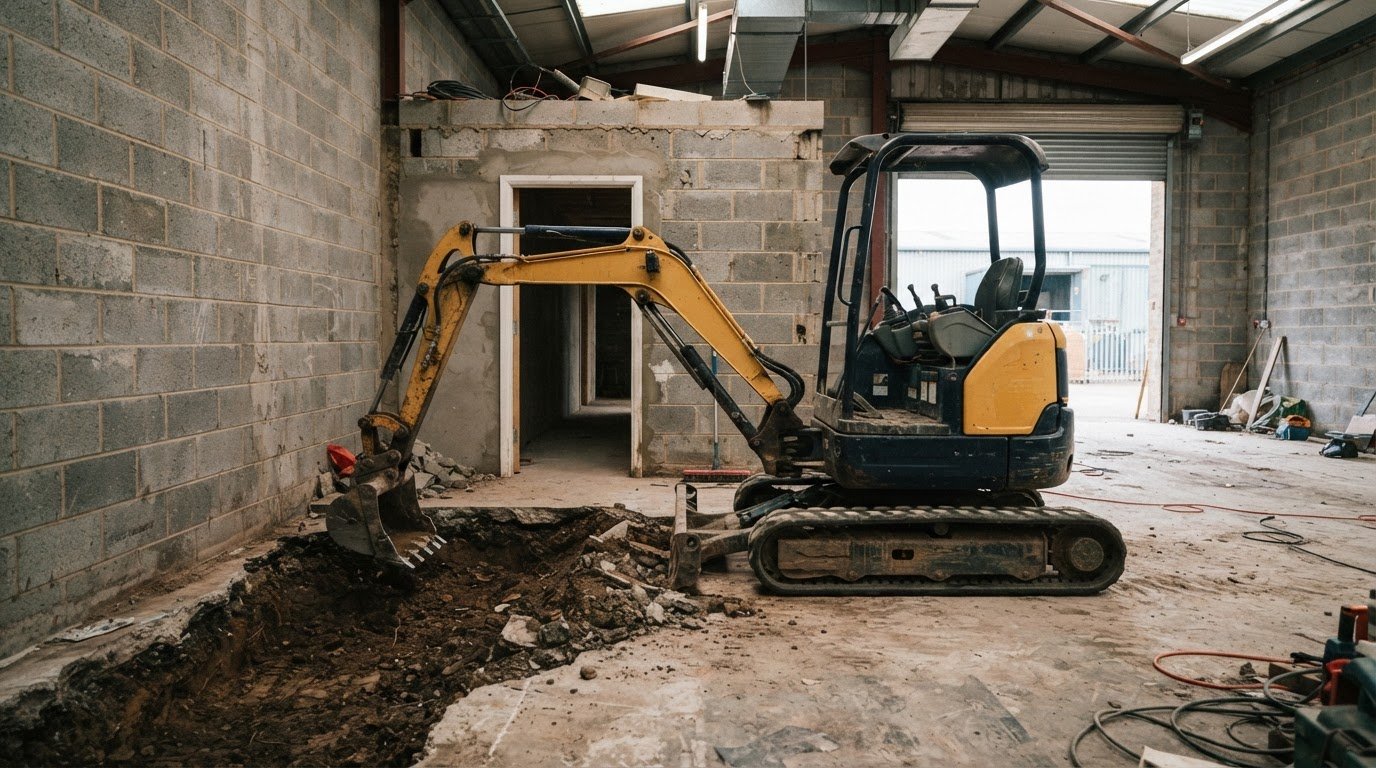
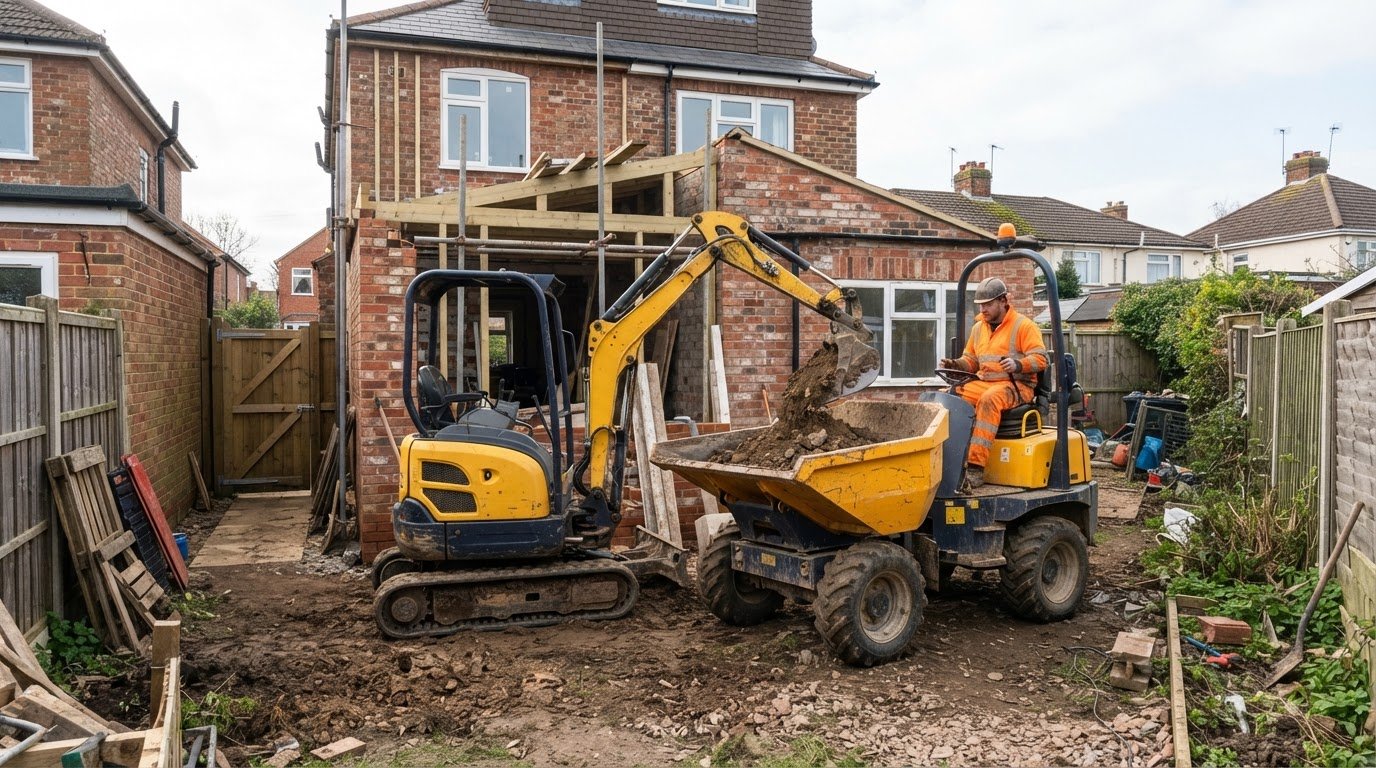
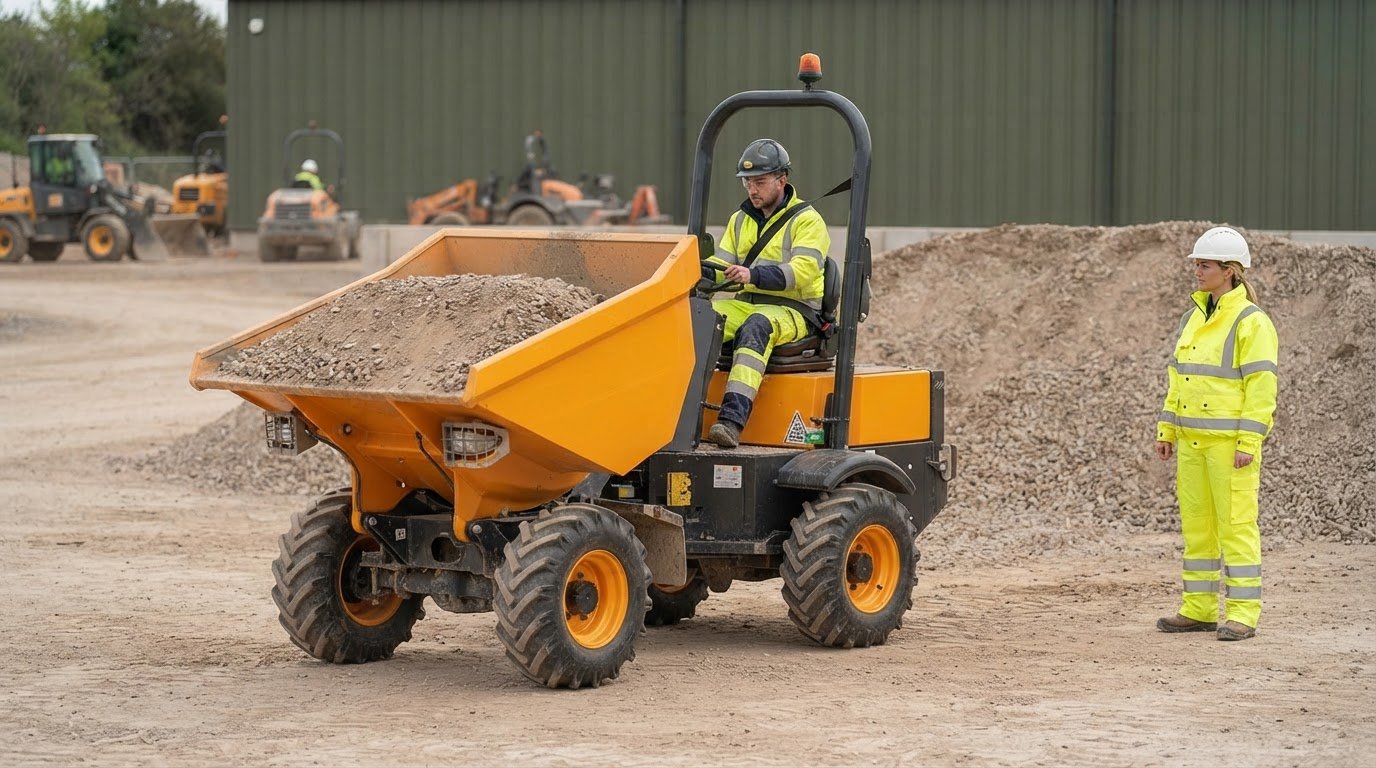
Drainage and utility work may involve trenches for water or gas pipes, telephone lines and fibre optic cables. An excavator can dig the trench, while a dumper moves excavated material around the site. As pipe laying progresses, an excavator can pull a drag box along the trench. Select equipment to suit the trench layout, access and sequence of work, so excavation and installation can proceed together.
For smaller digging tasks, spades and shovels let you shape an excavation carefully or remove material where machinery cannot reach. Rakes help level loose material, while a mattock can break compacted ground. For concrete finishing, a float smooths the surface and a straightedge levels it. These traditional groundworks tools support detail work and finishing, rather than replacing machinery for bulk excavation.
Before work starts, identify risks such as trench collapse, moving machinery and contact with buried services. In the UK, CDM 2015 places specific duties on those responsible for managing excavation support on construction sites, according to the Health and Safety Executive. Operators need training and qualifications suited to the particular machine and task. An inspection should assess visible condition and safe operation; routine maintenance should follow the manufacturer’s instructions and address faults before they cause downtime.
Tamping rammers
A tamping rammer compacts soil through repeated impact, a process known as ramming. Its narrow footprint makes it useful in trenches and other confined spaces where larger compaction equipment may be difficult to position. For example, after a service trench has been backfilled, a trench rammer can compact soil along the narrow run. It’s a compaction machine, not a digging tool: excavation and ramming are separate stages.
Choose a rammer for the task and site conditions, not just its size. Consider the trench width, ground condition, material being compacted and available working space. A narrow excavation may suit a trench rammer, while an open area may allow a different compaction machine. Check the manufacturer’s guidance for the equipment and material, as suitability depends on the specific task and site.
Plan the work before starting. Confirm the route the rammer needs to cover, clear loose obstructions and make sure the working area allows safe handling. The operator should be trained on the specific equipment and understand its controls before use. During ramming, keep the machine moving through the planned work area rather than concentrating impacts in one spot. Follow the project method for the material and required finish.
Before use, inspect the machine for visible damage or faults, and follow the manufacturer’s operating instructions. If it behaves unusually, stop and address the fault before continuing. Routine maintenance helps keep equipment in working condition and can reduce avoidable downtime. Record issues and maintenance in the relevant service records. Include a tamping rammer in your groundworks equipment list where narrow spaces need compaction, but choose another machine when the task or site conditions call for it.
Wheelbarrows
A wheelbarrow offers a practical way to move materials by hand around a groundworks site. It can carry soil from a short excavation, shift aggregate towards a work area or move debris where larger machinery cannot travel easily. For example, a narrow path beside a house may make a wheelbarrow more suitable than a dumper. It supports site work, but does not replace machinery for moving large volumes.
Choose a wheelbarrow by considering load capacity, tray depth and frame strength together. A deeper tray can contain loose material such as excavated soil, while a wider load may sit differently and affect handling. Match the expected load to the barrow’s capacity rather than filling it by eye. A strong frame matters when repeated journeys involve heavy site materials, as it carries the load between the tray, handles and wheel.
Tyre type and handle design also affect how a wheelbarrow performs. Uneven or soft ground can make a route harder to manage than a firm, level surface. Consider whether the wheel can travel across the site’s terrain without making the tray difficult to control. Handles should let the operator guide and tip the load steadily. Check that the route has enough space to turn, especially beside a trench or through a restricted access point.
Good handling starts before the first journey. Load material evenly, keep it within the tray and avoid blocking the operator’s view of the route. On a sloping or rough section, smaller loads can make the barrow easier to guide. Before use, inspect the wheel, frame, tray and handles for visible damage or loose parts. Remove dried concrete or soil after work, since build-up can obstruct tipping and make the next load harder to control. Include a wheelbarrow in your site equipment plan when short-distance material movement and access conditions make manual transport practical.
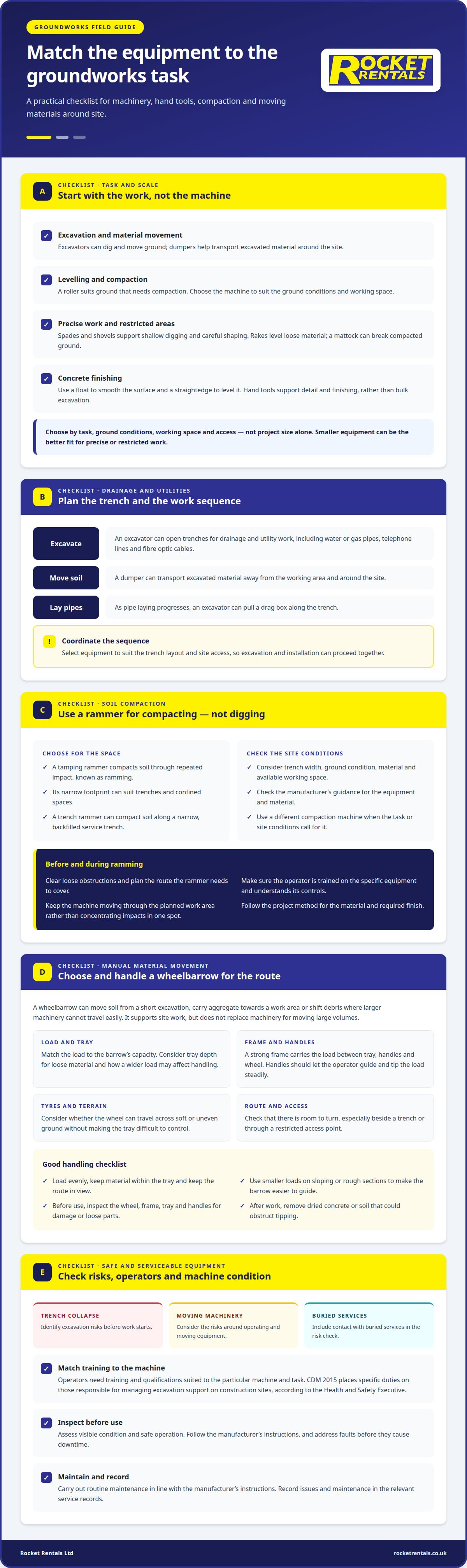
What equipment is needed for drainage, pipe laying and utility installation?
Drainage and utility work needs equipment matched to the trench, materials and site access. An excavator can open the trench, while a dumper transports excavated soil away from the working area. The installation may involve water or gas pipes, telephone lines or fibre optic cables. Plan the sequence so excavation, pipe laying and reinstatement can progress without equipment obstructing the work area.
For pipe laying, an excavator pulls a drag box along the trench as installation progresses. This allows the work area to move with the pipe-laying operation. The trench layout and available access influence how the excavator can travel and position itself. Consider where excavated material will go, how pipes will reach the trench and whether machinery can move safely around the site.
Equipment needs change with the task. Drainage work may involve preparing a route for pipes, while utility installation can require space for long sections of cable or pipe. An excavator attachment suited to the planned digging task can support excavation. A dumper can help shift soil or other materials between work areas. For smaller tasks or restricted access, hand tools can assist with careful finishing around the trench.
Before work begins, map the order of tasks: excavation, installation and backfilling. Match machinery to the trench dimensions and site conditions, then plan access routes for equipment and materials. Keep the excavated soil clear of the immediate pipe-laying area, so it does not obstruct progress. Allow space for the excavator and drag box to move as installation advances. A well-planned groundworks equipment list for this work should reflect the full sequence, not just the initial digging. Select excavator hire for projects that need machinery to excavate trenches or pull a drag box.
Rocket Rentals Ltd
Rocket Rentals Ltd hires groundworks machinery to suit the work planned on site. If excavation is central to the job, Mini Digger Hire or Excavator hire may suit different project requirements; Roller Hire can support ground preparation. Welfare Unit Hire provides a separate option when site facilities are needed. Plant hire is available on a weekly hire basis.
As an established family-run business operating nationwide, Rocket Rentals Ltd places importance on equipment inspection. Share the planned tasks and site conditions when discussing your requirements, so equipment selection reflects the work rather than a generic groundworks equipment list. If you are planning groundworks and want to discuss suitable plant hire, contact Rocket Rentals Ltd.
Plan your next site stage
Turn your groundworks equipment list into a site plan before finalising hire decisions. Set out the order of work, the areas machinery must reach and where materials will be moved or stored. This gives you a clearer basis for matching equipment to the job, rather than selecting machines by habit. Keep the plan focused on the work stages and access constraints that shape daily operations.
Rocket Rentals Ltd offers Mini Digger Hire, Excavator hire and Roller Hire for projects requiring groundworks machinery. Share your planned tasks and site conditions to discuss equipment that suits your requirements. A clear brief can help keep equipment selection aligned with the work as it moves from preparation to construction. For a practical next step, contact Rocket Rentals Ltd about equipment. With a considered plan, you can approach the next stage with confidence.
Frequently Asked Questions
What equipment is typically included for UK groundworks?
Equipment choices depend on the work stages and site layout. A house extension may need excavation machinery, equipment for moving spoil and tools for setting out foundations. Larger projects can require machinery for handling bulk materials and preparing wider areas. Include support items such as barriers and clear site markings where they help separate active work areas from vehicle routes.
What excavator sizes are used for different groundworks jobs in the UK?
The suitable excavator size depends on the required digging reach, working area and access route. A restricted entrance can limit which machine reaches the work zone, while a larger excavation may need a machine suited to the volume and sequence of digging. Consider turning space and overhead obstructions too, so the selected machine can operate within the site layout.
What machinery is needed for site clearance, excavation and earthmoving?
Site clearance and earthmoving can involve excavators, loading shovels and dumpers. The task determines their roles: one machine may remove vegetation or strip surface material, while another loads and transports spoil. For a phased project, plan where cleared material will be stored and how machinery will move between work zones. This helps prevent stockpiles from blocking access to later tasks.
What compaction equipment is used for groundworks, and when should each type be used?
Compaction choices include rollers, compactor plates and tamping rammers. The working area is a useful guide: a roller can cover broader ground, while smaller equipment can work in tighter spaces. Material and site conditions also matter. Follow the manufacturer’s guidance for the material being compacted, and plan the work so the selected machine can reach the full area.
What hand tools and surveying equipment do groundworkers need?
Groundworkers may use spades, shovels and rakes for manual preparation, alongside measuring tapes, site levels and setting-out equipment. A laser level can help transfer a consistent level across a work area, while pegs and string can mark boundaries or alignment. Keep measurements and marked points clear as the work progresses, particularly where excavation could disturb the original set-out.
What should I prepare before arranging groundworks plant hire?
Prepare a short brief covering the task, site access, ground conditions and the stage when machinery is needed. Note any restrictions affecting delivery or movement around the work area, along with the expected hire period. This gives the hire team practical information to discuss suitable equipment and terms. A clear brief also helps keep machinery selection aligned with the planned work.
Comments