
Micro digger hire for indoor and confined-space work
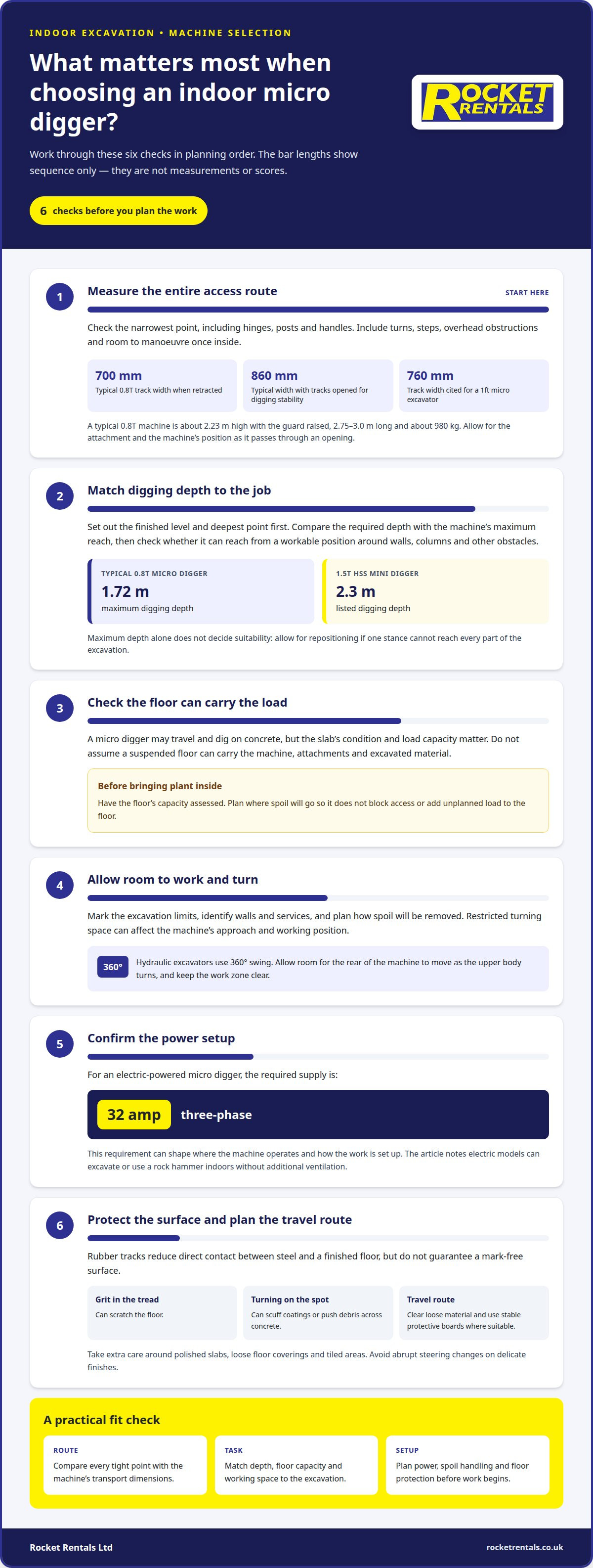
The smallest digger isn’t automatically the best choice for indoor excavation. A typical 0.8T micro digger can narrow to about 700 mm to pass through an access point, then open to about 860 mm for digging; its maximum digging depth is about 1.72 m.
Choosing a micro digger for indoor use means balancing access with the reach and stability your work needs. You’ll learn how to assess machine size, gate and doorway clearance, digging depth and track suitability before deciding whether a 0.8T, 1.5T or larger machine fits the job.
We’ll also consider the practical constraints of confined spaces, from the route to the excavation area to the room available to manoeuvre. These checks help you narrow down a suitable machine and plan the work with greater confidence.
Table of Contents
Will an 0.8T micro digger fit through my gate?
An 0.8T machine may pass through a narrow gate if its tracks retract far enough. Measure the tightest point on the route, not just the gate opening.
Gate and doorway access
Most 0.8T micro diggers can retract their tracks to about 700 mm for access, then open to about 860 mm for digging stability. A 1ft micro excavator can reduce its track width to 760 mm, which can pass through most door frames. Measure clear width at the narrowest point, including hinges, posts and door handles. Also check the route for turns, steps and overhead obstructions. A machine that clears the gate still needs enough room to travel and manoeuvre inside.
Indoor digger dimensions
A typical 0.8T micro digger is about 2.23 m high with the guard raised and 2.75-3.0 m long. Its typical weight is about 980 kg. These figures help you assess headroom, turning space and ground access, but the route matters as much as the opening. For a micro digger for indoor use, compare the machine’s width in both track positions with every doorway and passage. Allow for the attachment and the machine’s position as it moves through the opening.
Micro diggers are the smallest class of mini excavators. The terms can overlap, and “micro excavator” often describes a similar compact machine. Indoor demolition robots are different equipment, generally designed for controlled demolition rather than soil excavation.
On private land in the UK, a CPCS or NPORS card isn’t required to operate a hired micro digger, but the operator must be competent. The figures available here don’t establish an insurance requirement; insurance arrangements depend on the hire terms.
UK hire firms serve different delivery areas, so the relevant company depends on the site location. Compare the stated coverage with your site postcode before arranging delivery.
For indoor work, an electric-powered micro digger can excavate or use a rock hammer without additional ventilation. Plan dust control for the material being excavated, and manage noise by limiting exposure and keeping people clear of the work area.
Indoor and confined-space excavation applications
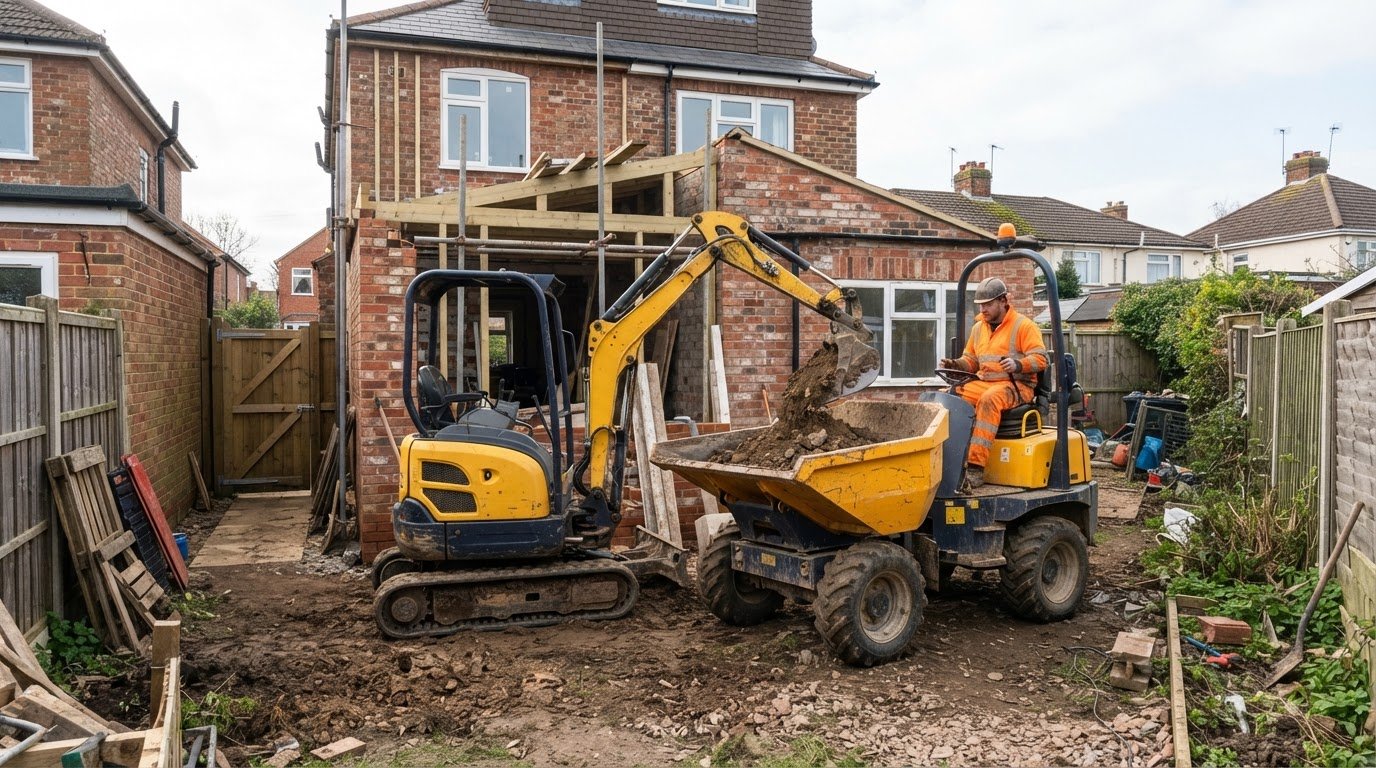
Basement excavation, internal drainage and floor preparation may require machinery that fits inside a building. A micro digger can help excavate soil where larger plant cannot manoeuvre, provided the machine and work area are suitable for the task.
Concrete and suspended floors need different consideration. A micro digger may travel and dig on concrete, but the slab’s condition and load capacity matter. Don’t assume a suspended floor can carry the machine, its attachments and excavated material. Have the floor’s capacity assessed before bringing plant inside.
Plan the work area before operating. Mark the excavation limits, identify walls and services, and decide where spoil will go. In a basement, restricted turning space can affect how the machine approaches the digging point and how material is removed. Hydraulic excavators use 360° swing, so allow for the rear of the machine moving as the upper body turns.
Indoor excavation has practical limits. Even a compact machine can disturb surfaces, strike hidden services or leave too little room for safe movement. Keep the work zone clear, plan a route for moving spoil, and don’t let excavated material block access or add load to a floor.
For electric-powered micro diggers, the required supply is 32 amp, three-phase. That requirement can shape where the machine operates and how the work is set up. Match the equipment to the excavation, floor and available working space rather than choosing on size alone.
Before hire, set out the indoor task, floor type, excavation position and spoil-handling plan. These details help establish whether a compact excavator suits the job. To discuss the requirements for your project, talk through your excavation plans.
Mini digger digging depth
Choose a digger by the depth your excavation needs, not its compact appearance. A typical 0.8T micro digger has a maximum digging depth of 1.72 m. A 1.5T HSS mini digger is listed with a digging depth of 2.3 m. These figures show why machine size matters, but maximum depth alone doesn’t determine whether a machine suits your indoor work.
Start by defining the finished level and the deepest point you need to reach. A shallow floor excavation and a deeper drainage run, for example, have different requirements. Compare the required depth with the machine’s maximum reach, then check whether it can reach the excavation from a workable position. Walls, columns and tight turning space may prevent a direct approach.
Assess depth alongside the ground conditions and excavation shape. A straight trench, a localised pit and a basement dig may each require a different working position. The bucket should reach the intended point without bringing the machine too close to an edge or obstacle. Plan where spoil will go so it doesn’t restrict movement or access.
For indoor excavation, check the planned depth against the route into the building and the space around the dig. A machine with 2.3 m maximum digging depth still needs enough room to position and operate. If the work requires several digging positions, allow for repositioning rather than assuming one stance will reach every part.
Make a simple site plan showing the excavation outline, required depth and obstacles. Mark the intended machine position beside each working area. Then compare the deepest point with the 1.72 m typical 0.8T limit or the 2.3 m figure for the HSS 1.5T. This gives you a practical basis for matching machine size to the job.
Rubber tracks and surface marking
Rubber tracks can reduce direct contact between steel and a finished floor, but they don’t guarantee a mark-free surface. Grit trapped in the tread can scratch, while turning on the spot may scuff coatings or push debris across concrete. Plan the travel route before the machine arrives, especially for polished slabs, loose floor coverings or tiled areas.
Protect floors by clearing grit and loose material from the route, then placing suitable protective boards where the machine will travel or turn. Keep boards stable and avoid abrupt steering changes on delicate finishes. A rubber track can still leave marks if it carries mud, oil or debris, so inspect the track and floor during the work.
Protect walls and door surrounds as well. Mark tight corners and exposed edges, then keep the tracks and attachments within the planned route. A narrow basement passage, for example, may leave little room to correct a turn. Use a spotter where visibility is restricted, and stop if the machine risks hitting a wall or doorway.
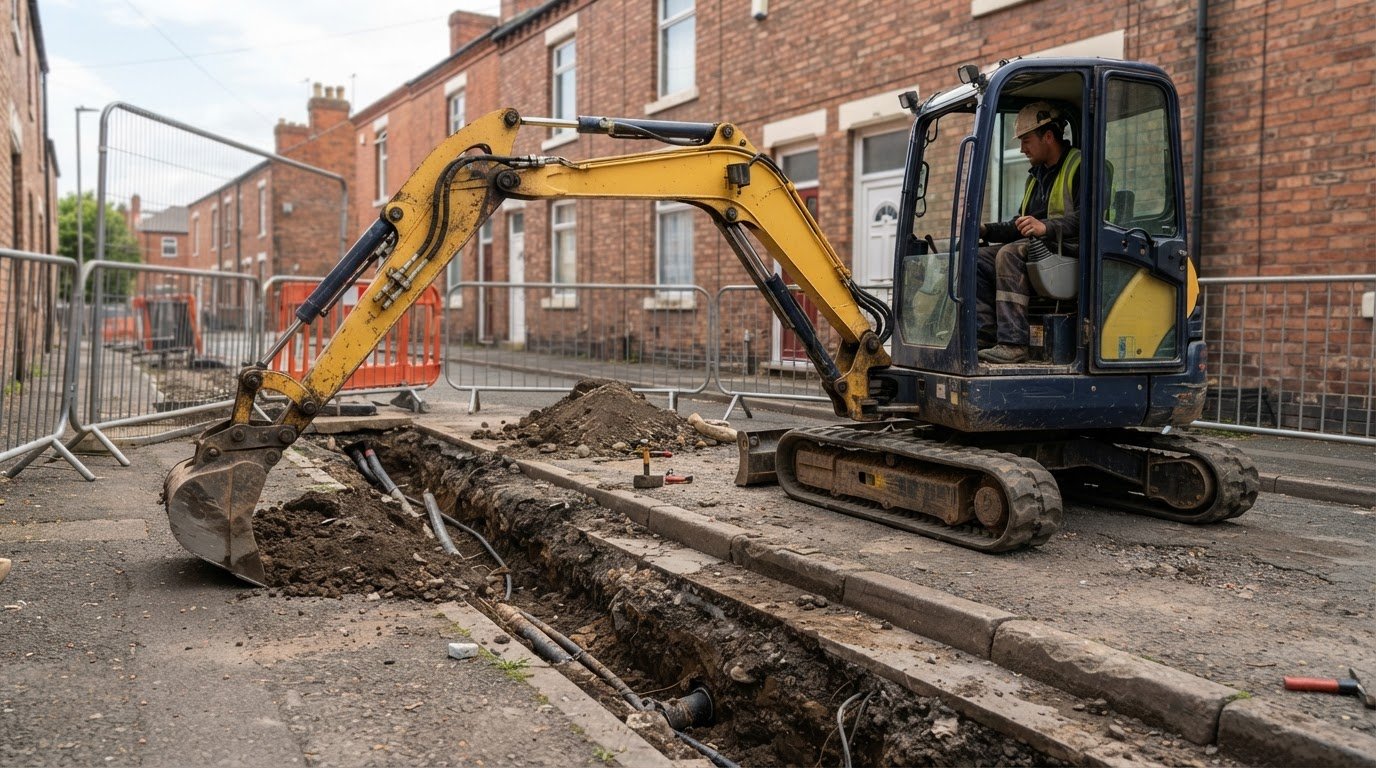
Before digging, identify buried or concealed utilities in the excavation area. Use available site information to locate and mark services, then plan the dig around them. Don’t assume a visible pipe or cable is the only service present. The bucket or an attachment can damage services below the surface, even during shallow excavation.
Match the working method to the floor finish, debris and turning space. On a clean concrete route, careful straight travel may reduce scuffing; on a finished surface, protective boarding provides separation. Include the excavation zone, travel path and spoil-handling area in the protection plan, without letting boards or barriers obstruct the operator.
If your indoor project needs excavation equipment, discuss suitable excavator hire for the site and planned work.
Rocket Rentals: Mini Digger Hire
Rocket Rentals Ltd provides Mini Digger Hire for excavation projects that need compact plant. For restricted-access or indoor work, share the route dimensions, required digging depth, floor type and available working space when discussing the hire. This helps match the equipment to the task and site conditions.
Inspection is part of preparing equipment for hire. Consider how the machine’s dimensions and capabilities fit your site plan, access route and excavation requirements. Rocket Rentals Ltd is a local, family-run business serving customers across the United Kingdom.
If your excavation needs a different machine, Rocket Rentals Ltd also offers excavator hire. Contact the team to discuss your project and plant hire requirements.
Plan your indoor excavation with confidence
Before arranging plant hire, turn the project requirements into a concise work brief. Set out what the excavation needs to achieve, the order of work and any site conditions that could affect the plan. This gives the hire discussion a clear starting point and keeps equipment selection focused on the job, not appearance alone.
Choosing a micro digger for indoor use is only one part of preparing the work. Consider how the machine will support the task from the first stage of excavation through to completion. If the scope changes, revisit the plan before work begins so the equipment and site arrangements remain suitable.
Contact Rocket Rentals about indoor digger hire to discuss your project. With a clear brief, you can take the next step with confidence.
Frequently Asked Questions
Can I take it home on a trailer or in a van?
The hire arrangement described delivers the micro digger as plant and collects it after hire, rather than transporting it in a van. Don’t assume a trailer is suitable based only on the machine’s weight: the trailer, towing vehicle and loading method all affect transport. A typical 0.8T micro digger weighs about 980 kg, before considering transport equipment or attachments.
How deep does an 0.8T dig?
A typical 0.8T micro digger has a maximum digging depth of 1.72 m. Treat this as the machine’s stated maximum, not a guarantee that every part of your excavation can be reached from one position. For a drainage trench, for example, consider the trench route and where the digger can stand as well as the deepest point.
Will it fit?
It may fit if the narrowest part of your access route clears the machine’s retracted track width. A typical 0.8T micro digger retracts to about 700 mm, then opens to about 860 mm for digging. Measure doorways, gates and turns along the full route, and account for the machine’s height and room to manoeuvre once inside.
What is the smallest micro digger suitable for indoor use in the UK?
There isn’t one smallest model that suits every indoor job. Track widths vary between micro excavators, so check the machine’s retracted width against the door frames on your access route. Choose according to the access route, excavation depth and working space, not the machine label alone.
What is the minimum doorway width and ceiling clearance needed for a micro digger?
There’s no single minimum that fits every machine. A 1ft micro excavator can narrow to 760 mm, and a typical 0.8T micro digger is about 2.23 m high with its guard raised. Compare the exact machine dimensions with the doorway’s clear opening and overhead route, including any low beams or pipes.
Which UK companies hire indoor micro diggers, and what are their delivery areas?
Rocket Rentals Ltd serves customers across the United Kingdom. Check that its delivery coverage includes your site before arranging hire.
Comments