
How to Start, Check and Dig Safely with a Mini Digger
A mini digger is manageable to learn, but safe operation depends on preparation as much as control. Learning how to operate a mini digger safely starts with the right training and a clear understanding of the machine. In the UK, you don’t need a driving licence to use one on private land or a worksite, but you do need a valid licence to drive it on a public road.
It’s natural to feel cautious before climbing into the cab. The controls respond to your movements, and poor positioning or a rushed check can put people, underground services and the machine at risk. A careful routine helps you work with greater confidence and avoid preventable damage.
This guide explains when a licence is needed, what to inspect before starting and how to practise the controls. You’ll also learn how to plan a safe dig, work within the machine’s limits and protect the surrounding area.
Table of Contents
Do you need a licence to operate a mini excavator?
In the UK, you don’t need a driving licence to operate a mini digger on private land or a worksite. You need a valid licence to drive one on a public road. Commercial-site and public-highway operators need a CPCS card, and some may hold an NPORS card.
Practise the controls in an open area. Before starting work, use a safe, clear space to learn how small joystick movements affect the machine. The typical layout has two travel levers and two joysticks: one pair moves the tracks, whilst the joysticks operate the boom, arm and bucket. Practise smooth, controlled movements before attempting to dig.
Learn the travel sticks, pedals and joystick pattern. Check the manual because control layouts can differ between machines. On a Takeuchi TB225, the left joystick typically controls the boom and swing, while the right controls the arm and bucket. Travel levers or pedals move the tracks; operate them gently and watch how the machine responds before travelling near an obstacle.
Identify controls before starting the engine. With the machine switched off, locate the travel controls, joysticks, pedals, safety lock and emergency stop. Read the manual for the machine’s operating limits, weight and safety features. Check that controls move freely and that guards, seatbelt and rollover protective structure are present and undamaged.
Wear suitable PPE and secure yourself. Operators should wear safety boots, high-visibility clothing and a hard hat; gloves and eye or hearing protection may suit the task and site. Climb in using three points of contact, sit correctly and fasten the seatbelt before operating. Keep other people clear while you test the controls.
Plan clearances and trailer movements. Keep the work area clear, keep tracks away from trench edges and never swing the bucket over people. Set safe clearance from buildings and overhead power lines before work, accounting for the boom’s full movement. For trailer loading, use suitable ramps, align the machine straight, keep the bucket low, then secure the machine against movement before transport.
For loading and transport, keep people away from the ramps and trailer, and follow the machine and trailer instructions. Secure the excavator at approved tie-down points, restrain its attachments and make sure the trailer load is stable before setting off.
What pre-operation checks are needed?
Use a consistent walk-around before each shift. Inspect the undercarriage, cab, structure and visible service points before moving the machine.
Inspect the undercarriage and cabWalk around the mini excavator and inspect both tracks for damage, loose sections and trapped debris. Check track tension against the machine’s manual, as the appropriate tension can vary between models. Look over the cab, access steps, handholds and glazing for damage that could affect entry or visibility.Next, examine the boom, arm, bucket and their attachment points. Look for cracks, bent parts, missing pins or loose fasteners. Check the seatbelt and rollover protective structure (ROPS) for damage. If a structural part, track or safety feature appears faulty, don’t start work until it’s assessed.
Check for damage and wearLook closely for leaks beneath the machine and around hoses, joints and cylinders. Check cables for visible damage, and inspect guards and covers for loose or missing fixings. A fresh patch of fluid on the ground or a damaged hydraulic hose needs attention before operation, as continuing could worsen the fault or affect control.Check engine oil, coolant and hydraulic fluid levels using the method specified for the machine. Look at the bucket edge and teeth for damage or excessive wear, as these parts meet the ground during digging. Compare your findings with the manual for that model, rather than assuming every mini excavator has identical limits.
Review warning stickersRead the warning stickers and operating labels before starting, especially if you haven’t used this model before. Check that instructions are legible and visible from the relevant position, including near the controls, access points and attachment areas. Labels can flag hazards such as crushing points or restricted movements.Follow the manufacturer’s pre-use inspection procedure and match each check to the machine in front of you. Don’t rely on a sticker alone if it’s damaged or unclear; use the manual to understand the control or hazard. On a construction site, make sure the operator can see the relevant warnings before work begins.
Inspect and refuel the machinePark on firm, level ground, lower the bucket and switch off the engine before refuelling. Use the fuel type specified for that machine, keep ignition sources away and avoid spilling fuel onto hot surfaces. Replace the cap securely, then clean up any spill before starting the engine.Finish the walk-around by checking once more for loose or damaged parts, leaks and track problems. Confirm that guards and access panels are secure and the bucket is attached correctly. Report defects through the site’s process, and keep the machine out of use if a fault could affect safe operation.
Is it easy to use a mini digger?
Learning how to operate a mini digger safely starts with the machine’s manual, a controlled warm-up and a stable working position. Smooth movements and a clear route help you stay in control.
Familiarise yourself with the machineRead the manual for the exact model before operating it. Locate the travel controls, pedals, safety lock and engine stop, then identify the machine’s limits and permitted attachments. Knowing the layout helps you avoid assuming the controls work like those on another mini excavator.With the engine off, identify how the cab, tracks, boom, arm and bucket relate to each other. Check the manual’s guidance for narrow access, ground conditions and operating limits. Keep the manual available so you can refer to the correct instructions during construction work.
Start and warm up the machineStart from the operator’s seat, with the seatbelt fastened and the safety lock set as instructed. Follow the model’s starting procedure. Some guides describe holding the ignition key in position two while the machine warms up, but don’t assume every model uses the same sequence.After starting, let the engine idle for 3-5 minutes, or 5-8 minutes in winter, before working. Use this time to check the warning lights and listen for unusual sounds. Move the controls only when ready and when the area around the tracks and attachments is clear.
Position the machine securelyChoose firm, level ground before digging, and keep the tracks horizontal to the surface. Position the machine so the boom points in line with the tracks when starting a digging task. This stable arrangement helps limit sideways movement as the bucket enters the ground.Make sure the working area is clear before turning the cab or lowering an attachment. Avoid setting up on soft ground, where tracks may settle unevenly under the machine’s weight. If the surface needs levelling before operation, address it first rather than compensating with sudden control movements.
Travel safely on slopesTravel straight up or down a slope without turning the tracks. Keep the bucket and any load lowered but clear of the ground when travelling downhill. On an uphill route, proceed cautiously because loss of traction can put the excavator at risk of tipping backwards.Assess the surface and route before moving, especially where ground is loose or uneven. Before operating on a slope, assess the ground and make sure the machine can be used safely there. Don’t turn across a slope or make abrupt movements; stop and reassess if the tracks begin to slip. Learning how to operate a mini digger safely means adapting your route to the ground, not forcing the machine through difficult conditions.
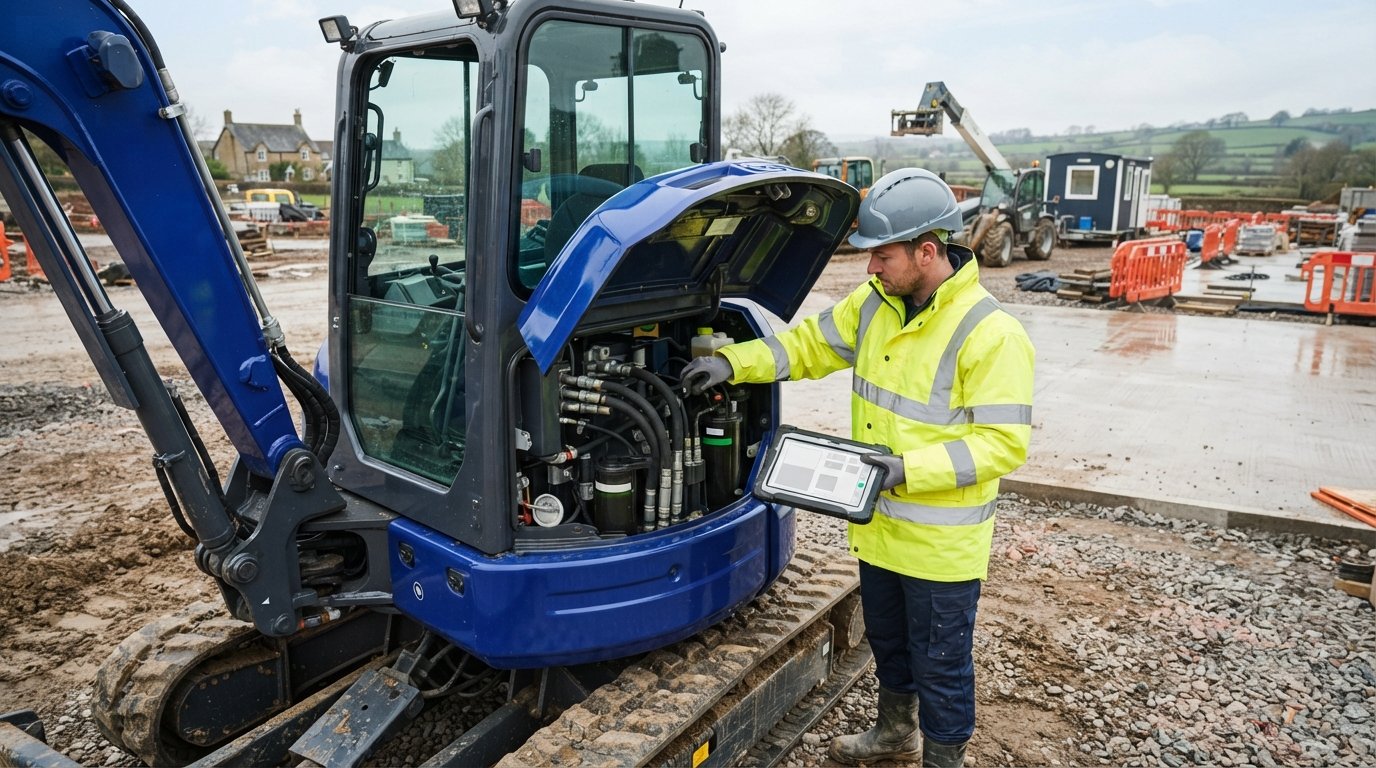
Pre-operation engine, hydraulic and electrical checks
Before digging, check the power systems and identify underground hazards. Work through these steps before moving the machine or lowering its bucket.
Check fuel, lubricant and coolantWith the mini digger parked securely, check engine oil, hydraulic fluid and coolant levels using the method in its manual. Low or contaminated fluid can affect engine performance or hydraulic function, so don’t start work until levels are correct. Look beneath the machine for fresh leaks, then inspect the fuel cap and surrounding area.Use the fuel specified for the machine. The mini digger described in the operating guidance runs on standard diesel, so confirm the fuel type before refuelling. Close the cap securely and clear any spills before starting. Keep checks specific to the model, as filler points and level indicators can differ between machines.
Locate underground services before digging. Identify buried cables, pipes and other obstacles in the planned excavation area. Use site plans, visible markings and available information about the ground before positioning the bucket. Check the full intended digging route, not just the starting point, as services can cross the work area. If their location is unclear, stop and resolve that uncertainty before breaking ground.Take particular care on construction and landscaping jobs where previous work may have altered the site. Marked services indicate areas that need careful excavation; don’t treat a clear surface as proof that nothing is buried below. Reassess if the excavation moves beyond its planned position or reveals unexpected material, ducting or pipework.
Inspect engine, hydraulic and electrical systemsInspect the engine bay and visible hydraulic components for leaks, loose parts or damage. Check hoses and connections for wear, and look for damaged electrical cables before starting. A leak near a hydraulic line or a cable with exposed conductors can affect machine function, so don’t ignore it or try to work around it.Check that the battery area, switches, lights and warning indicators appear intact. Turn the ignition to ON and wait 3-5 seconds before starting, allowing the fuel pump to prime. Watch the dashboard for warning lights and note any unusual sounds or smells after starting. Stop the engine if a warning remains or a fault appears.
Confirm the machine is ready to move. Check that the controls respond as expected and that no warning indicates an engine, hydraulic or electrical fault. Keep the bucket lowered until you’re ready to work, and make sure the area around the tracks is clear. In narrow spaces, confirm the planned route leaves room for the machine to travel without striking obstacles.Report any fault through the site’s process and keep the digger out of operation until it’s dealt with. A pre-start check is only useful if you act on what you find. Recheck fluid levels and visible systems if the machine develops a leak, loses power or displays a warning during the shift.
Safe digging and avoiding machine damage
Use a steady routine for access, digging and shutdown to protect yourself, nearby people and the excavator.
Enter and exit safelyUse the machine’s steps and handholds, keeping three points of contact as you climb in or out. Face the machine and avoid jumping down, especially when tracks or steps are muddy. Before moving, check the work area for people, including children and pets, then keep them outside a safety buffer of at least 3 meters.During digging, keep the tracks back from trench edges, where the ground may be weak and collapse. Never swing or position the bucket over people, even when it’s empty. If the excavator tips, stay seated and brace against the levers rather than trying to jump clear.
Use the seatbeltFasten the seatbelt before operating, then check that it sits securely across your body. A seatbelt helps keep you in the seat if the machine jolts or tips. Don’t operate with the belt unfastened or damaged; follow the machine’s instructions if its belt or rollover protective structure appears faulty.Keep the bucket load within the excavator’s capacity. Lifting too much can make the machine unstable, particularly when the arm is extended. Dig in sections the machine can handle comfortably at full bucket extension, and stop if the load or ground conditions make the excavator feel unsteady.Use controlled digging movements rather than forcing the bucket through difficult material. Set the bucket teeth at about 30° to the ground and the arm between 30° and 45° while digging. On a JCB 2.5-tonne mini digger, don’t use rotational force to rake soil or drive bucket teeth into the ground, as this can damage the machine or attachment.
Follow the shutdown procedureFinish the task by placing the bucket on the ground and parking on stable, level ground. Idle the engine for 2-3 minutes before shutdown to cool the engine and hydraulic system. Then follow the machine’s shutdown instructions, remove the key and leave the controls secure.Before leaving, check that the excavator is stable and won’t obstruct people or site travel. Don’t dig directly into large rocks on rough ground; use a suitable hydraulic breaker to break them first. Thick roots or hard clay can challenge a 3.5-tonne machine, so stay within its limits to avoid tipping or mechanical damage.
For projects that need a different machine or attachment, explore excavator hire to match the equipment to the work.
Rocket Rentals: Mini Digger Hire
Rocket Rentals Ltd offers Mini Digger Hire for projects where a compact excavator suits the work. If your plans call for a different machine, excavator hire and roller hire offer other options for site tasks. Choose equipment to suit the job's access, ground and working requirements so you can plan your next steps.
Consider the machine and any attachments needed for your project before arranging hire. Rocket Rentals Ltd also offers welfare unit hire for site welfare requirements, alongside its plant equipment.
Contact Rocket Rentals Ltd on 01453 51 95 51 to discuss your mini digger needs.
Plan your next dig with confidence
Make each project easier to manage by planning the work before the machine arrives. Consider the available space, ground conditions and where excavated material will go. A clear plan helps you decide how to approach the task and gives you time to address changes before they affect the work.
Build your operating routine around the machine’s manual and the demands of the site. Deliberate preparation makes it easier to apply what you’ve learned about how to operate a mini digger safely. Keep your attention on the work area and pause if conditions change or the machine behaves unexpectedly.
If you’re ready to plan equipment for an upcoming project, view Rocket Rentals’ plant hire options and take the next step at a pace that suits your job.
Frequently Asked Questions
What are the controls on a small digger?
A small digger usually has two travel levers and two joysticks. The levers move the tracks, while the joysticks operate the boom, arm and bucket. Pedals may also control travel or particular machine functions, depending on the model. Before starting, use the operator’s manual to identify each control and how it responds. Keep movements gentle at first, since the machine can react as soon as you move a control.
What training or licence is required to operate a mini digger in the UK?
You don’t need a driving licence to operate a mini digger on private land or a worksite, but you do need one to drive it on a public road. Operators on UK commercial sites or public highways need a CPCS card; operators may also hold an NPORS card. These competence cards are distinct from a driving licence. Practise the controls in a clear area before using the machine for work.
What pre-use checks should you make on a mini digger?
Before use, look for leaks, damaged cables, loose or broken parts and track problems. Check that the seatbelt and rollover protective structure are in good condition, and make sure the bucket and its pins are secure. Check engine oil, coolant and hydraulic fluid levels using the machine’s instructions. If you find a fault that could affect safe operation, stop and report it rather than carrying on.
How should you inspect a worksite and locate underground utilities before digging in the UK?
Review available site plans and ground markings, then walk the planned excavation area to identify visible signs of buried services, obstacles and previous work. Look for cable routes, pipework, inspection covers and changes in the surface. Treat uncertain locations as a reason to pause, not as permission to dig. Reassess if the excavation moves or exposes unexpected material, and keep the bucket clear until the route is understood.
How do you dig and manoeuvre safely on slopes and uneven ground?
Use firm, level ground for digging, with the tracks horizontal and the boom aligned with them. On a slope, travel straight rather than turning across it. Keep the bucket and load low when travelling downhill, and take care uphill because lost traction can increase the risk of tipping backwards. If the slope is greater than 15 degrees, level the ground before operating.
What are the main mini digger hazards and how can rollovers or crush injuries be prevented?
Key hazards include the machine overturning, people being struck by the bucket, crushing while turning and ground collapsing beside a trench. Keep people clear of the work area, never swing the bucket over anyone, and avoid placing tracks near trench edges. Don’t overload the bucket or work beyond the machine’s limits. If the excavator tips, stay in the seat and brace against the levers rather than jumping out.
What UK laws and HSE guidance apply to mini digger operation?
For practical site operation, follow the machine’s manual and the site’s safety procedures, including rules for operator competence, access, exclusion areas and excavation planning. Commercial-site and public-highway operators need a CPCS card, and operators may also hold an NPORS card. A valid driving licence is required to drive a mini digger on a public road. Keep the work area controlled and stop if hazards or ground conditions change.
How should you shut down, park and secure a mini digger after use?
Park on stable, level ground, lower the bucket and leave the machine in the position set out in its manual. Before switching off, idle the engine for 2-3 minutes to cool the engine and hydraulic system. Then follow the machine’s shutdown instructions, secure the controls and remove the key. Choose a parking position that doesn’t block site routes, access points or other equipment.
Comments