
Professional Machinery Hire Guide for Site Managers 2026
- Rocket Rentals
- Jul 31
- 12 min read
Could the autonomy of a self-drive fleet be the deciding factor between hitting your 2026 project milestones or falling behind schedule? Most site managers recognise that the real challenge isn't the build itself, but the friction caused by unreliable equipment and opaque hire agreements. When you're responsible for a busy site, you need machinery hire that functions as a seamless extension of your team, free from the distractions of unexpected downtime or hidden costs.
It's a common struggle to find specialised attachments or to decipher complex terms that threaten your project budget. We believe that maintaining a safe, productive site requires a dependable partner who prioritises transparency and technical readiness. This professional guide will help you master the complexities of plant procurement, providing the insights needed to select and manage self-drive machinery with absolute confidence. We will explore how to maximise project uptime, navigate the latest UK safety and welfare regulations, and ensure you retain full operational control from start to finish.
Table of Contents
What is Professional Machinery Hire and Why Does it Matter?
Professional machinery hire is the strategic procurement of heavy plant and site equipment designed specifically for industrial-scale construction and civil engineering projects. It represents a move away from the "one-size-fits-all" approach of general tool rental, focusing instead on high-performance machinery such as heavy excavators, telehandlers, and specialised attachments. In 2026, this model has become the standard for site managers who need to balance high operational standards with strict budgetary control.
The transition from equipment ownership to a rental-first strategy is driven by a need for agility. By opting for hire, you gain immediate access to the latest technological advancements in the various heavy equipment categories without the burden of capital expenditure. This includes machinery with enhanced telematics, superior fuel efficiency, and the most recent safety innovations. Partnering with a dedicated plant specialist rather than a general tool shop ensures that the equipment you receive is maintained by experts who understand the rigours of a professional site environment.
The Economic Case for Plant Hire in 2026
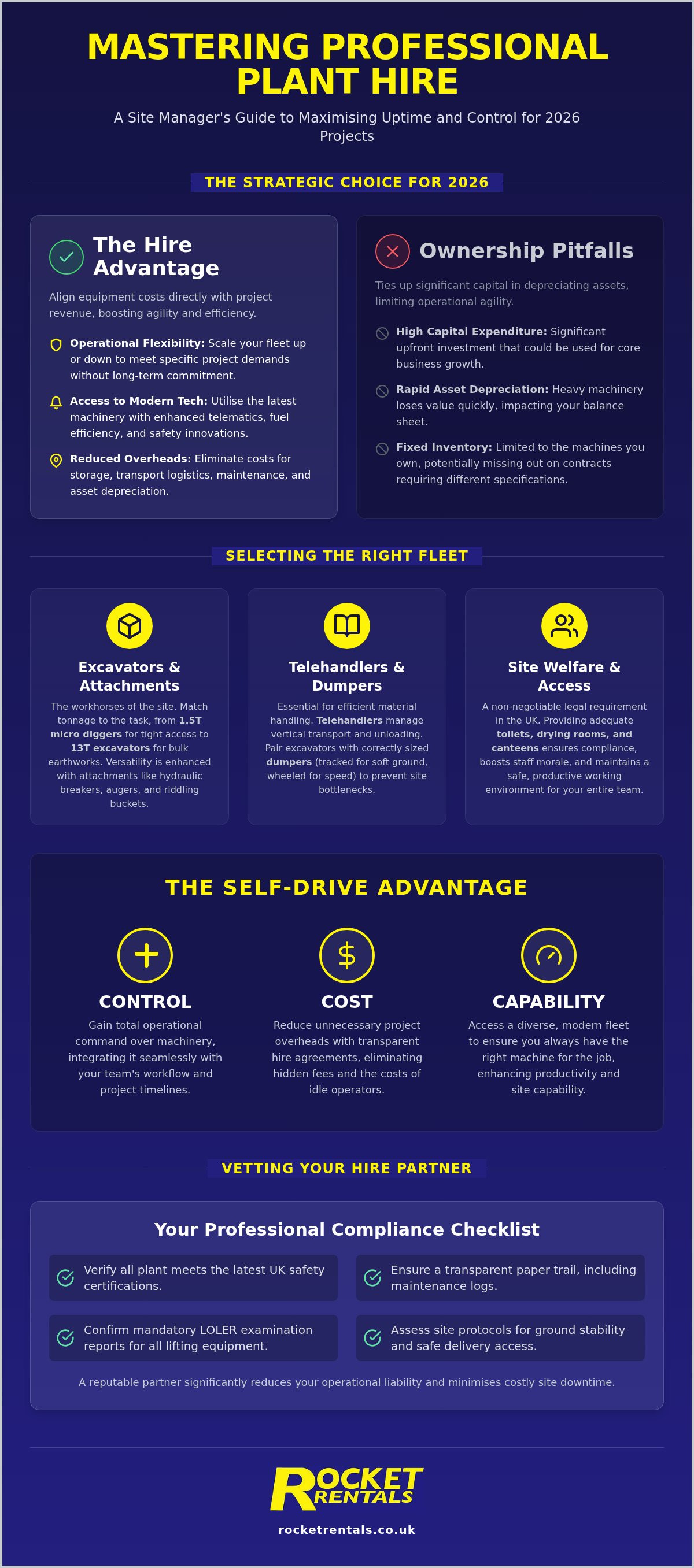
Maintaining a lean operation is essential when project timelines and material costs fluctuate. Machinery hire is a strategic procurement tool that enables modern contractors to align their equipment costs directly with project revenue. This approach eliminates the hidden expenses associated with ownership, such as secure long-term storage, transport logistics, and the rapid depreciation of heavy assets. To help budget for these logistical requirements, learn more about Silver Knight Haulage & Machineries Ltd and their comprehensive guide to heavy equipment transport costs. It allows businesses to bid for diverse contracts, knowing they can scale their fleet to meet specific task requirements without being tied to a fixed inventory of aging machines.
Meeting Regulatory and Safety Standards
Compliance is a non-negotiable aspect of modern site management. When you source from a professional specialist, you ensure that every piece of plant meets the latest UK safety certifications before it even reaches your site. A reputable hire partner provides a transparent paper trail, including up-to-date maintenance logs and mandatory LOLER examination reports for lifting equipment. This level of diligence significantly reduces your operational liability. It ensures that your operators are working with reliable, safe machinery that adheres to the strictest welfare and safety regulations, allowing you to focus on project delivery rather than paperwork.
Core Categories of Plant Machinery: Selecting the Right Fleet
Selecting the right fleet is a critical factor in maintaining project momentum. Professional machinery hire focuses on heavy plant that can withstand the rigours of a 2026 construction site, moving far beyond the scope of domestic tool rental. For site managers, the challenge lies in matching machine capabilities to specific site constraints whilst ensuring maximum operator productivity. A well-considered fleet ensures that every task, from initial groundworks to final lifting operations, is completed with precision and safety.
Excavators and Attachments: The Workhorses of the Site
Excavators are the foundation of most projects, but their effectiveness depends on matching tonnage to the task at hand. A 1.5 tonne micro digger is indispensable for tight access areas or internal demolition, whilst a 13 tonne excavator is required for bulk earthworks and heavy trenching. Versatility is further enhanced by specialised attachments. Using hydraulic breakers, augers, or riddling buckets can transform a standard machine into a multi-purpose tool, reducing the need for additional plant on site. For a deeper look at compact options, consult The Professional Guide to Mini Excavator Hire.
Telehandlers and Dumpers: Moving Materials Efficiently
Vertical material handling requires the precision of a telehandler. These machines are essential for unloading deliveries and transporting materials to elevated work areas. When organising site logistics, pairing the correct dumper with your excavator size is vital to prevent bottlenecks. You should select dumpers based on the terrain; tracked dumpers offer superior stability on soft or uneven ground, whereas wheeled options provide speed and agility on established haul roads. This coordination ensures that spoil and materials move across the site without delay.
Site Welfare and Access Solutions
Compliance with UK site regulations extends beyond the machinery performing the work. Providing adequate site welfare units, including toilets, drying rooms, and canteens, is a legal requirement that directly impacts staff morale and safety. Similarly, safe vertical access is paramount. Choosing scissor lift hire over traditional scaffolding often provides a more flexible and efficient solution for high-level installations. Adhering to rigorous safety standards, such as those outlined in OSHA safety protocols, helps maintain a secure working environment for everyone involved. For projects requiring zero-emission operation, Electric Scissor Lift Hire: Clean Access Solutions offers a modern alternative for indoor or sensitive environments. Exploring a professional plant fleet can help you identify the exact configuration needed for your next project.
The Self-Drive Advantage: Control, Cost, and Capability
The self-drive model, often referred to as "dry hire", provides site managers with the highest level of oversight. By securing machinery hire without a pre-assigned operator, you retain the ability to manage your workforce according to the immediate needs of the project. This approach is particularly favoured by contractors who employ their own CPCS or NPORS qualified staff. It removes the uncertainty of third-party availability and ensures that the person behind the controls is already integrated into your site’s safety culture and operational workflows. In a commercial environment, remember that a standard driving licence is never sufficient; operators must hold the specific certification for the equipment type they are using.
Relying on an in-house team for plant operation also enhances site security. You know exactly who is on your site and when, without having to vet new external operators for every machine delivery. This consistency builds a "safe pair of hands" environment where equipment is treated with respect and tasks are completed with a deep understanding of the specific site layout. It’s about more than just moving earth; it’s about maintaining a disciplined, predictable work environment.
Maximising Project Autonomy
Autonomy on a modern site means being able to adjust your schedule without seeking permission. If a concrete pour is delayed or a groundworks phase needs to extend into the evening, having the machine already on site allows your team to continue working. You aren't constrained by an external operator’s fixed hours or travel requirements. This allows for flexible project scheduling, potentially even 24/7 operations where local site limits and noise ordinances permit. Furthermore, consistent operator-to-machine pairings lead to higher productivity. When a team member is familiar with the specific cab layout and hydraulic response of a JCB or Kubota machine, they work faster and with greater precision.
Comparing Costs: Self-Drive vs. Operated Plant
Financial transparency is a significant driver in the shift toward self-drive solutions. When you opt for operated plant, the daily rate often conceals a variety of additional charges. These can include operator travel expenses, subsistence, and strict minimum-hour guarantees that apply even if site conditions prevent work. Self-drive rates are far more predictable, typically based on a straightforward daily or weekly fee. This clarity allows for more accurate project costing and protects your margins from the "hidden" inflation found in operated hire contracts. For a detailed breakdown of how to integrate these assets into your workflow, see our guide on Excavator Hire: The Professional’s Guide to Plant Machinery. By choosing self-drive, you're investing in your own team's capability whilst keeping a firm grip on the bottom line.
Operational Excellence: Site Preparation and Safety Protocols
Achieving operational excellence requires more than just high-spec machinery hire; it demands a meticulously prepared environment. Before any equipment arrives, a site manager must ensure the infrastructure can support the weight and dimensions of the incoming plant. Neglecting ground conditions or access constraints doesn't just cause delays; it creates significant safety risks. A proactive approach to site readiness ensures that once the machinery is off the trailer, it can begin work immediately without compromising the safety of the workforce or the integrity of the project schedule. For complex sites, securing professional transport planning from ML Traffic Engineers UK ensures your traffic management and access documentation are fully compliant with local planning requirements.
Ground stability is a primary concern. Heavy plant delivery vehicles and the machinery they carry require compacted, level surfaces to prevent overturning or sinking. You should identify any underground services or voids that could be compromised by heavy loads. By establishing clear, unobstructed access routes, you reduce the risk of collisions and ensure that delivery drivers can offload equipment safely and efficiently. This preparation is the foundation of a productive site.
Step-by-Step Site Readiness Checklist
Step 1: Verify access dimensions. Confirm that gate widths, turning circles, and overhead clearances are sufficient for large excavators and telehandlers.
Step 2: Establish parking and refuelling areas. Designate a secure, level hardstanding area for overnight parking and a dedicated refuelling station equipped with appropriate spill kits.
Step 3: Conduct a pre-start safety briefing. Ensure all operators and ground workers understand the RAMS (Risk Assessments and Method Statements) specific to the new machinery.
Once the equipment is on site, the focus shifts to daily maintenance and operator accountability. It's the site manager's duty to verify that every operator has completed a site-specific induction and that their CPCS or NPORS qualifications are valid for the specific machine. Daily checks on fuel, hydraulic fluids, and the integrity of safety pins are essential. These small, routine inspections prevent minor issues from escalating into major mechanical failures that cause project downtime.
Managing Plant Safety and Compliance whilst on Site
Maintaining safety in a dynamic environment requires strict discipline. Implementing robust exclusion zones around active machinery is vital to protect ground workers from slewing hazards or falling materials. Clear communication is equally important; operators and banksmen should use standardised hand signals or two-way radios to coordinate movements. Maintaining detailed daily plant inspection logs is a mandatory requirement for demonstrating HSE compliance and ensuring the continued safety of all site personnel. By following these protocols, you create a culture of safety that supports high operational standards. To ensure your project is supported by reliable equipment, view our full range of self-drive plant and start your next phase with confidence.
Partnering with Rocket Rentals for National Machinery Hire
Selecting a partner for machinery hire is a decision that impacts every facet of your project’s success. Since 1988, Rocket Rentals has positioned itself as a dependable specialist, focusing exclusively on high-quality self-drive equipment for the construction and industrial sectors. We understand that site managers don't just need machines; they need the assurance that those machines will arrive on time, in peak condition, and ready for work. Our national service model is built on this foundation of reliability and transparency, providing a "safe pair of hands" for contractors who value autonomy and operational excellence.
Our decades of industry experience allow us to offer more than just a fleet. We provide the technical support and informed advice necessary to navigate complex project requirements. Whether you're managing a tight urban site or a sprawling industrial development, our team works as a knowledgeable guide to ensure your plant procurement is as efficient as possible. This commitment to service is why we remain a preferred choice for professionals who require a partner that understands the high stakes of modern site management.
The Rocket Rentals Fleet: Quality You Can Trust
The strength of your site operations depends on the quality of your equipment. Our extensive fleet includes everything from 1.5-tonne mini diggers for precise trenching to high-reach telehandlers for complex lifting tasks. We also provide a comprehensive range of dumpers, rollers, and scissor lifts, ensuring you can source your entire fleet from a single, trusted provider. By focusing on modern, efficient machinery from leading manufacturers, we help you reduce fuel consumption and site emissions whilst maintaining peak productivity. For contractors looking to improve the efficiency of their own support vehicles, Naked Frog Vehicle Tuning provides specialist mobile engine remapping. To further increase machine versatility, we offer a wide array of specialised excavator attachments, allowing you to adapt your existing plant to meet specific task challenges without the need for additional machine hire.
How to Organise Your Next Machinery Hire
We’ve designed our hire process to be as straightforward and professional as the machinery we supply. Organising your next machinery hire begins with a simple trade account application, which provides you with a streamlined platform for managing your plant requirements. If you're unsure which machine configuration best suits your ground conditions or lift requirements, our experts are available to consult on your specific project needs. We prioritise clear communication regarding delivery and collection windows, ensuring that your machinery arrives exactly when it's needed to keep your project timeline on track. By combining the scale of a national provider with the personal touch of a dedicated service partner, we ensure that your site stays productive, compliant, and under your full control.
Securing Your Site’s Future with Professional Plant
Mastering the complexities of plant procurement is about more than just filling a slot in a project schedule. It's about choosing a machinery hire model that empowers your team and protects your bottom line. By prioritising the self-drive approach, you gain the operational flexibility needed to navigate the shifting demands of a 2026 construction site whilst ensuring total compliance with UK safety standards.
Success on site depends on the reliability of your equipment and the strength of your partnerships. We've seen how thorough site preparation and a focus on high-spec, well-maintained machinery can eliminate the friction of downtime. With decades of professional plant hire experience and an expertly maintained self-drive fleet, Rocket Rentals provides the "safe pair of hands" your project requires. From comprehensive site welfare units to specialised excavator attachments, we offer the complete solutions needed for modern industrial success.
Secure your project's success with professional machinery hire from Rocket Rentals and move forward with total confidence in your fleet. We look forward to supporting your next build.
Frequently Asked Questions
What is the difference between self-drive and operated machinery hire?
Self-drive hire provides you with the machine alone, whilst operated hire includes a driver provided by the hire company. We specialise in the self-drive model to give professional contractors total control over their project timelines and operator standards. This approach is ideal for sites with their own qualified personnel, as it eliminates the scheduling conflicts often associated with external operators.
Do I need a special licence to hire a mini digger for a professional site?
Operators on professional sites must hold a valid CPCS or NPORS card for the specific equipment type. A standard UK driving licence is insufficient for commercial machinery operation. Site managers have a legal duty to verify these qualifications during the site induction to ensure all machinery hire activities remain compliant with health and safety regulations.
What insurance do I need for plant and machinery hire?
You generally require "Hired-in Plant" insurance to cover the equipment against damage, loss, or theft whilst it is in your care. It's vital that your policy covers the full replacement value of the specific machinery you are hiring. Most commercial contractors include this in their standard business insurance, but you should always verify your coverage before the delivery date.
Can you provide specific attachments like breakers or augers with excavator hire?
We supply a comprehensive range of attachments including hydraulic breakers, augers, and various bucket types to enhance your excavator's capability. These tools allow a single machine to perform multiple specialised tasks, which can significantly reduce your overall project costs. Simply specify your requirements when booking to ensure the correct attachments are delivered with your plant.
How long can I hire plant machinery for on a single project?
Hire periods are highly flexible, ranging from short-term needs to several months depending on your project's requirements. We understand that construction timelines can shift, so we offer the ability to extend your hire period as the work progresses. This ensures you maintain maximum capital flexibility without being tied to equipment you no longer require on site.
What happens if a piece of hired machinery breaks down on my site?
In the unlikely event of a mechanical issue, you should notify our technical team immediately to arrange assistance. We maintain our fleet to rigorous standards to prevent downtime, but we recognise that technical faults can occasionally occur. We aim to provide a swift resolution to get your machinery back into operation as quickly as possible during our standard operational hours.
Are your welfare units compliant with current HSE site regulations?
Our welfare units are designed to meet all current HSE site regulations for professional construction projects. They include essential facilities such as toilets, canteen areas, and drying rooms to support your workforce's wellbeing. Using compliant units is a critical part of maintaining a professional site that adheres to the latest UK welfare legislation.
Do you offer national delivery for all plant and machinery categories?
We provide efficient delivery and collection services across our targeted regions to ensure your project stays on schedule. Our logistics team handles the transport of all plant categories, from compact mini diggers to large telehandlers. We always coordinate closely with site managers to confirm access routes and offloading zones are prepared before the delivery vehicle arrives.


Comments