
Professional Welfare Unit Hire: The Site Manager’s Guide to Compliance and Comfort
Did you know that a single failure to provide adequate site facilities resulted in a fine of over £15,000 for a UK developer in April 2026? Managing a construction site is a complex balancing act where regulatory compliance often feels like a moving target. You already know that keeping your team safe and comfortable is non-negotiable; however, the logistical headache of maintaining hygiene standards in remote locations or diverse site environments can be exhausting. When looking for reliable welfare unit hire, you need more than just a basic cabin. You require a partner that understands the strict rigours of Health and Safety Executive (HSE) standards and the importance of equipment readiness.
This guide will show you how high-specification welfare solutions can transform these regulatory challenges into a competitive advantage for your project. We'll explore the latest CDM 2015 requirements, the direct link between quality facilities and workforce productivity, and how to select the right towable or static units to ensure your site remains both legal and efficient. By the end of this article, you'll have a clear roadmap for maintaining a compliant, clean, and productive site environment that supports your team and protects your reputation.
Key Takeaways
Master the legal requirements of the CDM 2015 Regulations to ensure your site remains fully compliant with HSE standards and avoids costly penalties.
Identify whether a mobile or static solution best fits your project footprint and duration when arranging professional welfare unit hire Gloucester.
Discover how to implement a 'Zone' approach within your facilities to maintain high hygiene standards and optimise canteen efficiency for your team.
Streamline your site logistics by following a structured preparation guide for unit delivery and ensuring clear access for maintenance vehicles.
Understand the operational advantages of coordinating your welfare facilities alongside your plant hire to improve overall site productivity.
Table of Contents
Understanding Welfare Unit Hire Regulations and HSE Compliance
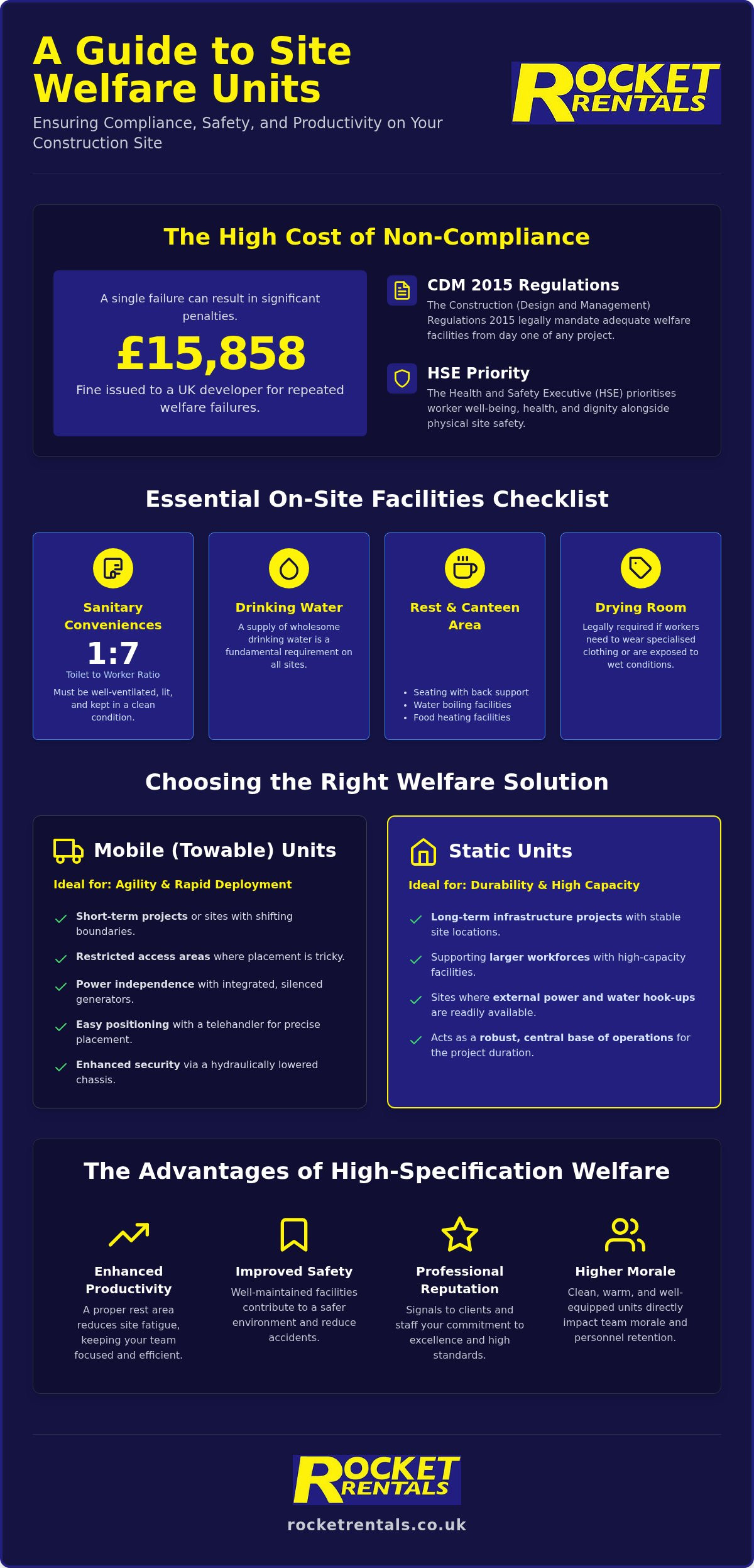
The Health and Safety Executive (HSE) defines site welfare as the provision of essential facilities that protect the health, safety, and well-being of every person on a construction project. This isn't merely a recommendation; it's a strict legal obligation. Under the Construction (Design and Management) Regulations 2015 (CDM 2015), principal contractors must ensure adequate facilities are available from the moment work begins. Failing to meet these Construction site safety standards carries heavy penalties. As recently as April 2026, a UK developer was fined £15,858 for repeated welfare failures, proving that the HSE prioritises worker dignity as much as physical safety. For site managers coordinating welfare unit hire Gloucester, understanding these nuances is the first step toward a compliant and productive site.
Key Components of Legal Site Welfare
What does a compliant site actually look like? At a minimum, you must provide sanitary conveniences that are ventilated, lit, and kept in a clean condition. The industry standard typically requires one toilet for every seven workers. Beyond basic sanitation, your team needs access to wholesome drinking water and a dedicated rest area. This canteen space must include seating with back support and facilities for boiling water and heating food. Additionally, if the work involves wearing specialised clothing or getting wet, you're legally required to provide a drying room. This space allows workers to change and dry their gear, preventing the health risks associated with damp clothing and ensuring they remain comfortable throughout their shift.
Duty of Care and Professional Standards
High-quality welfare facilities do more than just satisfy a checklist; they reflect your brand's professional reputation and commitment to your workforce. When a site provides clean, warm, and well-maintained units, it directly impacts morale and retention. Workers who have a proper place to recharge are less likely to suffer from site fatigue, which is a leading cause of accidents. Reliability in your equipment choices signals to your clients and staff that you're a "safe pair of hands" who values excellence. CDM 2015 compliance in the context of temporary site facilities means ensuring that every worker has immediate access to clean, heated, and fully equipped rest and hygiene stations throughout the project duration.
Mobile vs Static Welfare Units: Choosing the Right Solution
Selecting the appropriate facility depends on two primary factors: the duration of your project and the physical constraints of your site. For long-term infrastructure works, static cabins provide a robust, high-capacity base that can support larger workforces. However, for many contractors involved in groundworks or civil engineering, the flexibility of a towable solution is often the more strategic choice. When you arrange welfare unit hire Gloucester, you're looking for a setup that doesn't just sit there but actively supports the flow of your site. If your project boundaries shift as work progresses, a mobile unit allows you to maintain compliance without the logistical delay of a crane-in delivery.
Power independence is another critical consideration. Whilst static units often require external hook-ups or large external generators, many mobile units come equipped with integrated, silenced generators. This ensures you meet the HSE welfare regulations from the moment you arrive on site, even in remote Gloucestershire fields where grid access is non-existent. Our team can help you evaluate your site footprint to determine which power configuration offers the best balance of reliability and fuel efficiency.
The Versatility of Towable Mobile Units
Towable units are designed for agility. Their compact footprint makes them ideal for sites where space is at a premium or access is restricted. If a delivery vehicle can't reach the exact spot, a telehandler can be used to precisely position the unit. This ease of placement is a significant advantage for short-term projects that require rapid deployment. Security is also a built-in feature; once the unit is in place, it's lowered hydraulically until the chassis sits flush with the ground. This protects the wheels and makes the unit incredibly difficult for intruders to move, providing peace of mind during overnight periods.
Static Units for Long-Term Infrastructure
As a project scales, so do the requirements for your workforce. Static units are the preferred choice for sites with ten or more employees where the unit will remain in a fixed location for several months. These cabins offer higher capacity canteens and can be double-stacked to save ground space if necessary. While they require more planning for delivery, such as ensuring a clear path for a Hiab crane, they provide a sense of permanence and stability. Transitioning from mobile to static units is a common step when a project moves from initial groundworks into the main construction phase, ensuring your facilities always match the size of your team.
Essential Features of a High-Specification Welfare Unit
A high-specification welfare unit is defined by more than just its external dimensions; it's about the internal configuration and how it supports your team's daily routine. We advocate for a "Zone" approach to unit organisation. This method divides the internal space into distinct functional areas: the canteen, the sanitation zone, and the drying room. By clearly separating these spaces, you significantly improve hygiene standards and prevent the spread of site debris into rest areas. For contractors prioritising welfare unit hire Gloucester, selecting a unit with a logical, zoned layout ensures that facilities remain easy to maintain even during the busiest phases of a project.
The Canteen and Rest Area
The canteen serves as the primary hub for your workforce to recharge. To meet HSE construction welfare regulations, this space must be warm, well-ventilated, and equipped with facilities to heat food and boil water. It's not enough to provide a simple bench; seating should include back support to allow for genuine rest. Modern units now integrate features that reflect the needs of today's workforce, such as USB charging points for phones and high-efficiency LED lighting. Effective ventilation is particularly important here to manage the condensation and odours often associated with multiple microwaves and kettles running simultaneously. When the whole team can sit together in a comfortable, lit environment, it fosters better communication and team morale.
Sanitation and Hygiene Facilities
Maintaining hygiene in remote or temporary locations requires robust systems. High-specification units typically offer a choice between chemical toilets or mains-connected systems, depending on your site's infrastructure. Regardless of the waste system, the provision of hot water for hand washing is a non-negotiable requirement. Units should be fitted with non-slip flooring and easy-clean surfaces that can be quickly wiped down at the end of each day. Odour control is another critical factor; dedicated ventilation in the toilet area ensures that the rest of the unit remains a pleasant environment. These small details, from the quality of the flooring to the reliability of the water heater, are what distinguish a professional-grade facility from a basic alternative.
The drying room is perhaps the most underrated feature in the British climate. A dedicated space for hanging wet coats and boots prevents dampness from entering the canteen area. This separate, heated zone ensures that workers can return to their shifts in dry gear, which is essential for both comfort and health. By investing in these specific features, you aren't just ticking a compliance box; you're creating a professional workspace that respects your team's needs.
Planning Your Site Logistics: Placement and Maintenance
Efficient site management relies on foresight and meticulous preparation. When you arrange welfare unit hire Gloucester, the goal is to integrate the facility into your site workflow without creating bottlenecks. This process begins with a thorough assessment of your site's topography and access points. A well-placed unit saves time for your workforce and ensures that essential service vehicles can carry out their duties without disrupting the main construction schedule. Before the unit arrives, you should identify a dedicated area that balances convenience for the crew with the safety requirements of a busy working environment.
Strategic Unit Placement
Finding the right spot for your welfare unit requires a careful balance. It needs to be close enough to the work zone to minimise downtime, yet sufficiently removed from the path of heavy plant machinery to avoid accidents. You must also consider the needs of external contractors; for instance, waste removal tankers require clear, unobstructed access to the unit's tanks. Ensuring the ground is perfectly level and compacted is essential for the towable unit's hydraulic stability and to prevent structural strain during deployment. If the ground is uneven, you risk compromising the door seals and internal drainage systems, which can lead to long-term maintenance issues.
Ongoing Maintenance and Servicing
Hygiene standards shouldn't slip once the unit is in place. Site managers should establish a clear daily cleaning protocol to ensure that surfaces are sanitised and rest areas remain welcoming. This isn't just about appearances; it's a fundamental part of your duty of care to the team. You should also monitor the fuel levels of integrated generators regularly. Running out of fuel doesn't just mean a loss of power; it can lead to airlocks in the system that require a technician to resolve, causing unnecessary downtime. During the colder months, winterisation becomes a priority. This involves checking that heaters are functioning correctly and that tanks are protected from frost to prevent pipes from cracking.
Reliable facilities are the backbone of a productive site. By treating placement and maintenance as a priority rather than an afterthought, you ensure your project stays on track and your team remains focused. If you're ready to secure high-specification facilities for your next project, request a quote for your site welfare today to see how we can support your requirements.
Why Rocket Rentals is the Dependable Partner for Site Welfare
Rocket Rentals Ltd has been a staple of the UK construction landscape since 1988. With nearly four decades of industry expertise, we've built a reputation as a "safe pair of hands" for contractors who value reliability over hype. When you choose us for welfare unit hire Gloucester, you're partnering with a team that understands the logistical pressures of a modern site. We know that your project's success depends on every piece of equipment being ready to work from the moment it's delivered. Our commitment to excellence isn't just a corporate slogan; it's a standard we've maintained for generations.
One of the primary advantages of working with us is the synergy we provide across our entire fleet. We don't just supply cabins; we offer a complete site solution. By coordinating your welfare facilities alongside your mini excavator hire, you can streamline your entire procurement process. This integrated approach ensures that your site preparation and worker facilities arrive in tandem, allowing you to hit the ground running without the headache of managing multiple suppliers and delivery schedules.
A Comprehensive Plant Hire Solution
As self-drive specialists, we empower site managers to take full control of their logistics. Our fleet is comprised of modern, high-specification units that exceed current UK standards for safety and comfort. We take immense pride in our maintenance regime; every unit undergoes a rigorous inspection before it leaves our yard. This ensures that when your welfare unit hire Gloucester arrives, it is clean, fully fuelled, and ready for immediate use. Managing all your site equipment through a single trusted partner also simplifies your administration, reducing the burden of paperwork and allowing you to focus on the build itself.
Committed to Site Safety and Success
Our approach is characterised by a quiet confidence. We don't believe in aggressive sales tactics; instead, we let the quality of our equipment and the depth of our knowledge speak for itself. Whether you're managing a small groundworks project or a major infrastructure development, we provide the same level of care and attention to detail. We help you choose the right capacity for your specific workforce, ensuring you're never under-equipped or over-paying for space you don't need. If you're looking for a dependable partner to support your next project, contact Rocket Rentals Ltd to discuss your site welfare requirements today.
Elevating Site Standards for Long-Term Success
Providing professional site welfare isn't just about meeting a legal checklist; it's about fostering a productive environment where your team feels valued. We've explored how the right "Zone" approach and choosing between mobile and static units can streamline site logistics whilst ensuring full CDM 2015 compliance. When your facilities are organised and well-maintained, your workforce can focus entirely on the task at hand, knowing their health and dignity are prioritised.
When you choose welfare unit hire Gloucester from a provider with decades of site expertise, you gain the peace of mind that comes with a "safe pair of hands." As independent specialists since 1988, we've refined our fleet to ensure every unit arrives ready for work, perfectly complementing our comprehensive self-drive plant range. This commitment to quality ensures your project remains both legal and efficient, regardless of the site's complexity or location.
Ready to upgrade your project's facilities? Secure your site compliance with professional welfare unit hire from Rocket Rentals and experience the difference that high-specification equipment makes to your daily operations. We're here to help you build a safer, more efficient future for your workforce.
Frequently Asked Questions
What are the minimum welfare requirements for a small construction site?
Every site must provide access to toilets, washing facilities with hot and cold running water, soap, and a means of drying hands. You also need a supply of wholesome drinking water and a dedicated rest area. This canteen space must include seating with back support and facilities for heating food and boiling water. These standards apply from the first day of work, regardless of the project's size or duration.
How often should site welfare units be cleaned and serviced?
Daily cleaning of surfaces and rest areas is essential to maintain hygiene and is typically managed by the site team. For professional waste removal and water replenishment, a weekly service is the industry standard for most units in regular use. If your workforce is particularly large or the site is exceptionally active, you may need to increase the frequency of professional servicing to keep the facilities compliant and pleasant.
Do I need a mains water connection for a mobile welfare unit?
You don't need a mains connection for most mobile units as they are equipped with internal fresh water and waste tanks. This makes them perfect for the early stages of a project or for sites in remote Gloucestershire fields where utilities aren't yet available. When you arrange welfare unit hire Gloucester, we supply fully self-contained units that only require regular servicing to replenish water levels and manage waste tanks.
Can I move a towable welfare unit around the site myself?
You can move a towable unit using a suitable vehicle or plant machinery, provided the terrain is safe and stable. It's vital to ensure the hydraulic system has fully raised the unit and all safety locks are engaged before transit. Whilst these units are designed for agility, we recommend planning your placement carefully to minimise unnecessary movement, as frequent repositioning can lead to ground compaction issues or accidental damage.
What size welfare unit do I need for a team of ten people?
A 16ft welfare unit is the recommended choice for a team of ten people. This size provides sufficient canteen seating for the whole team to take breaks simultaneously, alongside adequate sanitation and drying room space. Choosing the correct capacity prevents overcrowding and ensures that hygiene standards are easier to maintain throughout the working day, which is a key factor in keeping your workforce comfortable and productive.
Is hot water mandatory in construction site toilets?
Yes, the provision of hot or warm running water for hand washing is a mandatory requirement under HSE regulations. It must be available in the immediate vicinity of every toilet and changing area to ensure proper hygiene. Our units are fitted with integrated water heaters to help you meet these legal obligations from day one. Cold water alone isn't considered sufficient for workers who may be handling hazardous materials or site debris.
What happens if my site welfare unit generator runs out of fuel?
Running out of fuel will result in an immediate loss of lighting, heating, and hot water, which can compromise your site's compliance. Beyond the loss of facilities, running a diesel generator to empty can pull air into the fuel lines. This often requires a technician to bleed the system before it can restart, leading to avoidable downtime and service costs. We suggest checking fuel levels daily as part of your morning site routine.
How do I secure a mobile welfare unit against theft overnight?
The most effective way to secure a mobile unit is to lower the chassis hydraulically until it sits flush with the ground. This grounded position hides the wheels and makes the unit incredibly difficult to tow away without specialist equipment. You should also ensure that all high-security doors and window shutters are locked at the end of every shift. This configuration provides a robust deterrent against opportunistic theft, even on remote or urban sites.


Comments