
The Ultimate Guide to Micro Digger Hire for Restricted Access Projects
Updated: Jun 25
Can a machine capable of passing through a standard 750mm garden gate truly deliver the hydraulic force required for a professional groundwork project? Many contractors and homeowners worry that opting for micro digger hire means compromising on power to gain accessibility. It's a valid concern, particularly when you're facing the dual challenge of protecting existing structures and meeting strict project timelines.
We understand that precision is just as important as performance in restricted environments. This guide will demonstrate how professional micro digger hire provides a robust solution for high-stakes sites where space is at a premium. You'll learn how to confirm the exact specifications for narrow access, ensure your chosen machine has the necessary digging depth, and identify a reliable self-drive partner who prioritises safety and equipment maintenance. We'll provide the technical clarity you need to manage your site effectively without the risk of costly delays or accidental damage to your property.
Table of Contents
Understanding the Role of Micro Diggers in Modern Groundworks
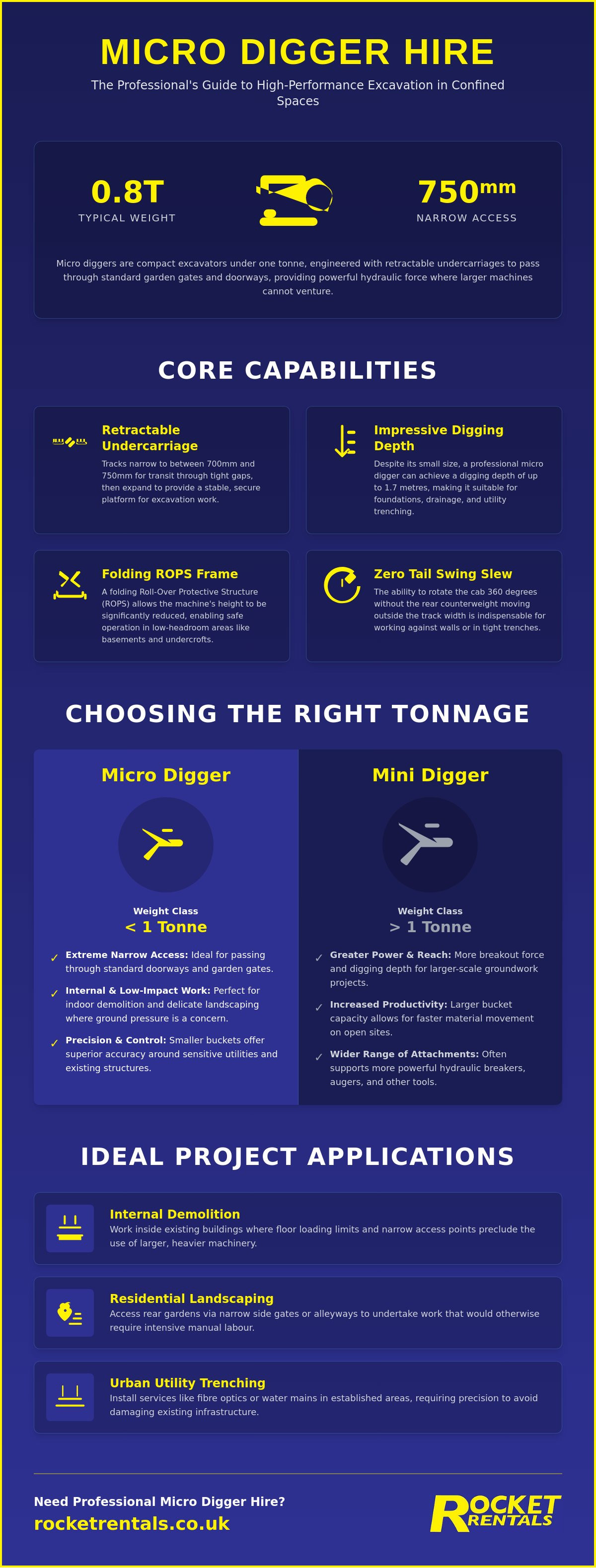
The modern construction site is changing, with space often becoming the primary constraint for groundworks contractors. A micro digger is defined as a highly compact excavator, typically weighing less than one tonne. These machines are engineered specifically for environments where a standard mini digger simply cannot venture. Their most defining feature is a retractable undercarriage. This allows the tracks to narrow to approximately 700mm to 750mm for transit through doorways, only to be widened again once the machine is in position to ensure stability during excavation.
The development of the compact excavator has been driven by the need for high-performance machinery in increasingly confined urban environments. As we look toward 2026, the evolution of hydraulic power has allowed these sub-1-tonne machines to perform tasks that previously required much larger plant. For many professionals, micro digger hire has moved from being a niche requirement to a core component of their fleet strategy. This is particularly evident on brownfield sites and urban infill projects where existing structures must be preserved whilst new foundations or utilities are installed.
Project managers are increasingly turning to self-drive options to maintain tighter control over their schedules and overheads. By integrating micro digger hire into their own operations, they eliminate the logistical headache of coordinating external operators. It provides the flexibility to pause or accelerate work as site conditions dictate, ensuring that the machine is only on-site and costing money when it is actively contributing to the project's progress.
When is a Micro Digger Necessary?
Internal Demolition: When working inside existing buildings, floor loading limits and narrow access points often preclude larger machinery. A micro digger provides the necessary breakout force without risking structural damage.
Residential Landscaping: Many modern properties feature side gates or alleyways under 800mm wide. These machines can track through these gaps to reach rear gardens that would otherwise require manual digging.
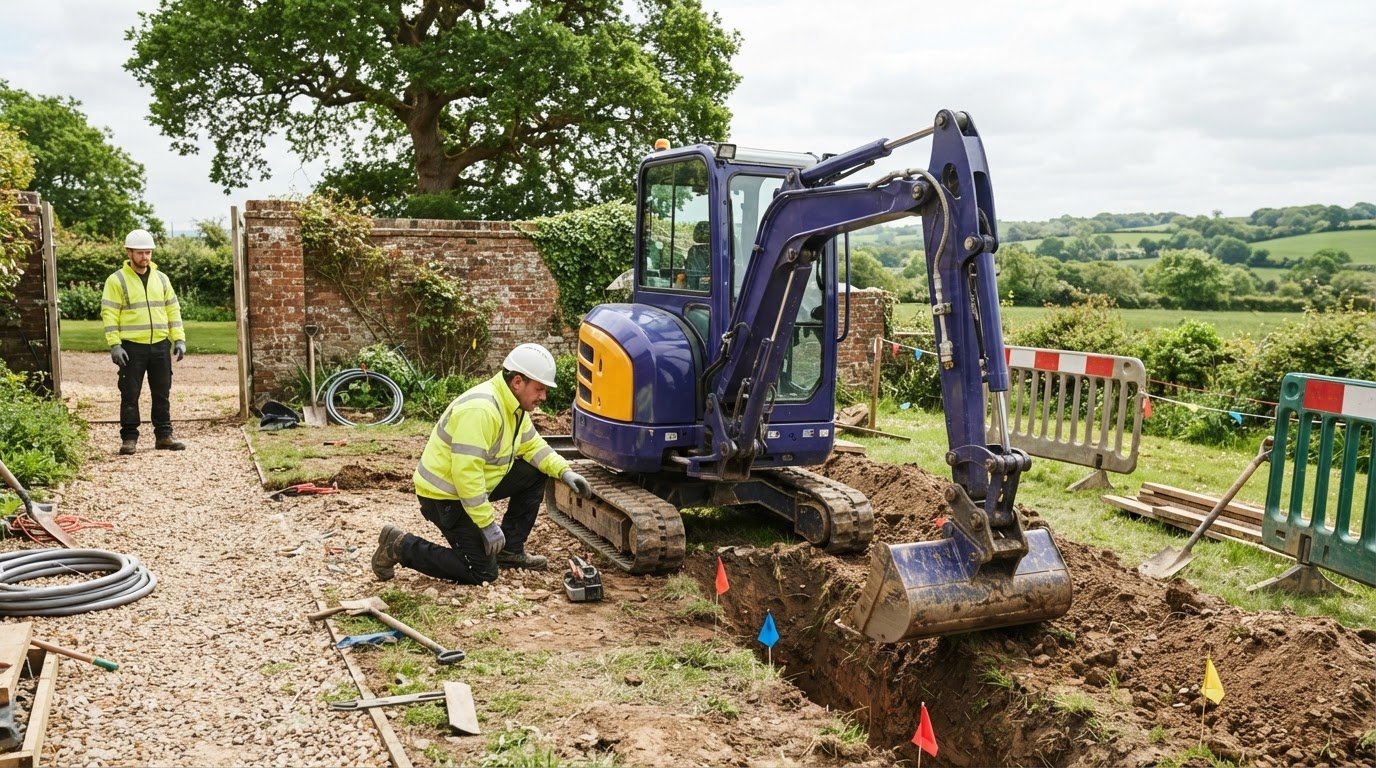
Utility Trenching: Installing fibre optics or water mains in established residential areas requires precision to avoid disrupting existing traffic or damaging nearby services.
Often, these groundworks are the first stage in creating a more functional outdoor living space. If your project involves a new outbuilding, you might want to discover Mighty Oak Construction to see how they design and build bespoke garden rooms and home gyms in restricted-access areas.
The Power-to-Size Ratio
Don't be misled by the small footprint of a 0.8t machine. Modern engineering ensures these units deliver a surprising amount of breakout force at the bucket teeth. This capability allows them to tackle compacted soils and even light concrete with ease. Hydraulic efficiency in modern micro excavators is achieved through high-performance gear pumps that maintain consistent flow rates even under significant load, ensuring that the arm and bucket respond with precision. This technical refinement means that smaller buckets actually improve accuracy in delicate groundworks, allowing operators to work around sensitive utility lines with a level of control that larger machines cannot match.
Key Features of Professional-Grade Micro Excavators
Professional-grade micro excavators are defined by more than just their compact dimensions. They represent a sophisticated balance of engineering that prioritises accessibility without sacrificing the stability or safety of the operator. For many site managers, the decision to opt for micro digger hire hinges on specific technical features that allow for operation in environments where a traditional machine would remain immobile. These machines are not merely scaled-down versions of larger plant; they are purpose-built for high-stakes, restricted-access groundworks.
Safety remains paramount, even in the tightest corners. Folding Roll-Over Protective Structures (ROPS) allow these machines to operate under low-headroom conditions, such as basements, undercrofts, or interior renovation sites. When the ROPS frame is folded, the machine's overall height is significantly reduced, yet it maintains its full digging capability. This is complemented by a 360-degree slew. In a confined trench or against a boundary wall, the ability to rotate the upper structure completely without moving the tracks is indispensable. It allows for soil to be loaded into a muck-away skip or dumper positioned directly behind the machine, minimising the risk of collision with existing structures.
Navigating Narrow Gaps with Retractable Tracks
The primary innovation found in modern micro plant is the retractable undercarriage. In transit mode, the tracks retract to between 700mm and 750mm. This is narrow enough to pass through a standard internal doorway or a domestic side gate with ease. Once the machine has reached the working area, the operator can hydraulically expand the tracks to 850mm or wider. This expansion is critical for safe operation. It provides the necessary lateral stability to prevent tipping when lifting loads at full reach or working on uneven ground. Modern machines allow this adjustment to be made whilst tracking slowly, ensuring a seamless transition from the access route to the dig site. To preserve the integrity of finished surfaces, such as block paving or interior flooring, we recommend using ground protection mats during the transit phase.
Hydraulic Versatility and Attachments
Beyond simple excavation, these machines serve as versatile power packs for a range of tasks. High-flow hydraulic circuits enable the use of specialised excavator attachments, such as hydraulic breakers for internal concrete removal or augers for precise post-hole digging in garden corners. When working indoors or in densely populated residential areas, the latest Stage V compliant engines ensure that fuel efficiency is maximised whilst exhaust emissions are kept to a minimum. Adhering to rigorous safety standards, including references like OSHA's excavation safety requirements alongside UK HSE guidelines, ensures that even the smallest machine is operated with the highest level of professional care. If you are planning a project with challenging access, exploring a modern excavator hire fleet can provide the technical solution you need.
Micro vs. Mini Digger Hire: Choosing the Right Tonnage
Selecting the correct machine for your project involves more than just checking the width of a side gate. Whilst the 0.8-tonne micro is the undisputed champion of restricted access, larger projects often benefit from the increased breakout force and reach of a 1.5-tonne to 3-tonne machine. This decision represents a classic "Access vs Productivity" trade-off. A micro digger can enter a site through a standard door, but its smaller bucket and shorter arm mean moving large volumes of spoil will take longer. If the site entrance allows for a width of one metre or more, a mini digger may be the more efficient choice for bulk excavation.
Digging depth is another critical factor. Most professional-grade micro excavators are designed to reach depths between 1.5m and 1.7m. This is usually sufficient for residential foundations, utility trenches, or garden drainage. However, if your project requires deeper excavations or the lifting of heavy materials like concrete lintels, you may find the stability of a larger machine necessary. Weight limits also play a role; micro machines exert very low ground pressure, making them ideal for working on sensitive surfaces or suspended slabs where a 3-tonne machine would pose a structural risk.
Tonnage Comparison Table
To help you decide between a mini or micro digger hire, we have outlined the typical specifications for the most common hire sizes below. These figures are based on standard industry configurations and may vary slightly by manufacturer.
If your site allows for a wider entrance and your project demands higher spoil removal rates, our guide to mini excavator hire provides a comprehensive look at larger machine options.
Transport and Logistics
One significant advantage of micro digger hire is the simplified logistics. A machine weighing less than one tonne can be easily towed on a standard plant trailer by most 4x4s or transit vans, provided the driver holds the appropriate licence categories. This makes it an excellent option for multi-day projects in residential zones where large delivery HGVs might struggle to navigate narrow streets or face parking restrictions. Choosing a self-drive partner ensures you have the machine ready to work the moment your team arrives on site, offering a better return on investment than waiting for scheduled drop-offs.
Operational Requirements for Self-Drive Micro Digger Hire
Success on a restricted-access site depends as much on preparation as it does on the machinery itself. Whilst the physical footprint of the machine is small, the operational responsibilities remain significant. For any professional contractor, the process begins long before the machine arrives on-site. Professional micro digger hire requires a proactive approach to site safety, ensuring that every operator understands the specific nuances of handling compact plant in high-stakes environments. This starts with a thorough site assessment to identify underground hazards.
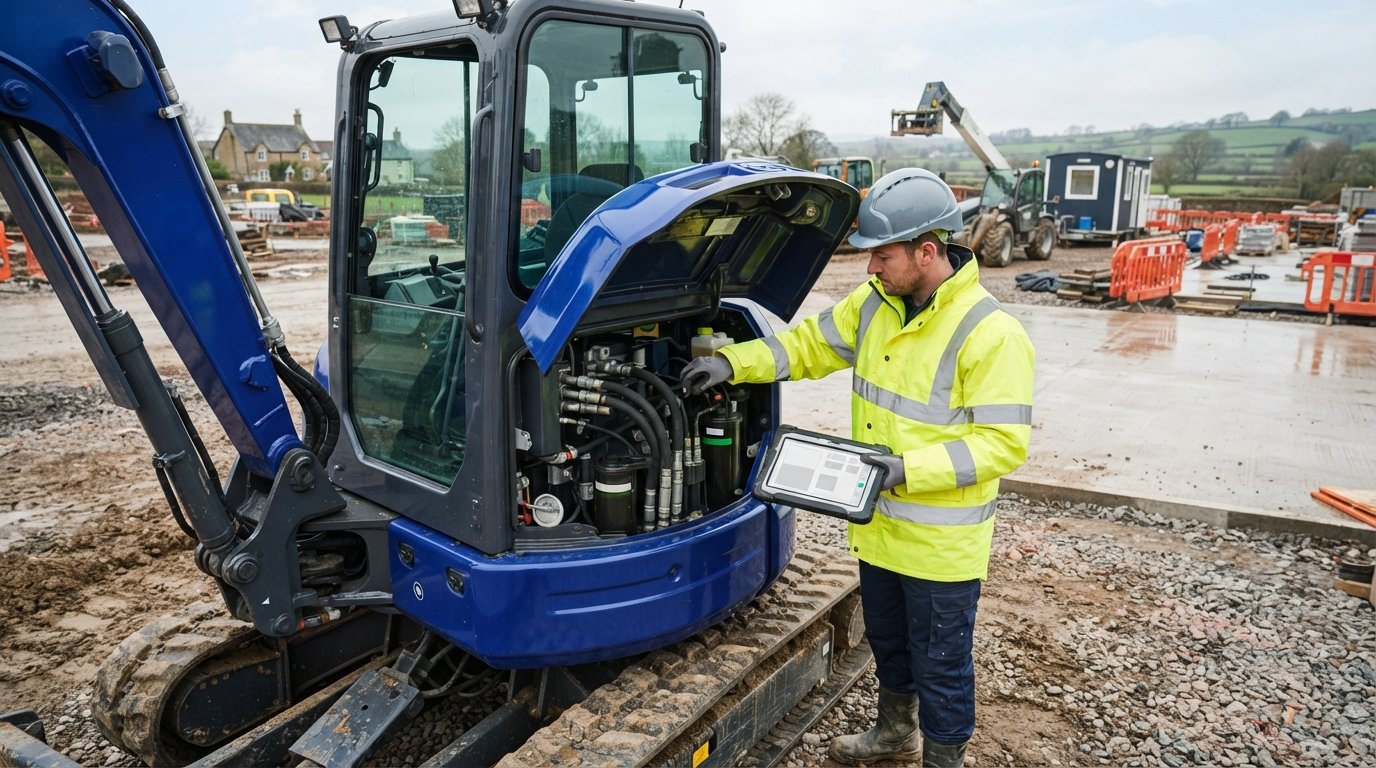
Before the tracks even touch the ground, utility mapping is essential. Striking a buried cable or water main in a confined rear garden or basement can be catastrophic, both for the project timeline and site safety. We recommend using a Cable Avoidance Tool (CAT) and Signal Generator (Genny) to verify the location of all services. Beyond utility checks, daily maintenance remains a non-negotiable part of the self-drive experience. Checking hydraulic fluid levels, inspecting tracks for debris, and ensuring all grease points are serviced will prevent unnecessary downtime and keep the project moving at a steady pace.
Safety Protocols in Restricted Spaces
Operating in tight alleys or internal rooms presents unique hazards that don't exist on open sites. If you're using a micro digger for basement excavations or internal demolition, managing exhaust fumes is a primary concern. Adequate ventilation or the use of exhaust scrubbers may be required to maintain air quality. In narrow side passages, the operator's visibility is often limited. Establishing clear exclusion zones and using a dedicated spotter ensures that the machine can manoeuvre without risking injury to other site personnel or damaging the building's fabric. Modern machines are equipped with a "Dead Man’s Switch" or seat-actuated safety levers; these features ensure that the hydraulics only become active when the operator is in a safe, controlled position.
Insurance and Liability
Protecting your business against unforeseen events is a critical part of the hire process. Most professional plant hire is conducted under the Construction Plant-hire Association (CPA) model conditions. These terms clearly define the hirer's responsibility for the machine from the moment it's delivered until it's collected. Standard Hired-in Plant Insurance is essential for professional contractors to cover the cost of theft or accidental damage whilst the machine is under their care. It's a common misconception that standard public liability insurance covers the plant itself; it usually doesn't. We pride ourselves on providing transparent hire agreements that help you understand your liabilities from the outset. If you're ready to secure a machine for your next project, you can book your excavator hire with confidence, knowing you're supported by a dependable partner.
Why Rocket Rentals is the Preferred Partner for Plant Hire
Choosing a plant hire partner is a decision that impacts your project's bottom line and safety record. At Rocket Rentals Ltd, we operate with a sense of quiet confidence, positioning ourselves as a dependable extension of your own team. Our "Safe Pair of Hands" philosophy isn't just a slogan; it's a commitment to professional reliability that prioritises your site's success over cheap shortcuts. When you invest in micro digger hire through us, you're gaining more than just a piece of machinery. You're gaining the peace of mind that comes from working with a partner who understands the high stakes of professional groundworks.
Reliability is built on the quality of the fleet. We maintain a modern inventory of micro excavators, ensuring that every machine represents the latest in hydraulic efficiency and safety engineering. It's about readiness. We understand that delays on-site are costly, which is why we focus on proactive maintenance and clear communication. Our team consists of seasoned industry veterans who have seen the challenges of restricted-access projects firsthand. This experience allows us to provide helpful, technical advice that goes beyond a simple transaction, helping you navigate the complexities of your specific site.
Quality and Maintenance Standards
Every machine in our fleet undergoes a rigorous multi-point inspection before it's cleared for hire. We don't just check the mechanics; we ensure every safety feature, from the folding ROPS to the track retraction system, is in perfect working order. We choose equipment from premium manufacturers known for their durability and precision. This ensures that when a machine arrives at your site, it's clean, fully fuelled, and ready to work. This meticulous approach to maintenance reduces the risk of mechanical failure, allowing your project to proceed without the frustration of unexpected downtime. We believe that professional-grade work requires professional-grade tools, maintained to the highest possible standard.
Partnering for Project Success
We understand that selecting the right machine for a complex site can be challenging. Our experts are available to assist with machinery selection, ensuring your chosen excavator has the reach and power required for your specific task. Whilst we are a local business at heart, our national delivery capabilities mean we can support your projects wherever they take you. Whether you're managing a short-term residential renovation or a long-term civil engineering contract, our micro digger hire solutions are designed to be flexible and cost-effective. We pride ourselves on our heritage of excellence and our focus on modern efficiency. You can view our micro digger range and request a quote today to see how we can support your next restricted-access project.
Securing Success for Your Next Restricted Access Project
Navigating the complexities of tight access groundworks requires more than just compact machinery; it demands a strategic approach to site safety and equipment selection. By understanding the technical capabilities of a sub-1-tonne machine, from its retractable undercarriage to its surprising hydraulic breakout force, you can transform a challenging site into a manageable workspace. Whether you're trenching in a narrow residential alley or performing internal demolition, the right plant ensures your project stays on schedule without risking structural damage.
Rocket Rentals has served as an independent plant hire specialist since 1988, providing the expertise and equipment needed for high-stakes environments. As a CPA member, we offer transparent hire terms and maintain a modern fleet featuring the latest safety technology to ensure you remain in a safe pair of hands. Our commitment to excellence means your machinery arrives ready to work, allowing you to focus on the project at hand with complete peace of mind.
Explore our professional micro digger hire options at Rocket Rentals and find the precision tools your project deserves. We look forward to supporting your next successful excavation.
Frequently Asked Questions
How wide is a micro digger and will it fit through a standard door?
A micro digger typically features a retractable undercarriage that narrows to between 700mm and 750mm. This engineering allows the machine to pass through a standard UK doorway or a narrow garden gate with ease. Once through the opening, the tracks can be expanded back to approximately 860mm to ensure the necessary stability for safe excavation.
Do I need a special licence for self-drive micro digger hire?
You don't require a specific operator's licence to use a micro digger on private land. However, for commercial construction sites, employers typically require proof of competence such as a CPCS or NPORS certification. If you intend to operate the machine on a public highway, a valid UK driving licence is mandatory to comply with road traffic regulations.
What is the maximum digging depth of a 0.8-tonne micro excavator?
A standard 0.8-tonne micro excavator provides a maximum digging depth of approximately 1.5 metres to 1.7 metres. This reach is specifically designed to accommodate residential foundations, utility trenches, and garden drainage systems. For projects requiring greater depth, you may need to consider a 1.5-tonne mini excavator instead.
Can I use a micro digger for internal demolition work?
Micro diggers are exceptionally well-suited for internal demolition projects due to their compact footprint and low ground pressure. Their size allows them to operate on suspended slabs where heavier machinery would exceed weight limits. When working indoors, it's vital to ensure adequate ventilation to manage exhaust emissions and maintain a safe working environment for all personnel.
What insurance do I need for hiring a micro digger?
Professional micro digger hire requires Hired-in Plant Insurance to protect against theft or accidental damage whilst the machine is on your site. Standard public liability policies often exclude the plant itself. We operate under CPA model conditions, which clearly outline the hirer's responsibility for the equipment from the point of delivery until collection is completed.
Are micro diggers powerful enough to dig through heavy clay?
Modern micro excavators deliver significant breakout force, making them capable of digging through heavy UK clay and compacted soils. Whilst they lack the bulk of larger machines, their high-performance hydraulic pumps ensure they can penetrate tough ground conditions effectively. Using a smaller, toothed bucket can further improve digging efficiency in particularly stubborn or heavy clay.
How is a micro digger delivered to my site?
We deliver micro diggers using specialised plant trailers towed by a 4x4 or a suitable commercial van. This delivery method is ideal for residential areas where large HGVs might face access restrictions or weight limits. The compact nature of the machine and trailer ensures we can reach your site even if access is limited to narrow lanes or cul-de-sacs.
Can I hire attachments like breakers for a micro digger?
Yes, you can hire a variety of micro digger hire attachments to increase the versatility of the machine. Hydraulic breakers are frequently used for breaking up internal concrete floors, whilst augers are ideal for drilling post holes in restricted garden spaces. These attachments connect directly to the machine's auxiliary hydraulic circuit, providing professional-grade power for specialised tasks.
Comments