
2.5 Ton Mini Digger Hire: The Professional Buying & Rates Guide for 2026
- Rocket Rentals
- Jul 12
- 12 min read
Why do so many groundworks projects stall between the limitations of a 1.5-tonne machine and the bulk of a 3-tonne excavator? It's a common frustration for contractors who need serious breakout force but can't risk damaging sensitive site surfaces with heavier plant. Opting for a 2.5 ton mini digger hire provides the ideal middle ground, offering the hydraulic power required for tough terrain without the logistical headaches of larger machinery. You've likely experienced that awkward "middle-child" dilemma where your equipment is either too weak for the clay or too heavy for the driveway.
This guide provides a professional breakdown of the technical specs and commercial realities of hiring 2.5-tonne excavators in 2026. We'll show you how to secure predictable costs and reliable national delivery whilst avoiding the hidden fees that often clutter hire agreements. You'll gain a clear understanding of the latest fleet standards, from fuel efficiency to attachment compatibility, ensuring your next project remains both profitable and on schedule. We'll also explore how to match specific models to your site requirements so you never pay for more machine than you actually need.
Table of Contents
Why Choose 2.5 Ton Mini Digger Hire for Professional Sites?
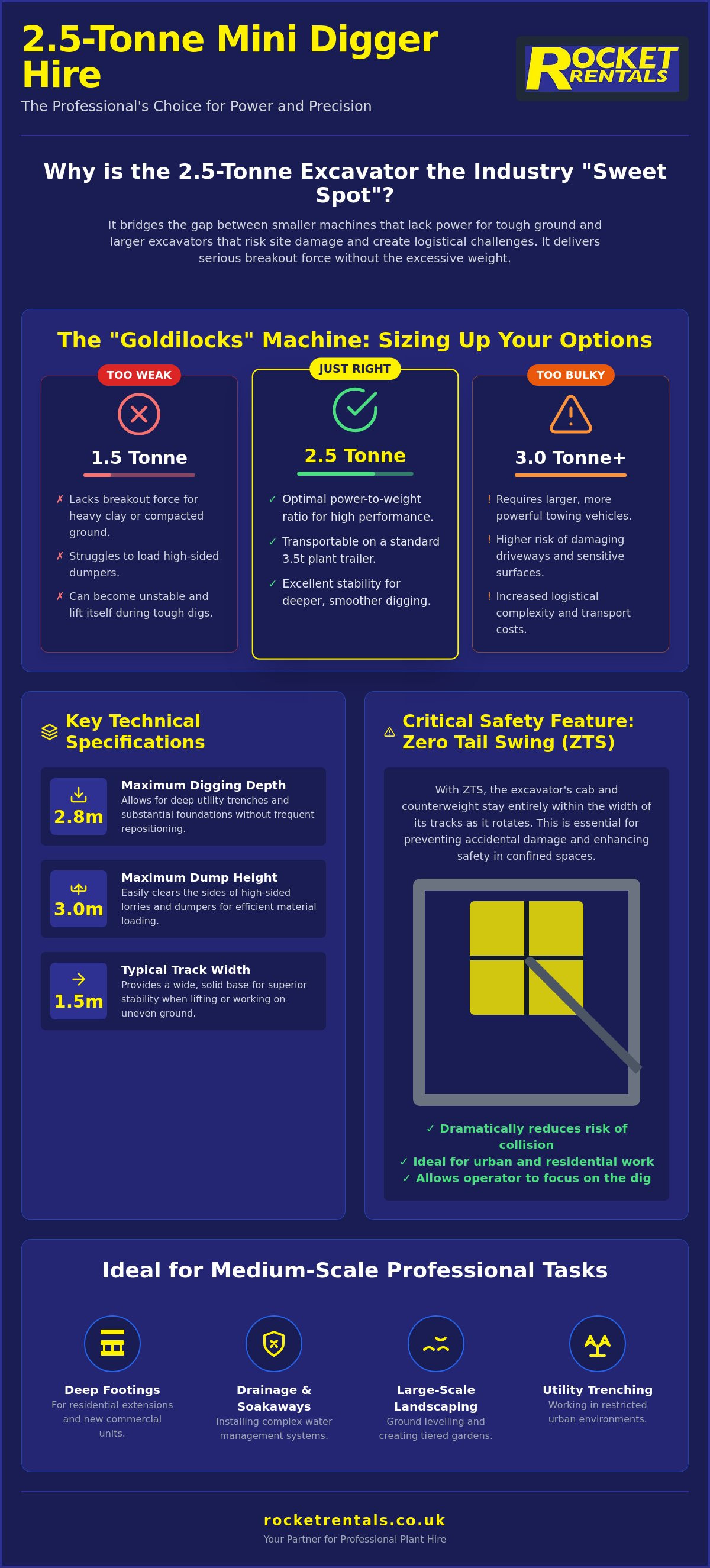
The 2.5-tonne excavator occupies a unique space in the plant hire market. It serves as a vital bridge between the nimble but limited micro diggers and the larger, more cumbersome heavy excavators. Whilst micro and 1.5-tonne machines are excellent for garden access, they often struggle when faced with compacted ground or heavy clay. Selecting a 2.5 ton mini digger hire ensures your site has enough hydraulic power to maintain productivity without the logistical burden of a 3-tonne machine. It's the professional's choice for projects that demand a high power-to-weight ratio.
Professional contractors typically deploy this class for a variety of medium-scale tasks:
Excavating deep footings for residential extensions or commercial units.
Installing complex drainage systems and soakaways.
Large-scale landscaping and ground levelling on tiered sites.
Utility trenching in urban environments where space is restricted.
The history of mini excavators shows a clear progression toward these compact, high-performance units as urban sites became more congested. Today, the 2.5-tonne machine is a staple for contractors who value a professional-grade tool that remains easy to position. It provides the stability needed for lifting and reaching whilst maintaining a footprint small enough to navigate through narrow site entrances.
The "Goldilocks" Machine: 1.5t vs 2.5t vs 3t
A 1.5-tonne machine often falls short when you encounter heavy clay or rock because it lacks the necessary breakout force. You might find the machine lifting itself off the ground rather than penetrating the surface. In contrast, the 2.5-tonne frame offers superior stability and a wider footprint, allowing for smoother operation and deeper digs. Whilst a 3-tonne machine provides even more power, it often requires a larger trailer and a more powerful towing vehicle. A 2.5 ton mini digger hire offers the highest performance possible whilst remaining transportable on a standard 3.5-tonne plant trailer, keeping your logistics simple and cost-effective.
Zero Tail Swing and Site Safety
Most modern 2.5-tonne excavators are designed with Zero Tail Swing (ZTS). This means the rear of the machine stays within the width of its tracks when the cab rotates. In confined professional environments, such as narrow alleys or alongside existing structures, ZTS is a critical safety feature. It significantly reduces the risk of accidental site damage or operator error. By choosing a ZTS model, you improve site safety and efficiency, allowing your team to focus on the task at hand rather than worrying about the swing radius of the counterweight. This makes the 2.5-tonne class a safer pair of hands for residential groundworks.
Technical Specifications: Reach, Depth, and Performance
When evaluating a 2.5 ton mini digger hire, understanding the machine's physical capabilities is essential for site planning. These units sit within a specific category of Technical Specifications defined by the Association of Equipment Manufacturers as compact excavators. For most professional models in this weight class, you can expect a digging depth between 2.5m and 2.8m. This extra reach over a 1.5-tonne machine allows for deeper utility trenches and more substantial foundation work without needing to reposition the machine as frequently.
Dump height and reach are equally critical metrics for site productivity. While a 1.5-tonne machine often struggles to clear the sides of a high-sided 3-tonne dumper, a 2.5-tonne excavator typically offers a dump height of around 2.8m to 3m. This ensures you can load material efficiently and safely without risking damage to the dumper or the excavator arm. If you're working on a site with significant obstacles or large spoil heaps, the extended reach ensures you can place material exactly where it's needed, reducing the need for secondary handling.
Stability is another major factor in this category. Unlike micro diggers that rely on retractable tracks to fit through garden gates, 2.5-tonne machines usually feature fixed track widths of approximately 1,500mm. This provides a solid base for lifting heavier loads and operating on uneven ground. The hydraulic flow on these models is specifically tuned to handle high-demand tasks, ensuring that the arm movement remains smooth and responsive even when the engine is under significant load.
Maximising Utility with Excavator Attachments
The true value of a 2.5-tonne machine lies in its versatility. Because the hydraulic systems are more robust than smaller units, they can power a wider range of Excavator Attachments, including hydraulic peckers, augers, and grading buckets. Most professional fleets now include quick-hitch systems as standard. This allows operators to switch between buckets or attachments in seconds, significantly reducing downtime. If you need to break through concrete before digging, this class provides the necessary force to get the job done efficiently.
Fuel Efficiency and Environmental Standards
Modern 2.5-tonne excavators must meet Stage V engine requirements. These standards ensure lower emissions, which is increasingly important for urban site compliance and local authority contracts. Despite the increased power, these engines are remarkably fuel-efficient compared to older or larger models. Choosing a well-maintained machine from a professional mini digger hire specialist ensures you benefit from the latest technology and peak mechanical performance. This focus on modern fleet standards helps reduce site downtime and keeps your project's carbon footprint in check.
Understanding 2.5 Ton Mini Digger Hire Rates
Transparency in pricing is the foundation of a successful partnership between a contractor and a plant hire provider. When you arrange a 2.5 ton mini digger hire, you'll find that the industry typically follows a tiered pricing structure. Daily rates provide flexibility for quick tasks, whilst weekend and weekly rates are the standard for professional groundworks. For projects spanning several months, long-term hire agreements often include further discounts. This is because the reduced frequency of transport and administration lowers the provider's overheads, a saving that's usually passed on to the client.
Professional contractors often find that opening a trade account is the most efficient way to manage these costs. It simplifies the VAT process and often provides access to more flexible payment terms. However, you should also be aware of how different providers handle their billing cycles. Some may offer a "five-day week" rate, whilst others charge for a full seven days if the machine remains on-site. Clarifying these terms at the start of the agreement prevents unexpected figures on your final invoice.
Beyond the base rate, several variables can impact your final costs. Fuel is usually handled on a "full-to-full" basis; returning a machine with an empty tank often results in a higher per-litre charge than current pump prices. You should also account for cleaning fees. If a machine returns from a particularly muddy site without being hosed down, providers may charge for the additional labour required to prepare it for the next customer. Identifying these factors early ensures your project budget remains predictable.
Damage Waivers and Insurance Requirements
Protecting your business against unforeseen costs is a requirement, not an option. Most hire agreements include an Accidental Loss and Damage Waiver, which typically adds around 15% to the base hire cost. This covers minor site mishaps, but it isn't a substitute for comprehensive "Hired-in Plant Insurance." Following UK Health and Safety Executive (HSE) guidelines regarding the Provision and Use of Work Equipment Regulations (PUWER) is essential. These regulations ensure that all equipment is safe for use. A transparent hire agreement from a reputable partner like Rocket Rentals will clearly outline your liabilities and the machine's maintenance history.
Delivery and Collection Logistics
Transport logistics can fluctuate based on your site's location and the type of vehicle required for delivery. A 2.5-tonne machine requires a dedicated plant trailer or a 7.5-tonne beaver-tail lorry. Coordinating these deliveries is vital to prevent site delays; having a crew waiting for a machine that hasn't arrived is an expensive oversight. For contractors managing multiple projects, a provider with national reach simplifies the process. It allows for a single point of contact and consistent pricing across different regions, ensuring that your 2.5 ton mini digger hire is handled with professional precision regardless of the site's postcode.
Logistics and Site Preparation for 2.5 Ton Machines
Successful groundworks begin long before the tracks touch the soil. Proper site preparation ensures that your 2.5 ton mini digger hire remains productive from the moment it arrives. Unlike smaller micro units, a 2.5-tonne machine has a larger footprint and requires more careful planning regarding access and ground conditions. Failure to prepare the site can lead to expensive delays or damage to existing infrastructure.
Follow these four essential steps to ready your site:
Assess Site Access: Verify that all gates, alleys, and entry points can accommodate a machine width of approximately 1,500mm. Don't forget to check for height restrictions such as low-hanging branches or building eaves.
Implement Ground Protection: Whilst these machines are compact, they can still mark sensitive surfaces. Use bog mats or heavy-duty plywood boards to protect block paving or manicured lawns.
Verify Operator Competence: Ensure your operator holds a valid CPCS or NPORS card for commercial sites. For private projects, confirm that your self-drive insurance is active and covers the full value of the equipment.
Clear the Drop-off Zone: Delivery lorries need ample space to unload safely. Ensure the kerbside or site entrance is clear of parked cars and obstacles before the scheduled delivery time.
Transporting 2.5 Ton Diggers
One of the most common misconceptions in plant hire involves towing capacity. Many contractors assume a standard 4x4 can tow a 2.5-tonne excavator. However, once you add the weight of a professional plant trailer (typically 700kg to 900kg) along with buckets and fuel, the total weight often exceeds the 3.5-tonne legal limit for standard towing. This is why we typically manage delivery via specialised 7.5-tonne beaver-tail lorries. It ensures the machinery arrives safely and complies with all UK road traffic regulations. If you need advice on site suitability, our team can help you select the right self-drive mini digger hire for your specific project.
Self-Drive Requirements and Compliance
Operating on a self-drive basis offers total control over your site schedule and project pace. However, this autonomy comes with the responsibility of maintaining safety standards. Before work begins, you must ensure the machine is compliant with LOLER and PUWER regulations. These statutory inspections verify that the lifting equipment and work machinery are fit for purpose. You can find a detailed breakdown of these requirements in our Mini Digger Safety Checklist. Maintaining a clear paper trail of these checks protects your business and ensures a safe working environment for your entire crew.
Sourcing Professional Plant with Rocket Rentals
Rocket Rentals Ltd operates with a specific focus on high-spec, self-drive machinery. We understand that for professional contractors, the equipment is an extension of their own expertise. By specialising exclusively in self-drive plant, we ensure that our fleet is tailored to the needs of those who require total control over their site operations. A 2.5 ton mini digger hire from our fleet isn't just a rental; it's a commitment to providing a reliable, well-maintained tool that arrives ready for work. We prioritise quality over volume, ensuring every machine meets the standards expected on modern construction sites.
Site downtime is the enemy of profitability. We mitigate this risk by maintaining a modern fleet with rigorous service intervals. Newer machines are less prone to mechanical failure and benefit from the latest ergonomic and safety features. This proactive approach to fleet management ensures that your project stays on track, avoiding the delays often associated with older, poorly maintained plant. When you hire from us, you're getting a machine that has been inspected and prepared by technicians who understand the demands of professional groundworks.
Our booking process is built for the pace of modern construction. We've replaced the slow, bureaucratic hurdles found with smaller tool hires with a streamlined system. This allows site managers to secure multiple units, from telehandlers to rollers, with a single point of contact. We provide the technical documentation and service records required for site induction immediately, ensuring that your 2.5 ton mini digger hire is compliant before the lorry even leaves our yard. This efficiency allows you to focus on the project whilst we handle the logistics.
The Rocket Rentals Professional Standard
Our professional standard is defined by a commitment to reliability and quiet confidence. We don't rely on aggressive sales tactics; instead, we focus on the safety and readiness of our machinery. We organise national delivery using our own transport network, which allows us to maintain strict control over site arrival times. This methodical approach ensures your project remains on schedule regardless of its location. It's this heritage of service that has made our fleet the favourite choice amongst UK contractors who need a partner they can trust implicitly.
Beyond the Digger: Complete Site Solutions
Managing a site requires more than just an excavator. To maximise efficiency, many contractors integrate their digging operations with our Dumper Hire services for rapid muck-away and material handling. Maintaining site compliance and worker comfort is also simplified through our Welfare Unit Hire solutions, providing essential facilities for your crew. Having a single, reliable source for all your heavy plant needs reduces administrative burden and ensures consistent equipment standards across your site. When you're ready to secure your plant, you can enquire about 2.5 ton mini digger hire today to discuss your specific project requirements.
Securing the Right Equipment for Your 2026 Groundworks
Selecting the correct machinery is a balance of technical capability and commercial sense. By prioritising the 2.5-tonne class, you gain the breakout force required for challenging terrain whilst maintaining the compact footprint necessary for restricted sites. We've explored the importance of Stage V engine compliance and the necessity of understanding transport logistics to avoid site delays. Professional groundworks demand precision, and having a machine that bridges the gap between micro units and heavy excavators ensures your project remains efficient and safe.
As an independent plant hire specialist established in 1988, Rocket Rentals provides a high-quality, modern self-drive fleet to contractors across the country. Our commitment to professional reliability means you can count on national delivery and transparent agreements every time you arrange a 2.5 ton mini digger hire. We're here to act as a safe pair of hands for your next project, ensuring you have the support and infrastructure needed to succeed. View our 2.5 Ton Mini Digger range and request a quote to get started on your next site with confidence.
Frequently Asked Questions
How much can a 2.5 ton mini digger lift safely?
Safe lifting capacity varies based on the machine's configuration and the distance of the load from the centre of rotation. Typically, a 2.5-tonne excavator can safely lift between 450kg and 600kg at a 3-metre radius over the front. It's essential to consult the specific load chart provided in the cab to ensure stability. Overloading the machine risks tipping or hydraulic failure, so always operate within the manufacturer's stated limits.
Do I need a special licence for 2.5 ton mini digger hire?
No specific driving licence is required to operate a mini digger on private land; however, commercial sites usually demand proof of competence. For professional groundworks, you'll likely need a Construction Plant Competence Scheme (CPCS) or NPORS card. If you intend to drive the machinery on public roads, a standard UK driving licence is mandatory. We recommend checking your site's specific health and safety requirements before arranging your 2.5 ton mini digger hire.
What is the width of a 2.5 ton mini digger for site access?
The width of a 2.5-tonne mini digger is approximately 1,500mm. Unlike micro excavators, these machines generally have fixed tracks to provide a more stable platform for heavy-duty digging and lifting. You should ensure that all access points, such as gates or narrow alleys, provide at least 100mm of clearance on either side. Measuring your tightest site entrance before booking helps prevent delivery day complications and ensures the machine can reach the work zone.
Can I tow a 2.5 ton mini digger with a standard van or 4x4?
Towing a 2.5-tonne machine with a standard 4x4 or van is often illegal because the combined weight of the excavator, trailer, and attachments typically exceeds 3,500kg. Most 2.5-tonne units weigh around 2,600kg. When you add a 700kg trailer and several buckets, you surpass the towing limit of most civilian vehicles. For this reason, we provide professional delivery via 7.5-tonne lorries to ensure safety and full legal compliance on the highway.
What is the difference between a 1.5 ton and a 2.5 ton digger?
The primary difference lies in breakout force and digging depth. A 2.5-tonne machine offers significantly more hydraulic power, which is vital for penetrating heavy clay or lifting larger spoil loads. Whilst a 1.5-tonne unit is easier to transport, it often lacks the stability required for deep trenching or loading high-sided dumpers. The 2.5-tonne class provides a more spacious cab and a larger fuel tank, making it more efficient for full-day professional operations.
What insurance do I need for self-drive mini digger hire?
You are responsible for ensuring the machinery is covered by Hired-in Plant Insurance for the duration of the project. This insurance protects you against the high costs of theft or major damage whilst the equipment is on your site. We also offer an Accidental Loss and Damage Waiver to cover smaller site mishaps. It's a standard requirement in the industry to have these protections in place before a self-drive agreement is finalised.
Are excavator attachments included in the 2.5 ton hire rate?
Standard digging and grading buckets are usually included in the base rate for 2.5 ton mini digger hire. Specialist tools, such as hydraulic peckers, augers, or concrete breakers, are charged as additional items. These attachments require specific hydraulic flow settings and maintenance, so they are costed separately. If your project requires multiple tools, we can organise an attachment package that integrates seamlessly with your machine's quick-hitch system.
How much fuel does a 2.5 ton mini digger use per day?
Fuel consumption typically ranges between 15 and 25 litres for a full eight-hour working day, depending on the intensity of the tasks. Modern Stage V engines are designed for maximum efficiency, but heavy digging or constant use of hydraulic attachments will increase the burn rate. We supply the machine with a full tank of white diesel. You should aim to return it full to avoid the higher refuelling charges associated with site collection.


Comments