
Roller Hire Cost: The Professional’s Guide to Compaction Budgeting in 2026
Is the lowest headline figure on your quote actually saving you money, or is it merely masking a cascade of hidden site delays and surcharges? When you're managing a complex groundwork project, understanding the true roller hire cost involves looking far beyond the initial daily rental fee. It's about the total investment required to keep your site moving without the friction of unreliable machinery or unexpected delivery bills.
You've likely felt the frustration of a project stalling because a piece of equipment arrived late or, worse, failed halfway through a critical compaction task. It's a common headache for contractors, where "budget-friendly" options often translate to expensive downtime and administrative stress that can derail an entire site programme. Professional plant hire should be built on trust, ensuring the equipment is as dependable as your own site team.
This guide provides a transparent breakdown of the factors that dictate professional hire rates in 2026, helping you eliminate budgeting guesswork and secure the right machinery for your specific needs. We'll explore how to optimise fuel management, delivery logistics, and machinery selection to ensure your project remains both on schedule and within its financial boundaries.
Table of Contents
Understanding the Variables of Roller Hire Cost
An accurate assessment of roller hire cost requires a shift in perspective. You shouldn't view the rental price in isolation. Instead, treat it as a composite figure that includes logistics, insurance, and site-specific operational variables. Why does a professional rate often differ from what you might find at a high-street tool hire shop? The answer lies in the quality and specification of the fleet. Professional plant hire focuses on modern, high-tier machinery that undergoes rigorous maintenance schedules. This reliability is vital. A well-maintained machine reduces the risk of project delays that could cost thousands in standing time for your groundworks crew.
In the professional construction sector, "Dry Hire" or self-drive is the established standard. This approach allows contractors to utilise their own qualified operators, maintaining full control over site safety and productivity. A Road roller sourced from a specialist fleet will typically offer superior vibratory technology and fuel efficiency compared to generic alternatives. Investing in the right equipment from the start ensures that your project remains efficient and compliant with site safety standards.
Daily vs. Weekly Hire Rates
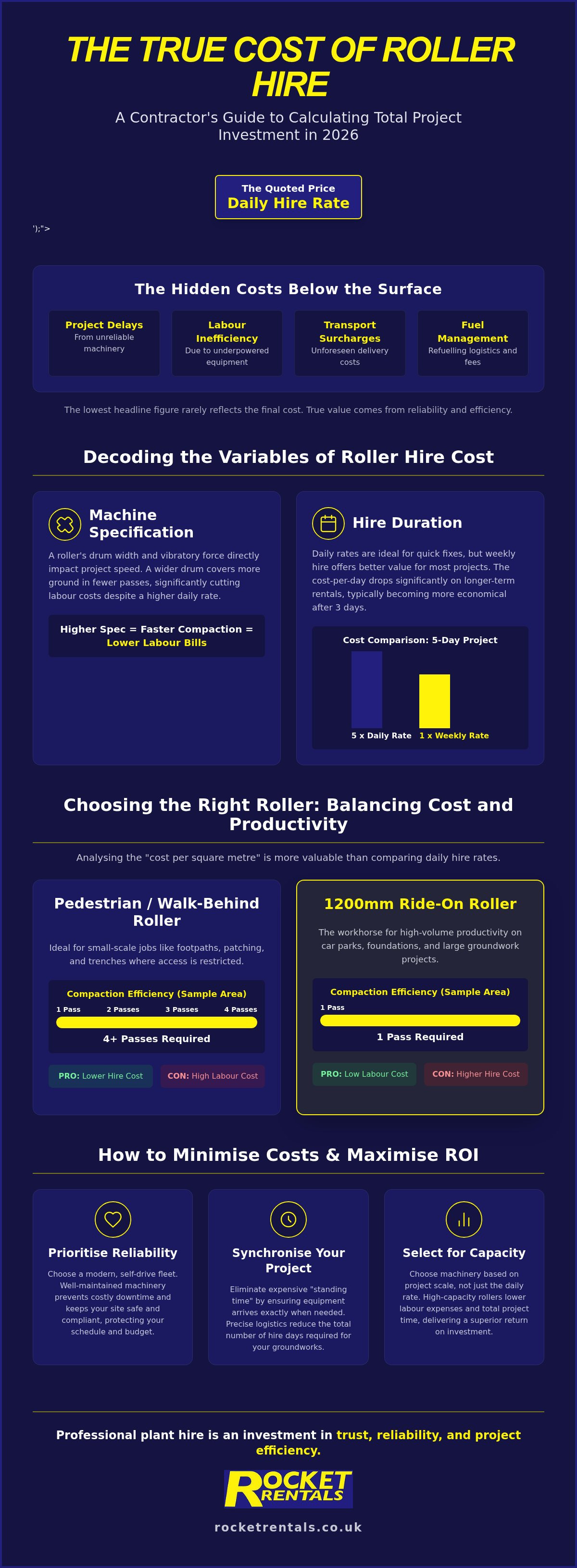
Most plant hire firms operate with specific "minimum hire" periods, often starting at a single day for smaller kit or a full week for larger rollers. Whilst daily rates might seem attractive for quick patch-up jobs, they rarely offer the best value for comprehensive groundworks. If your project spans multiple days, the pricing structure shifts in favour of longer durations. Weekly hire often becomes more economical than daily rates once you exceed a three-day period. This benchmark helps site managers decide when to commit to a longer rental term to maximise their budget.
The Impact of Machine Specification on Pricing
The physical capabilities of the machine directly influence the base price. A roller’s drum width and vibratory technology determine how quickly you can achieve the required compaction density. For instance, a wider drum covers more ground in a single pass, which can significantly lower your total labour costs despite a slightly higher hire rate. Specialised equipment, such as remote-controlled trench rollers, commands a premium because of the safety benefits and precision they offer in confined spaces. The relationship between machine weight and compaction force defines the hire value. Choosing a machine with the correct tonnage ensures you aren't paying for excess capacity or wasting time with an underpowered unit.
Categorising Roller Types by Project Requirement and Price
Choosing the correct machinery is a balancing act between the unit's rental price and its operational efficiency. It's a mistake to select a machine based solely on the lowest headline figure. A smaller roller may have a lower daily roller hire cost, but if it requires four times as many passes to reach the specified compaction density, your labour costs will quickly eclipse any savings. Professional site managers look at the "cost per square metre" rather than just the daily invoice. For those establishing baseline budgets, referencing standardised data like the FEMA Schedule of Equipment Rates can provide a useful perspective on how different weight classes and machine types are valued in a professional context.
Pedestrian and Walk-Behind Rollers
These compact units are the most cost-effective solution for small-scale patching, driveway installations, and projects with severe access restrictions. Because they're physically smaller and less complex than ride-on models, the hire rate is significantly lower. However, they're labour-intensive. An operator must manually guide the machine, which is physically demanding and slower. We typically recommend these for narrow footpaths or backfilling trenches where a ride-on unit simply won't fit. If you're working on a larger area, the time spent using a pedestrian roller often costs more in wages than the price jump to a motorised alternative.
Ride-On Twin Drum Rollers (800mm to 1200mm)
Ride-on rollers are the workhorses of the modern construction site. An 800mm twin drum roller provides a vital middle ground. It's narrow enough to navigate through standard gates or tight urban sites, yet it offers the power and speed of a motorised unit. When you move up to a 1200mm roller, you're investing in high-volume productivity. These machines are designed for large-scale groundworks and road construction.
The primary advantage of the 1200mm model is its ability to reduce the number of passes required to achieve full compaction. This efficiency doesn't just save time; it reduces fuel consumption and operator hours. Modern units also feature pressurised water systems and advanced vibration control, ensuring a consistent finish on tarmac or sub-base materials. While the upfront hire rate is higher, the rapid completion of the task often leads to a lower total project cost. If you're unsure which machine fits your site layout, you can view our full range of rollers to compare specifications and select the most efficient tool for the job.
Beyond the Daily Rate: Factoring in Total Site Expenses
Focusing solely on the rental price often leads to significant budgetary oversights. To arrive at a realistic roller hire cost, you must account for the secondary expenses that appear on the final invoice. Professional plant hire is a logistics-heavy service; the price you pay covers the readiness of the machine, but it doesn't always include the movement or protection of that asset. Transparency is essential here. Whilst some providers might obscure these figures until the final checkout, a dependable partner will outline them clearly during the quoting stage. You should also remember that commercial quotes are typically provided exclusive of VAT, so ensure you've factored the standard 20% into your total project calculations.
Fuel management is another variable that impacts your bottom line. Most professional firms operate a "full-to-full" policy, where the machine arrives with a full tank and should be returned the same way. If you choose to let the hire company refuel the machine upon collection, be prepared for site refuelling surcharges. These rates are often higher than standard pump prices to cover the labour and logistics of mobile bowser operations. Managing this internally is usually the more cost-effective choice for well-organised sites.
Logistics and Transport Charges
Transporting heavy compaction equipment requires specialised vehicles, and these costs are dictated by the distance from the plant centre and the physical size of the machine. A pedestrian roller might be delivered on a small plant trailer, whereas a 1200mm ride-on model requires a dedicated beaver-tail or low-loader. You can often find a significant cost benefit by synchronising your deliveries; for example, hiring an excavator and a roller together allows the provider to utilise a single transport movement, potentially halving your delivery fees. If your site requires a "timed delivery" to meet specific crane windows or traffic management restrictions, expect to pay an additional professional fee for the prioritised scheduling.
Insurance and Damage Waivers
Protecting the asset is a contractual requirement in the plant industry. Most contractors utilise their own "hired-in plant insurance," which covers the replacement value of the machinery in the event of theft or major damage. If you don't have a continuous policy, many providers offer a Damage Waiver for a percentage of the hire fee. This isn't standard insurance; rather, it limits your financial liability for accidental damage during the hire period. The hirer remains contractually responsible for the equipment's security and condition from the moment it is unloaded on-site until a formal off-hire reference has been confirmed by the plant provider. Ensuring your site is secure and operators are competent is the best way to avoid these additional charges.
How to Minimise Roller Rental Costs and Maximise ROI
Controlling your total roller hire cost requires a proactive approach to site management. It's often the small, overlooked details that inflate an invoice. For example, if the machine arrives before the sub-base is laid, you're paying for "standing time." This is a common budgetary leak that serves no purpose. You should ensure the area is cleared, compaction zones are marked, and the material is ready for processing before the delivery vehicle arrives. A well-prepared site ensures the machine starts working the moment it touches the ground.
Consolidating your equipment needs with a single-source plant hire specialist reduces administrative overhead and transport fees. Managing one point of contact for your excavator, dumper, and roller is far more efficient than juggling multiple suppliers. This approach simplifies the off-hire process and ensures that all machinery on your site meets the same high standards of reliability and safety. It also gives you more leverage when negotiating rates for long-term commercial projects.
Synchronising Plant Delivery
Time is the most expensive commodity on a groundwork project. You should align your roller's arrival with the delivery of hardcore or asphalt to prevent idle time. If the roller is offloaded at 8:00 AM but the material doesn't arrive until midday, you've wasted half a day's rental. Ensure your self-drive operator is briefed and ready the moment the ramps are lowered. Additionally, check site access beforehand. If a low-loader gets stuck in a narrow lane or blocked by other trades, you'll likely face wait-time charges from the transport company.
Correct Sizing for Efficiency
Matching the machine to the material is critical for long-term ROI. Using a small pedestrian roller on a deep lift of hardcore is a false economy. It won't reach the required density, which might lead to structural failure or the need for expensive remedial work later. You should consult with experts to match the drum width and vibratory force to your specific material, whether it's granular fill or bituminous mixtures. Modern rollers use advanced technology to achieve compaction in fewer passes. This directly reduces the total roller hire cost by cutting both fuel consumption and operator hours.
To get an accurate quote tailored to your specific project requirements, you can contact our specialist hire desk today.
Sourcing Reliable Plant Hire: The Rocket Rentals Standard
Selecting a plant hire partner is a decision that carries significant weight for any site manager. Since 1988, Rocket Rentals has operated as an independent specialist, focusing exclusively on high-quality self-drive equipment for the professional construction sector. We understand that the true roller hire cost isn't just the figure on the quote; it's the total cost of ownership throughout the project. Our commitment to excellence ensures that you receive modern, reliable machinery that performs exactly as expected. This reliability is your strongest defence against the hidden expenses of site downtime and mechanical failure.
Our national coverage across the United Kingdom means we can support large-scale groundwork projects regardless of location. We don't just provide equipment; we offer a partnership built on trust and technical expertise. Our team acts as a safe pair of hands, combining the scale of a major provider with the personal touch of a dedicated service partner. We prioritise safety and compliance above all else, ensuring our fleet meets the rigorous standards required for modern commercial sites.
A Fleet Built for Professional Performance
Our maintenance standards are designed to exceed standard industry requirements. Every machine in our fleet undergoes intensive checks to ensure it's ready for immediate site deployment. This is vital for civil engineering projects where delays can have a cascading effect on the entire programme. Hiring from a specialist company that understands these pressures gives you a distinct advantage. We help you select the right compaction technology to achieve density in the fewest possible passes. For contractors managing multi-disciplinary sites, we also provide electric scissor lift hire, offering a comprehensive solution for both groundworks and clean access requirements.
Streamlined Account Management
Administrative efficiency is just as important as on-site productivity. We've simplified the process of opening professional trade accounts, allowing for seamless management of ongoing projects. Our invoicing is designed with transparency in mind. We provide clear, itemised breakdowns of hire rates, transport fees, and fuel management. This level of detail allows your commercial team to track compaction budgets with precision. You won't have to navigate unexpected surcharges or vague billing. Instead, you can focus on project delivery, knowing your plant partner is as detail-oriented as you are. If you're planning your next groundwork project, you can contact Rocket Rentals for a comprehensive roller hire quote that reflects the true value of professional-grade equipment.
Mastering Your Site Budget with Professional Plant Hire
Navigating the complexities of a roller hire cost requires more than just comparing daily rental figures. It demands a thorough understanding of logistics, machine specification, and site-level planning. By synchronising plant deliveries and selecting machinery that precisely matches your material requirements, you can significantly reduce project downtime and administrative friction. Efficient compaction is the foundation of any successful groundwork project, and the right equipment partner makes that foundation secure.
As independent plant hire specialists since 1988, Rocket Rentals provides the high-specification self-drive fleet and technical expertise needed for professional civil engineering. Our national UK coverage ensures that contractors have access to reliable, modern equipment, regardless of the project's scale. We prioritise safety and transparency, ensuring your budget remains predictable from the initial quote to the final off-hire.
Ready to secure a transparent budget for your next project? You can Request a Professional Roller Hire Quote from Rocket Rentals to ensure your site remains both safe and efficient. We're here to help you build with confidence.
Frequently Asked Questions
How much does it cost to hire a ride-on roller for a week in the UK?
Weekly rates vary depending on the machine's weight, technology, and drum width. Generally, weekly hire offers much better value than daily rates, often following an industry-standard "three-day rule" where the weekly price is reached after three days of rental. Factors such as the specific model and the current demand for modern, eco-friendly machinery will influence the final quote you receive from a professional plant provider.
What is included in the standard roller hire rate?
A standard rate covers the rental of the machinery for a specified duration. This includes the provision of a modern, high-specification machine that meets all UK safety regulations, such as PUWER and LOLER. However, the base rate typically excludes transport fees, fuel, insurance, and VAT. These variables are calculated separately to determine the total roller hire cost for your specific project location and duration.
Do I need a special licence for self-drive roller hire?
You don't need a specific driving licence for use on private sites, but operators must be competent. For professional construction sites, operators usually require industry-recognised certifications like CPCS or NPORS cards. These qualifications prove the user understands machine safety and handling. Ensuring your operator is fully certified is a critical requirement for maintaining the validity of your site's hired-in plant insurance policy.
Are there additional charges for delivery and collection of plant machinery?
Yes, transport fees are a standard addition to any hire agreement. These charges depend on the distance between the plant centre and your site, as well as the type of delivery vehicle required. Larger 1200mm rollers require specialised low-loaders, which incur higher transport costs than smaller pedestrian models. Synchronising your roller delivery with an excavator or dumper can often help reduce these logistics expenses.
What happens if the hired roller is damaged on-site?
The hirer is contractually responsible for the machine from the moment it is unloaded until a formal off-hire reference is issued. If accidental damage occurs, costs are typically managed through your hired-in plant insurance or a pre-arranged Damage Waiver. It's essential to secure the machine when not in use and report any mechanical issues immediately to your plant partner to ensure site safety remains uncompromised.
Is fuel included in the roller hire price or is it extra?
Fuel is almost always an additional expense. Most professional firms operate a "full-to-full" policy, where the machine arrives with a full tank and should be returned in the same condition. If the machine requires refuelling upon collection, you'll likely face surcharges. These rates are often higher than standard pump prices to cover the labour and logistics of the hire company refilling the tank on your behalf.
Can I hire a roller for just one day on a commercial site?
Daily hire is often available for compact or pedestrian models, but it's less common for heavy ride-on plant. Whilst a single day can address minor patching tasks, the associated transport costs often make it less economical than a longer rental. Most site managers find that a weekly rate provides the necessary flexibility to handle material delivery delays or weather changes without significantly increasing the roller hire cost.
How do I choose between a 800mm and a 1200mm roller for my project?
Your choice should be dictated by the site's access and the total compaction area. An 800mm roller is the preferred choice for narrow paths or tight urban sites where space is restricted. Conversely, a 1200mm roller is designed for high-productivity groundworks. It covers more surface area in a single pass, which reduces the total operator hours and fuel consumption required to achieve the specified compaction density.


Comments