
Equipment downtime and its effects on operations, safety and performance
To reduce equipment downtime, plan routine maintenance and inspections, use equipment condition and runtime to guide servicing, and record the causes and duration of stoppages. Machines need downtime rather than running continuously, but planned work can help prevent unexpected failures that disrupt operations and create safety risks. Knowing how to reduce equipment downtime also means tracking whether maintenance is improving reliability and performance.
Downtime can be planned, such as scheduled maintenance or a changeover, or unplanned, such as a breakdown or fault. Planned stoppages can be prepared for; unexpected ones may leave crews waiting and delay work. This article explains what machine downtime is, how it affects operations and safety, and practical ways to manage it. It also covers performance measures, including availability, performance, quality and overall equipment effectiveness (OEE), to help you identify where time is being lost and assess whether your approach is working.
Table of Contents
1. What is machine downtime?
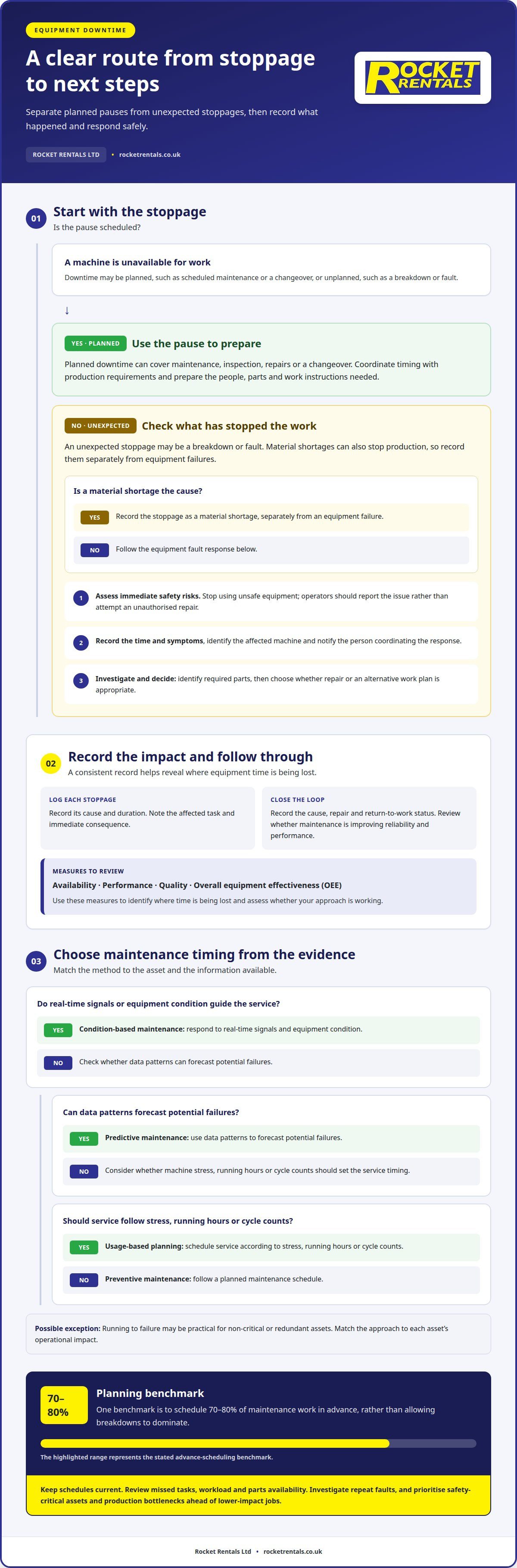
Machine downtime is the period when equipment is unavailable for work because of maintenance or failure. Equipment cannot run continuously every hour of every day, so planned stoppages allow service before wear causes a breakdown. Record each stoppage’s duration and cause. A useful first step in understanding how to reduce equipment downtime is to separate planned service from unexpected faults.
In the UK, health and safety requirements for maintenance and repairs depend on the equipment, task and workplace. Plan inspections and repairs to identify hazards, control risks and keep equipment safe to operate.
Schedule routine maintenance around machine stress, running hours and cycle counts, not just calendar dates. Compare completed work with the schedule and record missed tasks. Check whether workload or parts availability caused delays. A recurring fault after a missed inspection may point to a gap in the maintenance process. Repeated faults despite completed checks call for root cause analysis. Prioritise safety-critical assets and production bottlenecks ahead of lower-impact jobs.
Preventive maintenance follows a planned schedule. Condition-based maintenance responds to real-time signals and equipment condition, while predictive maintenance uses data patterns to forecast potential failures. Usage-based planning schedules service according to stress, running hours or cycle counts. These approaches shift teams from reactive repairs towards earlier intervention. Combine runtime data with inspection findings, then adjust tasks when evidence shows faster wear. For non-critical or redundant assets, running to failure may be practical. Match the approach to each asset’s operational impact.
Teams deciding how to reduce equipment downtime should keep schedules current, prioritise work by risk and operational impact, and investigate repeat failures. A short maintenance team stand-up can review stoppages, assign owners and agree one focused action. One planning benchmark is 70-80% of maintenance work scheduled in advance, rather than allowing breakdowns to dominate. Total Productive Maintenance (TPM) trains operators to care for equipment and report abnormalities early. Continuing management support helps sustain this approach.
2. Operational and safety impacts of downtime
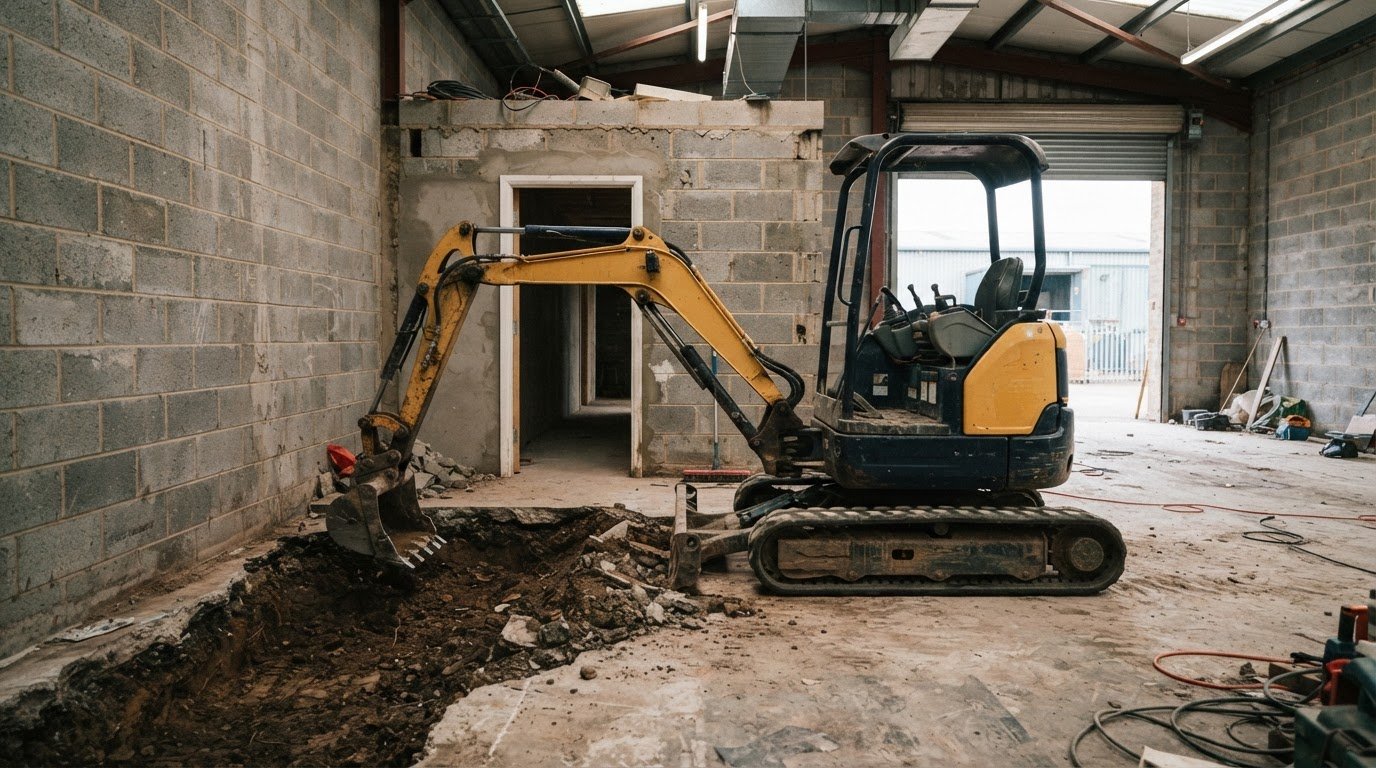
An unexpected machine failure can halt a production task even when the rest of the site is ready. For example, a failed excavator can leave groundworks unfinished and delay follow-on trades. Downtime interrupts material movement, leaves operators idle and can push scheduled work out of sequence. The impact grows when another task depends on that machine’s output. Record the stoppage, affected task, duration and immediate consequence to make the operational losses visible.
Safety can also be affected. A breakdown may leave operators dealing with an unexpected obstruction or tempted to continue using unsuitable equipment. Training helps operators recognise abnormal sounds, warning signals and changes in machine behaviour. Clear work instructions should explain safe operating limits, start-up checks and what to do when a fault appears. Operators should stop using unsafe equipment and report the issue promptly, rather than attempt an unauthorised repair.
Digital standard operating procedures can make current instructions easier to access at the point of work. An operator, for instance, can follow a machine-specific inspection checklist on a mobile device and record a fault with a photograph. Maintenance teams can then review the issue and organise a response. Keep digital instructions aligned with approved procedures and update them when a machine, task or identified risk changes.
Separate operator error from mechanical failure before choosing a fix. If the same stoppage follows an unclear set-up step, improve the instruction and provide practical coaching. If trained operators report the same fault despite following the procedure, investigate the machine and its maintenance history. Preventive maintenance supports reliability, but it cannot replace clear operating guidance or prompt fault reporting. For a project affected by unavailable machinery, suitable equipment for site work can help maintain progress while the issue is addressed.
3. What is the difference between planned and unplanned downtime?
Planned downtime is a scheduled pause for maintenance, inspection, repairs or a changeover. Unplanned downtime starts with an unexpected stoppage, such as a breakdown or fault. Material shortages can also stop a machine from producing, so record these separately from equipment failures. A planned inspection, for example, can be coordinated with a production changeover, while a failed component may interrupt work without warning.
Use scheduled downtime to prepare the people, parts and work instructions needed for each task. Set the timing around production requirements and allow enough time for inspection and repair. Equipment condition and recurring faults can help teams decide which jobs to schedule first. Planning makes resources easier to organise; unplanned downtime often requires a response before the cause or parts needed are known.
How can spare parts management reduce equipment repair time? Record parts used for common repairs and their compatibility with specific machines. Prioritise stock according to each asset’s operational importance and how readily its parts can be obtained. This helps maintenance teams identify the correct component sooner and avoid delays spent searching for or ordering parts after a failure.
A downtime response plan should set out clear actions for operators and maintenance staff. First, report the stoppage and identify the affected machine. Assess immediate safety risks, record the time and symptoms, and notify the person coordinating the response. The maintenance team can investigate the fault, identify required parts and decide whether repair or an alternative work plan is appropriate. Record the cause, repair and return-to-work status for later review. Clear responsibilities help teams act quickly without skipping inspection before equipment returns to service.
Review planned and unplanned downtime records together. If the same fault repeatedly interrupts a scheduled task, adjust the maintenance plan or investigate the root cause. Each stoppage can provide useful information for future planning.
4. Downtime and equipment performance metrics
Manufacturing teams need more than a downtime total to identify production losses. Track when each stoppage starts and ends, the affected machine, its cause and the time lost. Record a reason and duration for every event to create a reliable basis for analysis. Use consistent categories, such as breakdown, changeover or material shortage, so teams can compare like with like. This detail helps show where to focus efforts to reduce equipment downtime.
Availability measures actual runtime against scheduled production hours. If a machine runs for half its scheduled time, its availability is 50%. Performance compares operating speed with the ideal rate. A station producing 800 units in an hour against an ideal 1,000 has 80% performance. Quality compares acceptable output with total output; a 100% score means every unit meets the required standard.
Overall equipment effectiveness (OEE) combines three measures: availability multiplied by performance multiplied by quality. Keep the figures in a consistent format when calculating OEE. Multiplying the three figures shows how much scheduled production time becomes acceptable output. OEE helps reveal whether losses come from stoppages, slower running or rejected products, rather than obscuring them in one total.
Mean time between failures (MTBF) indicates how consistently equipment runs between breakdowns; a higher figure suggests fewer failures. Mean time to repair (MTTR) tracks repair duration; a shorter time means faster recovery. Total effective equipment performance (TEEP) accounts for planned and unplanned downtime when assessing potential capacity. Choose metrics that match the operational question, then compare results over comparable periods.
Use machine monitoring to capture activity and stoppages automatically, where suitable systems are available. Compare trends with inspection records and maintenance actions. Predictive analysis can help identify patterns that signal developing faults, but the data must be correct and consistently recorded. To assess how to reduce equipment downtime, start with the largest recurring loss, assign an action, then check whether the relevant metric improves. To plan equipment for an upcoming project, explore equipment options.
Rocket Rentals
When a machine is unavailable but a project still needs to progress, temporary plant hire can help keep work moving on site. Rocket Rentals Ltd offers Mini Digger Hire, Excavator hire and Roller Hire for construction and industrial projects, as well as Welfare Unit Hire for site facilities. Choosing equipment suited to the task can help you plan around an asset being out of service without relying on the unavailable machine.
As an established plant hire specialist, Rocket Rentals Ltd provides equipment for projects where reliable access to the right plant matters. Consider the work required, the site conditions and how the hired equipment will fit your schedule. For an upcoming project or to discuss your plant hire needs, contact Rocket Rentals Ltd.
Make your next maintenance decision count
A practical plan for reducing equipment downtime starts with one clear decision: which recurring interruption should the team address next? Choose a problem that affects planned work, assign an owner and agree what evidence will show whether the response helped. That might be fewer repeat stoppages, a clearer fault report or a better-timed inspection. Make the action specific enough for everyone involved to follow, then review what changed before adding another improvement. A regular review turns downtime records into decisions that support safer, more reliable work.
If equipment availability is affecting a project, consider whether suitable hired plant could help keep work moving while your team reviews its maintenance plan. Rocket Rentals Ltd can help you consider plant hire options for your site requirements. Contact Rocket Rentals Ltd to discuss your project and next steps. A clear plan, supported by equipment that fits the work, gives you a practical starting point for improving day-to-day operations.
Frequently Asked Questions
What is machine downtime?
Machine downtime is the period when a machine cannot perform its intended task. It may be scheduled for servicing or occur when a fault stops work. For example, a machine awaiting repair is unavailable even if other equipment on site remains operational. Recording downtime by machine helps reveal which assets interrupt production most often and where attention may have the greatest operational value.
How does increasing OEE help reduce downtime?
Improving overall equipment effectiveness (OEE) can reveal which production losses need attention, but the score itself does not prevent stoppages. Review availability, performance and quality separately. If availability is the weakest measure, investigate stoppage records; if performance is low, examine slow cycles. This breakdown helps teams choose improvements that address actual losses instead of changing maintenance or operating methods without evidence.
What is downtime analysis?
Downtime analysis means reviewing stoppage records to identify patterns and their operational effects. Compare machines, work periods and recorded causes to see whether a particular asset or task repeatedly disrupts production. For example, recurring stoppages during a specific process may point to a shared issue. Use the findings to define a focused improvement, then review later records to see whether the pattern changes.
What is equipment downtime?
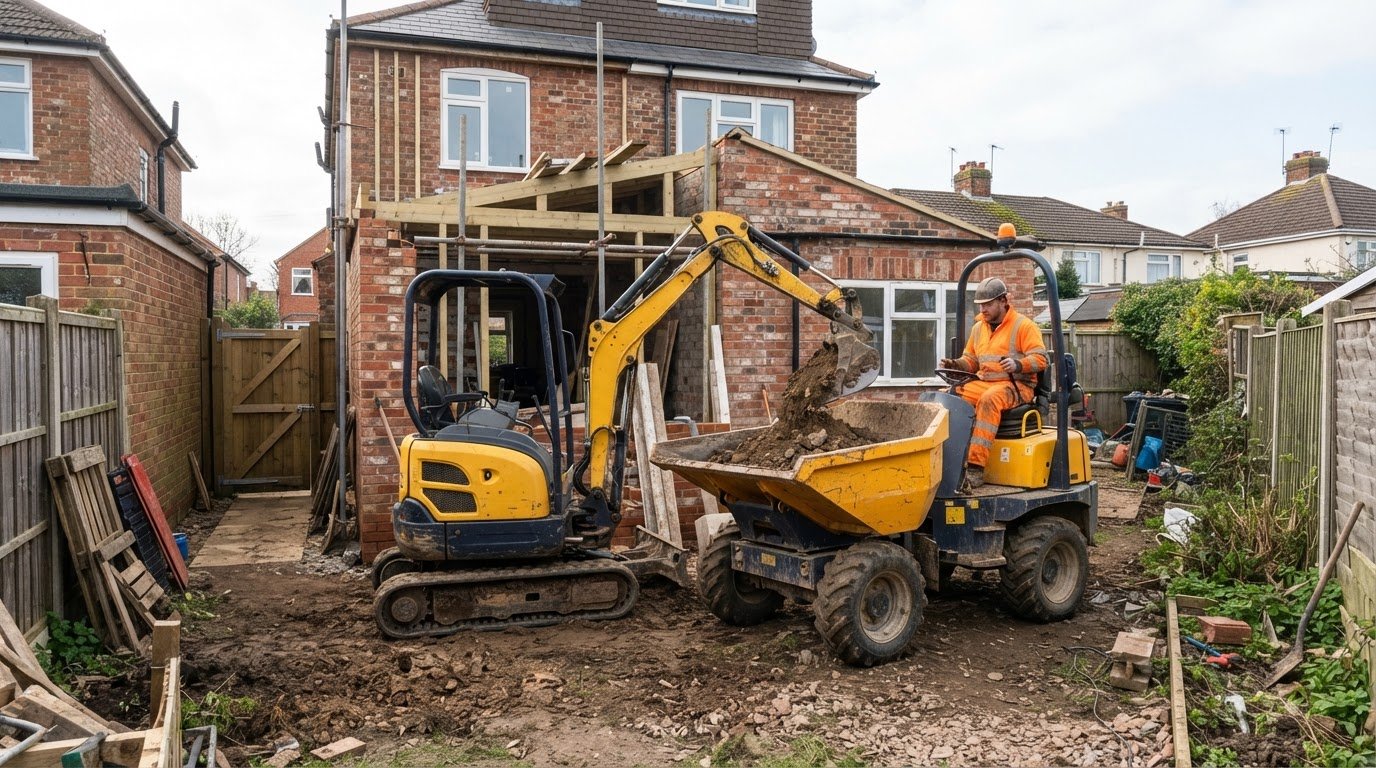
Equipment downtime is the period an asset is unavailable for its intended work. It can include individual machines and supporting assets across a site, not just production machinery. If a dumper is unavailable, for example, material movement may be affected even when an excavator is ready to work. Recording downtime across equipment types shows how asset availability affects the wider project.
What is the difference between planned and unplanned downtime?
Planned downtime is arranged in advance; unplanned downtime occurs unexpectedly. A scheduled service is planned, while a fault that stops a machine during a task is unplanned. This distinction helps teams assess whether stoppages were anticipated and resources prepared. Record interruptions caused by factors such as missing materials separately, so they are not mistaken for equipment failures.
How can preventive maintenance reduce equipment downtime?
Preventive maintenance can reduce the chance that wear or neglected service tasks will cause an unexpected stoppage. Routine checks and replacing worn components before they fail, for example, can help keep equipment available for scheduled work. Record findings and follow-up actions to make recurring defects visible. Use those records to refine maintenance tasks and focus effort on components or machines with repeated problems.

Comments