
Equipment for Laying Tarmac: A Practical Hire Guide for 2026
Choosing equipment for laying tarmac is easier when you plan around the sequence of work, rather than starting with a standard list of machines. Preparation, material movement, surfacing and compaction each have different requirements, and the right setup depends on your site.
Start by considering the work area, access routes and order of tasks. Excavators and mini diggers can support ground preparation, dumpers can move materials, and rollers compact the laid surface. A paving machine may be part of the surfacing method, but it is a separate consideration from supporting plant. This guide explains what each machine does, how to compare options and how to plan plant movements before work starts.
Rocket Rentals Ltd is an independent, family-run plant hire business offering self-drive equipment for professional projects. Its hire range includes mini diggers, excavators, dumpers and rollers, and equipment inspection is a key strength. Use the guidance below to match plant to your project and organise the work sequence.
Table of Contents
What equipment does a tarmac-laying project need at each stage?
A practical tarmac equipment plan matches machinery to the tasks on your site: preparing the ground, moving materials, placing the surfacing and compacting it. Plant supports these stages, but the right combination is not the same for every project. A restricted work area may need a different setup from a large, open site, and some jobs will not need every type of machine.
Separate supporting plant from specialist surfacing machinery when you plan. Excavators, dumpers and rollers support work around the surfacing process. A paving machine may be used to place the material, depending on the project method. The material commonly called tarmac is known technically as asphalt concrete. Plan around the work sequence instead of expecting one machine to perform every task.
Which machines support preparation of the surface?
Excavators and mini diggers can support ground preparation, including excavation where the project requires it. Consider the space available, the route into the work area and room to manoeuvre when selecting between machine types. A restricted entrance or tight working area can affect which machine will fit and operate safely. For more detail on this type of plant, see our guide to mini excavator hire.
How do material movement and compaction fit in?
A site dumper can move materials around the work area, helping connect preparation with later tasks. After the tarmac is laid, a roller compacts the surface. These machines have separate roles, so identify where materials need to go and how the roller will reach each section. The project’s scope and surfacing method determine the plant required. A paving machine may also be part of the approach, but it is not needed for every job.
Before selecting equipment, list the tasks each machine will support. Then check that the access route, material movements and compaction plan work together. This helps avoid hiring plant without a defined role.
How do the main machines contribute to laying tarmac?
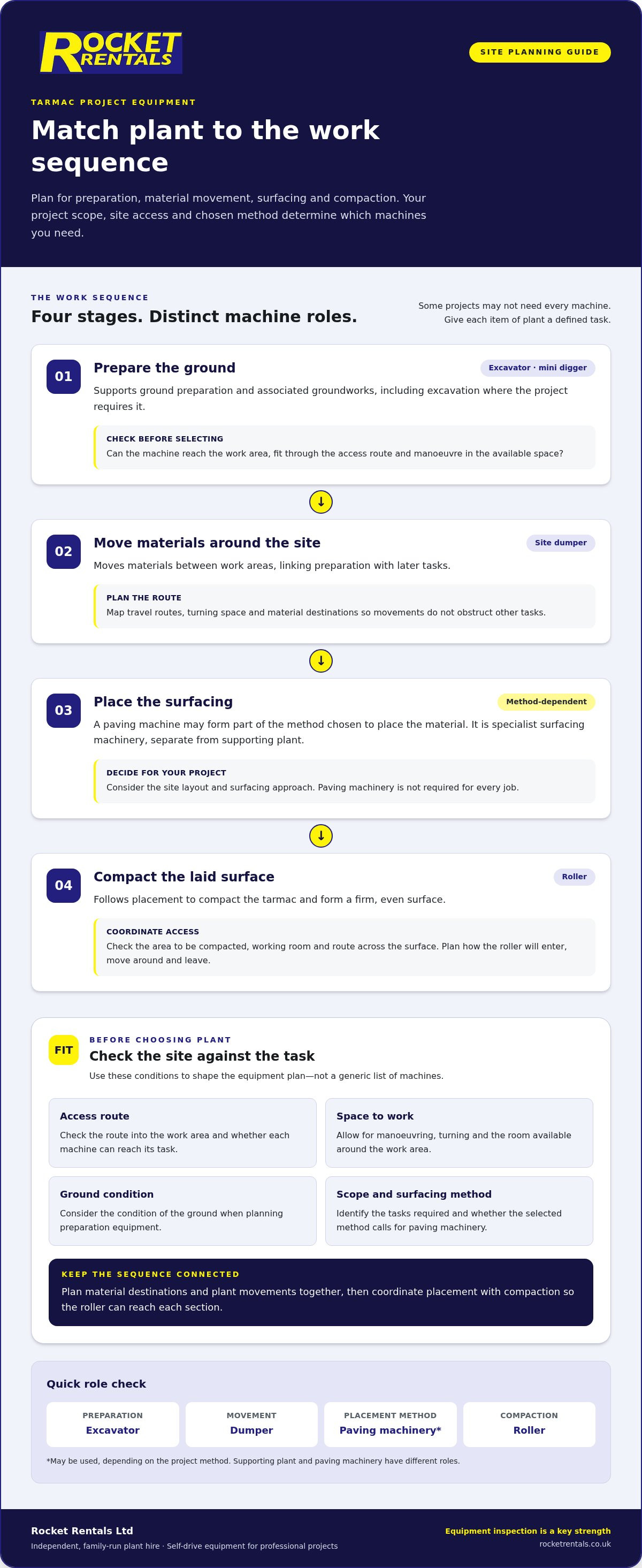
Each machine has a distinct job. An excavator supports preparation and associated groundworks, a dumper moves materials around the site, and a roller compacts the laid surface. Defining those roles makes it easier to plan around the work sequence and avoid treating different machines as interchangeable.
The equipment needed depends on the project scope and the surfacing method. Supporting plant helps prepare the work area and keep materials moving. Specialist paving machinery may be used to place the tarmac, depending on the method selected. Plan separately for each task your project requires.
What is a roller used for on a tarmac project?
After tarmac is placed, a roller compacts it to form a firm, even surface. Because rolling follows placement, the two stages need to be coordinated in the work plan. The area to be compacted, the route across it and the available manoeuvring space all affect roller selection. Think through how the roller will enter, move around and leave the work area without disrupting other tasks.
When might a dumper or excavator be useful?
A dumper can move materials between parts of the site, linking preparation and surfacing tasks. An excavator may support preparation or associated groundworks, depending on what the site requires. Neither replaces the other: their usefulness depends on the task and the movement routes involved. Rocket Rentals Ltd offers self-drive excavator hire for professional projects.
Where does paving machinery fit?
A paving machine may be used as part of the surfacing method. It has a different role from the supporting plant described above, so a dumper or roller should not be treated as a substitute for paving machinery. The Asphalt Paving Handbook offers further background on paving stages and equipment. Use it as a general reference, then plan machinery around your site and chosen method.
Clear equipment roles make coordination easier. Explore Rocket Rentals Ltd plant hire for self-drive rollers, dumpers and excavators. Equipment inspection is a key strength of the business.
How should you compare equipment for your tarmac project?
Compare each machine against its task, the space available and the order of work. The best equipment for laying tarmac is not determined by a generic checklist. Your project scope, site access and surfacing method all shape the plant plan.
Use the comparison below to identify the role each machine could play. Consider paving machinery separately as part of the surfacing method, rather than as a replacement for supporting plant.
Which site conditions affect equipment choice?
Start with the access route, then assess working space, ground condition and the routes needed to move plant and materials. A narrow entrance or restricted work area can limit where machinery can operate. The layout may also affect the sequence: preparation in one area may need to be completed before materials or surfacing work can move into it.
Map routes for plant and materials before work starts. Identify tight turns, areas that need to stay clear and points where different activities could cross. This makes it easier to plan movements as the work area changes.
How does project scale change the plant plan?
In a confined area, limited room can make machine movements and task order central to the plan. A larger surface may involve more material movement and a wider area to compact, so consider how those activities will be coordinated. The machines still have separate roles, but the project scope affects how they fit together.
Base your comparison on the actual work, access and surfacing method, rather than assumed size or capacity. A clear plan gives each machine a defined task and helps prevent you from treating different equipment as interchangeable.
How can you plan the equipment sequence before work starts?
Start with the job, not a list of machines. Before arranging self-drive hire, define the work, review site access, map the tasks and plan how machinery and materials will move. This creates a practical sequence and helps reveal whether any equipment lacks a clear purpose.
What information should you gather about the site?
Record the work area and the route into it. Note ground conditions, available working space and the planned order of tasks. Mark where materials need to go and where each machine will operate. A narrow entrance, limited turning room or an area that must remain clear can affect equipment positioning and the order of work.
Use this checklist to organise the details:
Define the work: note what needs preparing and where tarmac will be laid.
Review access: record entry routes, working space and any restrictions on movement.
Map tasks: set out when preparation, material movement, surfacing and compaction are planned.
Plan plant movements: identify where machines need to travel and where materials need to be delivered.
Match plant to tasks: include only equipment with a defined role in your sequence.
How can you reduce delays between work stages?
Coordinate equipment use with the order of work. Preparation needs to be ready before the next stage can proceed, while material movement and compaction must fit the surfacing method. If plant arrives before there is space to position or use it, it can obstruct other activity. Plan clear routes so machinery and materials can move between tasks.
Build time into the plan to inspect equipment before use. Equipment inspection is one of Rocket Rentals Ltd’s strengths. Keep the work sequence visible to the people coordinating the job, and revise movement plans if site conditions or task order change.
A well-planned sequence makes it easier to arrange the equipment for laying tarmac around the demands of your site. Rocket Rentals Ltd is an independent, family-run business offering self-drive plant hire for preparation, material movement and compaction tasks.
How can Rocket Rentals Ltd support your tarmac equipment plan?
Once you have mapped the work stages and site movements, arrange self-drive plant hire around the tasks your team needs to complete. Rocket Rentals Ltd is an independent, family-run plant hire business offering weekly hire for professional projects. Equipment inspection is a key strength. Relevant hire categories include rollers, dumpers, mini diggers and excavators.
Which Rocket Rentals Ltd equipment may support the work?
Match each machine to its part of the job. A roller supports compaction after the tarmac is placed. A dumper can move materials around the site, while an excavator or mini digger may support suitable preparation work. These are supporting plant roles, separate from specialist paving machinery that may form part of the chosen surfacing method.
Think in terms of tasks rather than treating machines as interchangeable. If your plan includes ground preparation, material movement and compaction, those stages may call for different plant. Arrange equipment to suit the project scope, access and sequence instead of relying on a standard set of machinery.
What should you include when arranging self-drive plant hire?
Prepare a short project summary before arranging hire. Include:
Project tasks: describe the preparation, material movement and compaction work involved.
Site access: note the route in, working space and any constraints that could affect positioning or movement.
Work sequence: explain when each machine is needed and how the tasks fit together.
Intended hire period: give the planned period so the hire can be organised around your programme.
Clear details make it easier to organise suitable equipment hire around the work. Include changes to access or task order in your summary, so the plant requirements reflect the site conditions during the project.
For equipment for laying tarmac, share your project tasks, access details and intended hire period with Rocket Rentals Ltd. The family-run team offers self-drive plant hire for work suited to its rollers, dumpers, mini diggers and excavators. Discuss your plant hire requirements.
Plan your next tarmac project with confidence
Choosing equipment for laying tarmac is more straightforward when you begin with the work sequence. Match plant to the tasks, then account for site access, working space and material movements. Excavators and mini diggers can support suitable preparation work, dumpers can move materials, and rollers compact the laid surface. Specialist paving machinery is a separate choice linked to the surfacing method.
Plan self-drive hire around the project instead of relying on a generic machinery list. Rocket Rentals Ltd is an independent, family-run business offering weekly hire of rollers, dumpers, mini diggers and excavators. Equipment inspection is a key strength.
Prepare your project tasks, access details and intended hire period, then discuss your plant hire requirements with Rocket Rentals Ltd.
Frequently Asked Questions
What equipment is used for laying tarmac?
Equipment for laying tarmac depends on the project scope, site layout and surfacing method. Excavators or mini diggers may support ground preparation, dumpers can move materials around the site, and rollers compact the laid surface. Specialist paving machinery may also form part of the surfacing method. Each machine has a different role, so plan around the tasks rather than assuming every project needs all of them.
Can you lay tarmac without a paving machine?
Yes, a paving machine is not required for every surfacing method. Depending on the project and layout, some work may be hand-laid, while machine laying may suit other jobs. The method affects the equipment plan: preparation plant, material movement and compaction may still be needed when a paver is not used. Consider the area to be covered, site access and the planned way of placing the tarmac.
What is a roller used for when laying tarmac?
A roller compacts tarmac after it has been placed, pressing the material down to form a firm, even surface. It follows the laying stage, so its use needs to fit the surfacing sequence. The project scale and available working space can affect roller selection. Consider the area to be compacted and how the machine will move around the site when planning plant hire.
Do I need a dumper for a tarmac project?
Not every tarmac project needs a dumper. A dumper can move materials around the work area, so its usefulness depends on the site layout, the amount of movement involved and the planned work sequence. Identify where materials need to go and whether a machine has a defined role in moving them. This helps you avoid adding plant that does not support the project tasks.
Can an excavator help prepare a surface for tarmac?
Yes, an excavator may support suitable ground preparation or associated groundworks before surfacing begins. The work required, site access and available working space help determine whether an excavator or mini digger fits the job. Treat it as preparation plant, not as a machine for laying or compacting tarmac. Plan its task and position as part of the overall sequence.
How do I choose plant for a tarmac-laying project?
Choose plant by matching each machine to a specific task, then consider access, working space and the order of work. An excavator may support preparation, a dumper may move materials, and a roller is used for compaction. Paving machinery is a separate consideration linked to the surfacing method. A clear sequence helps you identify what the project needs without assuming every job requires the same equipment.
What should I check before hiring equipment for tarmac work?
Before arranging hire, prepare a summary of the project tasks, site access, planned sequence and intended hire period. Consider where each machine will work and how materials will move between stages. Rocket Rentals Ltd is an independent, family-run business offering self-drive plant hire, including weekly hire, and equipment inspection is a key strength. Clear project details help organise plant hire around the work you need to complete.


Comments