
Excavator Hire South West: A Comprehensive Guide to Professional Plant Solutions
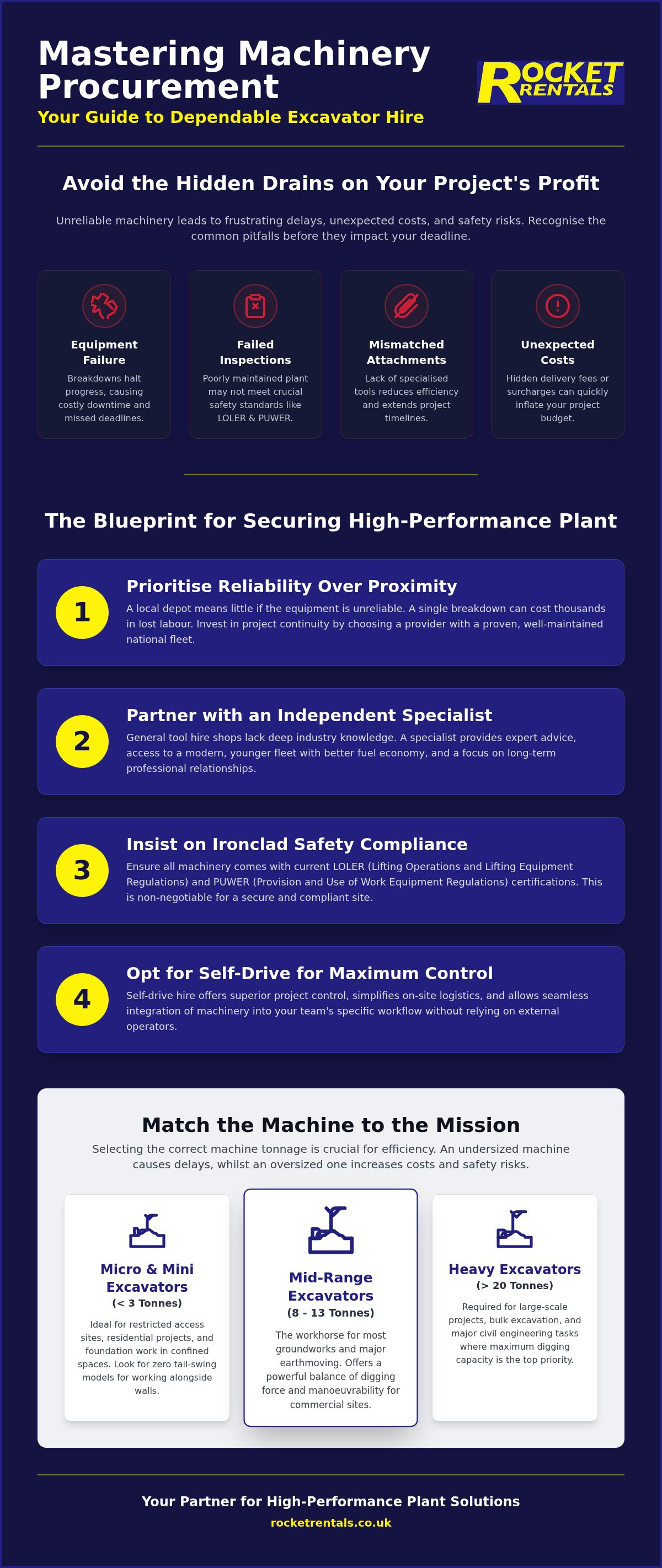
Could a single piece of unreliable machinery be the hidden drain on your project's profit margins? For many contractors, the frustration of a site grinding to a halt due to equipment failure or unexpected delivery surcharges is an all too familiar reality. When searching for dependable excavator hire south west, you've likely encountered the stress of machines failing safety inspections or delays caused by a lack of specialised attachments. It's a common challenge that can quickly turn a well-planned schedule into a logistical nightmare.
We understand that you need more than just a piece of plant; you need a dependable partner who provides security and peace of mind. This guide is designed to help you master the complexities of machinery procurement, ensuring you secure reliable, high-performance equipment for your next project. By choosing a provider that values transparency and meticulous maintenance, you can avoid the pitfalls of hidden costs and poorly kept machinery.
We'll walk you through how to access a modern, well-maintained fleet and provide expert advice on attachment compatibility. From understanding clear hire terms to ensuring national availability with consistent service quality, you'll gain the insights needed to keep your site running efficiently. Let's explore how the right plant solutions can transform your operational standards.
Table of Contents
Navigating Excavator Hire in the South West and Across the UK
Securing reliable excavator hire south west requires a broader perspective than just looking at the nearest depot. Professional contractors now look for partners who combine national reach with local expertise, ensuring that high-performance machinery is available wherever the project moves. This shift away from generalist tool hire shops toward specialist plant providers is a response to the increasing complexity of modern groundworks. Today's sites demand equipment that isn't just functional but also compliant with the latest environmental and safety regulations. Working with an independent specialist, particularly one with a heritage dating back to the late 1980s, provides a level of industry insight that generalists can't match.
Why Reliability Trumps Geographic Proximity
A common mistake is prioritising a hire shop's location over the quality of its fleet. While proximity might suggest lower delivery fees, a single machine breakdown can cost thousands in lost labour and missed deadlines. Reliability is the only true currency on a construction site. By evaluating a provider's maintenance and inspection protocols, you're investing in project continuity. A well-maintained fleet, backed by a "safe pair of hands" philosophy, significantly reduces the risk of unexpected downtime. It's about the peace of mind that comes from knowing your equipment has undergone rigorous safety checks before it even leaves the yard.
The Evolution of Professional Plant Standards
The industry has moved from simple mechanical digging to precision-controlled engineering. Modern excavators are sophisticated tools equipped with telematics and advanced safety features. Knowing the different types of excavators and their specific capabilities is essential for any site manager aiming for maximum efficiency. Tier 1 contractors increasingly prioritise younger fleets, as newer machines offer better fuel economy and lower emissions. The trend toward self-drive hire reflects a desire for greater on-site flexibility. It allows managers to integrate machinery into their specific workflows without the logistical headache of external operators. This level of control is vital for maintaining the high standards expected for excavator hire south west, where every minute of operation must be accounted for and optimised.
Selecting the Right Machinery: From Mini Diggers to Heavy Excavators
Matching machine tonnage to your specific groundworks requirements is the first step in ensuring project efficiency. Recent UK construction industry statistics highlight the continued demand for high-spec machinery across the sector, yet the effectiveness of that equipment depends entirely on its suitability for the task at hand. For those seeking excavator hire south west, the decision involves a careful balance between the physical constraints of the site and the volume of earth that needs to be moved. Selecting a machine that is too small leads to overexertion and delays, whilst an oversized machine can create unnecessary safety risks and increased fuel costs.
Micro and Mini Excavators for Restricted Access
Urban redevelopment and residential projects often present significant access challenges. Micro and mini excavators are designed to navigate these tight spaces without compromising on the breakout force required for foundation work. The 1.5-tonne mini digger remains a staple for professional contractors because it can pass through narrow gates or work in confined gardens whilst still providing impressive digging depth. A critical factor in these environments is the tail-swing design. Zero tail-swing models allow the operator to rotate the cab within the width of the tracks, which is essential for working alongside walls or in high-traffic areas. To learn more about optimising these compact machines, read The Professional Guide to Mini Excavator Hire: Maximising Site Efficiency.
Mid-Range and Heavy Excavators for Groundworks
When the project moves from restricted access to major earthmoving, scaling up the machinery is vital for maintaining productivity. Mid-range excavators, typically between 8 and 13 tonnes, offer the versatility needed for larger drainage projects and site levelling. For major infrastructure or commercial groundworks, heavy excavators reaching 20 tonnes and above provide the reach and bucket capacity to handle bulk excavations efficiently. In these long-term hire scenarios, fuel efficiency and cycle times become the primary metrics for return on investment. Modern fleets equipped with the latest engine technology ensure that every litre of fuel is used effectively, reducing both environmental impact and operational overheads. If you are planning a large-scale project, it's worth taking the time to evaluate your excavator requirements with an expert to ensure your fleet is perfectly matched to your site goals.
The Advantages of Self-Drive Plant Hire for Modern Projects
For professional contractors, the decision to opt for self-drive is often driven by a need for total autonomy on site. Unlike general DIY tool hire shops that cater to domestic users, specialist plant providers offer high-spec machinery designed for heavy-duty commercial use. When arranging excavator hire south west, choosing a self-drive model ensures the equipment fits into your specific project timeline rather than being dictated by an external operator's availability. This approach positions the site manager as the primary coordinator, allowing for a more agile response to the daily challenges of groundworks and construction.
Total Control Over Site Schedules
Site managers benefit from integrating hired plant directly into their existing team's workflow. This eliminates the friction of coordinating with third-party personnel who might not be familiar with your specific safety protocols or site pacing. Using your own qualified personnel allows for immediate adjustments to working hours. If a task takes longer than expected due to ground conditions, you aren't facing the steep overtime costs or rigid "clock-off" times often associated with operated hire. This flexibility reduces site congestion and ensures that every machine is operated by someone already embedded in your project's safety culture.
Cost-Efficiency of Professional Rental Models
From a financial perspective, self-drive hire offers a transparent and predictable cost structure. Commercial contractors often find superior long-term value in this model because it removes the variable overheads of external labour. When evaluating excavator hire south west, transparency in hire rates is paramount. Avoiding hidden fees for operator travel or subsistence allows for more accurate project budgeting. Maximising machine utilisation becomes easier when the equipment is at your disposal for the full working day. It allows your team to switch between tasks as priorities shift, ensuring the machine never sits idle while a clock is ticking on an operator's shift.
Safety remains the cornerstone of professional plant hire. While self-drive offers freedom, it carries the responsibility of ensuring operator competency. Professional contractors typically ensure their teams hold recognised certifications such as CPCS or NPORS cards. This commitment to skill, paired with comprehensive insurance coverage, creates a "safe pair of hands" environment. It protects your business from liability whilst ensuring the machinery is operated to its full potential, maintaining the high standards expected on modern UK construction sites. By maintaining control over who operates the machinery, you ensure that maintenance standards are respected throughout the duration of the hire.
Ensuring Site Compliance: Safety Standards for Hired Plant
Compliance on a construction site is far more than a bureaucratic exercise; it's the foundation of a safe and efficient working environment. When you arrange excavator hire south west, you're assuming a level of responsibility for the machinery's operation and the safety of everyone on your site. This begins with ensuring the equipment strictly adheres to the Provision and Use of Work Equipment Regulations 1998 (PUWER) and the Lifting Operations and Lifting Equipment Regulations 1998 (LOLER). A professional plant partner will provide machines that have undergone a "thorough examination" by a competent person, typically every 12 months for standard excavators, or every 6 months if the machine is used for lifting people. These aren't suggestions. They're legal requirements.
Modern plant solutions now integrate advanced safety features as standard. High-spec excavators often include 360-degree camera systems, proximity sensors, and green seatbelt beacons. These tools aren't just gadgets; they provide the operator with critical situational awareness and allow site managers to verify safety compliance from a distance. Integrating these features into your daily site management helps mitigate the risks associated with heavy plant movement in busy or confined areas. It's about maintaining a "safe pair of hands" across your entire operation.
Essential Safety Inspections and Documentation
Verifying service records and inspection certificates upon delivery is a non-negotiable step for any site manager. You shouldn't accept a machine without confirming its hydraulic integrity and structural soundness. Daily operator checks are equally vital. A simple pre-start inspection covering track tension, fluid levels, and control functionality can prevent minor wear from escalating into a dangerous failure. Maintaining a clear digital audit trail of these checks ensures safety and provides essential documentation for HSE compliance and insurance purposes.
Managing Site Welfare and Access
Safety compliance extends beyond the excavators themselves. Meeting HSE requirements necessitates the integration of site-essential equipment like welfare units to provide staff with adequate facilities. Coordinating the safe movement of different plant types, such as using scissor lifts or telehandlers alongside your digging team, requires a clear site plan. For a comprehensive look at managing these logistical challenges, read Excavator Hire in the South West: The Professional’s Guide to Plant Machinery. If you want to ensure your next project is supported by an expert partner, you can enquire about our fully compliant plant solutions to secure high-quality machinery that meets every modern safety standard.
Scaling Your Project with Rocket Rentals’ National Fleet
Large-scale industrial and civil engineering projects require a level of logistical precision that smaller providers often struggle to match. When your site demands consistent excavator hire south west, partnering with an independent specialist that commands a national fleet ensures that machine availability never becomes a bottleneck. Rocket Rentals has been a "safe pair of hands" in the industry since 1988, providing professional contractors with the scale of a major provider whilst maintaining the personal touch of a dedicated service partner. This balance is critical for streamlining procurement, as it allows site managers to manage all their plant needs through a single, reliable point of contact.
The Rocket Rentals Fleet Advantage
A diverse fleet is the backbone of any successful groundworks operation. Beyond high-spec excavators, our inventory includes dumpers, telehandlers, and rollers, all maintained to the highest standards. We prioritise modern, fuel-efficient machinery that meets the stringent environmental requirements of Tier 1 sites. This commitment to quality extends to our range of specialised excavator attachments. Whether your project requires hydraulic breakers for demolition or specific buckets for precision trenching, having access to the right tools increases machine versatility and reduces the need for multiple machines on site. This approach not only saves space but also optimises your hire budget by ensuring each piece of equipment is as productive as possible.
Streamlining Your Project Logistics
Efficient delivery and collection are as important as the machinery itself. Site schedules are often tight, and delays in equipment arrival can have a cascading effect on your project timeline. Our logistical support is designed to keep your site moving, with a focus on clear communication and reliable transport. We understand the complexities of multi-machine requirements on major civil engineering projects. By coordinating the delivery of excavators alongside welfare units and telehandlers, we help you maintain a compliant and organised site from day one. This level of professional support allows your team to focus on the task at hand, confident that the plant infrastructure is fully managed.
Choosing the right partner means selecting a business that understands the value of long-term professional relationships. We don't just supply machines; we provide the expertise needed to ensure those machines are the perfect fit for your specific site challenges. If you're ready to secure a high-performance fleet backed by decades of industry experience, contact Rocket Rentals today to discuss your next project and discover how our tailored plant solutions can support your project's success.
Securing Your Project's Success with Professional Plant Solutions
Efficiently managing a construction site requires a focus on machine reliability and safety compliance. By selecting the correct tonnage for your groundworks and ensuring all equipment meets rigorous LOLER and PUWER standards, you eliminate the risks of unexpected downtime. Opting for a self-drive model provides the project control and logistical flexibility that modern contractors demand. Since 1988, Rocket Rentals has served as an independent specialist, offering a modern fleet of top-tier machinery for those who need a "safe pair of hands" on site. When you require dependable excavator hire south west, our commitment to well-maintained equipment and expert advice ensures your project remains on track. It's about more than just hire; it's about a partnership that values safety and efficiency. Explore our full range of excavators and site equipment at Rocket Rentals today to secure the high-performance solutions your project deserves. We're ready to help you build with confidence and precision.
Frequently Asked Questions
What is the difference between self-drive and operated excavator hire?
Self-drive hire involves renting the machine and providing your own qualified operator, whereas operated hire includes a driver provided by the hire company. Rocket Rentals focuses exclusively on self-drive solutions for professional contractors. This model offers greater project control and cost transparency, allowing site managers to integrate machinery into their existing teams without the logistical headache of coordinating external staff. It remains the preferred choice for those seeking maximum site autonomy.
Do I need a special licence to hire an excavator for self-drive?
While you don't need a specific driving licence to operate an excavator on private sites, you must demonstrate operator competency under PUWER regulations. Professional standards usually require certifications like CPCS or NPORS cards. These verify that the operator has received adequate health and safety training. Ensuring your team is properly certified is essential for maintaining site safety and meeting insurance requirements when arranging excavator hire south west.
How do I choose the correct size excavator for my groundworks project?
Selecting the right machine depends on your site's physical constraints and the volume of material to be moved. A 1.5-tonne mini digger is ideal for restricted access, whilst 8-tonne to 20-tonne models are better for major bulk excavations. You should consider the required digging depth and tail-swing design to ensure the machine can operate safely within your specific environment without causing any unnecessary site delays.
Are attachments included in the standard excavator hire rate?
Standard hire rates typically include a basic set of digging buckets, but specialised excavator attachments are usually quoted as additional items. These can include hydraulic breakers, augers, or grading buckets that significantly increase machine versatility. We recommend discussing your specific project needs during the procurement process to ensure all necessary tools are available on delivery, helping you avoid unexpected equipment gaps or downtime on your site.
What insurance do I need for hiring plant machinery on a self-drive basis?
You are responsible for ensuring the hired machinery is covered by appropriate "hired-in plant" insurance. This should cover the full replacement value of the equipment and include third-party liability. Most commercial contractors have this as part of their standard business insurance, but it's vital to check that your policy limits are sufficient for the specific machinery being hired. This protection is a cornerstone of a professional approach.
Can you deliver excavators to sites with restricted access?
Yes, our fleet includes compact machinery specifically designed for narrow access sites. Models like the micro excavator or 1.5-tonne mini digger can navigate tight entrances and confined urban spaces. We coordinate delivery using specialised transport to ensure equipment reaches your site safely. Providing clear information about access width and ground conditions beforehand allows us to streamline the delivery process and keep your project moving on schedule.
What site welfare facilities are required when hiring heavy plant?
HSE regulations mandate that all construction sites provide adequate welfare facilities for workers, including toilets, washing facilities, and a place for rest and meals. When managing a project involving heavy plant, integrating welfare unit hire is essential for legal compliance. These units ensure your team has a safe, hygienic environment, which is especially important on long-term industrial or civil engineering projects across the entire United Kingdom.
How does Rocket Rentals ensure the safety and reliability of its fleet?
We maintain a modern, high-spec fleet that undergoes rigorous maintenance and inspection protocols. Every machine is subject to "thorough examinations" in accordance with LOLER and PUWER regulations. As an independent specialist founded circa 1988, we prioritise quality brands and meticulous servicing to prevent site breakdowns. This proactive approach ensures every excavator hire south west arrives ready for work, providing the reliability and safety that professional contractors and site managers expect.


Comments