
Guide to hiring construction machinery: costs and inclusions
Buying construction machinery isn’t automatically the simpler choice. An operator, fuel and transport may not be included in a hire agreement, so understand what the terms cover before planning the work. This guide to hiring construction machinery explains what to check and how hiring compares with owning.
It’s reasonable to want reliable equipment on site without surprises. The right choice depends on the job, how long you need the machine and who is responsible for keeping it ready for work.
Here, you’ll learn what to clarify about operator, fuel, delivery and collection, how to assess a machine’s inspection and service records, and what routine maintenance can tell you about its condition. We’ll also look at how hiring can reduce the need to transport and maintain machinery yourself, and when owning may better suit ongoing work. Use these points to make a considered decision for your project and site.
Table of Contents
Are the operator and fuel always included?
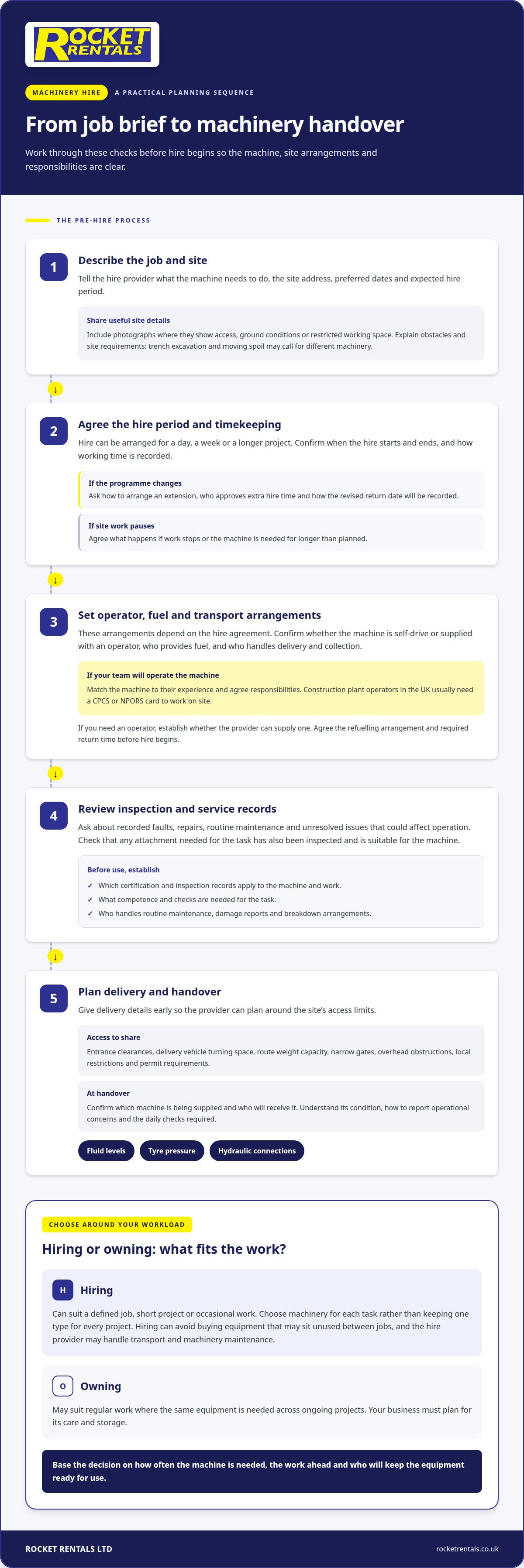
No. Operator, fuel and transport arrangements depend on the hire agreement. Confirm whether a machine is supplied for self-drive use, whether an operator is included, and who handles delivery and collection. Agree the refuelling arrangement and required return time before the hire begins. Clear responsibilities help the site team plan the machine’s arrival, operation and handover.
If an operator is needed, establish whether the provider can supply one or whether your team will operate the machine. Construction plant operators in the UK usually need a Construction Plant Competence Scheme (CPCS) card or National Plant Operators Registration Scheme (NPORS) card to work on site. Training may come through an employer or a Construction Plant Operator Level 2 Intermediate Apprenticeship.
UK plant hire is available from national companies and regional specialists. Compare the machinery each offers, their delivery arrangements and the support provided during a hire. Check that the provider’s equipment and arrangements suit your project and site requirements.
Before the hire begins, ask how the machine’s inspection and service records are reviewed, including any recorded faults or repairs. This gives you a clearer picture of its maintenance history. Establish who will explain the machine’s condition at handover and how to report operational concerns.
Hiring an operator alongside machinery may help if your team lacks the relevant qualifications or available manpower. If your own staff will operate it, match the machine to their experience and agree responsibilities before work starts. Confirming these arrangements early helps the site team understand who operates the equipment, who supplies fuel and how the machinery is managed throughout the hire.
What should you confirm before machinery hire?
Give the hire provider a clear description of the task, site address, preferred dates and expected duration. Include photographs if they show access, ground conditions or restricted working space. For example, trench excavation and moving spoil may call for different machinery. Explain obstacles and site requirements so the provider can help select suitable equipment and plan delivery.
Ask whether the machine is available for your planned dates and how to arrange an extension if the programme changes. Agree who must approve extra hire time and how the revised return date will be recorded. Before work begins, confirm the machine being supplied, delivery and collection arrangements, and the site contact who will receive it.
Hiring can suit a short project or occasional work because you avoid buying machinery that may sit unused between jobs. It can also mean the hire provider handles transport and machinery maintenance. Ownership may suit regular work where the same equipment is needed across ongoing projects, but your business must plan for its care and storage. Use this guide to hiring construction machinery to weigh the expected use against those responsibilities and choose the arrangement that fits your workload.
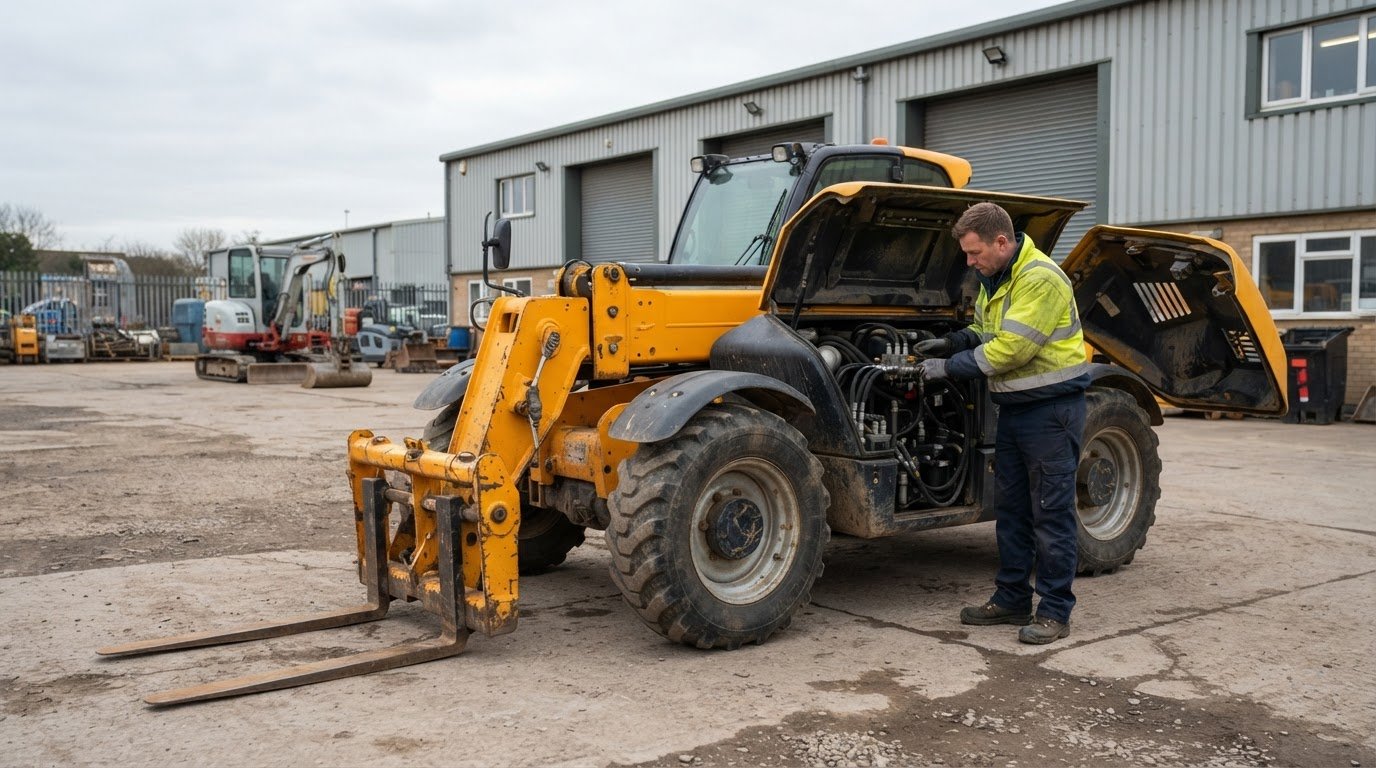
Checking machinery history and maintenance
Before accepting an excavator, establish how the hire provider checks its inspection and service records. Ask about recorded faults, repairs, routine maintenance and unresolved issues that could affect operation. A useful history shows how wear or damage was addressed, not simply that servicing took place. Confirm that any attachment needed for the task has also been inspected and is suitable for the machine.
Give delivery details early. Report entrance clearances, turning space for the delivery vehicle and the route’s weight capacity. Mention narrow gates, overhead obstructions, local restrictions and any permit requirements. For example, a large delivery vehicle may not be able to turn safely in a confined entrance. Sharing these details helps plan delivery around the site’s access limits.
Before using the machine, check the applicable certification and inspection records, maintenance history and operator requirements. UK requirements depend on the machine and the work, so establish what competence and checks apply to the task. Follow the handover guidance for daily checks, including fluid levels, tyre pressure and hydraulic connections. The operator can then identify visible leaks, damaged connections or other concerns before work starts.
Ask who handles routine maintenance, damage reports and breakdown arrangements under the hire agreement. Insurance responsibilities also depend on the written terms, so clarify what your cover includes and whether you need additional protection. If an excavator develops a fault, follow the agreed reporting process rather than continuing to operate it. At handover, make sure the operator understands the machine’s condition, daily checks and how to report a problem.
Resolve practical access constraints before confirming the hire. Share entrance clearances, delivery vehicle turning space, route weight capacity, local restrictions and permit requirements so delivery can be planned appropriately. Ask about the machine’s maintenance history and recorded issues before committing. During use, follow the handover guidance for daily checks, including fluid levels, tyre pressure and hydraulic connections.
Hiring versus owning construction machinery
Start by assessing how often each machine will be needed. Hiring suits a defined job, such as groundwork on one site, when equipment is required for a limited period. It lets you choose machinery for each task instead of keeping one type for every project. Use this guide to hiring construction machinery to frame the decision around your actual workload.
With hire, the plant hire business handles machinery care and maintenance. That can reduce the need for your team to arrange servicing, repairs and transport. Ownership places those responsibilities with your business, including routine maintenance and downtime planning. For example, an excavator awaiting repair cannot support a live site programme. Consider who will manage upkeep before deciding to buy.
Hiring offers flexibility when project needs change. A groundwork phase may need an excavator, while another task calls for a roller or dumper. You can choose machinery for each job without retaining it after the work ends. Ownership gives your team direct access to its machine, but also means planning storage, transport and use between projects. Compare these practical demands, not just the machine itself.
Compare both options against your project schedule. List the equipment required, how regularly it will be used, and who will manage its care and transport. Then decide whether access to different machinery matters more than having one machine ready. Hiring often suits occasional or changing requirements; ownership may fit steady, repeated use. Choose the arrangement that supports your workload and resources without leaving equipment idle or maintenance unmanaged.
Rocket Rentals
Rocket Rentals Ltd provides plant hire for construction and industrial projects, helping you select equipment for the work and site. Its local, family-run approach offers a personal way to discuss what your project needs. The available options include Mini Digger Hire, Excavator hire, Roller Hire and Welfare Unit Hire, alongside other plant equipment.
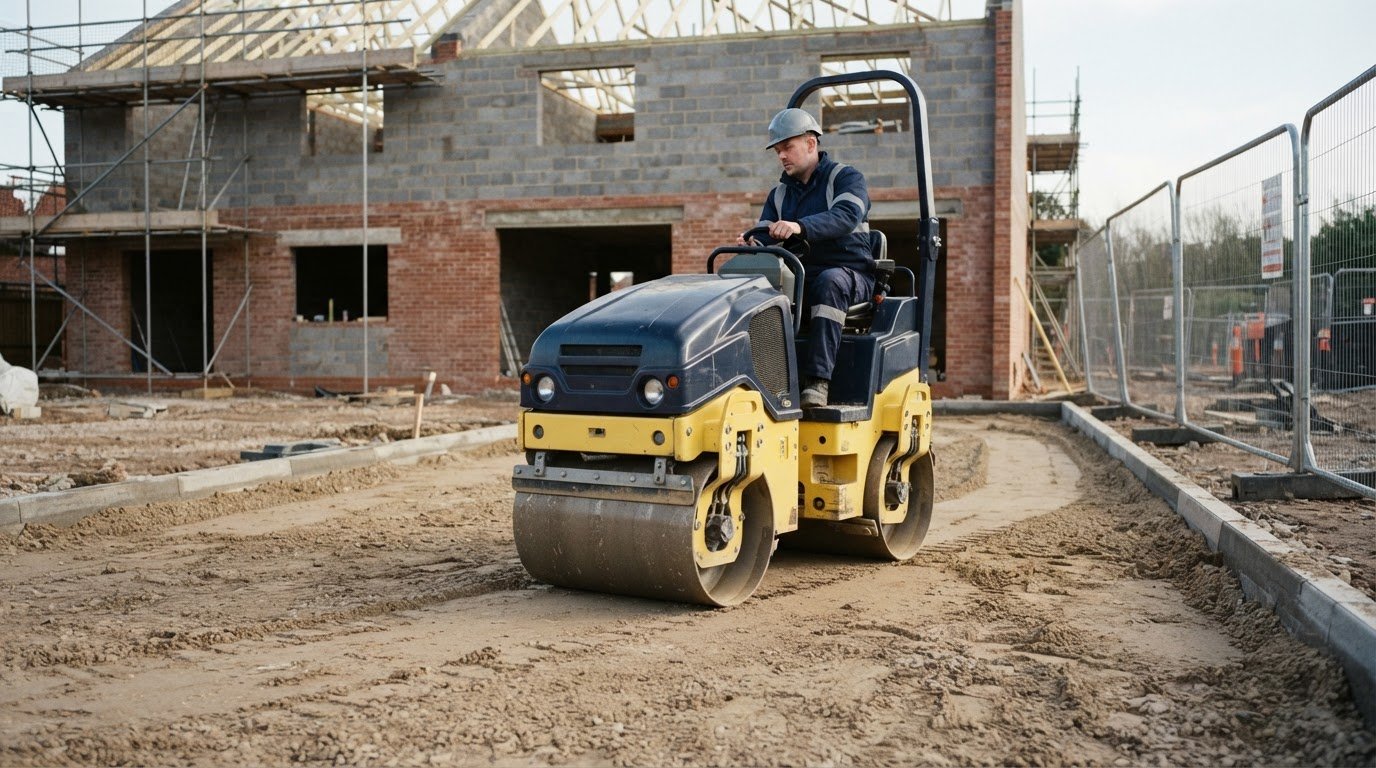
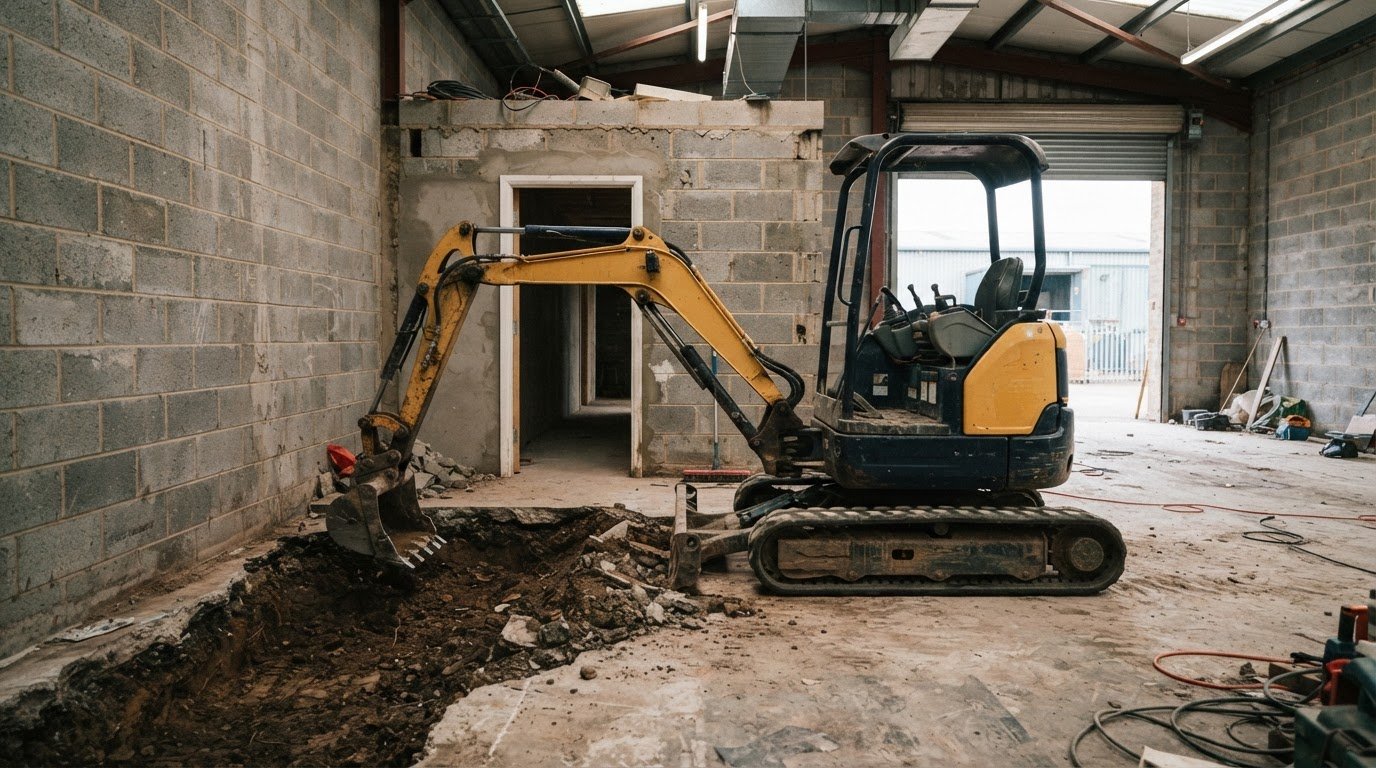
For digging and groundwork, Mini Digger Hire or Excavator hire may suit different project requirements. The right choice depends on the task, site conditions and access. A roller may suit work involving ground compaction, while a welfare unit can support site needs. Explain the job and its setting so you can choose equipment suited to its intended use.
Before arranging plant hire, consider the planned hire period, delivery access and how the machine fits the project schedule. Inspection and maintenance information can help you understand the equipment’s condition. Discussing these practical details sets clear expectations and helps you decide between hiring machinery for a project and owning it for ongoing use.
Rocket Rentals Ltd’s plant hire options are intended for professional projects, not operated plant hire. If your team needs self-drive machinery, identify the task, site requirements and equipment type before making an enquiry. This gives the discussion a clear starting point, whether you need excavation equipment, a roller for ground preparation or a welfare unit for site use.
If you’d like to discuss your project’s machinery requirements, please contact Rocket Rentals Ltd.
Frequently Asked Questions
What should I check in the hire terms?
Read the hire terms to see what period is covered and which services are included. Establish whether use is counted by time, a trip or a defined task, and how waiting or programme changes are recorded. For example, if site access is delayed, know whether the hire period continues and who must approve a revised end date.
What details should I provide first?
Describe the work, site conditions and planned start date, then explain how machinery will reach the working area. Mention narrow entrances, overhead obstructions or soft ground that could affect machine choice or delivery. If the project has separate phases, outline them too. This helps determine whether one machine can serve the work or different equipment is needed.
What should I ask about delays?
Ask who to notify if delivery is delayed, site access changes or machinery becomes unavailable during the hire. Clarify how to report a fault and how updates will be communicated. If weather or another site issue could interrupt the programme, establish how to agree a revised hire period. Keep the responsible site contact informed so decisions can be made promptly.
What should I ask before hiring JCB or construction machinery?
For a JCB or another machine, identify the task and capability required rather than relying on the brand name alone. Discuss working space, ground conditions, access and any attachment needed. Ask how the equipment will be handed over and what operating instructions apply. Also establish who will operate it and how the site team should report concerns about its condition.
What should be confirmed before booking?
Make sure the booking records the machine type, agreed hire dates, site address and delivery arrangements. Name the person responsible for receiving the equipment and give their details to the provider. Confirm site access instructions, collection arrangements and any agreed changes in writing. This gives the delivery team and site staff a shared reference when the machinery arrives.
Comments