
Heavy machinery transport in the UK: vehicles, lifting and securement
Plan a safe machinery move before the vehicle sets off. Understanding heavy machinery transport regulations in the UK starts with matching the vehicle and trailer to the machine’s size and weight, then ensuring the load is stable and secure for the journey.
It’s easy to focus on the transporter, but preparation matters just as much. Accurate machine details, suitable lifting equipment and a clear loading plan can help prevent damage and delays.
This guide explains how to choose transport vehicles and lifting equipment, prepare machinery for a move, and secure it for travel on UK roads. It also covers how route constraints and abnormal-load requirements can affect your plan, so you know what to address before transport begins.
Table of Contents
Choosing transport vehicles and lifting equipment
Choose the transporter and lifting equipment for the machine’s weight, dimensions and loading needs. The right combination also depends on route constraints, including bridge clearances and access at each site.
Matching Vehicles to Machinery Loads
Vehicle suitability means matching the transporter and lifting method to the machine’s size, weight and handling needs. A flatbed may suit some loads, while a step-deck’s lower platform can accommodate taller machinery. Lowboy or double-drop trailers may suit exceptionally heavy or unusually tall machines. The machine must fit the vehicle and stay within applicable limits. Lifting plans should also account for its shape, centre of gravity and fragile parts.
Visibility systems can support safe manoeuvring during loading and positioning. Workplace vehicle sensing systems typically detect objects at around 2 metres, but nuisance alarms or limited detection range can make them unsuitable for some sites. CCTV can help drivers see blind spots and position a vehicle accurately. The equipment selected should suit the working area and the task, rather than being treated as a substitute for traffic management.
Traffic Management and Escort Vehicles
Traffic management organises vehicle movements and alerts people to a load’s presence. For an abnormal load, signage and escort vehicles can improve visibility for other road users. An escort may be required for loads over certain widths, so dimensions affect planning. Consider the route, turning space and site access when deciding how the vehicle will approach and leave. These measures help manage the movement without assuming every oversized load needs the same arrangements.
Driver Licences and Vehicle Documents
The driver must hold the correct driving licence for the vehicle and trailer combination. Vehicle documents and any required authorisation must match the proposed movement. Under the Road Vehicles (Authorisation of Special Types) (General) Order 2003, Special Types Vehicles may operate outside Construction & Use and Authorised Weight rules, subject to the required authorisation. This matters when a load or vehicle configuration falls outside ordinary limits. Confirm the vehicle, trailer and movement requirements before transport is arranged.
How do you transport a heavy machine?
Transport requirements depend on the complete vehicle and load, including their combined weight and dimensions. Understanding heavy machinery transport regulations in the UK helps you plan around those measurements. Tracked machinery, self-propelled equipment and machinery on trailers are assessed according to their characteristics; the type alone does not set a separate notification threshold.
Assessing Machinery Weight and Dimensions
Before choosing a transport method, record the machine’s operating weight, dimensions and transport requirements. Include attachments and components, which affect the load and how it can be positioned. Accurate details help establish whether ordinary vehicle limits apply or an abnormal-load process is needed. They also inform loading arrangements, route checks and any required authorisation.
Choosing Transport by Size and Weight
Match the machinery’s size and weight to a suitable vehicle and trailer combination. A load that is too tall, heavy or wide for the planned vehicle can trigger different requirements and restrict route options. Assess how the load affects axle weights, gross vehicle weight and overall dimensions. These details, rather than a generic machine category, determine the transport method and planning.
Weight Thresholds and Notification Deadlines
In Great Britain, an abnormal indivisible load vehicle exceeding 150,000kg or 16,500kg per axle requires a Special Order. For gross weights exceeding Construction & Use limits up to 80,000 kg, two clear days’ notice and an indemnity to Road and Bridge Authorities are required. Above 80,000 kg and up to 150,000 kg, police need two clear days’ notice and Road and Bridge Authorities need five clear days’ notice with indemnity. A Special Order movement requires five working days’ notice to highway and bridge authorities and two working days’ notice to police.
Transporting Different Machinery Types
Tracked machines, self-propelled equipment and trailer-carried machinery are assessed by the loaded vehicle’s weight and dimensions. For a Special Order, thresholds include weight above 150,000kg, more than 16,500kg per axle, width over 6.1 metres or rigid length over 30 metres. The machine type doesn’t replace these measurements. Applying heavy machinery transport regulations in the UK means considering the full vehicle combination and the notices required for its movement.
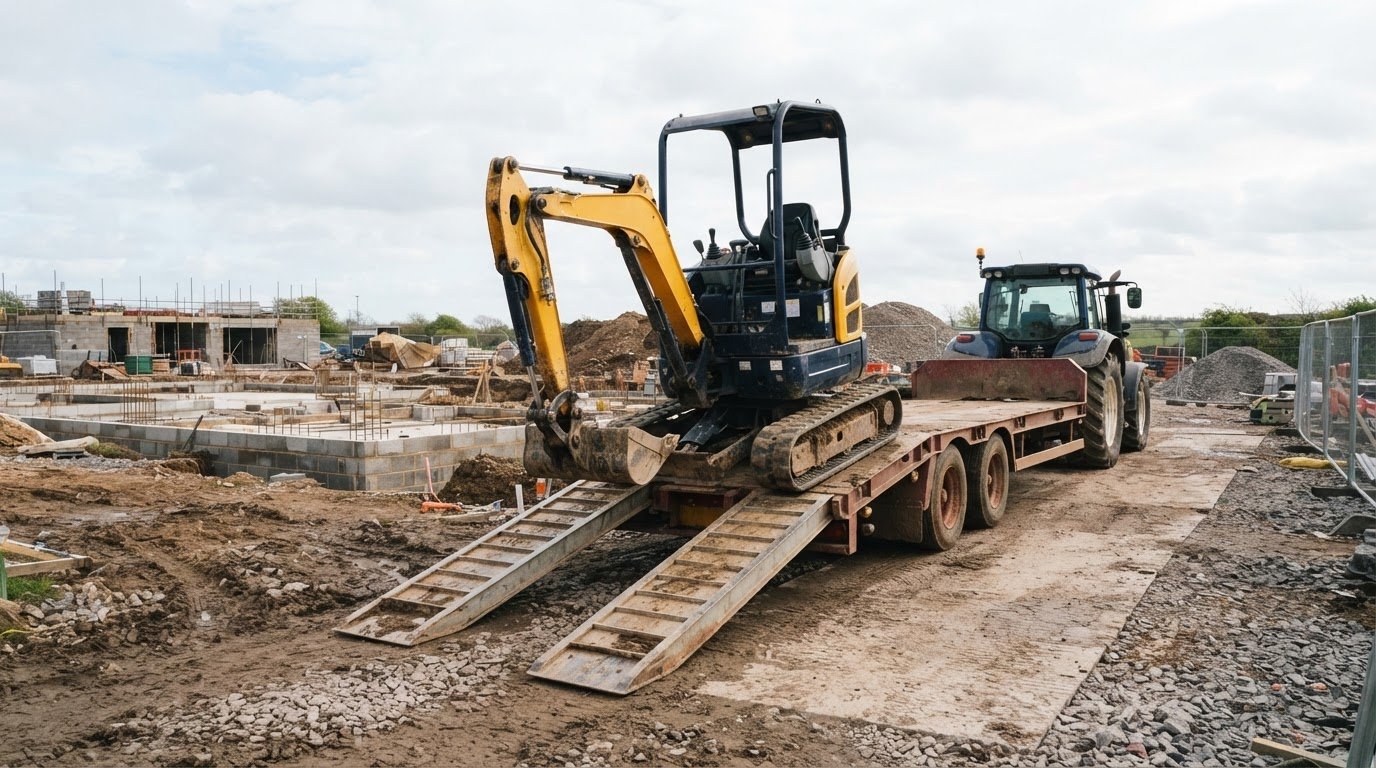
Load securement
Securement keeps machinery stable throughout a road journey and prevents it becoming a hazard. Restraints must suit both the machine and the carrying vehicle.
Load Stability and Centre of Gravity
Load stability depends on balanced weight distribution and restraints suited to the machine’s shape. A high or off-centre load can shift during braking or cornering, so position it to keep its centre of gravity controlled. Choose chains, binders or straps suited to the equipment and vehicle, and connect them to suitable anchor points. Blocking can help prevent movement; lock booms, blades and buckets before travel.
UK road loads must remain stable and must not create hazards for other road users. For oversized machinery, securement is only one part of compliance: the vehicle and load must also meet applicable limits or have the required authorisation. A VR1 form applies to a load wider than 5 m and up to 6.1 m. Wider loads require a Special Order. Authorisation and notification requirements depend on the load dimensions and route.
Differences Across UK Nations
The thresholds discussed here apply to Great Britain, covering England, Scotland and Wales; they should not automatically be treated as Northern Ireland requirements. For a journey involving Northern Ireland, establish the applicable rules and notifications for that jurisdiction. This distinction matters when planning a route across the UK, as a compliant movement in one area may face different requirements elsewhere.
Before haulage, match each restraint to the machine’s weight, shape and contact points. Keep chains or straps clear of fragile components, and use blocking where it prevents wheels or tracks from shifting. Check that the load is secure after loading and again before departure. Lock any boom or bucket in place so it cannot swing or move during transit.
Special Order requirements apply to certain abnormal loads, including those exceeding relevant weight or size limits. The required authorisation and notifications depend on the movement’s measurements and route. Include these requirements in the transport plan alongside securement, so the load is restrained safely and moved under the correct arrangements.
Preparing machinery for transport
Start preparation with accurate machine details and a clear loading plan. Record the dimensions, operating weight and condition, then identify any components that need protection or securing before the move.
Clean the machinery and document its condition before transit. Photographs can record existing damage and make changes after delivery easier to identify. Check for leaks, adjust fluid levels according to transport guidance, and power down electrical systems. Disconnecting the battery may also be appropriate for the machine and transport method.
Protect delicate components with suitable padding, foam, crating or shrink-wrapping. Remove attachments only when the transport plan requires it, and keep loose parts together for delivery. Secure or lock moving parts, such as a boom, blade or bucket, so they cannot shift during loading or travel. Controlled lifting helps prevent sudden jolts and swinging that could damage the machine or nearby structures.
Check the pickup and delivery areas before machinery arrives. The ground must support the crane or haulage vehicle, and the receiving floor must bear the machine’s weight. Include access routes, working space and the intended unloading position in the plan. These details affect where lifting equipment can stand and how the machine can be moved safely into place.
Prepare movement documents and site arrangements alongside the machine. A method statement should explain how transport and loading will be carried out; a health and safety pack should be ready for approval before work starts. Abnormal-load clearance planning may need to begin ten weeks ahead. Drivers and site teams also need clear timing and access information.
Finally, account for wind, rain, temperature and road conditions, which can affect vehicle handling and braking. Treat preparation as part of the transport method: the recorded condition, protected components, suitable lifting arrangements and accessible receiving site all need to align before departure.
Rocket Rentals
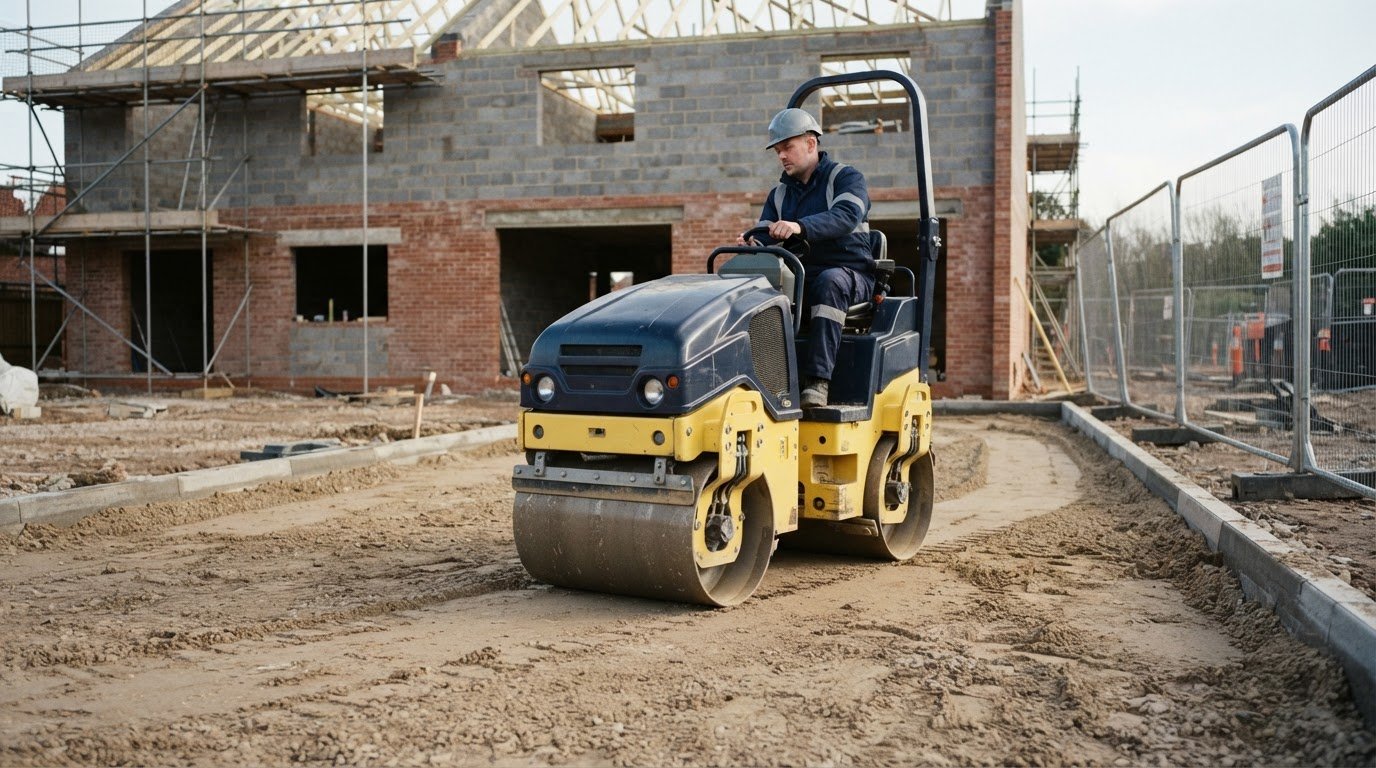
If your project needs machinery on site rather than transport for equipment you already own, Rocket Rentals Ltd, an established family-run business based in the West Country, offers plant hire options with thorough inspection. Mini digger hire, excavator hire and roller hire suit different construction tasks, while welfare unit hire provides essential site facilities.
Hiring may be a practical option when the equipment you need is locally available for your project, rather than arranging complex heavy machinery transport regulations UK compliant moves from elsewhere. Consider the work, site access and equipment required when deciding whether to move machinery you own or hire plant for the job.
For plant hire that fits your project, contact Rocket Rentals Ltd.
Plan the next move with confidence
Understanding heavy machinery transport regulations in the UK helps you make a sound decision before work begins. Consider whether moving machinery you own suits the project, or whether hiring plant could better fit your site and programme.
The right choice depends on the work ahead, the equipment required and how it will reach the site. If plant hire suits your project, Rocket Rentals can help you explore suitable equipment, including Mini Digger Hire, Excavator hire and Roller Hire.
Explore your plant hire options with Rocket Rentals and take the next step towards getting your site ready. With a clear plan, you can move forward with confidence.
Frequently Asked Questions
What happens if you don’t transport plant vehicles properly?
Machinery that isn’t secured properly can shift, fall or strike other road users, creating a hazard and risking damage to the machine or vehicle. A loose bucket or unsecured boom may move during braking or cornering. Poor preparation can also disrupt site access and loading. Treat securement, route suitability and machine condition as connected parts of the move, not separate checks.
Why can’t a plant vehicle drive from one location to another?
A plant vehicle can travel between locations under its own power only if the vehicle and its use meet applicable road requirements. Some machines are designed for site work, and their dimensions or configuration may make public-road travel unsuitable. Operators need the correct driving licence to use a vehicle on the public highway, and vehicles used there must comply with applicable road traffic legislation.
What UK laws and regulations apply to transporting heavy machinery by road?
Key rules include the Road Traffic Act 1988, the Road Vehicles (Construction & Use) Regulations 1986 and the Road Vehicles (Authorised Weight) Regulations 1998. These relate to road use, vehicle dimensions, weights and loading. Special Types Vehicles may operate outside Construction & Use and Authorised Weight rules under the Road Vehicles (Authorisation of Special Types) (General) Order 2003, subject to required authorisation.
What are the UK legal width, height, length and weight limits for abnormal indivisible loads?
In Great Britain, a Special Order is required for an abnormal indivisible load vehicle exceeding 150,000kg, 16,500kg per axle, 6.1 metres wide or 30 metres in rigid length. Height has separate route considerations: abnormal loads should, wherever possible, not exceed 4.95 m to allow wider use of the motorway and trunk road network. That height is planning advice, not the Special Order threshold.
When is an abnormal load notification, police escort or private escort required in the UK?
Notification requirements depend on the load’s dimensions and weight. For example, a load wider than 5 m and up to 6.1 m requires a VR1 form and two clear days’ notice to police; wider loads require a Special Order. An attendant is required when a vehicle’s width exceeds 3.5 metres. Escort vehicles may be needed for some wide loads, but the requirements depend on the movement.
How far in advance must abnormal load movements be notified to UK authorities and bridge owners?
For a Special Order movement in Great Britain, give highway and bridge authorities five working days’ notice and police two working days’ notice. Other movements have different notice periods, depending on dimensions and weight. For example, some load categories require two clear days’ notice. “Working days” and “clear days” are different counting terms, so use the period that applies to the movement.
Comments