
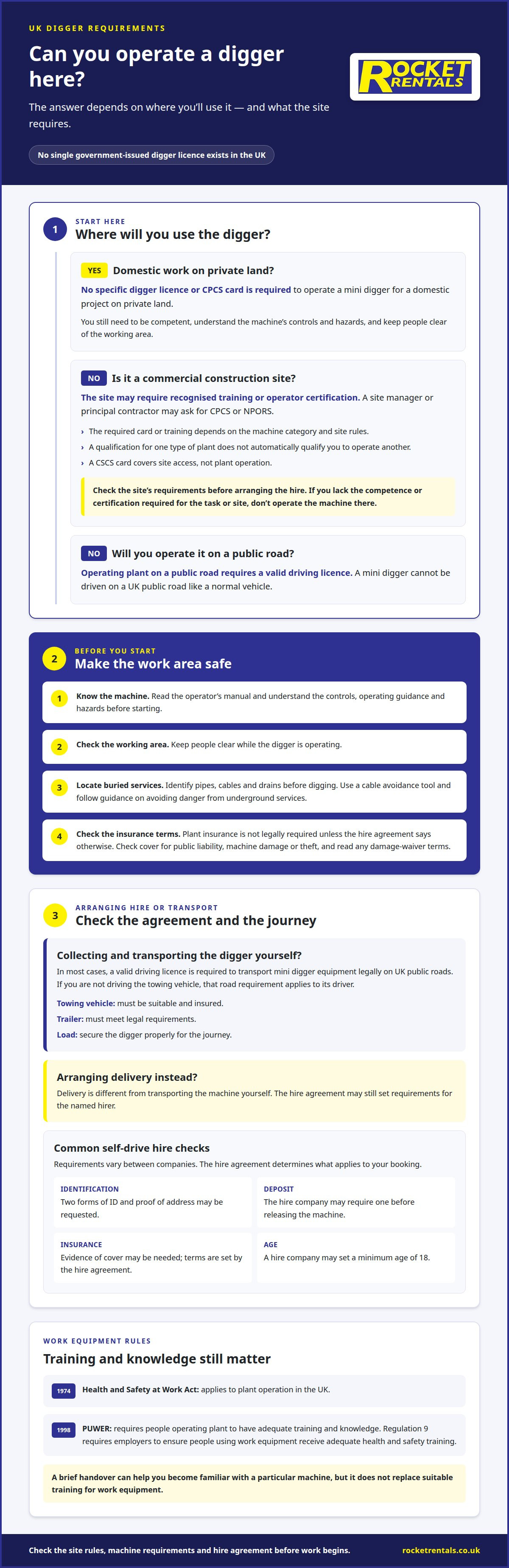
Hire a digger without a license in the UK: costs and safety
Not having a licence doesn’t automatically prevent you from operating a digger. You can hire a digger without a licence in the UK for domestic use on private land, but you must still understand the machine and use it safely.
It’s reasonable to assume a licence is the main requirement, but the setting matters. Commercial construction sites may require recognised operator qualifications, even though the UK has no single government-issued digger licence. A machine suitable for a private project may not be appropriate for every worksite.
This guide explains how requirements differ between private land and commercial sites, what to consider for safe operation and what can affect your hire. You’ll also learn why choosing equipment to suit the site and task matters, so you can plan the work with a clear understanding of the requirements.
Table of Contents
Licence requirements for private land
For domestic digging on private land, you don’t need a licence to operate a mini digger. If you want to hire a digger without a licence in the UK, domestic use on private land has no specific digger-licence requirement. Commercial construction sites and public roads have different requirements.
Driving licence and age eligibility
A driving licence concerns road use and transport, not simply operating a digger on private land. A mini digger can’t be driven on a UK public road like a normal vehicle, and operating one on a public highway requires a valid driving licence. A hire company may set a minimum age of 18, so someone under 18 may not be able to hire one.
On commercial construction sites, a site manager or principal contractor may require recognised training or operator certification, such as CPCS or NPORS. The project or hire agreement may also set conditions. These requirements matter if the work moves from a private garden to a construction site, where domestic-use rules don’t determine who can operate plant.
Mini digger licence requirements
For a domestic project on private land, you don’t need a specific licence or CPCS card to operate a mini digger. You do need to be competent: read the operator’s manual, understand the controls and hazards, and keep people clear of the working area. Hiring a digger without a licence in the UK doesn’t remove your responsibility to use it safely.
Insurance terms can also affect a hire. Plant insurance isn’t legally required unless the hire agreement says otherwise. Check whether your cover includes public liability, machine damage or theft, and read any damage-waiver terms in the contract.
Before digging, identify buried pipes, cables and drains. Use a cable avoidance tool and follow guidance on avoiding danger from underground services. This helps reduce the risk of striking buried services.
Hire requirements can vary between companies and locations. For example, current London non-road mobile machinery emission standards apply to small plant, including mini diggers. The relevant site rules and hire terms can therefore affect what you need to arrange before using the machine.
Whether you need a licence to operate a digger in the UK
There’s no single government-issued digger licence in the UK. Whether you can hire a digger without a licence in the UK depends on where you’ll use it and the work involved. Domestic use, commercial construction sites and public roads have different requirements, so permission to operate on private land doesn’t automatically apply at work.
The Health and Safety at Work Act 1974 applies to plant operation in the UK, according to The National Archives. The Provision and Use of Work Equipment Regulations 1998 (PUWER) require people operating plant to have adequate training and knowledge, according to The National Archives. Regulation 9 of PUWER requires employers to ensure people using work equipment receive adequate health and safety training, according to The National Archives.
On construction sites, a principal contractor or site manager may require a recognised qualification, such as CPCS or NPORS. The required card or training depends on the machine category and site rules. A qualification for one type of plant doesn’t automatically qualify you to operate another. A CSCS card covers site access, not plant operation.
If you’re a first-time operator, understand the machine’s controls, operating guidance and hazards before starting work. Training should prepare you for the equipment and task, such as landscaping or excavation. A brief handover can familiarise you with a particular machine, but it doesn’t replace suitable training for work equipment.
For commercial work, find out what operator certification and training the site requires before arranging a hire. This can help prevent delays if a site manager won’t allow an operator to start without the required qualification. Whether you can hire a digger without a licence in the UK is a separate question from whether you’re permitted to operate it on a particular worksite.
Operating plant on a public road requires a valid driving licence. Construction work may also require CPCS or NPORS certification, depending on the project. If you don’t have the competence or certification required for the task or site, don’t operate the machine there.
Can you hire a digger for delivery without a licence, and what ID or deposit is needed?
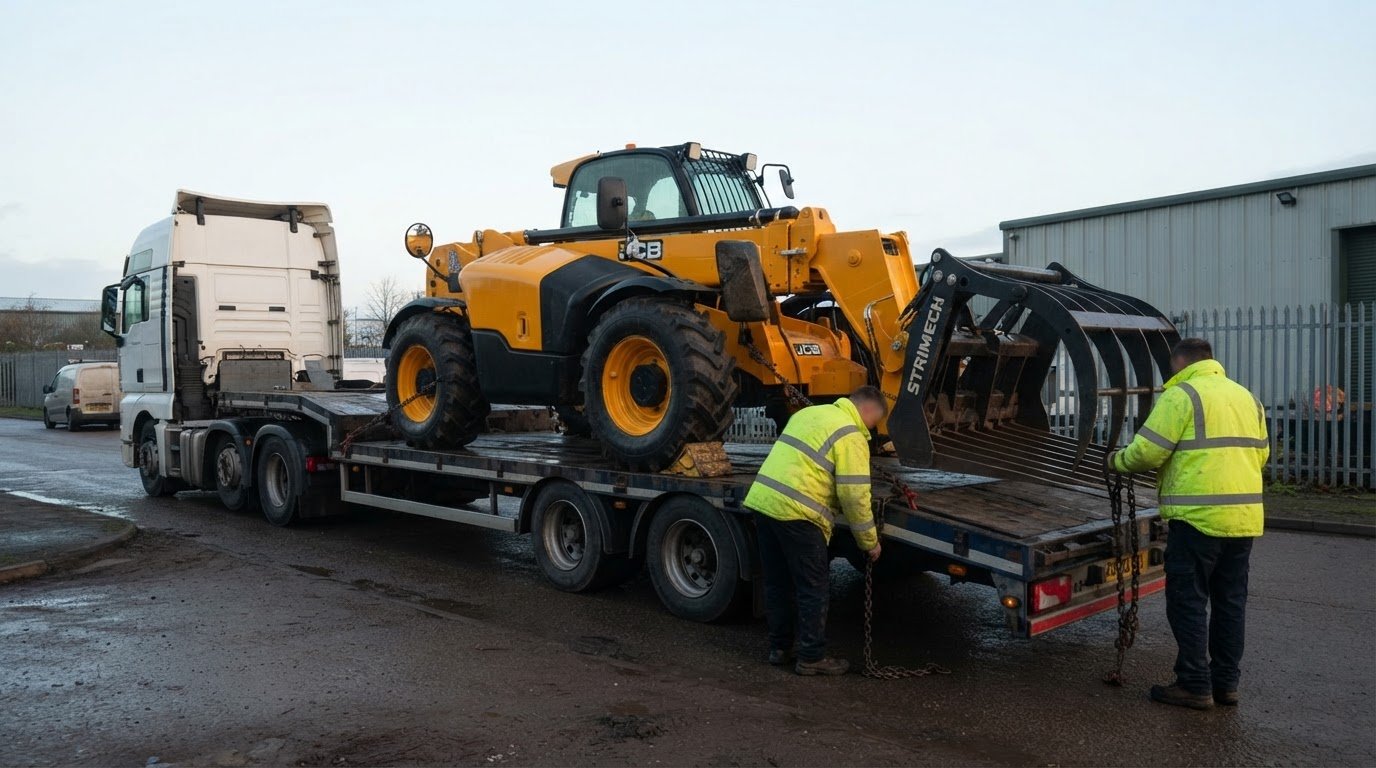
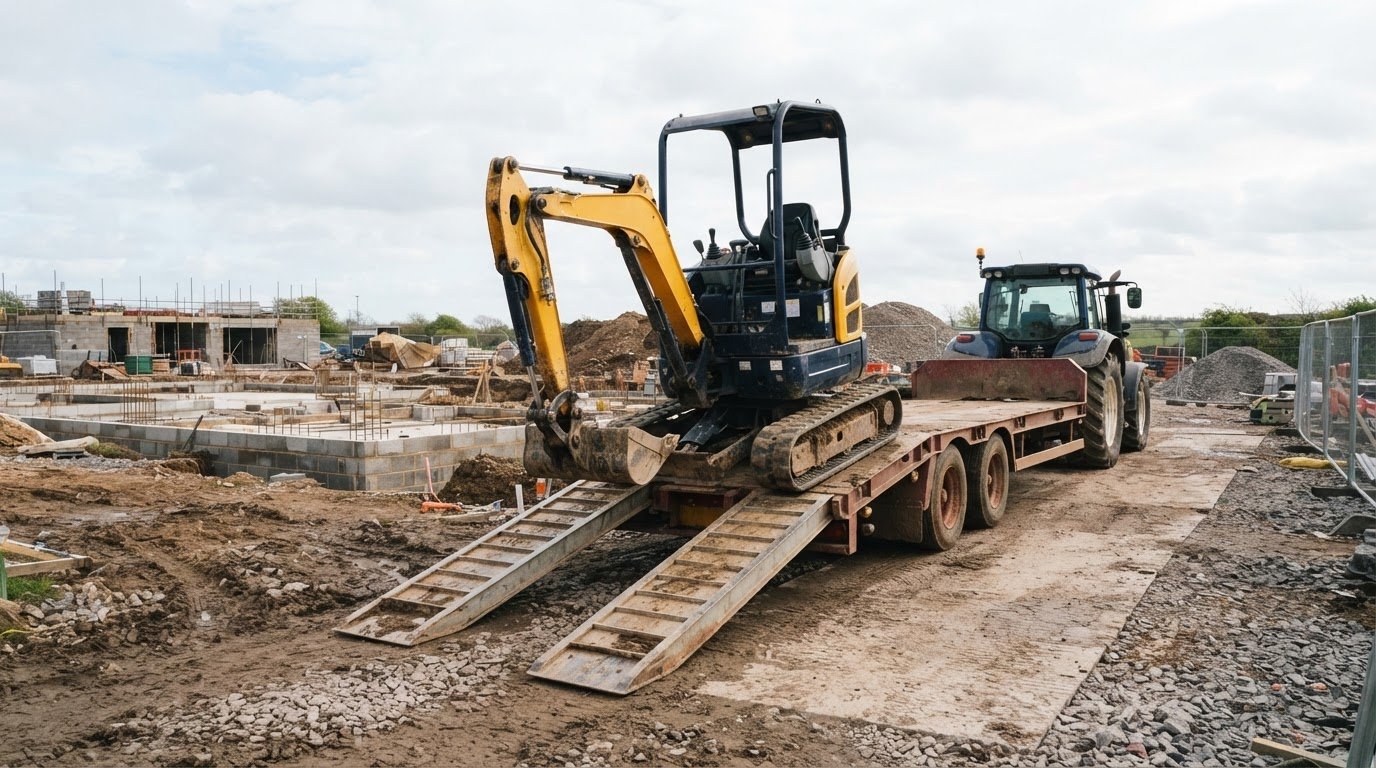
Hiring a digger for delivery is different from transporting it yourself. In most cases, a valid driving licence is required to transport mini digger equipment legally on UK public roads. If you aren’t driving the towing vehicle, that road requirement applies to the driver, not simply the person arranging the hire. The hire agreement may still set requirements for the named hirer.
Transport also depends on the vehicle and trailer. The towing vehicle must be suitable and insured, and the trailer must meet legal requirements. Secure the digger properly for the journey. These conditions matter whether you collect the machine or arrange transport, because an unsuitable vehicle or unsecured load creates a road-safety risk.
Self-drive hire companies commonly ask for two forms of identification, proof of address, a deposit and evidence of insurance before releasing a machine. A plant hire company may hire a mini digger to someone aged 18 or over. These are common requirements, not a single set of terms for every hire, so the agreement determines what applies to your booking.
Identification: Two forms of ID and proof of address may be requested.
Deposit: The hire company may require a deposit before release.
Insurance: Evidence of cover may be needed, with terms set by the hire agreement.
Age: A company may set a minimum age of 18.
Read the agreement before delivery or collection. It sets out the hirer’s responsibilities, insurance conditions and what happens if the machine is damaged or stolen. Plant insurance isn’t legally required unless the hire terms specify it, but cover can vary. Check whether the policy includes public liability, damage or theft protection, and understand any excess or exclusions in the documents.
Delivery doesn’t remove the need to plan for safe unloading and access. Make sure the delivery point is reachable and has suitable space for the machine. If you’re collecting it, confirm that the towing vehicle, trailer and securing arrangements meet legal requirements before travelling on a public road.
Rocket Rentals: Mini Digger Hire
Rocket Rentals Ltd offers Mini Digger Hire for projects where a compact excavator suits the work. The company provides self-drive equipment for construction, civil engineering and industrial projects, as well as garden projects. For domestic landscaping or site excavation, the right machine depends on the task, ground conditions and access. Defining these requirements helps you plan equipment hire around the work.
Consider the excavation and available working space before choosing a machine. A garden project, trench or foundation task can involve different access and digging needs. The route to the work area matters too: narrow entrances, uneven ground and limited room to manoeuvre can affect whether a machine is practical. Sharing these project details helps identify a suitable equipment category.
Rocket Rentals Ltd is a local, family-run business that places emphasis on inspection, so equipment is examined for safety and operational condition. This is relevant when planning a hire because reliable plant supports work getting under way as intended. The business offers plant hire for professional projects as well as garden-project owners. Choose equipment that fits the task rather than assuming the largest machine is the best option.
Mini Digger Hire suits projects that need excavation equipment. For other site requirements, Rocket Rentals Ltd also offers excavator hire and Roller Hire. Welfare Unit Hire provides site welfare facilities, rather than digging equipment. Matching the hire to the work can help keep the site organised and avoid bringing in plant that doesn’t serve the project.
Before arranging a hire, be ready to describe the work, ground conditions, access and whether the project is domestic or commercial. For commercial construction, operator certification and site rules remain separate from equipment hire. This distinction helps you plan for both the machinery and operator requirements, especially if a site manager sets specific conditions for plant use.
If you’re ready to discuss equipment for your project, contact Rocket Rentals Ltd by phone or email using the contact details on its website.
Frequently Asked Questions
Can anyone drive a digger?
No. Whether you can operate a digger depends on where it will be used and whether you’re competent to use that machine. Domestic use on private land doesn’t require a specific digger licence, but commercial sites can set certification requirements. Public-road operation has separate rules. A homeowner’s permission to use a machine in their garden, for example, doesn’t automatically qualify them to operate plant on a construction site.
CPCS and NPORS: what are they and who needs them?
CPCS and NPORS are schemes that provide plant operator training and certification. On construction sites, employers and principal contractors may require one to show that an operator has relevant competence. The card or qualification must match the plant category. A qualification for an excavator, for example, doesn’t automatically cover a telehandler. Site-access cards and plant-operator qualifications serve different purposes.
Do you need training for commercial work?
Yes. Operators using plant for work need adequate training and knowledge under PUWER. Employers must ensure appropriate health and safety training, and commercial sites may set additional requirements. Training should match the machine and tasks involved, such as trenching or foundation work. A short handover can familiarise you with a particular machine, but it doesn’t replace suitable operator training.
Can you hire a mini digger in the UK without a driving licence?
Often, yes, if the mini digger is delivered and you meet the hire terms. A driving licence is relevant if you transport the machine on public roads, rather than simply operating it on private land. For example, the person arranging delivery may not be driving the towing vehicle. Hire companies can also set their own conditions for the named hirer.
Do you need a licence or qualification to operate a digger on private land in the UK?
No specific digger licence or CPCS card is required for domestic use on private land. You still need to understand the machine and use it safely. Before work, consider the task, ground and machine’s operating limits. Digging a garden trench, for example, requires a different plan from moving large amounts of earth. Commercial site rules may require qualifications even when the equipment is similar.
What training or CPCS/NPORS card is required to operate an excavator at work in the UK?
There isn’t one card that applies to every workplace. The required training or CPCS/NPORS category depends on the excavator and the site rules. An employer or principal contractor may require recognised operator certification before work can start. A card for another type of plant won’t automatically qualify you. Match the training to the machine category and the work you’ll carry out.
Comments