
Telehandler Weights: A Practical UK Guide for 2026
Could a telehandler’s lifting capacity tell you how heavy the machine is? Not reliably. If you’re asking how much does a telehandler weigh, the answer depends on the model and its exact configuration. Lifting capacity and machine weight are different specifications.
That distinction matters when you’re arranging transport, checking site access or planning where a machine can work. Manufacturer specifications may also use terms such as operating weight and unladen weight. Without checking what each term means, you could end up comparing different figures.
This guide explains how to find the relevant weight in manufacturer information, why configuration can affect it and how to use the figure in transport and site planning. It also explains why weight and a load chart answer different questions: weight describes the machine, while the load chart shows its lifting limits for particular boom positions and attachments.
Rocket Rentals is an independent, family-run plant hire business offering self-drive telehandler hire. Checking the machine specification helps you plan your hire, alongside the inspection that supports our focus on dependable equipment.
Table of Contents
How much does a telehandler weigh? Why there is no single figure
Telehandler weight, payload and lifting capacity: understand the difference
How model and configuration change a telehandler weight comparison
What telehandler weight means for transport and site planning
Choosing a telehandler for hire: turn the weight figure into a useful decision
How much does a telehandler weigh? Why there is no single figure
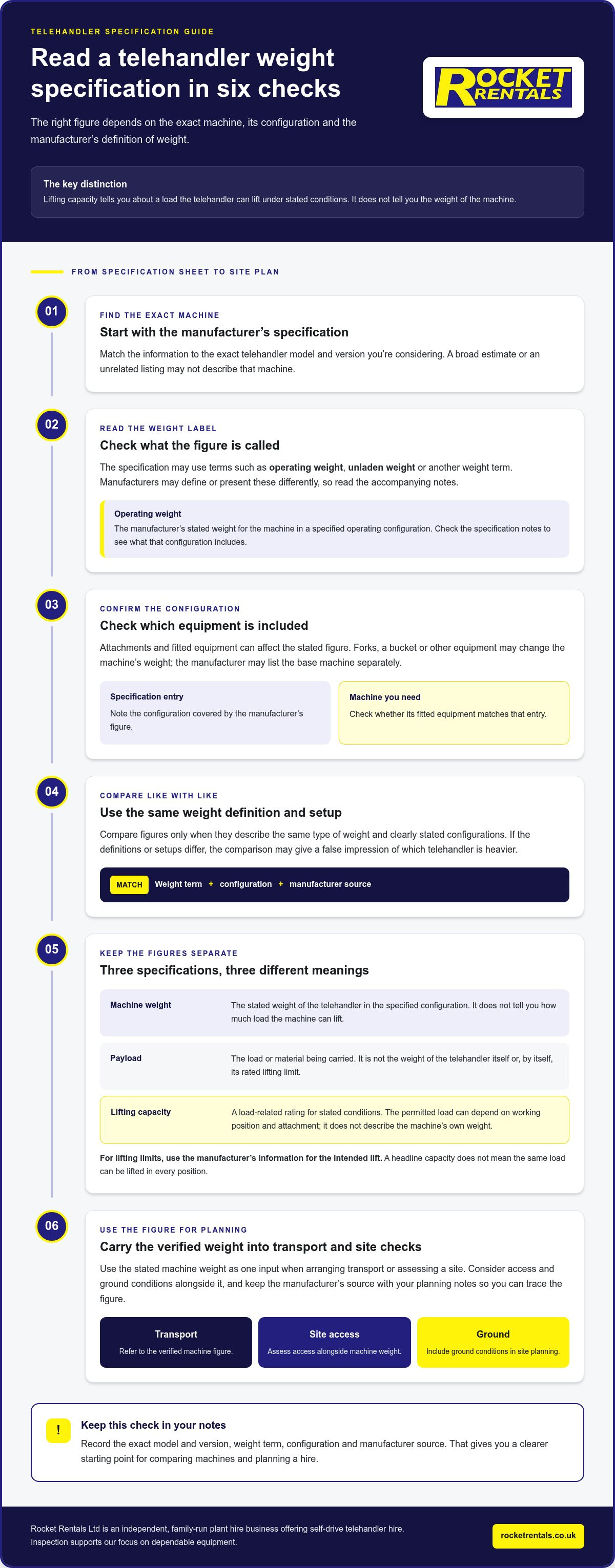
A telehandler’s weight depends on its model and configuration. There isn’t one figure that applies to every machine. A broad average can be misleading if it combines different designs or weight definitions. To find the weight of a telehandler for your job, use the manufacturer’s specification for the exact machine you’re considering.
Operating weight is the weight the manufacturer states for a telehandler in a specified operating configuration. The precise definition can vary between manufacturers, so read the accompanying notes rather than assuming every figure includes the same equipment. A published number is useful only when you know which machine and configuration it describes.
This matters when you’re planning transport or assessing a site. Keep machine weight separate from lifting capacity: the Telescopic handler overview explains the extending boom and how lifting capacity changes as it extends. Weight describes the machine; capacity describes the load it can lift under stated conditions.
Why telehandler weights vary between machines
Size and design are part of the answer. A compact machine and a larger model are built for different working demands, so their published weights may not be comparable. Even within a model range, the specification can vary according to the version or equipment fitted.
Attachments and configuration can also affect the figure. Forks, a bucket or other fitted equipment may change the machine’s weight, while the manufacturer may list the base machine separately. Don’t treat a specification for one setup as the exact weight of another.
What weight figure should you look for?
Find the manufacturer’s current specification for the exact model, then check the weight term and any notes about included equipment. Confirm that the figure matches the configuration you need. A general model description or a number copied from an unrelated listing may not be enough to identify the right weight.
Estimates can give you a rough sense of the subject, but they aren’t a substitute for machine data. When comparing telehandlers, compare like with like: the same type of weight figure and clearly described configurations. If the definitions or configuration differ, the figures may give a false impression of which machine is heavier.
Use this quick check when reading a specification:
Match the manufacturer’s information to the exact model and version.
Note whether the weight is described as operating, unladen or another term.
Check which equipment or configuration the stated figure covers.
Keep the source with your planning notes so you can trace the figure to the relevant specification.
This gives you a sound starting point for planning. It also makes a hire discussion clearer: you can refer to a specific manufacturer figure and configuration instead of relying on a general estimate that may not fit the telehandler you need.
Telehandler weight, payload and lifting capacity: understand the difference
Manufacturer specifications may place several weight and load terms close together, but they describe different things. If you’re checking how much a telehandler weighs, look for the machine-weight entry, not a payload or lifting-capacity figure. Mixing these up can lead to incorrect assumptions about the machine or the load it can handle.
Machine weight, payload and lifting capacity are separate specifications. Don’t use one as a substitute for another. The table below explains the basic distinction. Read each figure alongside the manufacturer’s notes, since terms and stated configurations can differ.
What does a telehandler’s operating weight mean?
Operating weight is the manufacturer’s stated weight for the machine as defined in its specification. Check the notes to see which configuration or fitted equipment the entry covers. Manufacturers may define or present the term differently, so don’t assume that two operating-weight figures include identical items just because they use the same label.
How is lifting capacity different from machine weight?
Lifting capacity concerns the load, not the mass of the telehandler. The rating applies under stated conditions, and the permitted load can depend on the machine’s working position and fitted attachment. Use the manufacturer’s information for the intended lift rather than treating the headline capacity as a figure that applies in every situation.
Payload is not another name for lifting capacity. It describes what is carried; lifting capacity is the machine’s stated limit for lifting a load in defined conditions. Keeping the terms separate helps you read a specification sheet accurately and describe your requirements when planning a hire.
Transport planning is a separate question from lifting performance. If a movement involves a vehicle or load classed as a special type, the GOV.UK Special types enforcement guide provides relevant transport guidance. Don’t use a lifting-capacity figure to estimate the telehandler’s transport weight.
When discussing a hire, share the task and load information alongside the machine specification. Rocket Rentals is an independent, family-run business offering self-drive telehandler hire, with inspection as one of its strengths.
How model and configuration change a telehandler weight comparison
A useful comparison starts with consistent information, not a list of figures collected from different sources. If you’re assessing how much a telehandler weighs, make sure each figure refers to the same kind of weight and a clearly identified machine configuration. Otherwise, you may be comparing unlike specifications, even if the figures look precise.
A comparison based on manufacturer documentation is more useful than an unsourced class average because you can trace each entry to its source. It also makes missing information visible instead of hiding uncertainty behind one general figure.
Which specification details can affect a comparison?
Start by recording the full model and version shown in the manufacturer’s document. Then read the notes beside the weight figure. They may state whether fitted equipment or a particular setup is included. A model name alone may not provide every detail you need for a fair comparison.
If one source gives an operating weight and another gives an unladen weight, mark the difference clearly. Don’t assume the terms mean the same thing or fill gaps with estimates. If the configuration or definition is missing, mark it as unverified rather than treating the figure as directly comparable.
How to compare telehandler specifications fairly
Use the same weight definition and measurement basis for each entry. Record the manufacturer’s source and the date you checked it, so you can return to the original document if you need to review the specification. Keep the source notes with the comparison rather than relying on copied figures without context.
Complete the rows only after checking current manufacturer documentation for each machine. The entries above are prompts, not machine data. Don’t add model names or figures from memory, an old listing or a broad category description. If a document uses a different weight term or leaves the configuration unclear, note that limitation rather than presenting the figures as directly comparable.
This method also prevents a common comparison error: assuming every version in a model family has the same stated weight. Keep the exact version, weight definition, configuration and source together. If any detail is missing, the comparison has limits, and you should avoid drawing a firm conclusion from incomplete information.
What telehandler weight means for transport and site planning
A verified weight gives you a sound starting point for planning how a telehandler will reach and work on site. It is one input, not a complete transport or site-access assessment. The machine’s dimensions, fitted equipment, route to the work area and ground conditions all affect what you need to plan.
Accurate machine specifications help you plan transport and project requirements using relevant information, not assumptions. If you’re asking how much a telehandler weighs, use the figure for the exact machine and configuration you’re considering. A general estimate may leave out details that matter.
Check the machine specification before transport planning
Start with the manufacturer’s information for the precise model and version. Record the stated weight and the configuration it covers, including any relevant fitted equipment. This keeps your plan tied to the machine being considered, rather than a similar model or a broad telehandler category.
Use this short sequence to organise the information:
Identify the exact model and configuration required for the job.
Find the relevant manufacturer specification and note its stated weight and definition.
Record the machine’s dimensions and configuration details relevant to movement and access.
Use those details to plan transport and consider the route to the site and work area.
Review site access and ground conditions alongside the machine information before settling the plan.
Keep the source with your planning notes. If the weight entry doesn’t clearly match the configuration, don’t fill the gap with a rough estimate. Resolve the discrepancy before relying on that figure for a transport decision. If equipment changes between planning and the job, review the notes so they still describe the machine that will arrive.
Consider access and working conditions on site
Think through the route from the site entrance to the working area. Note restricted access, tight turns, overhead obstructions or narrow spaces that could affect movement. Consider the surface and ground conditions too. Machine weight is relevant, but the figure alone cannot establish whether a particular area is suitable for the planned work.
Share practical details such as the task, access route and working area when discussing your project. This gives hire planning a clearer basis and connects the machine specification to the conditions where it will be used.
Transport arrangements and site suitability are related, but they are separate assessments. A machine may be straightforward to plan for in transit yet raise different access or ground questions at the worksite. Consider the full route and intended working area, using the exact specification as one part of that review.
For self-drive telehandler hire, discuss your telehandler hire requirements with Rocket Rentals. Sharing the job details and site conditions helps put the weight figure into practical context.
Choosing a telehandler for hire: turn the weight figure into a useful decision
The machine’s weight is one part of choosing a telehandler, not the answer on its own. Start with the work: what material needs moving, where does it need to go and what does the lift involve? Then consider lifting requirements alongside site access, working space, ground conditions and transport arrangements. The machine needs to suit both the task and the place where you’ll use it.
Think about how these factors connect. A machine that suits the lifting task still needs to reach the work area, and the route and ground conditions can affect which option is practical. Use the exact machine specification as part of the decision, but don’t select equipment by weight alone.
Information to have ready when arranging telehandler hire
A clear description of the job makes the hire discussion more useful. Note what you need to move, where it needs to be placed and any relevant access or site conditions. If you’re comparing options, bring the manufacturer’s specification for the exact model and configuration you’re considering instead of relying on an estimate.
The material-handling task and lifting requirements.
Access limits, working space and ground conditions at the site.
Transport considerations linked to the route and site entrance.
The machine specification and configuration you’re using for planning.
These details keep the discussion focused on your project. They also help you check whether the weight figure relates to the machine under consideration, without treating it as the only measure of suitability.
A straightforward next step for your project
Rocket Rentals provides self-drive telehandler hire for professional projects. As an independent, family-run plant hire business, the team can discuss your requirements with the task, access information and machine specification in view. Inspection is one of Rocket Rentals’ strengths as you plan your hire.
Before settling on an option, bring together the lifting requirements, site conditions and verified machine details. If you’re still weighing up how much a telehandler weighs for your project, focus on the specification for the exact machine, not a general figure. That gives your hire discussion a clear, practical starting point.
Talk through your project requirements with the Rocket Rentals team and explore self-drive telehandler hire for your work.
Put your telehandler plans into action
Give your project team one clear reference for the machine selected and the work it needs to do. If the scope or equipment changes, update the project notes so your planning stays aligned with the current job.
If you’re still asking how much a telehandler weighs for your project, keep the exact specification with those notes. This helps your team work from the same information as plans develop.
A short, accurate equipment brief is a useful step before hire arrangements are finalised. Include the task and any details that may affect how the machine will be used.
Explore telehandler hire for your project and take the next step with a clear brief in hand.
Frequently Asked Questions
How much does a small telehandler weigh?
“Small” doesn’t identify one fixed machine weight. For a useful figure, refer to the specific unit you’re considering rather than relying on its size label. If you’re preparing a job pack or transport plan, keep the machine’s identifying details and relevant weight information together. That way, everyone involved can refer to the same equipment as the project takes shape.
Does a telehandler’s weight include its attachment?
Don’t assume the figure includes the attachment. Include the planned attachment in your hire brief and note whether the weight information refers to the machine alone or a fitted setup. This keeps equipment requirements clear and reduces the chance of planning around a configuration that doesn’t match the task.
Does a telehandler weigh more when carrying a load?
The machine’s own stated weight remains distinct from the load it carries. The combined weight of machine and load is a separate consideration, so don’t substitute it for the machine’s specification. Keep these figures separate in your planning notes, particularly if different people are handling the lift plan and transport arrangements. Each decision can then use the information relevant to it.
Is a telehandler heavier than a forklift?
Not necessarily. The answer depends on the individual machines being compared. Compare the specific machines you’re considering for the job rather than making a decision from the equipment names alone. Note the weight information alongside practical requirements, such as where materials need to be placed and the space available to work. This gives you a more useful comparison than a general claim about either type of equipment.
Where can I find a telehandler’s weight?
Look in the technical documentation supplied for the machine, such as its manufacturer’s specification or handbook. Keep a copy of the relevant page with your project records so you can refer to it during planning. When arranging a hire, give Rocket Rentals the machine details or the reference you’re working from. This helps keep the discussion focused on the equipment for your job.
Can a telehandler’s weight affect whether it suits my site?
It can be relevant, but it isn’t enough to decide on its own. Consider the planned delivery route, where the machine will stand and the area where it will work. Share any known site restrictions when discussing self-drive telehandler hire with Rocket Rentals. A clear picture of the job helps align the equipment choice with the working environment.


Comments